
Why Keeping Your Skin Hydrated Is SO Important

When it comes to skin goals, one keyword that’s often overlooked is hydration. We’re often so busy trying to get rid of fine lines, minimize our pores, and get rid of hormonal pimples, that sometimes keeping our skin hydrated gets left behind. But the truth is, keeping your skin hydrated is one of the best things you can do for your skin – it’s a cornerstone of Korean skin routines – and you’ll likely find that by prioritizing this in your skincare routine that many of your other skin concerns will improve as a result.

New York-based dermatologist, Dr. Doris Day, explained, “Your skin is your first and best layer of protection for your body from the outside world. It functions at its best when it’s healthy and intact. When you have dry skin you have increased water loss from the skin which can end up not only leaving it dehydrated but also reduce its ability to naturally combat and repair damage from pollution, sun and other ‘insults.’” Therefore, making sure your skin is always hydrated means that your skin is able to function better.

Dehydrated skin lacks having enough water in it, which means it’s not a skin type, it’s something that everyone can experience, whether your skin is oily, normal or dry – in fact, sometimes excess oil can be caused by dehydration!

The Difference Between Dry and Dehydrated Skin

If you’re wondering what the difference is between dry and dehydrated skin, Dr. Day explains that “dry skin is related to the outermost layer of the skin, namely the stratum corneum,” whereas “dehydrated skin is skin that has had excess water loss due to both internal and external factors.” She continues to explain that “You can drink all the water there is and still have dry skin.”

However, dehydrated skin is usually down to a combo of internal and external factors, it could be that you’re not drinking enough water – you should aim for at least two liters a day – however, you can still have dehydrated skin while your body iis hydrated. Too much salty food, sugar, alcohol, and drinking too much caffeine are the most common contributors to dehydrated skin. External factors like “excess sun exposure and excess hot yoga, which essentially cook the water out of your skin,” will also cause skin dehydration.

Advertisements

The Difference Between Hydrated and Dehydrated Skin

“Your skin contains a key ingredient called hyaluronic acid. Its job is to help with the water balance of the skin and even of the entire body. When your skin is well hydrated, the hyaluronic acid in your body binds water and that gives your skin firmness (the medical term for that is turgor). When your skin is dehydrated it will start to sag and that can make it look older and more wrinkled,” Dr. Day explains.

Essentially, Dr. Day says that “Dehydrated skin can look saggy, crepey and tired,” and that you may also notice increased under-eye bags. As well as these tell-tale signs, other signs to look for including your moisturizer absorbing particularly fast (it’s literally trying to ‘drink’ in the moisture), and it could cause your makeup to look patchy. Well-hydrated skin is a sign of good barrier function, which is important for protecting your skin.

Another point to note is that as we age, our skin produces less natural moisturizing factors like ceramides, lipids, hyaluronic acid, and fatty acids, so as you age, keeping your skin hydrated and well moisturized becomes even more important.

RELATED POSTS:

How to Keep Your Skin Hydrated

Keeping your skin hydrated is a combination of ensuring you’re drinking enough water, going easy on the things we know dehydrate – and which are generally just not good for our body – like the aforementioned alcohol, sugar, and salt, and topically applying moisturizers to avoid water loss. If you’re dehydrated, Dr. Day says to “Avoid excess salt, moisturize well, especially at night.”

When it comes to products, Dr. Day says that ceramides and hyaluronic acid are the best for hydrating the face. When using hydrating products, it’s important to ensure you lock everything in with a moisturizer, which typically includes three types of ingredients: Emollients, humectants and occlusives. Dr. Day explains what each does;

Emollients: These ingredients moisturize the skin and help with skin barrier restoration. They smooth and soften the skin filling the gaps between cells with droplets of oils. Some emollients can also be considered occlusives. Emollients include, jojoba oil, ceramides, aloe vera, and oleic acid.

Occlusives: It creates a barrier on the skin and occludes (or blocks) water from leaving the skin from the inside, essentially trapping moisture in the skin and preventing other ingredients from penetrating the skin from the outside. These are typically thick and often greasy products. A classic example of occlusives include shea butter and petrolatum, which Dr. Day says are “great for the body and for those with very dry skin, but can be comedogenic and would not be ideal for those who are acne-prone or with oily skin.”

Humectants: “Ingredients like hyaluronic acid and lactic acid, they help pull water into the skin and hold it there. They are not usually occlusive,” Dr. Day tells us. Other humectants include honey, ceramides (which are essentially the building blocks of skin), glycerin, and amino acids.

Dr. Day also adds, “If you have very dry skin, you might select one that is richer and more occlusive. If you have combination skin, you would look for one that is lighter and more of a humectant.”

Dr. Day shares her top tips for keeping your skin hydrated:

Don’t over-exfoliate: “ That will strip the skin and lead to excess water loss.” Think about skipping out on your AHAs or opt for a more hydrating AHA, like lactic acid.

Hydrate deeply at nighttime: “ Use a richer moisturizer at night since you naturally lose more water from the skin at night.”

Go easy with actives: “ Don’t pile on the highest concentration of every acne medication; salicylic acid, glycolic acid, retinols are great but no need to use them all in their highest concentration or all at one time.”

Focus on your wellness: “ Getting enough sleep, minimizing alcohol intake, having a healthy diet all helps your skin function at its best.”

Choose skincare wisely: “ Using the right products for your skin will help it best use its own natural resources to repair and age beautifully.”

Advertisements

Dr. Day’s top product recommendations for instant hydration:

Doris Day M.D. Ultra Rich Peptide Renewal Cream, $103: “It contains ceramides, shea butter, peptides and vitamin E, and improves the skin barrier. You get an immediate healthy glow and a great anti-aging effect.”

Skinceuticals Triple Lipid Restore 2:4:2, $128: “It also contains ceramides and its claim is that it helps improve tolerability to retinol.” The formula also packs essential lipids to restore skin elasticity and hydration cycles, and vitamin E for skin repair and to defend against environmental damage.

When your skin is particularly parched and dehydrated, be sure to stay away from ingredients like retinol and AHAs and BHAs. Instead, load up on hydrating ingredients like ceramide serums and hyaluronic acid and glycerin facial mists, throw on a sheet mask, and lock it all in with a rich, hydrating moisturizer. Whenever we need an instant hit of moisture, we always go to our FARMACY Coconut Gel Sheet Mask, $6, which is packed with coconut, cucumber and sodium hyaluronate to soothe and hydrate your skin, and allantoin and niacinamide to brighten and protect. The mask is dripping in serum thanks to a unique double-layer-fiber technology that allows it to hold significantly more of the powerful vitamin-rich essence than any conventional sheet mask.

TATCHA Luminous Dewy Skin Sheet Mask, $12, is a silky soft, skin-fitting sheet mask that delivers a healthy drink of ultra-hydrating botanical oils and extracts for a dewy glow in just one use. Packed with Rice germ oil, Okinawa Red Algae, Wild thyme, and Sweet Marjoram. The mask feeds skin with Japanese anti-aging superfoods such as a fermentation of green tea, rice, and algae—ingredients at the heart of the Japanese diet and time-tested skincare rituals—that restore skin health and youthful radiance.

Check out some of our other fave intensely hydrating products here.

Advertisements

Pros Agree That Jade Roller Benefits Go Far Beyond De-Puffing Your Face

These days, it’s near impossible to scroll through your social media feed without coming across a beautifully-styled photo of a jade roller. But according to skin-care pros, jade roller benefits extend far beyond solely making for a pretty picture.

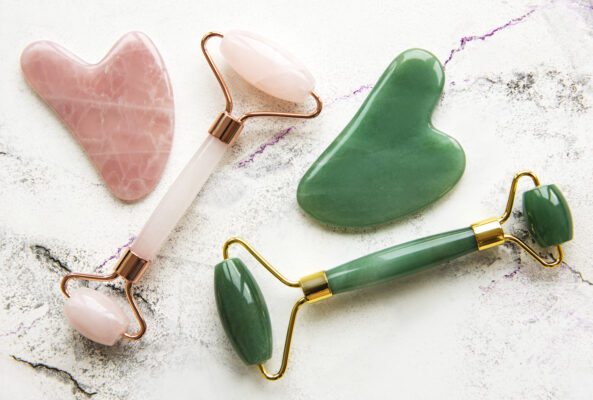
Jade face rollers for beauty facial massage therapy. Flat lay on marble background

Jade rolling has long been a practice in traditional Chinese medicine. The stone is believed to have healing properties and be a sign of power and immortality. Over the last few years, the tool has made its way into beauty stores (and onto Instagram feeds) in the Western world, thanks in large part to its de-puffing abilities. ” In the simplest terms, a jade roller is a facial massage tool,” says Jessica Briggs, the VP of marketing for Ecotools. “What makes it special is that it’s made from natural jade stone which has both spiritual and physical benefits, and is known for its purifying and detoxifying qualities.” And pros say that jade roller benefits include things like lymphatic drainage and improved circulation. Here’s what you need to know.

Advertisements

Jade roller benefits

1. Detoxifies and reduces puffiness

“Lymphatic drainage” is one of the buzziest wellness terms of 2020 (we called it in our Trends!), and jade rolling is one of the easiest ways to do it at home. Using the tool to massage your face can help reduce some of the fluid buildup, doing away with puffiness. Roll the massager toward your lymph nodes—which are located in your neck, slightly behind your ears—to help stimulate lymph movement.

2. Brightens and firms skin

Jade rollers massage the superficial layer of the skin, and if you pop them in the freezer to cool them down they can “calm irritation, tighten pores, and reduce the appearance of fine lines and wrinkles,” says Miami-based board-certified dermatologist Stacy Chimento, MD. There are some claims that jade rollers can help your skin absorb topical ingredients more effectively, but there isn’t enough research to fully support this theory.

3. Relaxes facial tension

If you’re a big-time jaw clencher, treating yourself to a DIY jade roller massage can help do away with some of the tension the habit leaves behind. “By putting gentle pressure on your face and neck it helps reduce tension,” says Briggs. Use the smaller end of the roller to gently massage along your jaw line, and you’ll feel an immediate release of whatever stress you’re holding in the area.

RELATED POSTS:

4. De-puffs your under eyes

After a long night of crying, drinking, or eating salt, if you ever wind up with your eyes puffy, a simple jade-rolling routine can help. Massaging the area with the smaller end of the tool can help even out some of the fluid, and it will work double-duty if it’s fresh out of the freezer, since cold temperatures help to constrict blood vessels, which helps to prevent the flow of fluid into the tissues.

How to use a jade roller

In order to reap the most of your jade roller benefits, you’ll want to be sure you’re using it the right way. “In terms of technique, make sure you aren’t applying undue pressure and pulling the skin, this goes double for downward strokes,” says Dr. Chimento. “You can start with the nose and eyes and gently and thoroughly cover the face with the massage tool emphasizing the forehead and cheekbones.” Briggs adds that you can use the tool with or without skin care, focusing on an outward, rolling motion on your face and neck, which helps push tension and swelling away from the center of your face and encourage circulation.

Most jade rollers come with a larger end and a smaller one, each of which serve different purposes. The larger one is great for use on your cheeks, forehead, and jawline, and the smaller one can be used under your eyes and around your nose. Some also have a textured side as well as a smooth side, which Dr. Chimento is a fan of using for light physical exfoliation (just be sure to limit yourself to a few times a week with it so you don’t over exfoliate).

A few other pro tips, depending on what you’re looking for? “If you want to really gain the maximum benefit out of the jade roller, I suggest placing your tool in the freezer or fridge overnight and massaging your face in the morning,” says Dr. Chimento. “The combination of massage and cool application will help not only break up fluids from overnight, but also tighten your pores, and calm the skin from minor irritations or puffiness.” Briggs also suggests warming the tool with water, which will help open your pores for improved skin-care absorption.

Advertisements

And one more thing? “Always make sure to clean your tools before the next use,” says Briggs. The best way to do it is by washing with a gentle soap and patting dry.

Our favorite jade rollers

1. Herbivore Jade De-Puffing Facial Roller, $30

Photo: Herbivore

2. EcoTools Jade Roller Duo, $19

Photo: EcoTools

3. Bullex 100% Natural Jade Face Roller, $7

Photo: Amazon

THANK YOU FOR READING AND SUPPORTING BEAUTYLEEBAR. THE LOVE IS DEFINITELY RECIPROCATED.

Do You Pick Your Skin? Here’s Why And When To Stop

Whether it’s an old scab on our shin, that bit of dandruff on our scalp, or popping a zit that popped, it’s safe to say that we all – to some degree – pick at our skin. The question is why? What is it about the whole thing that satisfies us, and why is it that sometimes a seemingly harmless habit can go sideways? Curious for the answer, we hit up a psychodermatologist and dermatologist.

Advertisements

Why We Pick, Pop, and Scratch

The reason why we pick isn’t exactly straightforward, but we can try to simplify. Dr. Stacy Chimento, a board-certified dermatologist for Riverchase Dermatology in Miami, Fla., breaks down skin-picking into three categories:

Mild / Minor Picking Habits: “This category refers to people who pick at their skin when they see that there is a stubborn blemish that they are not used to on their face. Usually, people that fall into this category don’t fixate on picking at their skin,” she says. Think: a few minutes to address the issue, then moving on.

Intermediate Picking Habits: “This level of picking refers to those who pick at their skin if they see anything abnormal, from a change of texture, dry patch, or raised bump on the skin’s surface. These patients tend to also pick at their scalp if they notice any flakes or rough textures,” says Dr. Chimento. Think: turning skin-picking into a pastime.

Severe Picking Habits: “At this point, patients are picking at their skin incessantly even when nothing unusual is present. Patients who develop severe picking habits can often find themselves probing their skin in search of anything to pick, whether that be a scratch, a blackhead, or a scab,” she says. People in this category pick so much it can cause damage or impact their day-to-day life.

Mild skin-picking is understandable and normal; we want to look and feel our best and eliminate anything “weird” or “different” from our bodies. For some, however, picking becomes a slippery slope.

“[Severe] skin picking is often used to help regulate emotions; it can be a coping mechanism to relieve emotional discomfort, physical discomfort, or a blend of the two. If [a severe skin picker] is stressed or anxious, skin picking allows temporary relief,” explains Matthew Traube, a licensed psychotherapist who specializes in the field of psychodermatology.

This behavior actually has a name – “Body-Focused Repetitive Behavior” (BFRB). It is defined as repetitive self-grooming behavior, including skin picking or even pulling hair from your body. In addition to soothing during times of stress or discomfort, Dr. Chimento says that skin picking can also provide a sense of “control” or can even be done out of sheer boredom.

“Picking can occur both consciously or unconsciously,” adds Traube. “Ultimately, the underlying issues do not get addressed and generally people feel awful about it afterward.”

Advertisements

The Dangers of Skin Picking

Carefully addressing a singular zit (or two), futzing with a scab, examining a new bump or patch, or occasionally scratching at dandruff are all within the realm of normal picking. It’s okay and healthy to pay attention to our bodies and groom ourselves.

The line is drawn when skin picking becomes compulsory and/or excessive – to the point you’re inflicting real damage or pain versus trying to quickly address a skin issue. This damage can range from mild to extreme. Dr. Chimento says that bleeding, bruising, post-inflammatory hyperpigmentation (PIH), secondary infections, and permanent scarring are not uncommon.

In addition to physical damage, severe picking can also impact your life and wellbeing. Compulsory skin pickers can spend hours obsessing in front of a mirror and still feel like they must keep going. Like other addictions, it can distract them from important things in life, such as work, relationships, exercise, and social engagement.

Advertisements

How to Curb a Picking Habit That’s Gone Too Far

To cease the picking, it’s important to take thoughtful action in order to set yourself up for success.

“In the early stages of trying to ‘quit’, try wearing gloves when your hands are not occupied. If you are at work, keep a squeezable ball on your desk. Each time you experience urges to pick, will yourself to resist for longer durations,” suggests Dr. Chimento. “Sometimes the urge to pick is manifested by skin conditions such as dry, cracked skin, or oily skin that produces acne. Instead of picking at it, treat the problem instead.”

If you’re working through a skin-picking addition and experience breakouts, it’s also better to visit your dermatologist for a facial or cleanup to prevent you from slipping down that slope. Another way to help is to keep your nails trimmed, which makes it harder to pick. And while you’re at it, toss those tempting instruments, such as tweezers, small manicure scissors, and anything else you use to pick your skin.

Traube adds, “It’s common for people to pick more when they’re alone, so I might suggest creating a weekly social schedule to assure that you are more often engaged with others. Social support can make a significant impact on skin picking.”

If small steps fail, even when aware of the issue and attempting to address it, consult a licensed therapist. A therapist can talk you through the process and help you understand the root of what is causing and magnifying the disorder.

“Professional help usually involves a combination of cognitive-behavioral therapy, habit reversal training, mindfulness, and psychodynamic therapy,” says Traube, “We want to address both the act of skin picking and the deeper emotional issues that can provoke it.”

Bottom Line: To a degree, we all pick at our skin, and in the mildest cases, it’s perfectly normal. If you sense yourself slipping or feel like you’re losing control of the situation, tackle the underlying issue and set yourself up for success by following the above advice. If you do find yourself picking to an extreme degree and are struggling to gain control, you’re not alone. A professional can help guide you to the other end.

BEAUTYLEEBAR does not provide medical advice, diagnosis, or treatment. Any information published on this website or by this brand is not intended as a substitute for medical advice, and you should not take any action before consulting with a healthcare professional.

MORE POSTS YOU’LL LOVE:

SPF APPLICATION: You’ve Probably Been Doing It Wrong

To give us all some credit, we’re sure a lot of us SPF enthusiasts are doing it correctly. Maybe even overdoing it. Which to us, is correct. One can never have too much sun protection! But there are many of us out there haphazardly slapping on the SPF sparingly, here and there, just to say we did it. Most often, that’s like not doing it at all.

Here are few expert opinions on how we should be applying sunscreen, day in and day out.

Reapply

People really need to understand the importance of re-application of your sunscreen, every day. Because that’s not just a thing our moms like to say to annoy us. SPF is only protectively active for so long, so if we never reapply, it’s literally not working hours later—we might as well have none on. FDA recommends that you reapply every two to three hours, and more often if you plan on engaging in high-intensity activities.

Make sure lips and eyes are covered

Lately, us beauties have been using an SPF mist as our go-to for full face, neck, and chest sunscreen every day because it’s great over makeup. It’s a personal preference whether or not one needs a different sunscreen for lips and eyes, but it’s super important if your eye area is extra sensitive, and many people’s are. What is crucial is that you stay covered, so if you’re avoiding sunscreen on your lips or eyes due to sensitivities, certainly get products just for that area.

Don’t forget the décolletage

You definitely want to remember sunscreen on the décolletage as well to avoid wrinkles and dark spots over time. I use it anywhere and everywhere my skin is constantly exposed—so that absolutely includes this gorgeous area of the body. The skin here is not as delicate as the face, but definitely more delicate and wrinkle-prone than other areas of the body, so don’t skimp on the neck and chest.

YOU MAY ALSO LIKE…

The tops of your hands, too

Especially while you’re driving, your hands are always exposed to the sun, which can often lead to skin damage. Some say our hands are the first to tell our true age, and that’s because they are so prone to wrinkling and sunspots. It’s easy to forget the hands, which arguably take the most beating over any other part of the body, and they are almost never unexposed.

If you sit in traffic often …

And if you live in Miami, you just might. When you’re driving, your entire upper body is exposed to the sun, and UV rays can definitely penetrate through the windows onto the skin. I highly recommend applying and reapplying sunscreen on your face, neck, chest, and arms even if you’re sitting in the car all day.

When things get wet

Swimming, versus just sweating? Not every day is going to be a wet and wild pool or beach day, but hot summer days have an effect on your level of protection as well. According to the FDA, there’s no such thing as waterproof sunscreen. So yes, sweating can lift your sun protection up from the skin through your pores, and any material that wipes or wicks sweeps it away along with the sweat. When I know I’m going to sweat a lot or plan on swimming, I make sure to reapply my sunscreen more often.

COMMENT BELOW YOUR THOUGHTS ON SUNSCREEN

SPF SPF SPF YOU’LL LOVE