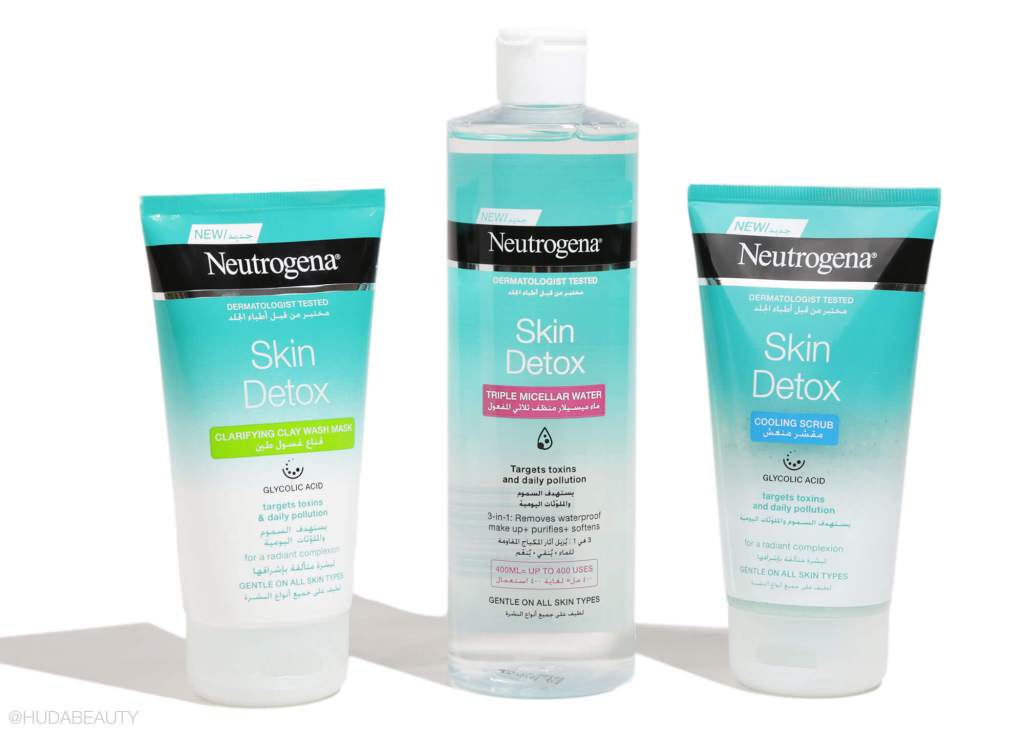
This $9 Cleanser Is The Answer To Clear, Smooth & Oil-Free Skin

With summer so close by, we’re feeling the pressure to strip back our cake face and go as natural as possible during the warmer months. After all, sweat is the enemy of a cake face, so the less we have to pile on, the better we’re gonna look as the day goes on. So, with thoughts of less foundation, we’re taking our skincare routine into overdrive.

Fortunately, we came across a 2-in-1 cleanser that has become our new best friend – not just because it costs $9, because it works so well to fight oily skin, congestion, and skin texture. Trust us when we say the Neutrogena 2-in-1 Skin Detox Clarifying Clay Wash Mask* is packed with some of the best oil-controlling, pore-busting ingredients that will detox your skin and keep your oil in check for the hot summer months.

The oil-free, non-comedogenic (won’t cause clogged pores) formula is packed with salicylic acid, a beta hydroxy acid (BHA) that cleans deep into pores to dissolve the glue that binds toxins and dirt in the pores, while their Barriercare cleansing technology helps preserve skin’s moisture levels. Glycolic acid also helps to clarify pores and remove surface dead skin cells that cause the complexion to look dull. Finally, Kaolin and Bentonite Clay draw out toxins, dirt, and oil that cause breakouts, while glycerin adds a hit of hydration.

We love that we can use this as an everyday cleanser but also use it as a mask two or three times a week. To use it as a mask, apply a thick layer to the skin and leave it on for three minutes, before thoroughly washing away. Prepare to feel super soft skin! After using this for just two weeks, we noticed our oily T-zone looked less and less shiny, our skin texture improved, and pimples also became less frequent. We also recommend using an exfoliator once or twice a week (like the Neutrogena Skin Detox Cooling Scrub).

*Note, if you’re based in the US, this cleanser is called the Deep Clean Purifying Clay Cleanser & Mask and for those in the UK and elsewhere, it’s called the 2-in-1 Skin Detox Clarifying Clay Wash and Mask, although both formulas are exactly the same!

Let us know if you’ve tried this in the comments below.

WHAT DO YOU GUYS THINK?

3 Super Easy Ways To Detox For Free

With summer fast approaching, I’m well aware that bikini season is right around the corner. And in an effort to stay clear of FAD diets, I’ve started thinking of some quick and easy lifestyle changes that’ll seriously help me and you to detox. Even if weight loss isn’t your goal, it never hurts to go on a little health kick every now and then. I swear with these three easy hacks, you’ll feel tons better, have way more energy, and you’ll look better too – beauty does start from within after all!

Learn To Decode Your Cravings

When you’re craving a particular food, it’s often the source of nutrients that triggers the feeling. That also means there’s always a healthier option with a higher content of the nutrients that your body really needs. For example, when you want chocolate, which I been craving chocolate for a while now, the source of your craving is actually magnesium, which can be found in almonds, spinach or quinoa. Similarly, if you’re desperate for salty foods, you’re in need of chloride silicon; which is found in apples, grapes or bell peppers. And, if you feel like you’re in desperate need of carbs, you’re really after nitrogen, which is found in high protein foods like meat or fish. Even, when you’re tired and desperate for a coffee, you can trade it in for a green tea, as this also contains a high level of caffeine. So the moral of the story is, don’t trust your cravings, decode them and find the source! Even though you may think the only thing that’ll satisfy your cravings is a tub of Ben & Jerry’s, it’s not what your body really needs.

Cut Back On Animal Products

I know that veganism may seem like the latest Insta happy trend, but there are actually some major health benefits to a plant-based diet. I am not suggesting that you go vegan 24/7 – we’re not sure what life is without a grilled cheese sandwich now and again – but cutting back on meat and dairy can make a real difference to your health. So, I try to go meat-free three days a week, and limit dairy intake to one meal a day. Even though meat is a really good source of protein, it also has the highest amount of saturated fats in our diet, especially red meat. When you do eat meat, it’s worth looking for free-range and organic sources, otherwise, the animal may have been pumped with harmful chemicals and hormones, which we all then ingest – gross!

When it comes to our dairy intake, we couldn’t believe it when we found out that 65% of the population is lactose intolerant (lactose is the main carbohydrate found in dairy products). This is because it’s a complex compound that our body finds difficult to break down and digest, causing you to bloat and feel sluggish. Limiting your dairy intake to one serving a day is also enough to satisfy your daily requirement for calcium. The rest of your calcium intake can be found in other calcium-rich foods, like pineapple or leafy greens. Plus, dairy is normally high in fat and can be super calorific, so even if you aren’t intolerant, it’s always a good idea to cut back. There are so many alternatives to dairy products too, like almond or oat milk, there’s even vegan ice cream which is surprisingly good, so next time you’re at the store, try these instead!

Eat Within a 12 Hour Window

When I found out that celebrities like Miranda Kerr, Beyoncé, Terry Crews, Nicole Kidman, Jennifer Lopez, Halle Berry and Kourtney Kardashian swear by eating within a 12 hour period, I had to check it out! And OMG it’s one of the easiest “diet” rules to follow! It can make a big difference to your daily metabolic cycle, helping you burn more fat, and it’ll also seriously decrease your daily food intake. Eating within a 12 hour period helps regulate and balance your insulin production (the hormone that’s released after each meal), which is what causes your body to produce glucose. The influx of glucose triggers a hormone called ghrelin, which makes you feel hungry. When you limit your food intake you also limit your production of ghrelin, which means you regulate and decrease your hunger.

Eating within a restricted time frame also means you don’t store fat, but instead you continue to burn it throughout the day and before you go to sleep. Even if you don’t want to regulate your hunger, restricting your eating time will help manage your blood sugar levels, lower levels of inflammation, improve your heart health, and your immune system. Just remember the golden rule, the clock starts ticking from the very first thing you put into your body (apart from water) and it stops exactly 12 hours later.

Are you guys gonna try any of these?

Can You Be Allergic to Makeup? Asked the Experts.

You don’t have to be a hardcore beauty junkie to appreciate a good foundation that hides all traces of a sudden breakout or an MLBB lippie with serious staying power. Makeup is, arguably, a girl’s best friend—especially for those days when stress finally catches up with your complexion. But what happens when your go-to cosmetics are actually the ones causing your skin to sting, itch or turn red in all the wrong places?

Recognizing a makeup allergy can be tricky, particularly when you’re also exposed to other potential allergens, use certain active ingredients in your skin care products or have a pre-existing skin condition. To help you figure out if your cosmetic products are causing your newfound rash, I asked top dermatologists and allergists to share their expert tips on how to spot—and deal with—a makeup allergy.

Common Signs of a Makeup Allergy

Some ingredients in skin care products, as well as flare-ups from certain skin conditions, can cause your skin to feel dry or flaky, which can make determining the real problem a bit of a challenge. “Allergies should be differentiated from other reactions such as skin irritation caused by active ingredients like retinoic, lactic and glycolic acid (red, flaking skin without the itch) or acne breakouts that are produced by comedogenic (pore-clogging) ingredients,” says board-certified dermatologist Yoram Harth.

An allergic reaction from makeup, or allergic contact dermatitis, often appears as red, itchy and flaky rashes that can even crack or appear as blisters in the most severe cases (when infected, for example), explains Michigan allergist/immunologist Kathleen Dass. “The rash typically occurs where you have applied the makeup, though it can technically appear anywhere you have had contact with the exposure,” she says. For the majority, this means the eyelids and the delicate skin surrounding the eyes, which is up to five times thinner than the rest of the skin on the face.

In some cases, skin reactions to makeup could take time and require several applications before manifesting. “One of the most important things to know about contact dermatitis, which also makes it the most challenging, is that the reaction does not always appear right away. Sometimes, you can be using the products for weeks, months or even years before you start having symptoms,” Dr. Dass adds.

Who’s Likely to Develop a Makeup Allergy 

Several factors can determine your susceptibility to makeup allergies, including genetics, environment, skin integrity and amount of exposure, says board-certified dermatologist Hal Weitzbuch, medical director at Calabasas Dermatology Center. “The longer we are exposed to certain chemicals, we eventually can pass a threshold of sensitivity and begin exhibiting symptoms of an allergic reaction,” he notes.

Those who already have sensitive skin to begin with, have compromised immune systems or are dealing with asthma, seasonal allergies and other inflammatory skin conditions are particularly vulnerable. “People with a history of eczema are more likely to develop skin allergies and this may be due, in part, to the less robust nature of their skin barrier. So ingredients can penetrate into the skin and be more sensitizing,” explains New York City board-certified dermatologist Hadley King.

What Type of Ingredients to Avoid

A number of ingredients found in makeup can cause allergic contact dermatitis, but the most common culprit is fragrance, says Dr. Harth. Present in nearly all types of beauty and skin care products, fragrances often contain a cocktail of harsh chemicals—including alcohol, phthalates and styrene—that can trigger headaches, nausea and skin irritations. “Some of these fragrances can also cause increased sensitivity to the sun, also known as photodermatitis,” Dr. Harth adds.

Board-certified dermatologist Tsippora Shainhouse echoes this and adds preservatives (such as formaldehyde, parabens and DMDM hydantoin), coloring agents, rubbers (found in mascara and latex sponge tips used to apply makeup) and hair dyes to the list. But while synthetic chemicals are often to blame for what’s causing your skin to react to makeup, natural ingredients have also been linked to allergic contact dermatitis—especially for those who have extremely sensitive skin. “Tea tree is a common skin irritant, while willow bark can be drying and irritating to the skin. Essential oils (like lavender, oregano, sandalwood and vanilla, to name a few) can also be skin allergens, as can other natural ingredients like honey and coconut-derived products,” adds Dr. Shainhouse.

Aside from these, Dr. Dass also lists the following ingredients found in makeup as common causes of skin irritations and allergies:

  • Lanolin or Wool Alcohols: Used as an emollient and lubricant, often found in foundations, eye shadows, blushes, mascaras, eyeliners, moisturizers, face masks, lipsticks and lip balms.
  • Nickel: A common contaminant found in pigments that are used in eye shadows, hair dyes, costume jewelry and antiperspirants.
  • Methylisothiazolinone (MIT) and Methylchloroisothiazolinone (MCT): Antibacterial and anti-fungal preservatives found in mascara, makeup remover, liquid soaps, cleansers and other personal care products.
  • Balsam of Peru: A fragrant resin, with a scent similar to that of vanilla and cinnamon, typically added to essential oils, hair products, baby powders and sunscreens.

How to Treat a Makeup Allergy 

Treating an allergic reaction from cosmetics depends on the severity of the situation, says New York City esthetician and model Sydney Blankenship. To quickly calm any redness or itching, she suggests treating the area with a cool compress before applying topical creams like hydrocortisone or calamine lotion. “Finally, over-the-counter oral antihistamines may be used to reduce inflammation,” adds Blankenship. For severe reactions, or when the irritation involves swelling in your eyelids, tongue, lips or mouth and difficulty in breathing or speaking, Dr. Weitzbuch says it’s best to call 911 or head to the emergency room as this can compromise breathing.

Fortunately, most people will only experience mild irritations that “will usually resolve itself once you have stopped using the product,” says New York City board-certified dermatologist Debra Jaliman, assistant professor of dermatology at Icahn School of Medicine at Mount Sinai. Still, this doesn’t mean you can continue exposing your skin to the same product or ingredient as long as you stop at the first sign of trouble. “Chronic irritation and skin inflammation can lead to skin redness, discoloration, thickening and/or collagen breakdown, which can then lead to premature skin aging and wrinkling,” explains Dr. Shainhouse.

When to See a Doctor

As a general rule, Blankenship says, “It’s best to see a dermatologist for a second look when any kind of irritation does not go away with over-the-counter products after a few days. Whenever you notice your skin having significant changes, it’s best to consult with a skin care medical professional.” It’s even more important if your skin starts to peel or blister as lesions can easily get infected by bacteria. During your visit, your dermatologist can evaluate the rash and prescribe a stronger corticosteroid cream, if necessary, explains Dr. King. “Then, he or she can perform a patch test to help elucidate exactly which ingredient or ingredients you are reacting to,” she adds.

Similarly, you can set an appointment with an allergist who will then perform a patch test on your back using small chambers that contain common allergens, says Dr. Dass. “An allergist can also apply a specific makeup product you are suspicious of. After 48 hours, the patches will be removed, but your allergist may ask you to return in 72 or 96 hours for a second or third reading. These are delayed reactions we are looking for, which is why you would need to return,” she adds. Aside from topical or oral corticosteroids, your doctor may also recommend barrier creams and moisturizing lotions to soothe and protect the area. “If your skin has become infected, you may even require an antibiotic,” adds Dr. Dass.

What Type of Products or Formulas to Use

Regardless of what product or formula you pick, Dr. King says it’s important to do your own research and testing before using any new makeup product. “Place a small amount of the product on the inside of your elbow and wait 48 to 72 hours. If you experience redness, swelling, itching or burning, do not use that product,” she warns. Once you’ve identified the type of formulas or ingredients that are causing your skin to react to makeup, it’s best to stick to products that are labeled paraben-, phthalate- and fragrance-free, sensitivity-tested or hypoallergenic. Keep in mind, this doesn’t always guarantee that your skin will not experience any reaction, says Dr. King. The safest way to avoid developing allergic contact dermatitis, she says, is to look for products with the fewest ingredients.

One way you can make sure your blush and eyeshadows don’t work against you is to opt for mineral makeup and cosmeceuticals as these typically have cleaner and gentler formulations, aside from the added skin care benefits. Look for clinically proven and dermatologist-tested formulas that are also free of known natural or plant allergens. Lastly, Dr. Jaliman reminds, “Expensive doesn’t always mean better. The most important thing to do is to check the list of ingredients on labels and become informed about certain ingredients and what they do.”

Stop Neglecting Your Tongue! It’s More Important Than You Think…

Dental health is seriously trending right now; from Kendall’s whitening Moon pen to pretty much every influencer’s fave teeth whitening gadget. But as intrigued as we are with the latest advancements in oral health; it’s the ancient practice of tongue scraping that I am currently obsessing over. It’s super simple, it’s basically free, and it has tons of health benefits.

What is tongue scraping?

Ok, so I realize it sounds kinda gross but Dr. Ghalili explains “Tongue scraping is the method to remove the remainder of the food, possible bacteria, and dead cells from the surface of the tongue and therefore out of the body.” Dr. Garcia adds, “Tongue scraping is nothing new and has been a part of Ayurvedic practice since ancient times. A scraper is designed to fit the anatomy of the tongue and scrape off bacteria and flora on the tongue that can produce volatile sulfur compounds.”

Why you need to start scraping… like NOW

Dental benefits: Dr. Garcia outlines the benefits of tongue scraping; “Tongue scraping can clear up bad breath and help to prevent an incidence of periodontal disease [gum disease].” Dr. Ghalili agrees, saying tongue scraping helps “To remove bacteria and toxins and this prevents them from getting reabsorbed into the body. This improves problems with bad breath and improves overall health.”

Other health benefits: But the benefits don’t stop at helping with bad breath, it’ll help remove toxins from your body, increasing your bodies immunity, and improving your health in general. Plus, don’t forget fewer toxins in your body = better skin. Dr. Ghalili explains how it works, “When bacteria and other possible pathogens remain on the tongue and get reabsorbed by the bloodstream, it can cause serious health issues all throughout the body.” Plus, Dr. Garcia notes that it’s the perfect practice to get into whenever you’re feeling under the weather, “Since bacteria lingers on the tongue, it’s especially beneficial to do regular tongue scraping when you’re sick with a cold or infection.” Oh, and last but not least, it’ll enhance your taste buds as there’s less mucus on your tongue – err, yes, please!

How to use a tongue scraper

The tools: Dr. Garcia recommends, “The tongue scrapers made from copper, tin or brass [which you can buy on Amazon, $8, here]. Using an ergonomic one only designed for tongue scraping is much more effective than using a toothbrush.” Whereas Dr. Ghalili keeps it simple, suggesting “A toothbrush or a tongue scraper. Both are effective. If you use a toothbrush, it is easier to use without toothpaste.”

The technique: With firm yet gentle movements, scrape the surface of your tongue with singular, long strokes using your tongue scraping tool, then rinse your tool in water. Repeat this five to ten times. Follow with mouthwash, flossing, and then brush your teeth as usual.

Let me know if you guys use a tongue scraper in the comments below.