
CLEAN BEAUTY– WHAT IS IT AND WHY IT’S IMPORTANT


The beauty buzzword and movement of the moment: “clean.” Along with other terms like “green” and “natural,” it’s used to describe every type of skincare, hair, makeup, and fragrance product, from moisturizer to makeup, shampoo to soap.

Ok, you guys have seen all the talk about switching to clean beauty on my Instagram feed, but what is clean beauty? Clean beauty is products that are not toxic to your body, and free of harmful ingredients. I was pretty shocked—actually, floored—to learn that the US beauty industry is one of the most unregulated industries. Companies can basically put any ingredients they want in a product—harmful or not. If you’re anything like me, you probably try to live your best to live a healthy lifestyle by eating well and reaching your fitness goal with the help of FlattummyApp. But then you are slathering yourself with chemicals, parabens, and silicones — it’s counterproductive!

Retailers know that consumers want cosmetics and beauty products that aren’t laden with potentially harmful ingredients — for example, Sephora recently launched “Clean at Sephora,” an initiative in which the beauty brand badged over of its 2,000 products as “clean,” in this case meaning free of ingredients like sulfates, parabens, formaldehydes, phthalates, and mineral oil.

But identifying the “cleanest” makeup products or “safest” cosmetic brands on the market isn’t all that simple. Despite a booming beauty industry, U.S. laws for cosmetics safety are virtually unchanged since they were created back in 1938. Here — unlike in Canada and Europe, where well over 1,300 unsafe ingredients are banned for use in beauty products — unbelievablythe FDA has prohibited only 11 ingredients or related compounds.

While legislation is pending to change this, progress is slow. The Personal Care Products Safety Act, supported by the Good Housekeeping Institute and beauty industry-leaders, would require the FDA to review the safety of at least five ingredients per year (at which rate it could take hundreds of years to even test for risks and dangers!). Yet this small step has remained stalled in the Senate since it was proposed in 2015. And there is no established industry-wide definition for “clean” or “natural” beauty claims. Being aware of what clean beauty is and educating yourself is so important which is why I wanted to share  Clean Beauty 101 today.

YOU MAY ALSO LIKE:
SELF-SOOTHING PRACTICES EVERYONE SHOULD KNOW
HAIR ACCESSORY SPOTLIGHT: SOIELI HAIR SLIP
WHY YOU’LL NEVER HAVE TO BUY ANOTHER MAKEUP WIPE AGAIN

CLEAN BEAUTY 101

So, what does “clean” beauty really mean?

The term “clean beauty” gets thrown around quite a bit, but few people know what the phrase actually means. Which is understandable: terms like “natural,” “botanical” and “green” are completely unregulated by the FDA, meaning anyone can use them. At its most basic level, a true clean product avoids the use of ingredients like parabens, sulfates, silicones, phthalates, and synthetic fragrances.
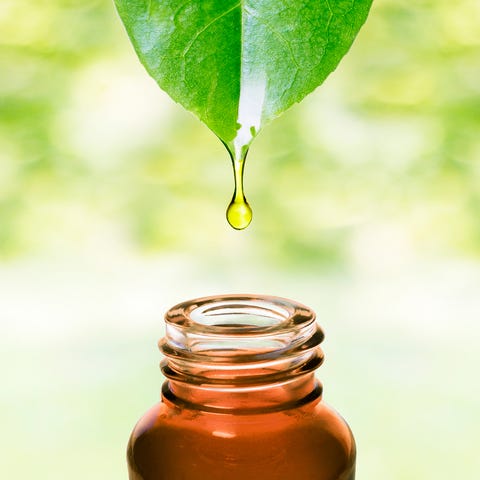
Essential oil dropping from leaf .Aromatherapy.

“Natural” or “All-Natural”

What it implies:
A product is made with ingredients sourced from nature — be they plant, mineral or animal — that are minimally modified.

GH Lab lowdown:
Few ingredients are used as-is from nature. “Natural” doesn’t always mean healthier: Some natural substances can even be harmful.

Trust it when:
You see the Ecocert Natural Cosmetic stamp, which confirms that at least half the ingredients are plant-based.
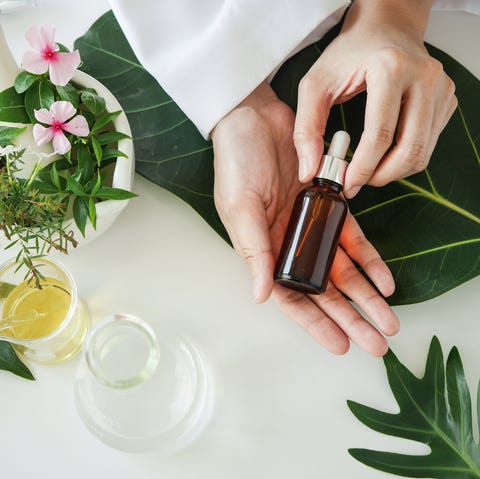
the scientist,dermatologist with the organic natural product in the laboratory.research and development beauty skincare concept.blank package,bottle,container .cream,serum.hand

“Organic”

What it means:
The product’s ingredients and formula are produced without harmful pesticides.

GH Lab lowdown:
This is the only government-regulated term in the “clean” beauty space.

Trust it when:
It is USDA-Certified Organic (contains at least 95% organically cultivated ingredients) or NSF Organic-Certified (contains at least 70% organic ingredients).
Creative layout made of flowers and leaves with paper card note. Flat lay. Nature concept

“Naturally Derived”

What it implies:
Natural ingredients in a product have undergone some chemical processing.

GH Lab lowdown:
When you see this term or a similar one like “natural origin” or “made with natural ingredients,” look for a qualifier that indicates what percentage of ingredients it applies to.

Trust it when:
The product carries the Good Housekeeping Seal, since the Good Housekeeping Institute Labs verify all product claims.
natural cosmetics, a leaf of a fern and a cone

“Chemical-Free”

What it implies:
A product doesn’t contain harmful chemicals like formaldehyde, toluene, and lead.

GH Lab lowdown:
Not all chemicals are created equal; plus, every ingredient (natural or synthetic) is made up of chemicals. They are even part of human biology!

Trust it when:
The claim is ingredient-specific, as in “paraben-free,” and the product has earned the Good Housekeeping Seal (we obtain data to validate all ingredient claims).
Herbal dermatology cosmetic hygienic cream with flowers skincare product

“Nontoxic”

What it implies:
A product is not harmful to humans.

GH Lab lowdown:
Such a wide-ranging term is meaningless unless it refers to a specific ingredient. Almost anything, even drinking water, can be harmful in large quantities.

Trust it when:
Never, since it cannot be proven or disproven.
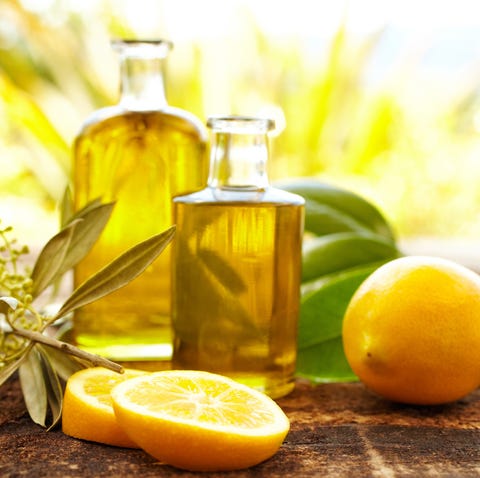
Massage oil bottles with lemons and olive branch

“Green” or “Sustainable”

What it implies:
Products are developed with minimal present and future environmental impact.

GH Lab lowdown:
This broad term covers everything from what’s in a product to how it’s made, packaged, distributed and disposed of.

Trust it when:
You see certifications like Cradle to Cradle for sustainability and the Green Good Housekeeping Seal, which validates both sustainability and product performance.

Why is Clean Beauty Important?

Your skin is the biggest organ and absorbs up to 60% of what you put on it. Yet so many of us are completely unaware of what’s inside our products and believe the government will oversee our safety. The truth is, that there is a serious lack of regulation of U.S. Cosmetics.

The US has not passed a law regulation personal care products since 1938. Since then, more than 80,000 chemicals have been introduced into products on store shelves.  Only 10% of these have been tested for human safety.

Just as a comparison, while the UK has banned nearly 1,400 harmful ingredients in personal care products, the US only partially prohibits 11. The FDA even allows chemicals known to cause cancer including parabens (which are known to disrupt hormone function), phalates  (an industrial chemical that can damage the liver, lungs, and reproductive system), formaldehyde, lead and more.

How can you really go “clean” with your beauty routine?
The BLB Lab’s top tips on making truly natural and sustainable clean beauty choices:

1. Do an ingredient check.
For a deeper dive into ingredients, the Beauty Lab recommends consulting resources like the Made Safe Hazard List and the Environmental Working Group Skin Deep database. Both nonprofits aim to collect the latest science on ingredients and offer recommendations for safety-certified products across categories.

2. Choose fragrance- and dye-free.
Products that contain no fragrances or dyes are by nature better for the environment, as they use fewer ingredients, and people can have sensitivities to both. Even fragrance from natural sources can cause reactions. Plus, brands aren’t required to list the ingredients in “fragrance” on labels, so in many cases there’s no way to know what’s in those products.

3. Pick less packaging.
The more minimal the packaging, the better for the earth. Whenever possible, seek out products with fewer components and without parts or materials that can’t be recycled (aim for codes 1 and 2) and unnecessary elements like outer boxes. Keep your eye out for the winners of BLB’s new Sustainability Awards for beauty, home care and toys, to be announced this fall.

4. Buy (green!) beauty that gives back.
Seek out beauty brands that donate a portion of their proceeds or make a contribution to environmental causes.

What Can I Do Right Now to Protect Your Health?

When I am purchasing a new product from toothpaste or laundry detergent to shampoo or nail polish, I use the Environmental Working Group website. EWG created the Skin Deep Database that includes information on more than 61,000 products and rates them for safety.

My tip is to slowly switch out products one at a time so it doesn’t seem daunting and expensive. I would start with the products you use daily. I love Native Aluminum & Paraben Free deodorant and their sulfate and paraben free body wash! Make sure to stay tune for a full guide!


SELF-SOOTHING PRACTICES Everyone Should Know

You feel raw and emotions are running high. You’ve had a stressful week at work, an over-the-top family weekend gathering, or a falling out with a close friend. You know you need some “me time,” and that it’s clearly a moment for you to regroup. What are your go-tos to reset? Your usual Netflix binge and a tub of ice cream sounds like a slippery slope hurtling toward a shame spiral. Instead, you may want to add some new self-soothing tools to your Honor Thyself Toolbox.

Here are some ways for you to productively reclaim balance to your nervous system and practice extreme self-care for those moments in life when you need it the most.

Give Yourself a Break

If you’re in need of some self-soothing, this is certainly not the moment to take an inventory of your life and your failings. Bring yourself into soft focus by practicing an important self-soothing tool: speaking to yourself with kindness and compassion. I often say to clients, when the proverbial mess hits the fan, “How much more can you love yourself right now, in this moment?” Loving and accepting who you are is a big part of emotional intelligence, especially when you feel raw and vulnerable. And positive self-talk is a valuable skill that can be developed over time. It’s learning to speak to yourself lovingly, even when you feel down, less-than, and at odds with the world around you, and sometimes that feels counterintuitive. So, crank up the kindness and give yourself some props.

Clean and Clear

Clear your home, your heart, your body, and your intimate space:
• Sometimes putting on some music and tidying or organizing feels good to the soul! Making your sacred space beautiful can be uplifting and soothing. Lighting candles and putting flowers around your home once you’re done shifts a mood and can be deeply satisfying. Don’t forget to fire up the sage and to Palo Santo every room, releasing any old and stuck vibes lingering about. We don’t need any outside energies running interference on the home front.

• Often, we get cluttered on the inside too, and we’re in need of an inner Kondo session. You can release old, pent-up feelings by processing them through writing about what’s going on in your head, clearing away the cobwebs of heart and mind, so you can be up to speed with you.

• A purifying soak in a warm tub, with Epsom salt for 20 minutes, can literally draw toxins out of your system. Next-level self-soothing is adding baking soda and essential oils to the mix. And a “psychic shower” is always in order: when you allow the shower to pour over you while visualizing the water clearing all that you no longer need. Just imagine everything you were carrying around being blissfully washed away, spiraling down the drain, gone forevermore.

Hobby It Out

Make a list of things you can do with your hands that you’ve always wanted to, but haven’t made the time for. And then try them out. Painting, jewelry-making, vision boarding, coloring, or even cooking can get super creative. When you tap into your artistic self, the intuitive part of your brain becomes engaged and a calming sense of well-being can have its way with you. Order what you need ahead of time and store it in your closet for that rainy day. Creating itself is soothing, calming, and way more constructive than a binge-tastic Lifetime couch potato run (although that has its merits too).

The Center Is Where It’s At

The center being you, your inner core, your internal compass, your heart center—when you’re operating from the highest, best aspect of yourself. That’s your center. The goal is to live from that place in every area of life, in all circumstances. And that takes practice because it’s not our go-to. So, when we’re agitated or drained, we recalibrate, knowing nothing “out there” is going to soothe us at a soul level. Only we can do that for ourselves, by turning inward for solutions when we really want to look outside of ourselves for the quick fix. And every time we do this, we strengthen that all-important connection to ourselves, at the deepest level of being.

We can learn, over time, to lean into who we are, knowing we have our own back, we are our own best friend, and that every other relationship in our life flows from that place of self-love and true power. So, notice when you feel shaken up, and get quiet. Be with yourself, check in with yourself, and ask what you need next. Speak to yourself with kindness, the same as you would with a child you cared for deeply, who’s needing love and direction. Remind yourself that your relationship to you is the only constant there will ever be. This is the self-soothing master class: be with you, stay close to you, tune in to you, and treat yourself with all the love and respect you deserve. You’ll be amazed how this practice will radically shift your life and open you up to all good things, up-leveling you in ways you never knew were possible.

The truth is, honoring ourselves and self-soothing can mean many things to different people: taking yourself out to a wonderful dinner at your favorite restaurant, going to a day spa for pampering, sitting on a park bench watching dogs and children play with abandon, immersing yourself in a great book, meditating while listening to a great guided visualization. At the end of the day, it’s about taking time to fill up your well that’s dry—and not going to the hardware store for milk. We pause when agitated or on empty, recognize it’s time for some radical self-care, and move into gentle action around our vulnerability. Self-soothing is how we shift into alignment with who we are. And as you continue to expand your self-soothing toolbox, you will ultimately develop a deeper relationship to amazing you.

YES, YES, YES! AN ACTIVE SEX LIFE IS THE KEY TO MAKING YOUR SKIN GLOW

I’ve always wondered how orgasms affect your skin. I mean, everyone knows that sex rivals the treadmill when it comes to cardio. And then there’s that whole post-coital glow that people talk about, which I swear is real. So with those two factors combined, one would think that there’s a scientific reason behind having good skin after an orgasm. Right?

After some research, I’ve stumbled upon some good news: orgasms will make you look younger and glowier! Seriously, after-sex skin is a real thing, and by that we mean super glowy, literally lit-from-within skin. It sounds too good to be true, and you’re probably thinking, well that glow’s not gonna last long, but here’s where it gets really interesting; there are tons of studies that show having more orgasms will actually make you look younger while the short term benefits include decreasing stress, helping with sleep, and improving your skin. Even if you’re still not convinced, it’s worth a try, right?!

The thing is, having an orgasm as often as you can could be the cheapest wellness hack you discover this year. Oh, and for the record, Medical News describes an orgasm as “a powerful feeling of physical pleasure and sensation, which includes a discharge of accumulated erotic tension. Having a successful orgasm has numerous health benefits like your body releases serotonin, dopamine, oxytocin, and prolactin,” says Shirley Chi, MD, a California-based dermatologist. “What that cocktail does is basically reduce the effects of the stress hormone—cortisol—that’s in your body and creates a deep sense of relaxation.” Here’s all the proof and all the ways orgasms are going to make you look and feel ten times better.

Orgasms Will Make You Look Younger

One study examined 3,500 people and found that women who had three orgasms a week looked, on average, 10 years younger than the women who only had two! Another study, which came to the same conclusion, revealed the reasons behind why having orgasms can make you look so much younger:

Endorphins: The release of the ‘feel good’ chemical, endorphins, naturally acts as a painkiller and helps to reduce anxiety, thereby helping you sleep better – and sleep is the key to health!

Human growth hormones: Orgasms cause human growth hormones to release, which helps improve the skin’s elasticity.

Another study by the University of Michigan showed that orgasms increase estrogen levels, which also has anti-aging benefits: it maintains collagen, which we all know is a protein that promotes more youthful skin. Higher estrogen levels also help skin thickness and elasticity, and may even help lock in the skin’s moisture, thereby keeping the skin plumper and more resistant to wrinkles.

Orgasms Will Make You Feel Better

Okay, so that’s obvious, but it will make you feel better in the unobvious ways! When you orgasm, your body releases what people refer to as the love hormone, aka oxytocin. Oxytocin helps to decrease stress by lowering cortisol levels and it also helps release tension by stimulating feelings of warmth and relaxation.

All this oxytocin and de-stressing leads to better sleep, decreased inflammation in the body – less inflammation means less acne and puffiness – while the lower levels of cortisol improve collagen production, helping the skin to heal better.

Orgasms Will Make Your Skin Glow

After an orgasm, the increased rate of blood flowing through your body coupled with blood-vessel dilation means your system is flooded with oxygen, which boosts collagen production that stimulates and repairs the skin. All that increased blood flow also gives your cheeks what’s referred to as an ‘orgasm flush’ – hence the name behind NARS’ iconic Orgasm Blush – as your body pushes all the blood to your skin to make your face look flushed.

Finally, increased blood flow means more water is transferred to your skin (your largest organ), and we all know hydration is essential for a glowy complexion.

So, other than the initial glowier appearance that you’ll get after an orgasm, the results of orgasm often are actually much longer lasting than you’d think – not just for your skin and body, but for your mental well-being too! And the best thing about orgasms is they’re completely free, and you don’t need anyone else to help you!

This of course doesn’t mean you should ditch your skin-care regimen for a more actively-seeking-orgasm life all in order to get a glow. “Sex and masturbation aren’t the answer to acne, but they’re definitely not bad for the skin,” says Dr. Chi. Sounds like doctors orders to me. If you don’t have time to orgasm you can always fake it – no, not like that! – with makeup!

For the ultimate glowy skin, check out this after-sex skin makeup look that Huda Beauty shared:

CBD OIL: AN EFFECTIVE CURE FOR ACNE?

In the world of natural healing, nothing is trending hotter right now than cannabinoid oil, also known as CBD oil. It’s been claimed to heal depression, anxiety, inflammation, and even cure acne! That’s right- acne. Whenever something claims to cure or even help acne, I’m always a skeptic and insist on trying it myself. I did of course, and saw real eye-opening result. Specifically, when it came to reduction of inflammation, sebum production, and stress levels. Did it work for my acne? Yes CBD oil reduced my acne after a month of use. But, we will dig deeper into that in a little bit. Before we get into how it exactly works to treat acne, let’s examine what exactly CBD oil is, how it works, and what it can be used for.

WHAT IS CBD OIL?

First things first, CBD is not weed, okay?! If you’re thinking, “heck yeah, I’m going to get legally stoned”, sorry, but you’d be wrong. It’s true Cannabinoid oil is extracted from the hemp or marijuana plant, but unlike its controversial counterpart, marijuana, it doesn’t contain any physcoactive properties. CBD oil contains higher levels of CBD and low levels of THC; THC being the only chemical in marijuana that causes the physcadelic effects, also known as the “high” feeling when smoked or consumed.

CBD (also known as cannabidiol) is the non-psychotropic component of marijuana or hemp. CBD oil is a mixture of the CBD isolate (pure CBD) + an oil like olive, hemp, or coconut. CBD oil won’t get you high because it doesn’t have the mind-altering properties of marijuana’s tetrahydrocannabinol (THC) content (they are sourced in different ways).

It is also important to know that CBD oil is not the same thing as hemp seed oil. The two are often marketed interchangeably, but CBD oil is richly concentrated in cannabidiol, whereas hemp seed oil only contains trace amounts of cannabidiol, if any.

WHAT DOES CBD OIL TREAT?

CBD oil has been claimed to treat various different diseases. It’s basically considered a cure all, here are some of the diseases or general disorders that have claimed to be cured or significantly helped by CBD oil users:

  • Anxiety
  • Alzheimer’s
  • Appetite
  • Migraines
  • Insomnia
  • Stress
  • Cancer
  • Inflammation
  • Chronic pain
  • Sleep Disorders
  • Epilepsy
  • Acne or other skin conditions

IS CBD GOOD FOR ACNE?

CBD oil is extremely effective when it comes to the treatment of acne in three ways, by inhibiting oil production, decreasing stress, and reducing inflammation.

Regulates Oil Production: Cannabinoid oil, either ingested orally or applied topically, helps to regulate oil production by calming down the sebaceous glands and inhibiting the overall production of sebum. This means that if your face is overly- oily and your pores are easily clogged, CBD may be a good choice for naturally regulating oil production to reduce acne.

Tames Inflammation:A second way CBD helps to reduce acne is through its anti-inflammatory effects. As we are well aware, acne is considered an inflammatory disease in which the pore becomes red, irritated, and highly inflamed. When it comes to systematic inflammation, some people can only find relief with CBD oil, more specifically those with serious joint disorders and continuous muscle pain. It is extremely surprising that in most cases people have reported an almost complete recovery from their chronic inflammation when using CBD oil regularly.

It wouldn’t be so far fetched to think that perhaps because acne is an inflammatory disease where the sufferers naturally have higher levels of inflammation (due to the genetic IGF-1 gene), cannabinoid oil may also help to naturally reduce the inflammation that comes along with it.

Reduces Stress: One of the most celebrated aspects of cannabinoid oil is its ability to reduce anxiety, depression, and stress. CBD oil itself has anti-stress properties, it lowers the heart rate and allows stressed individuals the ability to relax. A study published in the international journal of neurophyschopharmacology shows that it has beneficial therapeutic benefits on the health of humans, preventing the development of chronic unpredictable stress (CUS).

This is inspiring news when it comes to the treatment of acne; because undoubtedlyacne causes stress and stress causes acne.It can be a difficult cycle to break.When stressed, the skin and the brain both create a spikein cortisol which leads to higher levels of inflammation, increased sebum production, and in general, the perfect breeding ground for acne.

With stress, inflammation, and oil production all taken out of the picture, it appears that cannabinoid oil tackles acne in a multifaceted approach, which is exactly what is needed when it comes to chronic adult acne that is unresponsive to topicals and medication.

MY EXPERIENCE WITH CBD OIL FOR ACNE

As someone who believes in dealing with acne in a holistic approach by taking all health aspects into consideration, I was beyond ecstatic to give CBD oil a whirl. It actually started couple of years ago at my friend job, when I told her I was experiencing chronic back pain, she whipped out her CBD oil and insisted that I gave it a try- I did. And I never looked back. The very next day I was so eager to try it again that I went to my local store and bought my own bottle.

Oddly enough I realized after going out that night and having a few drinks I didn’t breakout, it seemed strange but I didn’t really think too hard about it. Next few days, I was off the rails so to speak, I completely went off of my insanely strict diet and basically ate anything I wanted. I went out a few nights, drank quite a bit, stayed up all night, but wait what’s this- still no acne?! At this point I had been taking CBD oil orally for about 2 weeks.

I never thought of it as an acne treatment, it initially began with pain and easing a little bit of social anxiety, but as time went on I was surprised to find that not only was I physically feeling better but I was looking better too!

My skin, perhaps besides a spot or two, had 100% gained full clarity. I was bewildered, after so much research, time, and energy put into my diet and trying to live a healthy lifestyle, I couldn’t understand why all of a sudden (as I was completely off my diet) my skin had been the clearest and least irritated it’s been in months.

Then it dawned on me, besides ditching my old diet and ways, I wondered if there was anything new I had begun using. As someone who is very routine, it was easy for me to quickly figure out it was the CBD oil. My back pain subsided, stress was at a lower rate, and my skin was the clearest it’s been in aloongggggg time. Could this really be the miracle solution people claim it is?

I still continue to use CBD oil, it has been about a month now and I can say that I honestly have seen dramatic effects, physically and mentally. I no longer wake up and worry if I’m going to breakout, I sleep better at night, my mind feels clearer, and overall it has just been an overwhelmingly positive experience. I would highly recommend it to anyone who hasn’t seen results with their current skincare, diet, or exercise regimen and continues to struggle daily with acne. With all symptoms alleviated and no side effects included, I would stretch as far as to say that it is an even more effective treatment for acne than accutane.

How to Use CBD for Acne

If you are interested in using CBD for acne, you might be wondering the best way to start taking it. You might even be wondering if it is safe and legal.

The good news is that CBD is a safe product that millions of people are already using worldwide—and as it does not contain THC, it is legal in all fifty states.

As mentioned before, more research on CBD is underway than ever before, so far studies have been focusing on it being taken orally or transdermally (directly on the skin) when it comes to acne treatment.  For this reason, it is up to you. You might want to start by taking a tincture or edible product, and see if you notice an improvement.

You can also purchase skin care products that contain CBD or purchase a tincture and create your own home treatments (in the long run, this option might save you money and ensure that you know exactly which products are ending up in your skin care products).

Ultimately, the choice is yours— the only thing you have to lose is your pesky acne.

Have you tried CBD oil for acne or the treatment of any other disorder/disease? Let me know in the comments below! Let’s talk all things CBD.