

Embracing Your KINKIER SIDE

No kink-shaming, we’re so past the days of (safe) sexual fantasies feeling taboo. Here’s the deal, it’s common (and normal) to have a little kink in you—how it’s defined and the level of it is different for everybody, of course.

If you enjoy rough foreplay or wild sex, there’s no need to have shame around it. You may not even realize you’re kinkier than the average person until you’re with a new partner, or, on the flip side, you may discover additional desires as you get older. It’s natural that as we mature and gain sexual experience, we learn what we like and want in the bedroom. 

First and foremost, when exploring the world of kink, the two most important things are communication and consent. So once you’re on the same page with your partner, here are some tips to incorporate kinky behavior in your sexual relationship.

Advertisements

Be expressive. 

Say exactly what you want or describe your fantasy to your partner. If you need some ideas, watch a movie or film with a tasteful and steamy sex scene. Or ask your close friends for some tips. Even something small like finding an unusual position could be considered kinky to some. Plus, it’s so hot to surprise your partner with a new move under the sheets (or wherever you prefer to get it on). 

Be open.

Keep the dialogue open with your partner. Even if you’re not 100% sure you want to try something, share your curiosity. If you say your vision out loud and have a conversation about it, you’ll feel more comfortable possibly exploring it the next time you’re hooking up. 

And be open when your partner shares their desires as well (given you’re comfortable with what they want to do). Try not to judge if it’s something you’re not used to. Instead, say “I’ve never done that, and I’ll have to think about if I want to go there.” As we mentioned earlier, everybody has different deeds that turn them on, and there’s no reason to make your partner feel weird for vocalizing them. Just kindly say you’re not into trying it. 

Advertisements

Set and define your limits. 

With any act under the BDSM family, it’s important to set hard and soft boundaries. Sexual scenarios that you’re open to exploring or curious about could fall under your soft boundaries list. Whereas anything you consider off-limits would be on your hard boundaries list. Also, be sure to pick a safe word before entering the rougher side of the kink. 

The content provided in this article is provided for information purposes only and is not a substitute for professional advice and consultation, including professional medical advice and consultation; it is provided with the understanding that BeautyLeeBar, LLC (“Hello Beauties”) is not engaged in the provision or rendering of medical advice or services. You understand and agree that BeautyLeeBar shall not be liable for any claim, loss, or damage arising out of the use of, or reliance upon any content or information in the article.

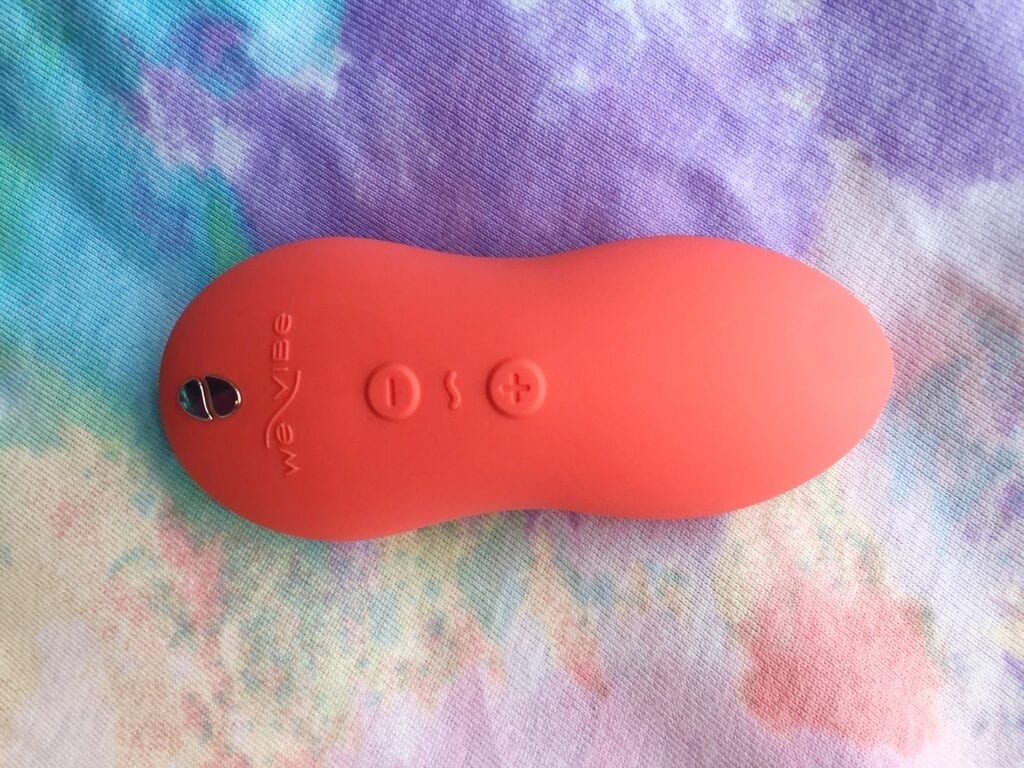
Shop our sex and love picks:
Up next, be the first to know our weekly content by subscribing to BeautyLeeBar.

How to Not MINDFUCK YOURSELF

One of the best pieces of advice I was ever given was this: “Stop standing in your way.” And the thing standing in the way of us and our dreams? FEAR. Fear that we won’t succeed, fear that things won’t work out, and fear that we simply aren’t good enough. It is so easy to allow these fears to have control over us. And when we do, fear limits us by keeping us locked in our comfort zones, driving us to self-sabotage, and keeping us stuck.

But as author Zig Ziglar put it, perhaps FEAR has two meanings, one that confines us and one that empowers us:

Meaning 1: Forget Everything and Run

Meaning 2: Face Everything and Rise

Imagine the potential we would unlock if we began to use fear to help us rise to opportunity rather than run from it. Here are a few tips to help do this:

1. Question Your Thoughts

When the voice of doubt, uncertainty, and fear comes into your mind, take a moment to question its authority. Remember that you are not your thoughts; you are simply the observer of them. This means that you have the power to choose whether to trust and act on these thoughts or choose to ignore, replace, and overcome them. When fear tells you, “Don’t do it, you’ll never succeed,” take a deep breath, pause, and replace that thought with one that empowers you. Perhaps you could repeat a positive mantra such as “I am capable of anything I set my mind to.”

2. Be Ok with Discomfort

When fear tells you to “forget everything and run” and you choose to instead “face everything and rise,” you make that wonderful and liberating choice to step outside of your comfort zone. What inevitably accompanies this decision (to varying degrees) is a feeling of discomfort. Remember that your subconscious finds comfort in the familiar, even if that familiar is not something that serves you. So when you decide to rise (step outside of your comfort zone), your subconscious says to you, “What’s going on here? This doesn’t feel right. This isn’t what you normally do.” This creates a feeling of discomfort. At this point, you have another choice to make—do you allow the discomfort to push you to self-sabotage and fall back into old patterns, or do you sit with that discomfort, be OK with it, and keep going for the greater good?

Advertisements

3. Heal the Source

Fear is almost always driven by a culmination of your insecurities, past experiences, and old pain. When you become aware of your fear, you can allow it to guide you to unhealed wounds that need some love, care, and attention so that you can break the fear cycle.

4. Find Your Reason

When fear rears its ugly head, you need a good enough reason to fight it off and move forward. You need to be clear on WHY you should choose not to Forget Everything and Run, but instead Face Everything and Rise. Ask yourself, “What change do I want in my life and why do I want it?” Allow your desire and passion for personal growth to drive you, undeterred by the doubt in your mind.

5. Get Ready

When you start to live a life that is not governed by fear but is fueled by it, your life will transform in every way. So get ready to let go of the past and embrace the endless possibilities ahead of you.

Essentially, what I’m trying to say is this: fears will come into your mind, but see them for what they are—unwelcome visitors. Don’t allow them to control your behavior or dictate what you do or don’t do. Don’t allow them to rule over you and your future. Do not allow yourself to be mindfucked by your fear. Remember that you always have a choice. So choose to take charge, rise above your fears and doubts, step out of your comfort zone, unlock your fullest potential, and manifest the life of your f*cking dreams!

Advertisements

Roxie Nafousi is a self-development coach, manifesting expert, yoga teacher, and host of the podcast “The Moments That Made Me.” Head to her website to book a spot in her next self-development webinar, schedule a one-on-one advice session, or download one of her meditations or affirmation playlists designed to help you on your manifestation journeys. Follow her on Instagram.

The content provided in this article is provided for information purposes only and is not a substitute for professional advice and consultation, including professional medical advice and consultation; it is provided with the understanding that BeautyLeeBar, LLC (“Hello Beauties”) is not engaged in the provision or rendering of medical advice or services. The opinions and content included in the article are the views of the author only, and BeautyLeeBar does not endorse or recommend any such content or information, or any product or service mentioned in the article. You understand and agree that BeautyLeeBar shall not be liable for any claim, loss, or damage arising out of the use of, or reliance upon any content or information in the article or any other article that is provided on here, BeautyLeeBar.com.

Understanding Your HUMAN DESIGN

This is a defining year for a lot of us. We’re all sitting with ourselves, our vulnerabilities, our resilience, our goals, and our pivots. Many of us are learning a lot about ourselves, while others are seeing where we want to make a change. 

Giving structure to what makes us tick the way we do is an excellent practice for giving these moments clarity. That’s where Human Design comes in. It consists of four types: Manifestors, Projectors, Reflectors, and Generators. There is some fluidity between them, but knowing where we lean can have a great impact on how we approach the next steps in life and understanding how we got to where we are and what our strategy should loosely look like.

Advertisements

Generators

Generators are as kinetic as they sound. To generate means to create, so generators are hard workers. They are typically creative, energetic, and productive. They love to produce and build, and they usually have a clear, defined goal in mind that they work toward until it’s completed and there is something to show for it. 

Generators are the most common human design, so many of you may be feeling akin to this. However, there are two types of generators—Pure Generators and Manifesting Generators. Manifesting Generators can be super intense and headstrong, jumping into big ideas and projects with an unstoppable force of energy. They need to keep in mind that patience and consideration pay off when making big moves or launching a big idea into reality.

Pure Generators are a bit more fluid. They go with the flow, are patient and resilient, and are deeply connected to nature. They can hesitate to take risks, however, and get stuck in a state of deliberation, dwelling on perfectionism. Pure Generators need to remind themselves to stay present, which includes practicing fearlessness.

Advertisements

Projectors

Projectors are guides. They help to lead other people both directly and indirectly, by being sources of inspiration via their infectious energy. They aren’t selfless leaders necessarily, as they learn a lot about themselves through their experiences with other people and relationships. They are curious, smart, sensitive, and loving, and are deeply intrigued by others and creating relationships.

Projectors need to be seen for who they are, accepted and loved for it more than anything else. It’s what drives them and their purpose. Like generators, Projectors work very hard to be seen and recognized. However, sometimes this diligent work goes unnoticed by a passive employer or a misunderstanding partner, and it can make Projectors feel exhausted or self-conscious, even annoying. Projectors need to communicate their needs clearly and trust that the universe will invite them on their path, instead of trying to force success and relationships. 

Advertisements

Manifestors

Manifestors are much rarer. They love freedom and typically dislike authority, and like to make the first move, so to speak. They are proactive and energetic, having really powerful energy that either tends to repel people or let them in selectively. Some might describe Manifestors as having a “strong personality,” even if they aren’t loud or forthcoming, just because of their intense aura.

Manifestors have a strong need to communicate their goals and intentions with others, and they must do. Their job is to inform those around them—employers, friends, family, lovers—of their dreams and plans before taking action. This is how Manifestors can flex their powers without stepping on anyone’s toes. 

Advertisements

Reflectors

Reflectors are the rarest human design type of all. They are known as incredibly open and sensitive beings and can be supportive and beneficial friends to anyone, regardless of others’ energy, because they don’t absorb the energy of others. This doesn’t mean that Reflectors are cold—they can be very warm and empathetic. It simply means they have the power to be wise and helpful, unaffected in a deeply personal way by those around them.

What makes Reflectors stand out against the other human design types is that they feel deeply connected with the moon. It is said that Reflectors should wait for a full lunar cycle (28 days) before making important decisions. They benefit from the pause, the cleansing of the situational energy proximity, and the gathering of information before jumping to any conclusion.

WHICH ONE ARE YOU? COMMENT BELOW!

Advertisements

How to Handle Things THE SECOND YOU’RE TRIGGERED

None of us is above being triggered. Even the most evolved person in the room—someone with a healthy, trained mindset—will struggle from time to time. We all have moments when we’re tired, we’re drained, and our batteries are running low. And it’s at times like these when we’re most open to being triggered.

Everything goes wrong one day, and suddenly we can fall victim to our situations. Someone says something that doesn’t sit right with us and we get defensive, or vice versa. When we’re triggered, we tend to react as if everything we’re feeling in that moment is the unequivocal truth. In actuality, it’s usually just our one-sided perception of the story, and it’s driven by past hurts.

And so begins our downfall.

Advertisements

Adding fuel to the fire

The second someone feels triggered, their defenses go up. And the reaction will often create an equally defensive reaction in whoever else is involved. It’s like a chain reaction.

When somebody feels like they’ve been made into the bad guy in a situation, they’ll naturally want to defend themselves and justify their actions. During tense moments, those reasons are often at each other’s expense. We say, “You made me so mad,” pushing that discomfort onto them. But they fight back with “Well, I wouldn’t have said that if…,” getting defensive themselves. It’s a deflection of guilt or upset, and we begin the blame and justification dance that has no winners and often leaves all parties feeling sore.

When both parties are triggered and defensive, neither is dealing with the truth of the moment. Neither is accepting the role they may or may not have played. Perhaps nobody did anything wrong, but defensiveness has certainly escalated matters. And now both sides are fighting completely different fights based on differing views of the same situation, and no one is dealing with what’s going on at the moment. Which is that both sides are dealing with some past sore point.

We react like the complaint now is the truth—when we’re just triggered by an emotional echo. Whether one person feels triggered or both people do, we fall victim to our reactions, focusing on the often minor current issue. Both add fuel to the fire, and nobody wins. Before we know it, two people who love each other have just fallen out over something utterly trivial.

Advertisements

Everything links back

In these instances, the exact details of why we became triggered in the first place are largely irrelevant. The point is that, even though a real comment or action might have triggered us, our reaction isn’t about the actual situation at hand.

Advertisements

We’re only ever triggered by the past, and our triggers will always stem back to something from our childhood. For the first 20 years of our life, life happens to us. Then, we spend the rest of it dealing with what happened to us.

But if we’re not aware of this—and neither is the other party—how can we find a resolution? We aren’t walking in each other’s shoes. We can’t know exactly where they’re coming from. We’re two people with different pain points and perspectives. It’s like a conversation where both parties are speaking different languages and wondering why no one is making any sense.

Advertisements

Learning to let go

What has us stuck in these triggered moments is running over things again and again. We’re trapped trying to make sense of truth in the present moment that simply doesn’t exist there but in our past.

So, to move past this, we need to work on our awareness and try to catch ourselves. If someone is consistently talking over us or not listening and it triggers us, we should ask ourselves, who first did this to us? Was it a parent? Or a sibling? When did we first not feel heard or respected in conversations? If we can look back and grow our awareness of what we need at the moment, we can explain to someone what triggers us now, what our sore point is, and what we need to help us feel heard and understood.

Also, it’s worth knowing we will often put ourselves around people who will repeat behaviors we didn’t like when we were younger, so we can continue working out how to handle it and grow past it. This is a subconscious choice, but one we all make. Ever noticed someone dealing with the same things again and again, like repeating the type of significant other they go for? The more we engage with the tense, defensive moments today, the more we are buying into them being real and about us now. They aren’t about now.

Instead, we want to notice the moments when we’re triggered. Or when we might be triggering someone else. It’s no easy feat. It’s an ongoing exercise in strengthening our awareness and ability to detach from what is here, to see what is going on there in our minds and our past. And the more we practice this, the more evolved we become, the more we strengthen this muscle, and the quicker we will let these moments go when they arise.

Advertisements