
How to Handle Things THE SECOND YOU’RE TRIGGERED

None of us is above being triggered. Even the most evolved person in the room—someone with a healthy, trained mindset—will struggle from time to time. We all have moments when we’re tired, we’re drained, and our batteries are running low. And it’s at times like these when we’re most open to being triggered.

Everything goes wrong one day, and suddenly we can fall victim to our situations. Someone says something that doesn’t sit right with us and we get defensive, or vice versa. When we’re triggered, we tend to react as if everything we’re feeling in that moment is the unequivocal truth. In actuality, it’s usually just our one-sided perception of the story, and it’s driven by past hurts.

And so begins our downfall.

Advertisements

Adding fuel to the fire

The second someone feels triggered, their defenses go up. And the reaction will often create an equally defensive reaction in whoever else is involved. It’s like a chain reaction.

When somebody feels like they’ve been made into the bad guy in a situation, they’ll naturally want to defend themselves and justify their actions. During tense moments, those reasons are often at each other’s expense. We say, “You made me so mad,” pushing that discomfort onto them. But they fight back with “Well, I wouldn’t have said that if…,” getting defensive themselves. It’s a deflection of guilt or upset, and we begin the blame and justification dance that has no winners and often leaves all parties feeling sore.

When both parties are triggered and defensive, neither is dealing with the truth of the moment. Neither is accepting the role they may or may not have played. Perhaps nobody did anything wrong, but defensiveness has certainly escalated matters. And now both sides are fighting completely different fights based on differing views of the same situation, and no one is dealing with what’s going on at the moment. Which is that both sides are dealing with some past sore point.

We react like the complaint now is the truth—when we’re just triggered by an emotional echo. Whether one person feels triggered or both people do, we fall victim to our reactions, focusing on the often minor current issue. Both add fuel to the fire, and nobody wins. Before we know it, two people who love each other have just fallen out over something utterly trivial.

Advertisements

Everything links back

In these instances, the exact details of why we became triggered in the first place are largely irrelevant. The point is that, even though a real comment or action might have triggered us, our reaction isn’t about the actual situation at hand.

Advertisements

We’re only ever triggered by the past, and our triggers will always stem back to something from our childhood. For the first 20 years of our life, life happens to us. Then, we spend the rest of it dealing with what happened to us.

But if we’re not aware of this—and neither is the other party—how can we find a resolution? We aren’t walking in each other’s shoes. We can’t know exactly where they’re coming from. We’re two people with different pain points and perspectives. It’s like a conversation where both parties are speaking different languages and wondering why no one is making any sense.

Advertisements

Learning to let go

What has us stuck in these triggered moments is running over things again and again. We’re trapped trying to make sense of truth in the present moment that simply doesn’t exist there but in our past.

So, to move past this, we need to work on our awareness and try to catch ourselves. If someone is consistently talking over us or not listening and it triggers us, we should ask ourselves, who first did this to us? Was it a parent? Or a sibling? When did we first not feel heard or respected in conversations? If we can look back and grow our awareness of what we need at the moment, we can explain to someone what triggers us now, what our sore point is, and what we need to help us feel heard and understood.

Also, it’s worth knowing we will often put ourselves around people who will repeat behaviors we didn’t like when we were younger, so we can continue working out how to handle it and grow past it. This is a subconscious choice, but one we all make. Ever noticed someone dealing with the same things again and again, like repeating the type of significant other they go for? The more we engage with the tense, defensive moments today, the more we are buying into them being real and about us now. They aren’t about now.

Instead, we want to notice the moments when we’re triggered. Or when we might be triggering someone else. It’s no easy feat. It’s an ongoing exercise in strengthening our awareness and ability to detach from what is here, to see what is going on there in our minds and our past. And the more we practice this, the more evolved we become, the more we strengthen this muscle, and the quicker we will let these moments go when they arise.


Advertisements

OLD VS. YOUNG PARTNER: What’s Better?

In high school, I always had a crush on the “older” guy (me a freshman, him a senior—back then, it seemed like such an age disparity), and I never looked twice at the dudes my year or in the grades below me. I had concocted this fantasy that an older man and woman would save and protect me. Some may call it “daddy issues;” I’ll leave that to the experts.

At 18, I encountered my first taste of the ubiquitous older man. The story is so cliche. I worked in this Orthopedic Center and met this 40 something-year-old who worked in the mall I would travel to for my boss. Long story short, we had an epic romance. No, sex was involved. Yes, feelings were. I look back on this tryst with somewhat fond memories, and I know now that it was the beginning of a pattern that I would come to live out for a good portion of my 20s: the older man/younger woman scenario.

Advertisements

Without going into my entire sexual and dating history, let’s say I’ve had more than one dalliance with a (much) older man and woman. I’m not talking two or even five years older; we will leave it at that. What I’m noticing in my early 20s is that I gravitate toward older men/women because I found them to be more mature and stable. They were successful and (in many cases) powerful. They took care of business, in more ways than one. 

And then, one day, as I was rehashing my evening with one said an older man to a girlfriend, she stopped me mid-sentence and blurted out: “Just imagine his a** in five years.” I gasped. OMG. Think Jack Nicholson in the hospital scene of Something’s Gotta Give, and you’ll get the image that plagued my mind from that moment on. I’ve never been able to get it out of my head.  

Soon after, my love affair with the older man ended, and as I approached my mid-20s soon, I noticed a new trend emerge: the younger man. To be fair, this seemed to be a trend that exploded in pop culture too: Madonna, Janet Jackson, JLo—they were all fans of the younger man. And the 30-somethings are starting to bore me; even the 40-somethings now wanted the 20-somethings, but the 20-something dudes? Well, let’s just say they were very eager to accommodate. After a rather tumultuous breakup with a boyfriend of two-ish years, my ego yearned for some serious boosting, and the more I hung out with guys my age, the more I remembered what FUN was all about. Sure, perhaps it was all a bit more no strings attached when it came to partnering up, but for a flirty fling, the younger man had me at “you’re hot.”

Advertisements

So, yes, I’ve sampled both younger and older partners. I’m in no way a dating pro, but here are my pros and cons to each.

NOTE: I am not generalizing age groups here. OK, I am slight—but these are my experiences, and if even one of them rings true for you… take it, comment, and feel free to leave the rest.

OLDER MEN

PROS – They know what they want. They’ve had enough time to test the dating waters and—unless they cannot commit, which could certainly be the issue—the older man is laser clear on what he’s looking for.

CONS – They know what they want, and they’re less malleable to change, which likely means that if they are inept at communicating or if they don’t remember important dates like your birthday or anniversary, chances are they never will. That ship has sailed, to keep with the water metaphor.

PROS – They have their sh*t together. At least when it comes to a job, a place to live, a means of transportation—and if they don’t have these things… run, don’t walk, away. 

CONS – They come with their fair share of baggage (and I’m not just talking about the bags under their *slightly* older eyes). The older you date, the more baggage your partner will have. It just comes with the territory. Think exes, kids, business failings, insecurities, etc. 

PROS – They tend to provide the compelling conversation. If you’re one who likes talking politics, international relations, distilling whiskey, etc… the older man can be a veritable teacher of sorts. 

CONS – They have a schedule, which isn’t necessarily a con for everyone—for some this may even be a pro. But I’m not into the 10 p.m. lights out, 6 a.m. rise and shine, and can’t even meet me for an impromptu lunch because… he doesn’t take lunch, and work comes first—how do you think he can afford that nice house and those pristine wheels? YAWN.

Advertisements

YOUNGER MEN

PROS – Confidence. They haven’t been burdened by as many rejections, or it just hasn’t bothered them yet. So they barrel in at 65 miles per hour… with the compliments, the texts, and the kisses. The dating rules? Not in their vocabulary. 

CONS – The thing about an overly confident male is that you’re likely not the only one he’s DMing, sexting, or even kissing. Protect your heart (and your other precious parts).

PROS – They’re spontaneous. Think of a weekend jaunt (whatever town is drivable from where you live) at a moment’s notice. Sex in the hotel lobby bathroom. Showing up at your place in the middle of the night because you were on their mind. Spontaneous gestures are exciting and, for some, a great reminder that your partner doesn’t just talk the talk but can also walk the walk. Aka: actions speak louder than words.

CONS – They can be immature. Like the younger guy who invites you to the house in Miami that he rented for the weekend. You show up, only to find that a dozen other youngsters are milling about, smoking weed, drinking, playing video games. You just wanted some sexy time, so you manage to pull your dude away from the keg and find a random room with a futon and an overflowing ashtray. The next thing you know it’s 5 a.m., your back is killing you from the futon mattress, and some half-naked guy just walked past you to puke in the bathroom. And your guy has slept through all of it. 

PROS – They speak the language of flirtation—and they’re damn good at it, too. This complements the confidence pro above, but in my experience, younger men are just so much less intimidated with what they say and what they do to their lover.

CONS – They’re less serious about everything in life—and that includes you. When the BBD comes along, you’re lucky if you even get a “sorry, we’re done” text. Much more likely he’ll ghost you and you’ll find out about his new girl after some blog writes about him and his new girl. Don’t try to have a “closure” conversation with the younger man, it’s not his “vibe.” 

Advertisements

FINAL THOUGHT: As people love to say, age is just a number. But it truly is… (as long as everyone is 18 and older) what matters most is timing and compatibility. What you want will change at different stages in your life, so go for the person who makes you feel like the best version of yourself, regardless of their birth year. Older guys ain’t shit either so do what makes you feel good ladies and gentlements. Just be careful though because soul-ties do exist.

Advertisements

How to Properly Introduce New SKINCARE INGREDIENTS

It can be tempting to totally renovate our skincare routine when our skin is not behaving. And for some of us skincare junkies, the arrival of a new active ingredient or miracle treatment can have us rushing to the online checkout and slathering our mugs with the latest buzzworthy potion. But we need to slow our roll. 

Our skin needs time to acclimate to new ingredients, especially intense, effective actives. Otherwise, we risk reactions like dermatitis, peeling, dryness, redness, and breakouts. Here’s how we should go about doing that.

Advertisements

Read product reviews.

Ok, this may sound either boring or like duh to some, but there is some value to be found in reviews. Look for specifics, like if it made a rash appear, if it did nothing at all, if someone suffered a reaction. Some reviewers will share personal information about their skin so that we can compare. And to the people who do this, thank you so much. Sincerely.

Patch test.

If the product we’re trying out has intense, clinical actives in it, we want to make sure our face isn’t going to explode. Try it on an extra-porous area like the T-zone (opt for chin, near the nose, or on the forehead). This should give an idea, in at least 48 hours, whether the product is a major no-no for us. We can likely skip this step with most super-simple, natural, clean products unless we’re sensitive. In that case, always patch test.

Advertisements

One thing at a time.

There comes a time when we get fed up and want to try everything, right now. We want to try the new tincture, herbal supplement, face mask, cleanser, and serum all at once. Sometimes, the results are amazing! But other times, we suffer some consequences. In order to understand which products are helping and which are causing problems, we need to pare down how many new products we are using. Just stick to one at a time, and give it at least two weeks of consistent use (unless there is an immediate reaction; then stop immediately).

Don’t do it before a big event.

Just in case our skin will not be pleased with the latest active ingredients we have our sights on, it’s best we don’t get too excited before a date night or big event. The last thing we want is a rash or the beginnings of an inflammatory purge breakout just when we’d hoped to look our very best.

Always ice.

On the occasions that our skin simply is not loving our latest product, of course, stop using it right away, and rinse with cool water. We want to cleanse thoroughly and ice the area to keep inflammation down. When in doubt, always ice. Stay away from steams and hot water, which can make the reaction worse.

Advertisements

POSTS YOU’LL ENJOYS:

APPLE CIDER VINEGAR GUMMIES NOW EXIST, AND I PUT THEM TO THE TASTE TEST

GOLI NUTRITION | APPLE CIDER VINEGAR GUMMIES

FRAGRANCES TO GIFT YOUR LOVED ONES WITH, PURELY BASED ON PERSONALITY

HEALTHIER WAYS TO USE FRAGRANCE

Yes, You Should Be Cleaning Your Spoolie Brushes — Here’s How

Spoolie brushes are a secret makeup weapon that can be used for everything from de-clumping mascara to brushing up your brows to epic proportions. Whether you’re using a mascara wand, a brow gel or an individual spoolie, like any makeup application tool,  they need to be cleaned every once in a while. Here, we’re sharing how to do it.

Advertisements

How to Clean Every Type of Spoolie

Before cleaning your spoolie, identify what material it’s made of, says Chanel Temple, Global Makeup Artist at Hourglass Cosmetics. According to Temple, most are made of synthetic nylon, which is easy to clean. 

Advertisements

How to Clean Synthetic Spoolies

STEP 1: For synthetic spoolies, all you need is a paper towel and a makeup brush cleaning product to sanitize and remove product buildup. Try the NYX Professional Makeup On the Spot Makeup Brush Cleaner. Apply the formula directly onto the spoolie before twisting it in the paper towel — a method that will get your brush squeaky clean.

STEP 2: Next, leave your spoolie out overnight to dry before using it again.

Advertisements

How to Clean Natural Bristle Spoolies

STEP 1: If your brush is made out of boar hair or natural bristles, Temple recommends opting for a brush shampoo like the Sigma Professional SigMagic Brushampoo Liquid Makeup Brush and Sponge Cleaner that’s free of alcohol to avoid damaging the material. Run your spoolie under water and place a small amount of the shampoo on the palm of your hand. 

STEP 2: Run your spoolie back and forth over the palm of your hand repeatedly. 

STEP 3: Once the spoolie is foamed up, rinse thoroughly under the water until the suds are completely gone.

STEP 4: Pat it dry with a towel, and leave your spoolie out overnight to fully dry.

Advertisements

How Frequently Should You Clean Your Spoolies?

If you clean your spoolies every one to two weeks,  they can last for years, so consider it an investment into your makeup-loving future. Over time they may lose a few bristles, says Temple, which is a sign you should throw them out.

Our Favorite Makeup Spoolie Products

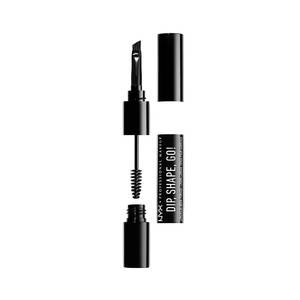
NYX Professional Makeup Dip, Shape, Go! Brow Pomade

This brow pomade not only comes with a long-lasting, eyebrow maximalist-friendly formula, it also features a handy spoolie tool. Simply apply the pigment with the angled brush, and then blend in the color with the dual-ended spoolie for a natural, bushy finish.

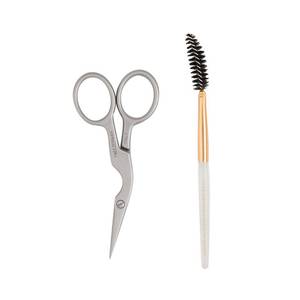
Tweezerman Brow Shaping Scissors & Brush

If we had a dollar for every time we needed a tiny scissor for errant brow hairs or a spoolie to de-clump a mascara, we wouldn’t be rich, but we’d certainly have enough money for a few Urban Decay Naked Palettes. Enter the Tweezerman Brow Shaping Scissors & Brush.

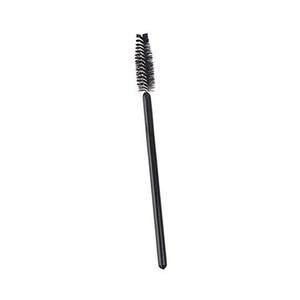
Leegoal Disposable Eyelash Brushes

Whether you’re an aspiring makeup artist or just want to keep a few spoolies in rotation, pick up a pack from your local drugstore or from Amazon. The best part? They’re only $6 a set so you can pick up a few without breaking the bank.

Advertisements

POSTS YOU WILL LOVE: