8 Bad Skin Habits to Kick

When it comes to our skin, we’re all just out trying to do our best, right? We test out products, wash our faces regularly, moisturize... but it turns out that some of our most persistent habits can be very bad for our skin. The good news is that most of them have easy fixes—so you can turn bad habits into good ones.

1. You don’t clean your makeup brushes.
Besides being good for keeping your makeup looks #onfleek, cleaning your makeup brushes on a regular basis is also a fundamental aspect of a good skin care routine. “If not properly cleaned, makeup brushes can carry hordes of bacteria that can cause serious damage to the skin. “Not to mention the buildup that gathers on dirty makeup brushes causes them to deteriorate quicker, affecting your makeup application.”

Tragic all around. But the key to avoiding this travesty is simple: Clean your tools regularly. You should spritz your brushes once a week with a cleansing spray and deep clean them once a month with shampoo or gentle soap. This is the best way to prevent buildup from causing infection, as well as problems like acne and irritation.

2. Not Exfoliating
exfoliation. As you get older, your need for regular exfoliation increases. Plus, when you’re using potent anti-aging products, you want to make sure they are being well absorbed.

Of course, there is such a thing as too much exfoliation, so you need to find a balance. For most people, a couple times a week does the trick. As you age, this may be closer to 3 or 4 times a week.

Here are my two favorite body scrubs  that I have been using for a while:

Hold my drink has a soft and fluffy texture and can be used as a daily exfoliator. Coconut oil and vitamin E seeps into your skin as you exfoliate and tease out ingrowns. Bonus, it literally smells like a coconut in a jar without any added artificial fragrance.

What It Does

-Moisturizing organic coconut oil melts into your skin.

– Natural sugar cane gently buffs away dead skin. Perfect for dry legs, arms and even your lips.

-Vitamin E is full of antioxidants and amazing at targeting fine lines and dryness.

Goddess Body Scrub is a gentle, salt-based body exfoliant that hydrates skin with organic coconut oil, scented with dry lavender buds and few drops of lavender essential oil. Goddess Body Scrub is highly moisturizing and gently exfoliating blend of organic coconut oil. It leaves the skin silky, soft, glowy, and hydrated with light scent of lavender.

These amazing scrubs exfoliates while providing nutritive minerals. It’s the perfect thing to use before putting on a moisturizing mask. If you have oily skin or otherwise sensitive skin, be careful not to exfoliate too vigorously. 

3. Leaving Your Makeup on Overnight
You’re tired. Your eyelids are closing against your will. You’re almost considering sleeping in your jeans. Stop! Wait! It’s time to wash off your makeup.

Naked skin is happy skin. Especially if you’re wearing chemical makeup brands, you want to give your skin a break over night.

In the same vein, make sure to wash your makeup off before working out. When you break a sweat and your pores open up, dirt, oil and, yep, makeup will get in there.

Also, unless you want to wash your pillow cases every day (Ouch! Said mother earth) you should do your best to keep them clean in between washes. Another reason that washing your face before bed is a must!

4. Overcleansing
Don’t consider this a free pass to skip washing off your makeup at night: If your skin is dry skin, lather up less often, since doing so strips away natural oils. Wash with a creamy or oil-based cleanser at night (they’re gentler on dry skin) and rinse with just water when you wake up. “It’s enough to clean your skin in the morning, and you’ll retain more of your own moisturizing oils,” says Ellen Marmur, a dermatologist in New York City. Try L’OrĂ©al Paris Pure-Clay Purify & Mattify Cleanser and/or St.Ives Blackhead Clearing Green Tea Scrub. 

5. Not Sleeping Enough…
Getting less than seven hours of shut-eye can make your skin duller and fine lines (like the ones around your eyes) more obvious. Your skin can rebound from the occasional late night, especially when you’re young, but a few in a row will catch up with you. If you have trouble falling asleep, don’t start watching Black Lightning or The Good Doctor reruns: Bright screens suppress melatonin, a hormone that makes us sleepy and regulates our circadian rhythms. That second part is a biggie. When melatonin levels drop and your circadian rhythm gets thrown off, your skin cells can’t turn over as efficiently, causing even more wrinkles and dullness over time, says Phyllis C. Zee, the director of the Center for Circadian and Sleep Medicine at Feinberg School of Medicine, Northwestern University Hospital in Chicago. A warm shower or bath before bed is much better for inducing sleep, says Michael Breus, an author, a psychologist and sleep medicine expert.Image result for white pillow on white bed sheets blog post

 …And Not Sleeping Smartly
Your sleeping conditions matter. First things first: your pillowcase. “It collects oil, dead skin cells, bacteria, and excess night creams. “As you toss and turn, all of that is deposited right into your pores. I recommend changing them at least once a week (twice is better). While you’re at it, swap out the regular cotton version for something smoother, like satin, silk, or Egyptian cotton, since rough pillowcases can actually cause wrinkles. And if I can convince you to make just one more change, plug in a humidifier. It counteracts the skin-drying effects of air conditioning and heat.

6. Overlooking Sunscreen in Certain Areas  Related image
Slathering SPF over your entire face (even in the winter) is a good start, but you can’t ignore the rest of your body—and certain areas are missed too often. “In my practice, I’m seeing an epidemic of skin cancer along the hairline, the jawline, and the ears,” says Dennis Gross, a dermatologist in New York City. Apply a broad-spectrum sunscreen with an SPF of 30 or higher all over your face and exposed skin from the neck down. And keep in mind that light cotton clothes won’t totally protect skin on their own in the summer. 

7. Forgetting Face Wipes
Washing your face before bed or after spin can be a pain. We get that. But letting makeup, dirt, and bacteria linger can cause breakouts, dullness, and even wrinkles over time. Which brings me to face-cleansing wipes: A single towelette removes a day’s worth of grime, and you won’t need to haul yourself to the sink. Try Neutrogena Makeup Remover Cleansing Towelettes, AVEENO ULTRA-CALMING MAKEUP REMOVING WIPES, and AVEENO POSITIVELY RADIANT MAKEUP REMOVING WIPES. Keep them on your nightstand or in your purse so you actually remember to use them.

8. Smoking Image result for no more cigarette gifs
Please, I beg of you, just quit. On top of a long list of evils, smoking breaks down elastic fibers in the skin (which is why smokers’ complexions look yellow) and revs up the enzyme responsible for breaking down collagen (and that definitely leads to wrinkles), says Francesca Fusco, a dermatologist in New York City. Your skin can bounce back once you quit. “Within two weeks, you see improvements,” she says. “The texture improves; it’s a little smoother. Over time, the brightness comes back.

You can achieve the skin you want! By ditching some of your bad habits and adopting some good ones, you could find yourself waking up to younger, more radiant looking skin!

What skin habits do you want to break? Have you broken any of these already? Tell me in the comments below!




The 6 Most Common Beauty Questions – and Some Helpful Solutions

Q: What’s the cause of under eye dark circles – and what treatments can help?
A: Occasional dark circles under the eyes can be caused by factors as simple as lack of sleep, dehydration or an allergy – particularly congestion in the central facial and nasal area. Dark circles can also be hereditary, and are more likely to occur in certain ethnic groups.
But for many folks, dark circles are simply a sign of the aging process at work. As we age, the fat pad under the eye thins, allowing blood vessels underneath to show through. Moreover, as we age, blood flow to the skin beneath the eye becomes sluggish, further increasing the darkness in this area.

While sometimes a skin-lightening product can help fade dark circles, the American Academy of Dermatology reports that creams containing a combination of Vitamin K and retinol have an even more powerful lightening effect. The vitamin K works directly on the blood vessels, while the retinal helps re-build collagen, potentially improving the appearance of dark circles. .
The best way to hide dark circles is with a cosmetic concealing product. However, it’s important to choose one in a shade as close to your natural skin tone as possible.. Choosing a concealer that is too light, particularly white, will cause dark circles to appear gray and call more attention to the problem.

Q: If I use makeup with sunscreen, do I still have to apply sunscreen separately?
A: That all depends on the SPF (sun protection factor) rating of your make up. If it’s 15 or more then it will likely be enough – as long as you apply it properly and in a thick enough layer to get maximum protection. If your makeup contains less than a 15 SPF, then you need a layer of sunscreen as well. But remember, SPF numbers are not cumulative. So, if your foundation has an SPF of 10 and your powder has an SPF of 8, the maximum protection you are getting is 10. Moreover, remember that sun exposure degrades sunscreen , so you have to reapply it every few hours. To avoid having to redo your make-up, check out mineral powders or mineral veils. These loose powders contain a natural sunscreen and can be dusted on top of make-up without getting that heavy, caked-on look.

Q: What’s the best way to deal with age spots – and keep hands from aging?
A: These brown spots (also known as “age spots” or “liver spots”) are actually the result of sun exposure. So one way to avoid them is to protect your hands from the sun. Doing so will not only reduce the risk of age spots, but also reduce collagen breakdown so your hands will wrinkle less.
Rarely found in those under 30, age spots are age related, so a lifetime of sun exposure will give away your birthdays! If you use sunscreen from early in life, you will reduce the risk of age spots in later years. But it’s never too late: using sunscreen after age spots develop will help prevent more from appearing.

While skin lightening products will help diminish some age spots, only permanent treatments, such as lasers or chemical peels, can remove them completely. One caveat: While these treatments are effective, skin on the backs of the hands contains fewer blood vessels than the face, so healing can take longer.

Q: Why do anti-oil shampoos seem to make my hair oilier?
A : The problem is known as “rebound” oil production – a condition that occurs when you strip so much oil from your hair that it sends a message to your sebaceous glands to produce more oil. The greatest offenders are harsh shampoos, some of which are formulated for oily hair. To combat the problem, choose a shampoo for “dry,” “sensitive,” or color treated hair. These products are designed to give the most thorough cleansing without stripping the hair. So not only will you effectively remove all the oils, you won’t trigger the “oil alarm” when doing it.

This holds true for oily skin as well. Indeed, experts say the body’s natural response to skin irritation is oil production. So, the harsher the cleanser – and the more oil you remove – the more oil your sebaceous glands will produce. So what type of cleansers should you use? Look for products marked “gentle,” like those recommended for dry or sensitive skin. They will remove excess oil, while leaving the barrier of fatty acids in tact. This will protect skin and keep oil production under control.

Q: How do I select the right moisturizer for my skin type?
A: It seems like there are zillions of moisturizer choices out there – and no way to know what will work best for you. But experts say if you use your skin type as a guide, you can substantially narrow down product choices.
Here’s a quick guide that can help:

  • If your skin is dry and/or sensitive – meaning it is easily irritated – look for a moisturizer formulated for that skin type.
  • If your skin is oily and acne-prone, your moisturizer should be labeled “non-comedogenic”.
  • If you wake up with your face feeling parched, then in addition to whatever daytime moisturizer you use, you also need a night moisturizer – one that is generally richer, thicker and heavier than a day cream.  

Q: Why does my hair color fade, and what can I do about it?
A: As anyone who colors his or her hair can tell you, the shade you had when you left the salon may not be the same color you end up with 3 weeks later. This is particularly true for blonde hair, which tends to change color the most.

One cause of fading hair color is oxidation, a natural process that occurs when oxygen molecules in the air attach themselves to color molecules in your hair. The end result dulls and fades hair color. While there’s not much you can do about it, you do have power over one contributing factor: sun exposure. Indeed, the sun fades hair color much the same way it fades your living room drapes. Keeping your head covered will dramatically reduce the sun’s fading power.

Shampoo and your water type can also influence color fading. Hard water that is mineral heavy (particularly well water) can leave deposits on hair that dull and fade color. This is exacerbated if you use a harsh or medicated shampoo, which can strip color as well. To reduce fading, choose a quality shampoo with gentle ingredients, and look for products for color treated or damaged/dry hair. You might also want to try a color enhancing shampoo, a temporary product that revitalizes hair and pumps up color between salon appointments. However, be sure to tell your colorist about you trying these kind of shampoos and ask him/her for some recommendations. Some can impact the performance of permanent hair coloring.


beauty 50

If you have hyperpigmentation spots due to breakouts and sun exposure, the good news is you’re not stuck with them forever. Follow the tips below and you’ll start to notice the diminish appearance of dark spots in as quickly as four weeks and prevent new spots from cropping up. Read on for your spot-fading game plan.

1. Do Not (I Repeat, Do Not) Pick That Zit

Yes, it’s hard to resist. But if you’ve given into temptation in the past, you know the ugly aftermath: a red or brown mark that could scar your face forever. Instead, treat your marks with a 1% hydrocortisone cream 4 times a day (you can pick up a tube at any drugstore). Apply it around the same time every day. Hydrocortisone is an anti-inflammatory, so it’ll soothe redness and swelling. It’s better than traditional zit zappers that use salicylic acid or benzoyl peroxide to dry out pimples, which can potentially dry out your skin and lead to more irritation. Want a more natural safe alternative? Try Aloe Vera, Baking Soda, Coconut Oil, Cucumber, Honey, Lemon, Potato Juice, Rose Hip Seed Oil, Sugar Scrub, and Vitamin E. After that, put Visine on the pimple to make it look less obvious for a few hours. Want to speed things up? Use a clay mask. Popping the sucker can damage skin tissue and make your pimple a lot worst.   clay

2. Use a Skin-Cleansing Brush/Pad 

Using a powered cleansing brush or facial cleaning pad every two days not only cleanses your skin more deeply than your fingertips can, it also gently gets rid of dull, dead skin cells that can sit on your skin. Sloughing away dead cells also removes the top layer of skin that’s ready to be exfoliated away, making your skin better able to absorb the spot treatment you’ll apply to eradicate any brown spots from past breakouts or overexposure to the sun. Just remember to take good care of your brush head, washing it after each use and swapping it for a new one every month. 


3. Treat Your Trouble Spots 

Spots, whether from your handiwork (i.e. picking your skin) or the sun, take weeks to fade. So, while treating existing hyperpigmentation, make sure you’re also taking steps to prevent spots from forming by keeping your face clean. Whether or not you have acne, it’s important to wash your face twice daily to remove impurities, dead skin cells, and extra oil from your skins’ surface. Use warm water ( not hot water) and a mild facial cleanser.  Always dry your face with a clean towel but I normally just let my face air dry for better protection. 

 Many acne products contain ingredients that dry out the skin. Look for “noncomedogenic” on the label, which means it should not cause acne. There are moisturizers made for oily, dry, or combination skin. I use Aveeno Active Naturals positively radiant daily cleansing pads, Ponds Clarant B3 Dark Spot Correcting Cream, L’OrĂ©al Paris go 360 Clean Ideal Clean Deep Cleansing Exfoliating Scrub, and the Skinutritions Age Defy Ultimate Dark Spot Corrector. They are available at your local stores/ drugstore. For lotion, I either use Aveeno creamy moisturizing oil, Aveeno skin relief moisture repair cream, or coconut oil.  


This slideshow requires JavaScript.

 During a breakout, try to avoid wearing foundation, powder, or blush. If you do wear makeup, wash it off at the end of the day. If possible, please try to choose oil-free cosmetics without added dyes and chemicals. Choose makeup that is labeled as “noncomedogenic”, meaning it should not cause any acne.  Watch what you put into your hair because if they get on your face, they can block your pores and irritate your skin. Oily hair can add to the oil on your face, so wash your hair often, especially if you are breaking out. Got long hair? Keep it pulled away from your face. 

Keep your hands off your face because that’s one of the ways bacteria can spread . Never pick or pop pimples with your fingers, as it can lead to infection and scarring. Try to feed your skin with more fruits and vegetables and whole grains to your “diet”. Also, try to stress less because that can cause breakage.


4. Fade Spots Fast With a Retinoid     derm

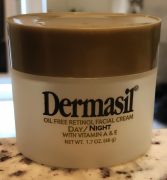
Retinoids are a powerful form of vitamin A proven to speed up cell turnover, which helps erase spots faster. (Bonus: The vitamin also helps your skin produce more collagen, which helps your complexion looks smoother and diminishes the appearance of fine lines.) The most potent form is retinoic acid, which is only available through a prescription from your dermatologist, although it might cause slight irritation and flaking. It also costs about $150, though your insurance may cover it depending on your plan.
 If you don’t have $150 to shell out on the regular, you can opt for the over-the-counter form, retinol, at any drugstore. The milder version offers similar results and minimizes the chance of redness or flaking. Regardless of the retinoid your derm recommends, start out using it once a week and then build the usage from there to ensure your skin stays calm. And then use your skin-brightening cream, like Olay Luminous Tone Perfecting Cream Moisturizer, on the other nights.

5. Wear SPF Daily

If there’s only one thing you do, make it this: Use broad-spectrum SPF 30 or higher daily, a guideline recommended by the American Academy of Dermatology. Not only does it help prevent skin cancer, it protects your skin from harmful UV rays, the culprit behind most dark spots. In response to the sun’s UV rays, our cells send out protective pigment (or melanin) to naturally keep your skin from getting burned. This is what you know to be a “tan,” but it’s really your skin trying to protect itself. You might be into your glowing bronze color, but deep in the layers of your skin, the damage has occurred and will later surface in as tiny brown spots (aka freckles). To keep your skin brown spot-free, don’t skip the SPF! I use the Aveeno protect + hydrate lotion sunscreen daily even if I don’t go outside.sunscreen


Skin Care: 5 tips for healthy skin- including sun protection and gentle cleansing — can keep your skin healthy and glowing for years to come.

Don’t have time for intensive skin care? You can still pamper yourself by acing the basics. Good skin care and healthy lifestyle choices can help delay the natural aging process and prevent various skin problems. Get started with these five quick and easy tips:

1. Protect yourself from the sun

One of the most important ways to take care of your skin is to protect it from the sun. Sun exposure can cause wrinkles, age spots and other skin problems — as well as increase the risk of skin cancer.

For the most complete sun protection:

  • I generally use the Maybelline New York dream BB Fresh Cream that has SPF 30 but you can use sunscreen too if you like. Use a broad-spectrum sunscreen with an SPF of at least 15 and apply the  sunscreen/BB Cream generously.
  • Avoid the sun between 10 a.m. and 4 p.m., when the sun’s rays are strongest. Protect your eyes with sunglasses that filter UVA and UVB rays. When UV light is strongest are between 10 am and 3 pm (standard time) or 11 am and 4 pm (daylight saving time).
  • Try to plan outdoor activities for early morning or late afternoon when the sun’s rays are less intense. But, if you can’t avoid the sun between those time then wear long sleeved clothes. Try to wash your clothes with a UV -repellent laundry detergent .
  • Drink plenty of water

2. Don’t smoke

Smoking makes your skin look older and contributes to wrinkles. Smoking narrows the tiny blood vessels in the outermost layers of skin, which decreases blood flow. This depletes the skin of oxygen and nutrients that are important to skin health.
Smoking also damages collagen and elastin — the fibers that give your skin strength and elasticity. In addition, the repetitive facial expressions you make when smoking — such as pursing your lips when inhaling and squinting your eyes to keep out smoke — can contribute to wrinkles.

If you smoke, the best way to protect your skin is to quit. Ask your doctor for tips or treatments to help you stop smoking.

3. Treat your skin gently

Daily cleansing and shaving can take a toll on your skin. To keep it gentle:

  • Hot water and long showers or baths remove oils from your skin. Limit your bath or shower time, and use warm — rather than hot water.
  • Avoid strong soaps. Strong soaps and detergents can strip oil from your skin. Instead, choose mild cleansers.
  • To protect and lubricate your skin, apply shaving cream, lotion or gel before shaving. For the closest shave, use a clean, sharp razor. Shave in the direction the hair grows, not against it.
  • After washing or bathing, gently pat or blot your skin dry with a towel so that some moisture remains on your skin.
  • If your skin is dry, use a moisturizer that fits your skin type. For daily use, consider a moisturizer that contains SPF.

4. Eat a healthy diet

I know it is hard, trust me I deal with this battle everyday. But try to find something that motivates you to eat better. Start cutting things out and eating smaller portions. It is all about starting somewhere.

For example: Lately I’ve been drinking soda a lot but I don’t eat candy anymore.

A healthy diet can help you look and feel your best. Eat plenty of fruits, vegetables, whole grains and lean proteins. The association between diet and acne isn’t clear — but some research suggests that a diet rich in vitamin C and low in unhealthy fats and processed or refined carbohydrates might promote younger looking skin.

5. Manage stress

Uncontrolled stress can make your skin more sensitive and trigger acne breakouts and other skin problems. To encourage healthy skin — and a healthy state of mind — take steps to manage your stress. Set reasonable limits, scale back your to-do list and make time to do the things you enjoy. The results might be more dramatic than you expect.

  • Focus on the positive things that is going on in your life now
  • Live your life for yourself
  • Eliminate the negative people out of your life. Your space, your bubble, and etc is very important. Choose wisely who you let in.
  • Exercise
  • Smile and laugh
  • Get social support, Talk about your problems
  • Meditate, yoga
  • Use your time wisely
  • Eat a healthy diet
  • Make time for hobbies
  • Take a breather and relaxed
  • Take control
  • Get more sleep
  • Avoid caffeine, alcohol, and nicotine
  • Start Writing, it doesn’t have to make sense. Writing helps me to heal and it makes me a very happy girl.
  • Soothing bath
  • Develop healthy responses
  • Establish boundaries
  • Drink a cup of water
  • Ditch the “should”
  • Go for a walk
  • Take a break from technology, Take a break from people
  • Use positive self-talk
  • Focus on right now