BETTER TOGETHER: LANCÔME TEINT IDOLE FOUNDATION AND OIL-IN-GEL CLEANSER

We all want our makeup to help us achieve flawless, imperfection-free skin. That’s why we’re constantly searching for the best foundations on the market and practicing the best application methods for our base products. But a common mistake is assuming an even, smooth complexion starts with makeup when it really starts with your skincare. It’s important to have not only a great foundation in your stash but also a top-rated cleanser — and Lancôme has a solution for both. 

lancome-teint-idole-foundation-and-oil-in-gel-cleanser-review

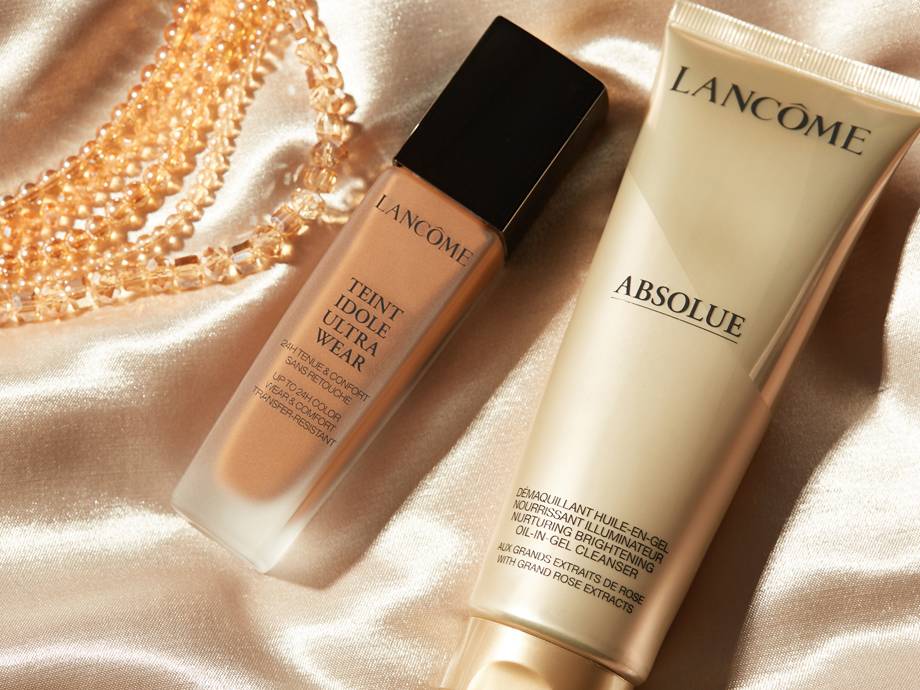
The Lancôme Teint Idole Ultra 24H Long Wear Foundation is one of the best long-wear foundations on the market. With 50 medium- to full-coverage shades available, it’s earned a spot in many beauty lovers’ makeup routines, including our editors. It offers long-lasting, velvety-smooth coverage for hours after application without the risk of transferring, melting or smudging. Thanks to its oil-free liquid formula, even those with oily skin can benefit from its skin-blurring effects. When it comes time to remove it after a long day of wear, look no further than the Lancôme Absolue Nurturing & Brightening Oil-in-Gel Cleanser with Grand Rose Extracts to get the job done. 

lancome-teint-idole-foundation-and-oil-in-gel-cleanser-review

The unique transforming oil, gel, and milky cleanser melts away makeup with ease. It contains a rich blend of oils that simultaneously lift away dirt and reveal refreshed skin. As you work it into your complexion, you can visibly see even waterproof makeup products wipe away. What’s left behind is silky, hydrated skin that feels soft to the touch — and ready for your next round of makeup application.

When you treat your skin on both ends of your beauty routine — during the skin-care phase and the makeup phase — you’ll be able to see a real difference in your complexion.

Read More:

Processing…
Success! You're on the list.

YES, YOU NEED A FOUNDATION BALM IN YOUR LIFE — MORE ON THAT AHEAD

We all have our alliances when it comes to face makeup products. You’re either a foundation kind of beauty person or you’re a lighter CC or BB cream stan (I’m the latter). But we’re here to throw another curve ball into the mix of base products. Introducing foundation balms. We know what you’re thinking: How does this differ from my other foundation products

All About the Texture and Coverage of a Foundation Balm

Think of a foundation balm as a cross between a cream and powder foundation. It applies like a cream or a mousse but sets to a semi-matte finish. As someone who usually prefers lightweight CC or BB creams with a natural finish, I’m obsessed with this formulation. Lujan describes its feel as cushiony and luxurious, being both smooth and comfortable without the heaviness that can come with cream foundations. 

When it comes to the coverage, foundation balms are pretty customizable. When first applied, a little goes a long way and can be blended and smoothed over a larger area of skin. “Foundation balms have an excellent level of coverage that can be applied as a full-coverage foundation or sheer with your moisturizer or beauty oil to create a skin tint,” says Lujan.

How to Apply a Foundation Balm

STEP 1: A foundation balm works best when applied over well-prepared skin. Well-prepared skin starts with a good cleansing and hydrating routine, followed by a good moisturizer application.

PRO TIP: Apply your moisturizer with your foundation balm brush. The residual moisturizer in the brush will ensure a seamless application of foundation.

STEP 2:  Load your brush by dabbing it into your foundation balm. A light dab will give you more sheer coverage. If you swirl it in the product to load your brush, you will get immediate full coverage.

STEP 3: Apply the foundation in the areas that need more coverage first,” advises Lujan. “Bounce the brush on the skin to deposit coverage and then buff outward and down in circular motions with light pressure.”

Our Favorite Foundation Balms

Giorgio Armani Power Fabric Foundation Balm

This full-coverage foundation balm gives you a natural-matte finish that stays shine-free and feels hydrating all day. When applied, it provides you with a blurred finish for smooth, flawless skin. 

Related image

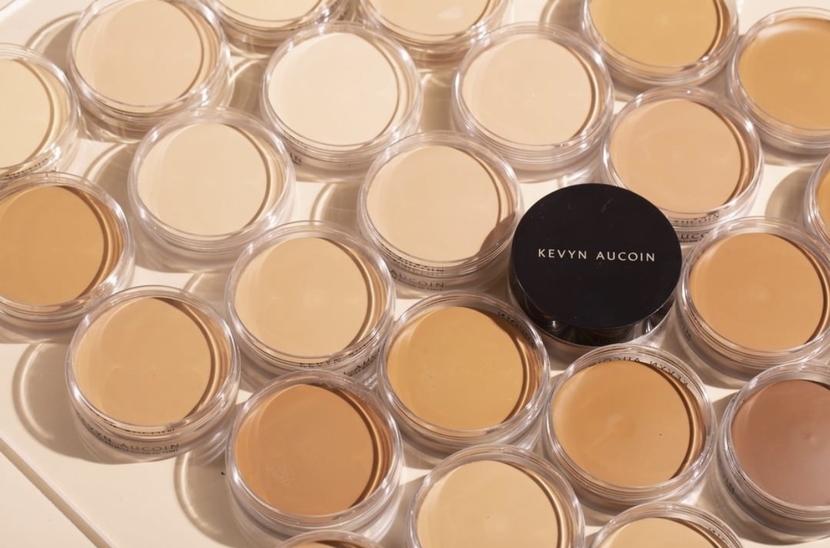
Kevyn Aucoin Beauty Foundation Balm 

You can get as little or as much coverage as you desire with this foundation balm. It contains skin-loving ingredients; hyaluronic acid, vitamin E, and skin barrier-reinforcing avocado oil that nourish and hydrate your complexion while you wear it for a better look and feel. The foundation is currently available in 20 shades and is available is 3 undertones.

As for the finish, it’s advertised as silky and flawless, though Kevyn Aucoin notes online that anyone after a dewy glow can apply the brand’s Neo-Elixir Weightless Beauty Oil before the complexion product to achieve a glossier finish. (And in case you’re curious, Sephora has classified the balm as a matte cream foundation.)

While the foundation is intriguing all on its own, the formula’s versatility may be even more noteworthy. In the product description, Kevyn Aucoin lists that the Foundation Balm can be used as an eyeshadow base, contour, or applied over your arms and legs, crediting the formula’s powder-like finish as the key reason why. Using it just as a foundation is simple, too: Just “swirl” the foundation with the Foundation Balm Brush (which comes included) and stroke the product over your skin. It’s that easy.

You can shop Kevyn Aucoin’s new Foundation Balm on the brand’s website; the brand also notes on its Instagram that it’s available at Sephora, Space NK, and Bluemercury.

Read More:

3 DIY Lip Balms For Smooth Lips All Winter

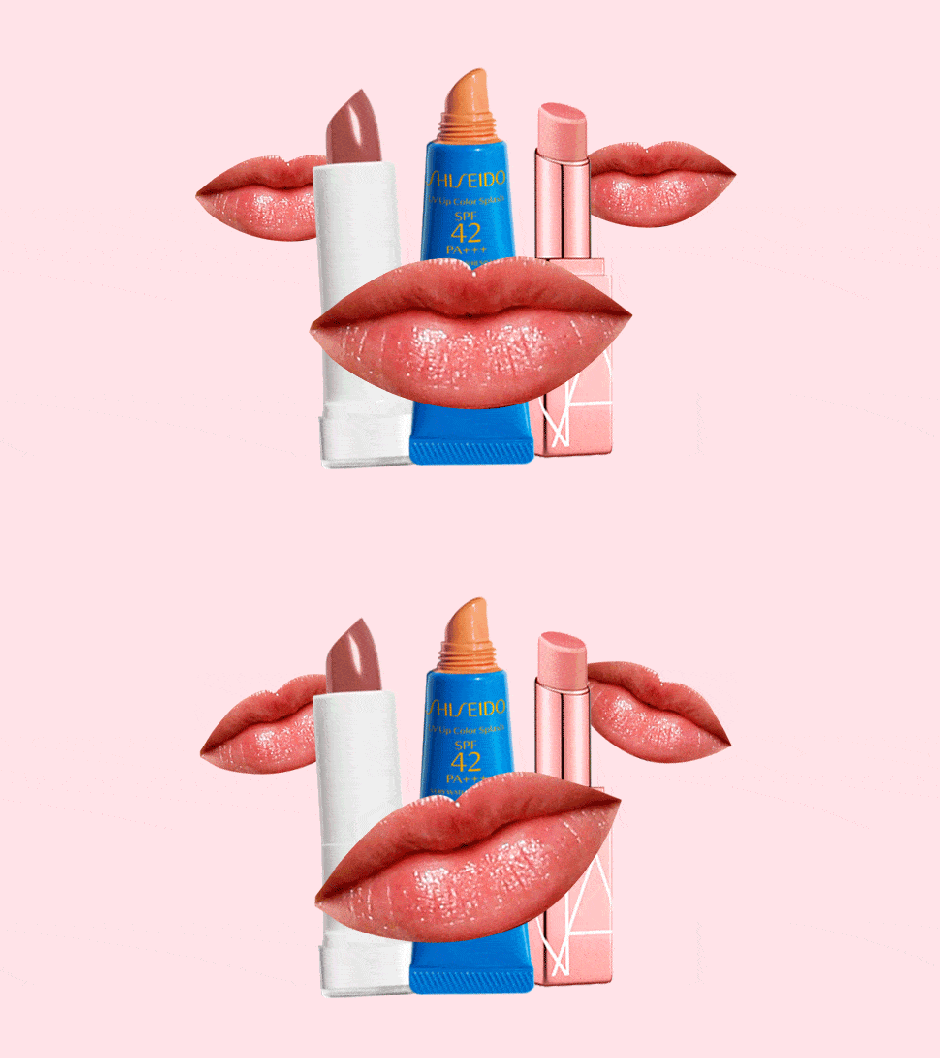
With the holiday season right around the corner, you don’t want to be caught under the mistletoe with anything other than smooth, pillowy lips. But as the temperature drops and the wind picks up, our lips get dry and chapped, which is why it’s super important to stock up on lip balms to keep your lips hydrated at all times! Stash them in your purse, on your desk, on your bedside table – everywhere!

To help you guys save the dollars we’ve sharing three bomb DIY lip balms: They’re super hydrating, and they’re all-natural. We’ve even made dupes of some of our fave lip balms but for a fraction of the price. You can be as creative as you like and mix in any of your favorite flavors. Here are our three favorite recipes:

1. Peppermint lip balm

If there’s one lip balm we’re always lusting after, it’s the La Mer Lip Balm, $70 – it’s a cult classic for a reason, but we can’t deny it’s pretty damn expensive. So, we decided to make our own using the signature ingredients; peppermint, almond oil, and Aloe Vera. The sweet almond oil is high in vitamin E, which will help protect your lips from UV damage and the aloe vera will hydrate and soothe.

Ingredients:
2 tbsps of petroleum jelly or coconut oil
1 drop of peppermint oil
1 drop of sweet almond oil
½ tsp of aloe vera

In a pan on a low heat melt the petroleum jelly (or just use softened coconut oil). When it’s melted, add in the other ingredients and stir well. Leave it on a low heat for two to three minutes and then pour it into a small dish (we use our leftover lip balm tins) using a funnel. Leave it in the fridge to set for six to eight hours.

2. Coconut lip balm

We’re in love with this DIY coconut lip balm – it leaves your lips feeling super soft and nourished, plus it has a sweet rose tint – your lips will literally be irresistible. All three oils are miracle workers: the coconut oil is a natural emollient, the argan oil is bursting with nourishing antioxidants, and olive oil is high in squalene, which creates a protective barrier on your lips.

Ingredients:
2 tsp of virgin coconut oil
2 tsp of Argan oil
2 tsp of Olive oil
Colored berry lipstick

In a pan on a low heat, melt together the coconut oil with about 1 cm of lipstick and add it into the pan. Next, add in the oils and stir well. Leave it on the heat for two to three minutes and then pour it into a small dish or an old lip balm tin. Leave it in the fridge to set for a few hours.

Posts You’ll Love:

3. Honey lip balm 

The Burt’s Bees Honey Lip Balm, $4, has been a firm favorite of ours for years, as the combination of beeswax and honey will soothe even the driest lips. Honey is a humectant so it draws moisture into the skin, while the addition of lavender gives extra healing powers as it has antiseptic properties, plus it’s full of antioxidants that’ll help fight against aging free radicals.

Ingredients
2 tsp of organic beeswax
1 tsp of organic coconut oil
1 tsp of raw liquid honey
2 drops of lavender

Add the beeswax, oils, and honey into a glass bowl, then place in a pan of very hot water and mix until they melt, then add two drops of lavender. Using a funnel, pour it into a small dish or lip balm tin. Leave it in the fridge to set for six to eight hours.

Bous: Rose Lip Scrub

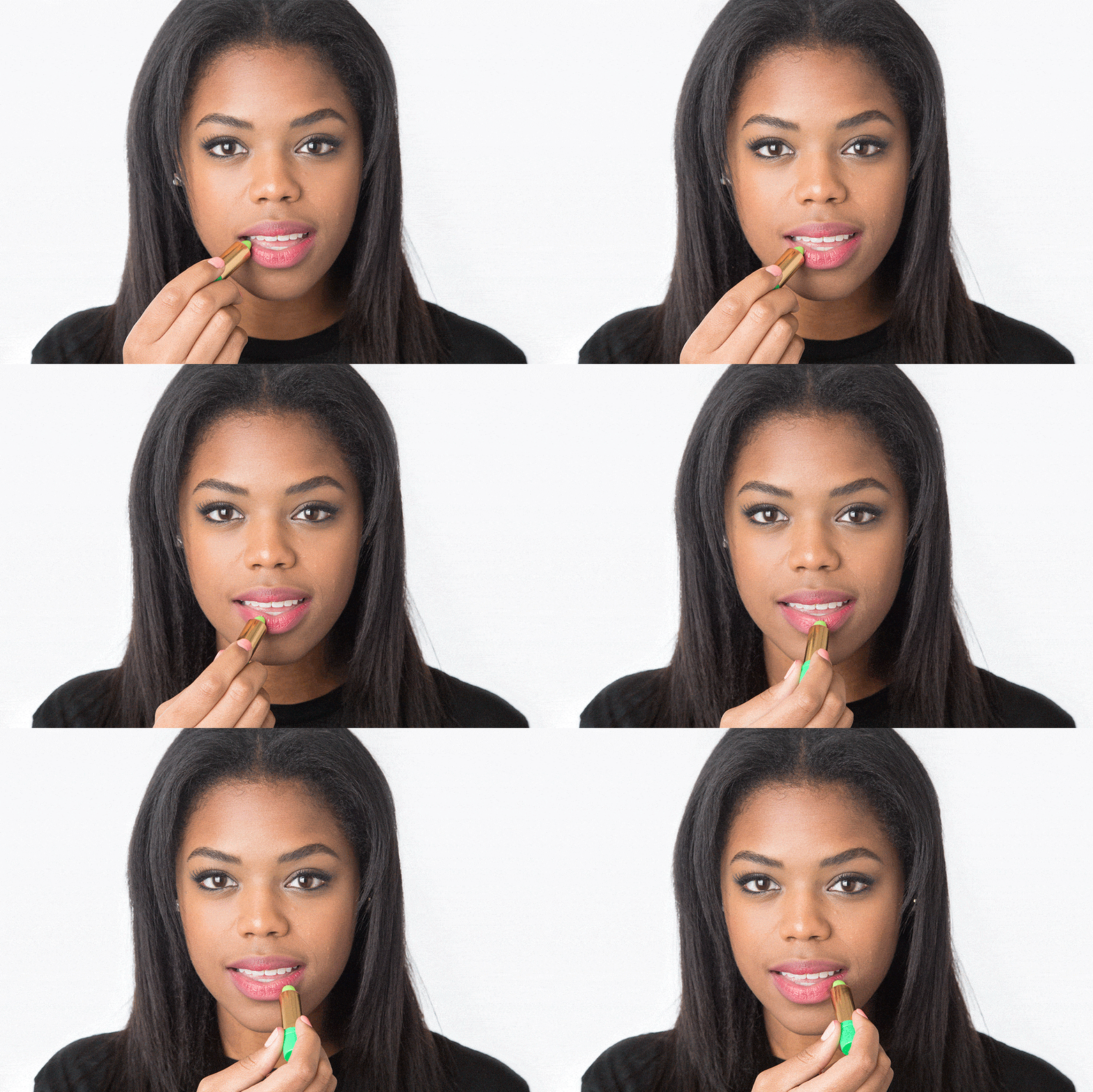
We’re throwing in an extra DIY lip scrub for you guys, but you actually have Priyanka Chopra to thank for this delicious exfoliating lip balm. We like to do this a couple of times a week to get rid of any dead skin, which to be honest, in the winter is a regular occurrence.

Ingredients:
2 drops of glycerin
2 drops of rose water
1 teaspoon of sea salt or brown sugar

Mix one teaspoon of salt or sugar with a couple of drops of rose water and vegetable glycerin. Then, gently massage it onto your lips and wash it off with warm water.

Let us know if you’ve ever tried making your own DIY lip balms, in the comments below.

Spotlight on: Citric Acid

Citric acid is in just about everything from skincare products, to food, to floor cleaner. While lemons aren’t really something you want to be rubbing all over your face, citric acid is something very different and is actually quite beneficial!

Here is what you need to know about citric acid and how to incorporate it into your routine.

What is Citric Acid?

Citric acid is found in, you guessed it, citrus fruits, and is what gives them their acidic flavor. Citric acid was first isolated in 1784 by the Swedish chemist Carl Wilhelm Scheele, who was able to crystallize it from lemon juice.

And not long after, it started to appear in just about everything but particularly in cosmetics and skincare products. In 2016 the U.S. Food and Drug Administration’s (FDA) Voluntary Cosmetic Registration Program (VCRP) stated that citric acid was used in almost every category of cosmetic products and had over 10,000 reported uses.

It is also used as a popular flavor and preservative agent in foods, soft drinks, and candies.

What Are AHAs?

Citric acid is what’s known as an alpha hydroxy acid (or AHA) in the skincare world. The most basic definition of an HA is a carboxylic acid, which is an organic acid that has at least one carboxyl (carbon double-bonded to oxygen) group. However, that general definition includes unrelated compounds like retinoic acid, L-ascorbic acid, and azelaic acid. Therefore, further qualifications (like alpha, beta, etc) need to be identified.

AHAs are non-abrasive, leave-on exfoliators that are traditionally more effective and gentle than traditional scrubs. Sun damage and overly dry or oily skin can hinder your body’s ability to properly shed dead skin cells. These obstructions can cause skin concerns like dullness, clogged pores, milia, texture, and breakouts. Using an exfoliant can help your skin clear out the dead cells to make room for the new, healthy ones. Chemical exfoliants help to prevent breakouts and premature aging and reduce the appearance of pores.

How Can Citric Acid Benefit Your Skin?

AHAs like glycolic acid and lactic acid can be incredibly potent, and sometimes a little too much for those with sensitive skin. That is where citric acid can be helpful! It is like the training bra of AHAs: It doesn’t really do as much as its fellow acids, but it’s made for people who don’t need the support older girls do.

But what exactly are the benefits of citric acid for the skin? Citric acid (like most all AHAs) can help to brighten skin, shrink pores, treat acne, and correct dark spots and fine lines.

Before it started being added to formulas for its exfoliating abilities, citric acid used to be used to keep the pH range of skincare products in check. The pH of cosmetics and skincare products is important because the skin’s normal pH is slightly acidic. A low acidic pH can cause ingredients to be more irritating for those with sensitive skin.

Is It Safe?

The terms “citric” and “acid” are intimidating on their own but can be downright scary when used together. Especially when it comes to something that you’re putting on your face! But according to The Derm Review, it is perfectly safe to use on the skin! “The Cosmetic Ingredient Review (CIR) Expert Panel reviewed scientific literature and data on the safety of citric acid and its salts and ester in 2014. This data revealed that at concentrations used in cosmetics and personal care products, citric acid and its salts and esters were not eye irritants, nor did they cause skin irritation or allergic skin reactions. Thus, CIR concluded that the available scientific data showed that citric acid, its salts, and esters were safe under current conditions of use in cosmetics and personal care products.”

Some people get freaked out by citric acid because they know that lemons are highly irritating for the skin. And while, yes, you can absolutely go overboard with citric acid, it’s safe to use.

Just be cautious, especially if you have sensitive skin. The thing with citric acid is that it can be intense. Let’s put it this way: How will you know if you’re using too much? Side effects of overuse include stinging, burning, and irritation.

If you’re still unsure, always do a patch test first to see how your skin reacts. If you don’t see any irritation or redness, start to slowly introduce it into your routine. Don’t use AHAs the same night you use retinoids or physical exfoliants because that can lead to serious damage to your skin’s barrier!

Bottom Line

Citric acid can be an effective chemical exfoliant for those with sensitive skin. I don’t find it as effective as glycolic or lactic acid, however, but if you have tried those and found them to be too irritating, citric acid could be a great alternative!

Sign up for our newsletter!

Processing…
Success! You're on the list.

Disclaimer:

The purpose of this blog is for skin care, makeup, and wellness + health-related reviews and tips only. It is not intended as and does not substitute for medical advice. Information posted should not be construed as personal medical advice. Posts are not intended to diagnose, treat, or cure disease.