Before you start bashing me in the comments section or on Twitter, hear me out first, okay? I know some of you are thinking, what’s the point of wearing makeup when half your face is covered, or it’s not the time to worry about makeup. Well, those are valid opinions but for some, applying makeup gives them a sense of normalcy during these severe times. I never thought of writing a guide on how to prevent makeup from smudging on face masks until a doctor in an online beauty group asked about it. She got criticized but I’m glad a majority supported her and gave her tips. And surprisingly, there are now a handful of face mask makeup tutorials online.
I don’t know about you but keeping makeup off my masks has been quite the TASK so I brought back this old school tip on how to prevent makeup from smudging. This is a really amazing makeup transfer proof technique!! ENJOY!
Christen Dominique
These are my tips and tricks I’ve found that have been keeping my makeup fresh so none comes off when I put on or take my face mask off!
Gabriella Elena
Yes, you might have a little transfer (YOU’RE WEARING MAKEUP! LOL).. ♥️
Koko Guerra
Hey Boos! I missed y’all! Waassssssup? Thanks for watching and I hope at least one of these techniques help your makeup to not just be mask proof but to last you much longer through out the day! Tis the summer to slay your smudge free, mask proof makeup!!
Beauty Over 40
For the 40 and over beauties, here are tips that you will enjoy!
Advertisements
Despite the tips you heard from all those amazing beauties, I just want to tell you that, do what’s comfortable with you. If you’re not into the glamourized eyes, foundation or you are a minimalist makeup wearer, that is okay. Follow your mood. I actually go out often without makeup. I just do my basic skincare regiment ( ” basic ” might not be the right wording but I mean I do my quick skincare and go since I am usually in a rush for work).
Do you have tips on how to prevent makeup from smudging on face masks or do you have a face mask makeup tutorial? Don’t hesitate to share it below!
We’re calling it: blush is going to be one of THE biggest makeup trends of 2020. While some of you may think blush is a little old school, it’s a classic for a reason! When applied correctly, blush warms up your entire face and gives you the most stunning youthful glow. It also adds an element of harmony to your makeup game that we can’t live without (more deets on that later). The thing is, it has to be applied correctly otherwise a sun-kissed goddess is the last thing you’ll look like, and trust us, it’s easy to go overboard if you’re not careful! Here are all of our top blush tips, and how to avoid any blush-mishaps.
How to Find the Right Blush Shade for Your Skin Tone
Finding the right blush for your skin tone is one of the most important elements to get right. If it’s too bright it can look harsh on your skin, and if it’s the wrong shade it can disrupt the harmony of your look. The key is to choose a shade that looks like a natural flush; as if you’re blushing.
For fair skin tones: Light, pink-toned blushers work well for fair skin tones – the Benefit Cosmetics Dandelion Box O’ Powder Blush, $30, is perfect!
For light to medium skin tones: Peach shades will warm up your complexion beautifully. We’re obsessed with the Charlotte Tilbury Beach Stick in Formentera, $45.
For golden or olive skin tones: Opt for brighter pinks and soft corals like Patrick Ta’s Monochrome Moment Velvet Blush, $32, in the shade She’s Passionate – a beautiful coral-pink.
For deep and rich skin tones: Hot pinks, fiery corals, and deep berry tones look divine. The Glossier Cloud Paint in Haze, $18, is perfect for rich skin tones; it looks super bright but it blends out like a dream.
How to Choose A Blush Shade To Complement Your Look
Of course, you don’t have to stick to one blush shade, you can experiment with different shades depending on your vibe. However, try to create an element of harmony by using similar hues for your eyes, lips, and cheeks. It’s an MUA rule that we live by – it’ll instantly elevate your look. Celebrity makeup artist Patrick Taactually created a makeup collection dedicated to the monochromatic mantra including four sets of Lip Cremes, lip liners and Velvet Blushes in complementary shades to create a truly harmonious look.
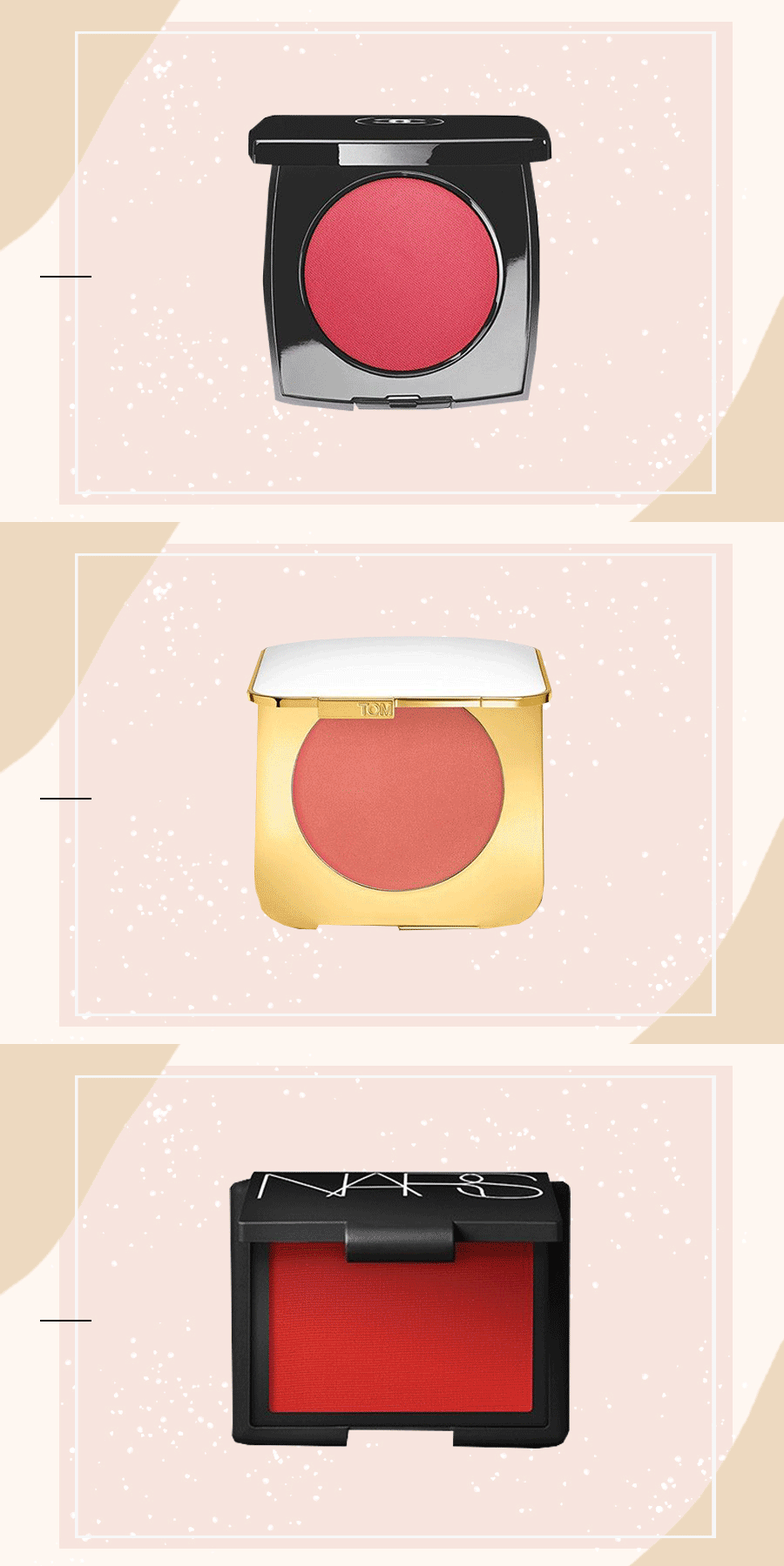
For example, if you’re wearing a bold coral or orange-toned lip, opt for a coral-toned blush. If you’re wearing a brown nude lip like our Power Bullet Matte Lipstick in Board Meeting$25, use a cool-toned blush with muted brown undertones like NARS Luster, $30. Check out our examples below for monochromatic makeup goals:
For fair skin tones: To match the Dandelion Box O’ Powder Blush, $30, we’d recommend Huda Beauty Power Bullet Matte Lipstick in shade Rendez Vous, $25. It’ll create that soft feminine look that’s seriously trending right now.
Source: Benefit
For light to medium skin tones: The Beach Stick in Formentera, $45, is in fact, a lip and cheek stick, so you can use it to warm up your complexion as well as your lips. This is actually one of the easiest ways to create a harmonious look; either by buying multi-purpose products or using a lip creme as a blush. Simply try to find a shade that matches the blush shade for your skin tone, as we’ve recommended above.
Source: Charlotte Tilbury
For golden or olive skin tones: Patrick Ta’s Monochrome Moment Velvet Blush in shade She’s Passionate, $32, was created to be worn with Lip Crème shade She’s Independent, $24.
Source: Patrick Ta
For deep and rich skin tones: Once you’ve applied the GlossierCloud Paint in Haze, $18, to your cheeks, you can use it to stain your lips or try our Demi Matte Cream Lipstick in the shade Lady Boss, $20, which looks gorgeous on deep skin tones.
Source: Glossier
How to Find the Right Blush Formula
When you’re searching for your perfect blush, the formula is another crucial factor to consider. There are so many variations on offer from matte and shimmer powders, cream pots and sticks, and stains and tints. Each formula has its own set of pros and cons. Powder blush is great for those who love to set their foundation with powder and prefer a more matte skin finish. If you prefer the no-makeup makeup look and glowy skin and rarely set your base with powder, then you’ll most likely gravitate towards a ‘wet’ finish blush, like a cream or a tint. Blush stains are another great option and can be blended with foundation, but they can be harder to blend out, so you have to be very careful with the application.
Source: Benefit, Morphe
We recommend steering away from very shimmery or sparkly blushes, as these can disrupt the balance of your blush. Creams are also often not as long-lasting as a powder, which is why Beyoncé’s makeup artist Sir John suggests layering your blushes; first by applying a cream, followed by a powder to set it. He notes this is especially beneficial for dark skin tones to ensure it stays put and the pigment pops.
How to Apply Blush
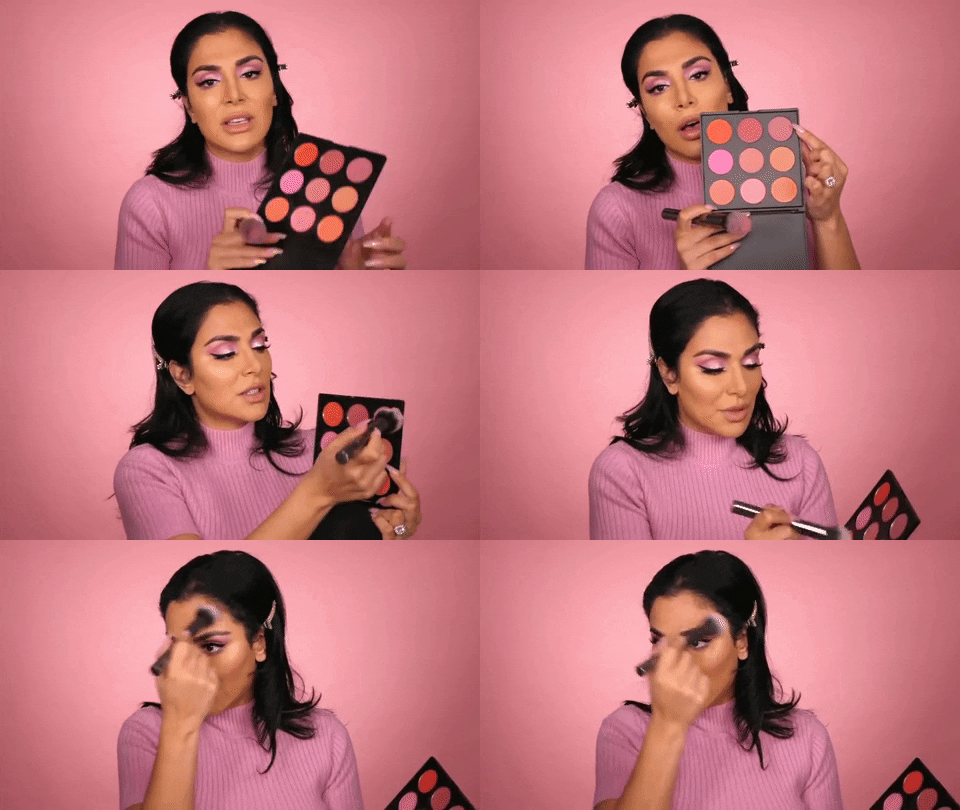
For flawless blush application, use a tapered or rounded, medium-sized fluffy brush. If the brush is too densely packed, you run the risk of picking up and applying too much blush, and if the brush is too small, then the blush will be too heavily concentrated and won’t look well blended.
Our Fave Blush Brushes
The Spectrum A05 Blush Brush, $10, which has a tapered finish and works beautifully for targeted blush and contour.
The Patrick Ta Monochrome Moment Blush Brush, $35, has crimped synthetic fibers that easily pick up powder formulas and a tulip shape to disperse pigments for seamless application.
The Real Techniques Blush Brush, $9, is a classic and one of our all-time faves. The tapered bristles allow for precision application and flawless blending.
How to Apply Blush for a Natural Glow
For a healthy flush of color apply blush to the apples of the cheeks and blend outwards using a circular motion. Scott Barnes, J.Lo’s go-to MUA told us “Instead of applying blush to the sides of your face, apply it towards the front of your cheeks, more under the eye line.”
What You Should Never Do…
Scott warns; “Applying blush on the sides, or stretching it out really far like it’s some sort of blush contour, will make you look older or outdated. The only time you want to put blush on the sides is if you are doing an editorial shoot or fashion shoot with a specific reason. Proper blush screams youth and that’s the makeup gospel truth.” And if there’s anyone we can rely on for youthful makeup tips, it’s JLo’s makeup artist – that woman doesn’t age!
If you’re looking for a sun-kissed vibe, even in the dead of winter, blush is your BFFL. The trick is to apply a dusting (and we mean the lightest of dustings) of blush wherever the sun would hit. Think about the apples of your cheeks, the center of your forehead, and the tip of your nose. This looks works particularly well when it’s layered on top of a bronzed glow.
For a warm sculpted finish, apply blush to the apples of your cheeks as instructed by Scott, then lightly warm up your contour with any excess product, like under the cheekbones, and the top of your forehead. This will warm up your face and balance a grey-toned contour; the key is to go lightly – only use whatever is on your brush after applying your blush.
Do you guys wear blush? Let us know in the comments below.
Having a flawless canvasis exactly what an artist needs to build his or her masterpiece — and the same applies to your face pre-makeup application. Knowing how to make the most of your foundation and concealer for smoother, brighter skin and a more even complexion is key in creating and maintaining a full-coverage, smooth look. Ahead, we broke down the best products to try, plus all the tools, products and insider tips you never knew you needed.
There are so many different formulations of foundation out there, so ultimately, the choice depends on the coverage level you’re looking for, your skin type, the amount of time you have to apply and the price you’re willing to pay. The most classic form of foundation, liquid, offers medium-to-full coverage for all skin types and is a sure-fire way to achieve a smooth base.
NYX Professional Makeup Total Control Drop Foundation allows you to customize the exact amount of coverage you want, making it even more versatile than the amazingly affordable formula already is. If you’re looking for lighter coverage, try a BB or CC cream, which offer skin a ton of benefits (think: antioxidants, hyaluronic acid, illuminators) in one tube.
The IT Cosmetics CC+ Matte Cream is beloved for many reasons. Not only is it your foundation, moisturizer, primer and sunscreen all in one, but it also offers a great amount of coverage and keeps you matte for hours.
And we haven’t even gotten into the other types of formulas that could technically live in the liquid family. Take the La Roche-Posay Toleriane Teint Mattifying Mousse Foundation, for example. It’s a practical choice for oily skin types because it deflects any sebum or oil from building up throughout the day with a lighter-than-air feel.
If you’re looking to really build and customize the amount of color, try a cream foundation, like theGiorgio Armani Crema Nuda Supreme Glow. It’s loved by makeup artists for its non-comedogenic water base as well as light-blurring particles that give your complexion an Insta-filter effect.
Oily, acne-prone skin will benefit from a cream consistency foundation like the Dermablend Cover Creme Foundation, which gives you full coverage like a liquid foundation but with the consistency of a concealer — in fact, you could use this for your foundation as well as your blemish and spot concealer.
If you’re feeling like your skin is dull and dry, opt for the NYX Professional Makeup Born To Glow! Radiant Foundation. This formula is made with luminous pigments that help to brighten and maintain major glow all over the face for hours.
Different Types of Concealers, Explained
Before you even look into concealer formulas, it’s important to know that there are two kinds of concealers, because like your body, your skin isn’t a one-size-fits-all kinda deal. You should use a concealer two shades lighter than your foundation for your under-eye area (and formulated to ward off puffiness, darkness and bags), and a separate formula for spots, zits and redness.
For blemishes, dark marks and other corrections, a pencil can be incredibly easy to use — easier than a stick, even — as it requires no brush, and the waxy formulation stays put without the help of foundation, powder or setting spray. Cue the NYX Professional Makeup Wonder Pencil for your next beat.
Start by laying your foundation first. The only exception is when using a treatment concealer to cover blemishes or scarring. In that case you will apply a color corrector or thin layer of concealer first. Otherwise, it’s foundation and then concealer. If you apply your concealer first, you will end up using a lot more than necessary and can risk looking cakey.
Primp Tip: Apply primer, concealer, finishing powder, foundation then finishing powder and setting powder
Next, grab your application tool of choice — like theL’Oréal Paris Infallible Blend Artist Foundation Blenderor the Clarisonic for a more even spread. Start by applying foundation using short strokes, starting from the center of your face and sweeping outwards and downwards, ensuring that the color seamlessly blends past your jawline and down your neck. A brush provides fuller coverage with each swipe, but a sponge makes any formula more buildable.
Which Formulas Work Best Together?
When it comes to picking the perfect pairing, you should use cream with cream, liquid with liquid, and so forth. For powder foundations, use a concealer with a drier consistency, ideally one with a waxy base, such as the Wonder Pencil or any concealing palette, which allows you to customize your colors.








 beautyleebar.org