How To Make a Honey Face Mask + 4 Extra Recipes for Clear, Glowing Skin

If there’s one natural ingredient to stock on your beauty shelf, it is honey. You can find the bee sap in anything from a hair mask, face wash, even an all-natural moisturizer—is there nothing the golden goop can’t do?

Consider honey the ultimate DIY superstar, one that you can add to virtually any treatment. But let’s start with the simplest out there: a single-ingredient honey face mask. Easy to make, and the benefits are just as sweet.

Advertisements

What is Honey?

Honey has centuries-long credibility as a respected ingredient beyond kitchen use. Chief among the benefits is the antimicrobial activity of many honey varieties—it kills bacteria living on the skin. This effect probably explains how honey came to be used traditionally as a wound-healing agent in many different cultures. The sweet substance is produced by plant matter, enzyme activity, and live bacteria. According to these research scientists Howe and Marisa Plescia, what honey contains will depend in large part on what plant source the bees who are making it are using.

Honey is what’s called a natural humectant (draws moisture into the skin). If your skin needs a hydrating boost, this is the perfect ingredient. It is antibacterial, anti-inflammatory, and acts as an anti-viral/anti-fungal.

Benefits of Honey for Skin

As Shamban describes, it is full of flavonoids, hydrogen peroxide, and phenolic acid dermal benefits. Raw, unpasteurized honey is one of Mother Nature’s power players you want to have on your A-team to get the job done when needed.

  • Cleanses pores: good news: Honey is naturally antibacterial, one of the reasons it makes for a great face wash. Remove dirt and debris with nothing more than a little raw honey—just add water.
  • Treat Acne: You can use honey as a cleanser to help prevent certain types of breakouts because of its anti-fungal properties. For a more potent effect, honey can be left on breakouts to help them heal faster.
  • Exfoliate Skin: Honey on its works better as a cleanser as opposed to an exfoliator because of its smooth consistency. You generally won’t find honey, even in its purest form, to be particularly granular.
  • Fade Scars: Honey contains trace amounts of hydrogen peroxide. This might give it mild lightning properties, which is particularly helpful when it comes to resolving pesky post-acne marks and hyperpigmentation.
  • Hydrates Skin: Honey draws moisture into the skin from the air. Applying honey on the face is a great way to keep your skin hydrated, glowing, fresh, and supple at all times.
  • Helps Skin Conditions: Howe shares, “One researcher has shown it to treat seborrheic dermatitis, atopic dermatitis, and psoriasis.” Raw honey can also soothe eczema.
Advertisements

How to make a honey face mask

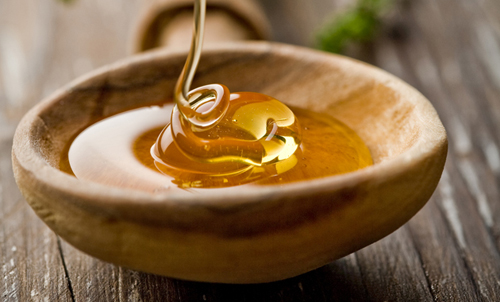
A honey face mask is as simple as it sounds: Snag some raw/unfiltered honey from your favorite grocery store, and you’ve got yourself a spa-grade mask in a snap. Using honey by itself is an effective skin clearing, nourishing, and revitalizing treatment. That’s because honey, especially of the Manuka variety, has anti-inflammatory and antibacterial properties that calm the skin and keep breakouts at bay.

With all the benefits honey has to offer, no surprise you can invest in a jar of the straight-up goop and slather on. Here’s how to do it right: 

  1. Apply an even layer of raw/unfiltered or Manuka honey on damp skin after your face wash routine.
  2. Leave on for 20 minutes, then rinse off with cold water. It rinses off much more easily than you might expect! It’s hardly sticky at all when you add water.
  3. After rinsing, apply warm water to face towel and gently dap the hot face towel on face for a minute. Then, follow with a cream or oil to seal in the moisture. 

Primp Tip: If you have a blemish you’d like to nix, try dabbing a little raw honey directly on as a spot treatment. “It can be particularly beneficial for acne or blemish-prone skin. There have been clinical studies proving positive results both in lessening size and duration of blemishes,” says Shamban.

Advertisements

In terms of how often you should mask, we recommend sticking to a couple of times per week. While it certainly won’t hurt to slather on every single day, it’s not necessary to reap all the benefits mentioned above. Just 20 minutes 2x a week is plenty: It will still provide all those skin-boosting benefits.

With that being said, it’s also not necessary to leave the treatment on overnight; while you certainly can if you feel so inclined, know that you’re not providing your skin with any extra benefits. Remember, honey is thick and has a sticky texture so that might be messy when you wake up unless you’re able to sleep on your back through the night.

4 honey face masks for clear, glowing skin
Sure, a honey face mask is a simple, one-ingredient mask, but that’s not to say you can’t include some add-ons if you’re feeling fancy. Here are four ways to upgrade your honey mask, for any skincare concern you’ve got:

  • Brightening turmeric, honey, and lemon mask 

Turmeric and lemon are amazing for skin-brightening: Turmeric (and its active ingredient, curcumin) has antioxidant properties that can help protect the skin from free-radical damage, while lemon has a fair share of vitamin C—perfect for fading dark spots.

To make this mask, combine 1 tbsp. of raw or Manuka honey, 1 tsp. of ground turmeric, and ½ tsp. of lemon juice. Slather on and leave for 10 minutes or until the mask starts to harden, then wash off with warm water. 

  • Moisturizing honey and olive oil mask

This nourishing mask feels downright luxurious: Adding a natural oil to your honey mask can not only help with the stickiness and application of the honey, but natural oils are emollients that contain high levels of fatty acids, which moisturize and soothe the skin. The result? A lightweight mask chock-full of skin-healthy antioxidants. Feel free to choose any oil here (coconut, jojoba, argan—the list goes on.) We use olive oil because olive oil work wonders on dry skin and contains many antioxidants, such as vitamin E. Simply mix the two until combined, then leave on for 20 minutes. 

Advertisements
  • Exfoliating yogurt and honey mask

Yogurt is jam-packed with lactic acid—a sensitive-skin-approved chemical exfoliator—which gently sloughs dead skin cells with ease. When you add honey to the mix, it becomes even more gentle and hydrating: Simply combine 1 tbsp. of finely ground oatmeal, 1 tsp. of raw or Manuka honey, and 1 tsp. of full-fat dairy or nondairy yogurt. Stir until it forms a paste, then slather on and leave for 15 minutes.

  • Skin-soothing mint, honey, and aloe mask 

If you’re looking for a fun, summery option reminiscent of a poolside cocktail, this refreshing mask is practically screaming your name. Both aloe and rosewater are great skin-soothing and -balancing ingredients, bound to tame any inflammation you’ve got (it feels especially lovely post-sun). Try this mixture during your next impromptu spa night: Mash 2 to 4 mint leaves, and mix with 2 parts honey, 2 parts aloe gel, and a few sprays of rosewater. Leave it on for up to 20 minutes before rinsing with warm water. 

Advertisements

The takeaway. 

With all the skin-health benefits the goop has to offer, no surprise honey reigns supreme as a DIY-friendly ingredient. Of course, remember to do a patch test before applying honey to your face, especially if you’re new to DIY: Even if you consume honey all the time, your skin might have an unexpected reaction to it as a topical treatment. If you have any bee or pollen allergies, you may want to steer clear entirely, as raw honey might contain trace amounts of bee pollen or other tree pollens.

Other than that, feel free to slather on the star of DIY. A single jar of honey can have you glowing in no time.

BeautyLeeBar takes every opportunity to use high-quality sources, including peer-reviewed studies, to support the facts within our articles. Read our editorial guidelines to learn more about how we keep our content accurate, reliable, and trustworthy.

This Mask Is Like a Virgin Mojito for Your Face

Living in Florida feels like summer is here all year round especially when it is hot, humid, and cool like it has been lately. One of the best ways to enjoy summer, which is its own special season according to traditional Chinese medicine, is to embrace the mix of warm and cool weather that’s to come. If you find yourself wishing you were on vacation, use it as an excuse to give yourself an at-home spa day.

This mask was formulated for warmer days to bring a cool, calming energy to the skin. Use it on mild sunburns, as a weekly hydration treatment, and/or when it’s too damn hot to do anything else. Here is a simple beauty solution that can make your skin glow.

DIY Mint & Aloe Face Mask

Ingredients

  • 2 teaspoons raw local honey
  • 1 teaspoon aloe vera gel
  • a spray or a few drops of a rosewater toner
  • organic fresh mint leaves (2 to 4 leaves is all you need)

Directions

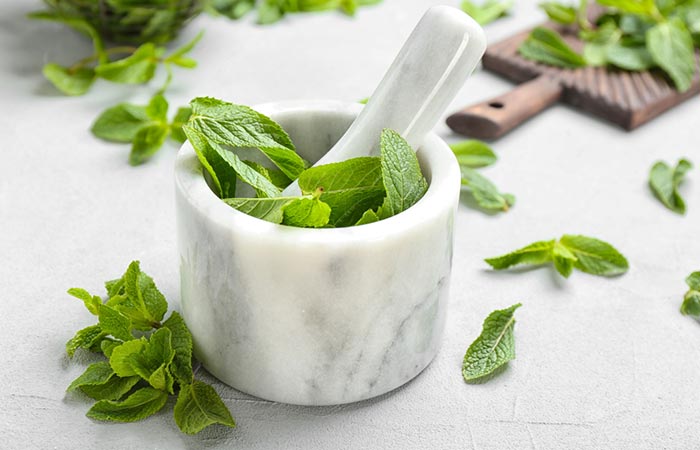
  1. Bruise and mash up the mint with a mortar and pestle to release the essential oils.
  2. Stir everything together.
  3. Apply it all to your face.
  4. Leave the mask on for 10 to 20 minutes.

Disclaimer: This article is completely based on research, experiments and data available on the internet. However, it is always advised to consult a dermatologist before following any remedy or making changes in your regime.

Creamy DIY Lip + Cheek Stain

If you’ve read this blog for a long, then you know we make a lot of stuff. I mean, you should see my bathroom. It’s a nightmare of bottles and jars of concoctions to test out. Some make the cut, and some sit for so long I completely forget what’s in them (apparently that’s what labels are for).

Advertisements

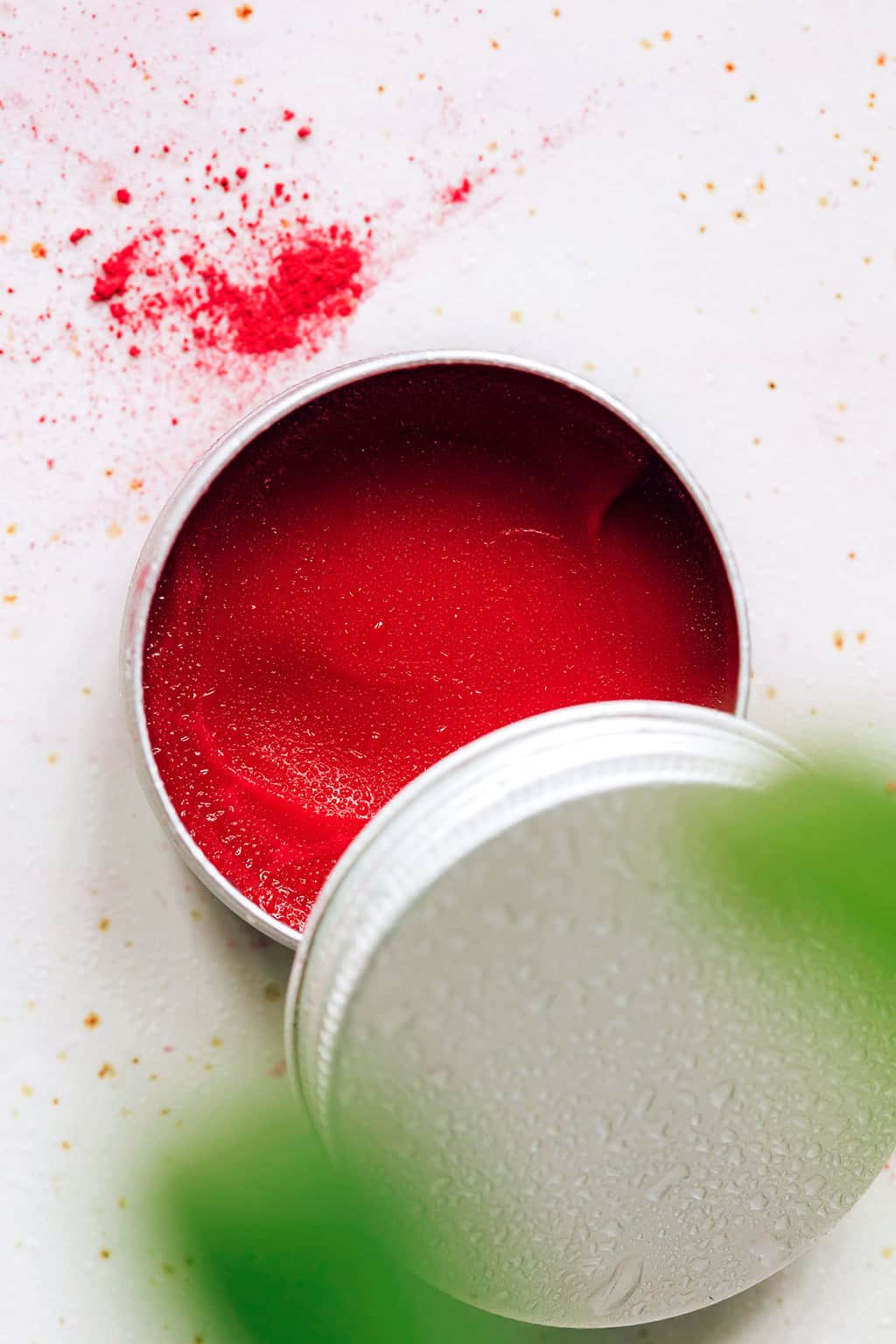
But this DIY, this recipe is one I am so excited about. Because I love, love, love it. It’s easy to make (3 ingredients!) and makes the prettiest color for your cheeks and lips. It’s lightweight and perfect for summer.

I’m all about ‘no makeup’ in the summer. Multi-use makeup that I can apply with my finger is even better. Just swipe on your lips and cheeks for a healthy pink glow. It goes on easily and feels somewhere between a balm and a gloss on the lips. To apply, use your fingertip to dot a small amount onto your cheeks or lips and blend into skin.

Advertisements

Even if the stain starts a little strong, it’s easy enough to blend out to a sun-kissed flush that looks completely natural. I’m already obsessed! I like to bring it across my nose, too—a couple of tiny dabs make for the perfect, I just came from the beach look. 

And that’s not even the best part—this stain is good enough to eat. Using beetroot powder for coloring is the perfect natural option for getting that flawless glow without resorting to using conventional products, some of which are irritating and not cruelty-free.

Most blushes rely on carmine for red pigment, which comes from crushed-up bugs. Ew! Plus, the combination of super-nourishing shea butter and castor oil makes for the perfect base.

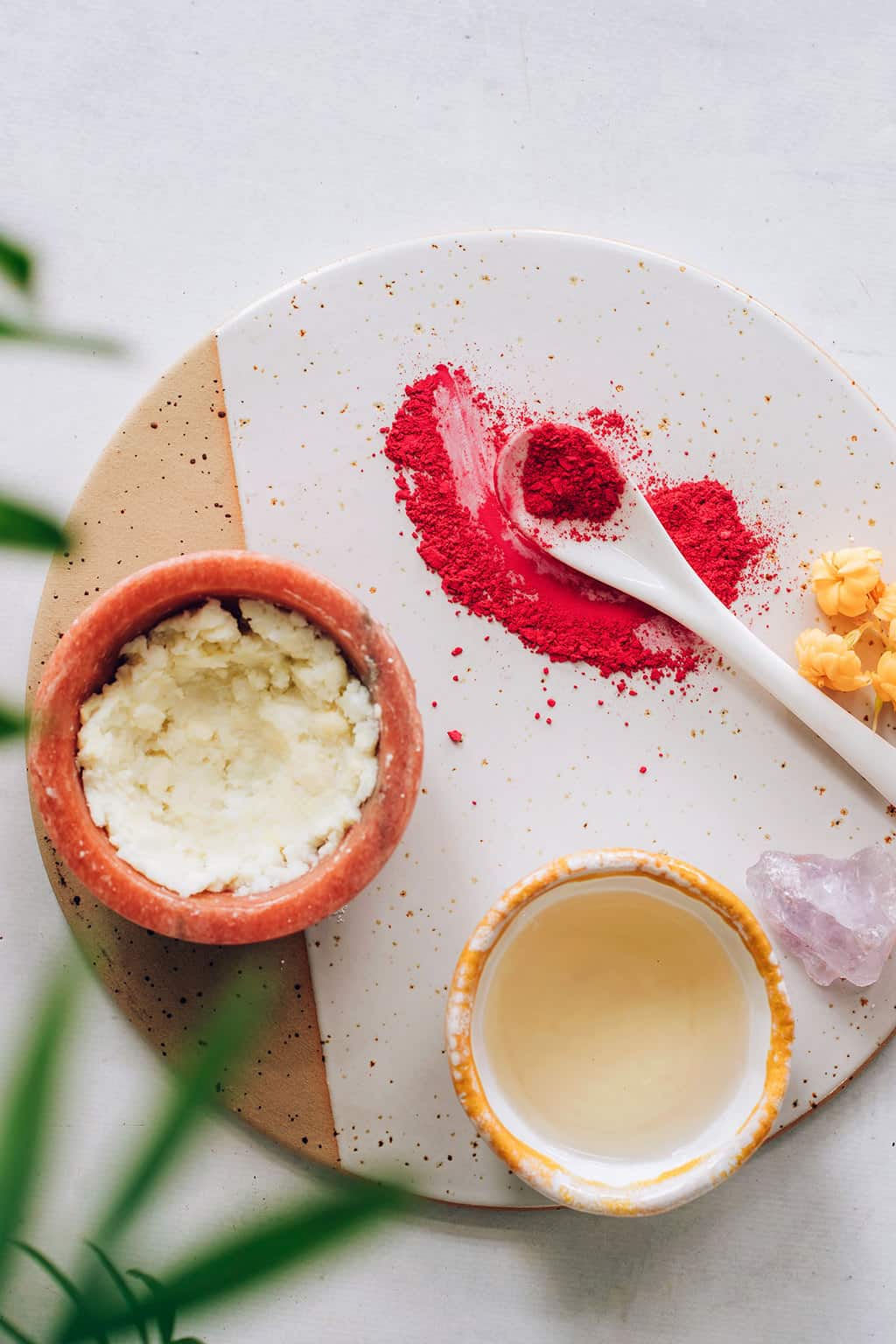
DIY Lip + Cheek Stain Ingredients

Ingredients for Creamy DIY Lip Stain

Here’s a rundown of the 3 ingredients:

Castor oil

Castor oil is very hydrating (it works great on eyelashes) and has a nice, thick texture that makes this recipe feel smooth and glossy. It is known for preserving moisture, and its fatty acids leave the skin feeling nourished.

Shea butter

Shea butter is such a silky, creamy ingredient. It provides healing moisture and also gives the blush its staying power on the cheeks.

Beet powder

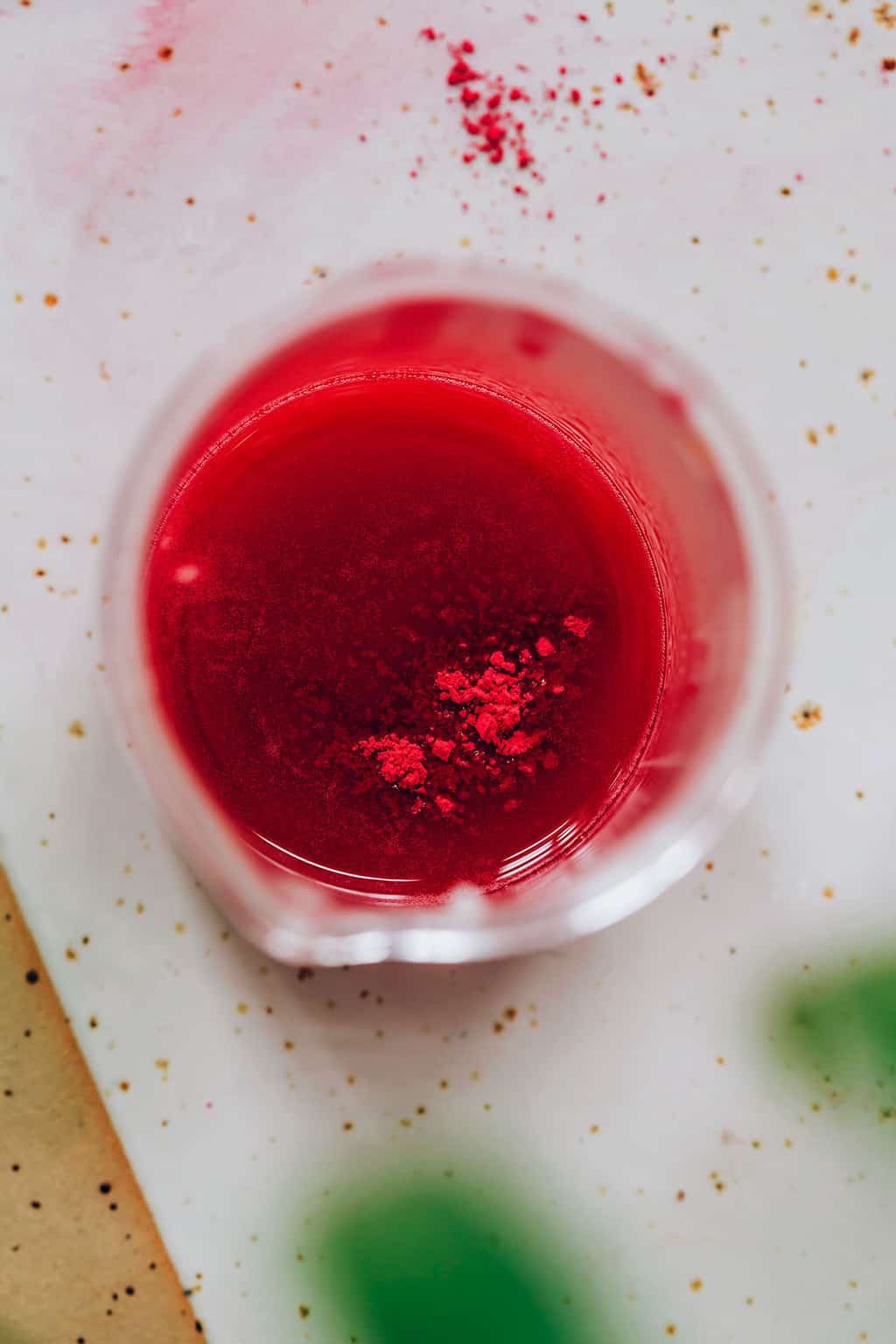
I had no idea you could get beet powder in pill form. The powder is a super bright hot pink, but don’t let that scare you! If you want to tone down the pink, you could add a tiny, tiny bit of turmeric or cocoa powder.

How to make a DIY lip gloss with beet root powder

I’ve been more than a little afraid of venturing into make-your-own makeup territory, but this DIY might just have changed my mind! To keep this stain fresh for as long as possible, keep it in a cool, dark drawer or even better, the fridge. If you have a skincare mini-fridge, that would be perfect.

Because our ingredients are good enough to eat and we’re not relying on preservatives, it’s important to store our DIY products properly. If it begins to separate or smell a little funny, then you know it’s time to let go of this batch and whip up a new one, tout de suite!

Creamy DIY Lip + Cheek Stain

Beet Lip + Cheek Stain

With just 3 ingredients, this lip + cheek stain makes the prettiest color for your cheeks and lips. It’s lightweight and perfect for summer.

Prep Time: 10mins Total Time: 10mins

Course: Natural Beauty Cuisine: DIY Keyword: lip balm

Yield: 2ounces Author: Crystal Lee Cost: $5

Equipment

  • Measuring cup
  • saucepan

Materials

Instructions

  1. Measure ingredients into a small glass measuring cup, then set in simmering water until shea butter melts.
  2. Stir in the beet powder and pour into a small jar and allow the mixture to cool.

Notes

Store in a dark area away from heat. Stored properly, the blush should last up to 6 months.

4 Reasons You Should Add Apple Cider Vinegar to Your Next Bath

POST MAY CONTAIN AFFILIATE LINKS. BeautyLeeBar gets a small commission, whenever you lovely beauties purchase an item directly from the links that are provided in this post, past posts, and any other posts after this. However, this DOES NOT change the price or the value of the product(s) that BeautyLeeBar recommends. I repeat, this DOES NOT change the price or value of the product(s).

Is there anything apple cider vinegar can’t do? It’s one of those kitchen staples, like baking soda or lemons, that has so many benefits—from cooking to cleaning to everything in between. But it’s not just household tasks that can benefit from its magic. Apple cider vinegar also does wonders for the body. Simply add some to your bathwater next time you require a soak, and you’ll be amazed at what it does for your skin, hair, and even your joints.

Advertisements

Benefits of an Apple Cider Vinegar Bath

I firmly believe that apple cider vinegar is a miracle worker that really does do it all, but for it to work, you need to buy the raw, organic kind. Unfiltered and unpasteurized ACV (with the “mother” of live organisms) still contains the vitamins, minerals, and probiotics that are so beneficial to the body. Simply look for a brand like Bragg’s, or head to your local health food store to find the raw stuff. Then hop in the tub and soak away.

Advertisements

Here are just some of the things an apple cider vinegar bath can do:

Advertisements

1. Relieves common skin issues

ACV naturally kills bacteria and yeast on the skin, which can be helpful for people suffering from dry skin, eczema, dandruff, or yeast overgrowth. Because bacteria doesn’t stand a chance around the pH of vinegar, it can also help clear up acne when applied to the face and body. ACV also contains the gentle exfoliant, malic acid, which can help remove dry, dead skin cells and leave fresh, vibrant skin in its place.

2. Soothes inflammation

Vinegar contains acetic acid, one of the components of medications such as aspirin. It can help ease sunburn pain, itching, and inflammation. Soaking sunburned or inflamed skin for 30 minutes can help calm the redness and irritation, so it heals faster.

3. Restores pH balance

Our skin is naturally acidic, but some common bath and body products make our skin a little too alkaline, which can lead to dryness and eczema. Because ACV is acidic, it can help restore our skin’s pH balance, which helps reduce dandruff and makes skin feel soft and moisturized.

4. Eases pain

Applying apple cider vinegar topically is also said to help with muscle and joint pain. If you’re a runner or if you simply suffer from sore knees, take an ACV bath regularly to soothe pain and nurture your joints.

Advertisements

The Best Soothing Herbs for a Bath Soak

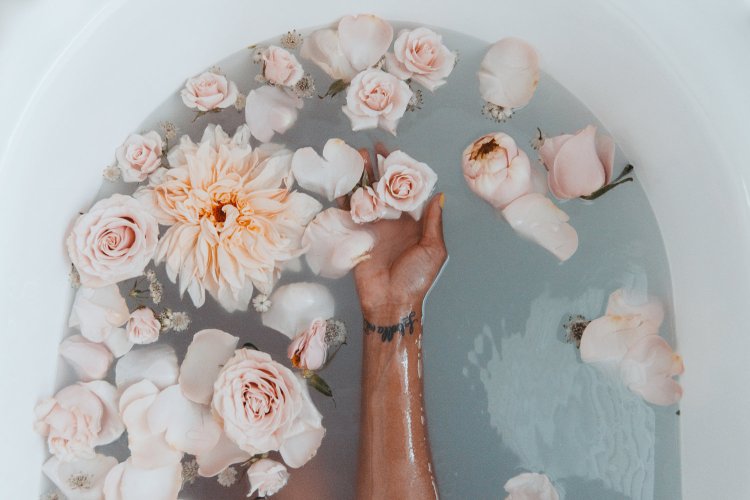
To boost the skin-soothing effects of apple cider vinegar, choose flowers and herbs that calm inflammation, and promote relaxation. You can add them to the bathwater directly, or wrap and tie them into a bit of cheesecloth, like when you are making a broth, to soak in their essence. Another way to use them is to brew a concentrated tea, strain, and then swirl into the bathwater—still nice and hot.

Here are a few flowers and herbs to try:

Lavender

Lavender has been used for centuries to relax jittery nerves, calm any feelings of anxiety [source], and soothe aching muscles. 

Rose Petals

A powerful mood booster, rose can moisturize, protect skin from oxidative damage [source], and soothe those itchy and flaky areas. It has also been shown in one study to help joint pain symptoms in patients with arthritis [source]. If you don’t have any roses in your garden or can’t find rose petals, feel free to use rosewater instead.

Peppermint

Peppermint is said to disinfect and calm inflammation [source]. But since peppermint oils have a tingling effect, it’s best not to use it on sunburned skin.

Chamomile

Often used in tea for its calming effects, chamomile has a similar effect on skin [source]. It’s especially soothing for itchy, irritated skin. 

Advertisements

Calendula

Calendula has antibacterial, antifungal, and anti-inflammatory properties, which makes it useful for soothing eczema and relieving irritation [source]. 

Rosemary

This medicinal herb has known therapeutic benefits. The many compounds within it have anti-inflammatory and antioxidant properties for the body, but they are also known to have beneficial effects on the emotions [source]. One study showed rosemary’s ability to provide relief of physical and mental fatigue in those with health issues [source].

Advertisements

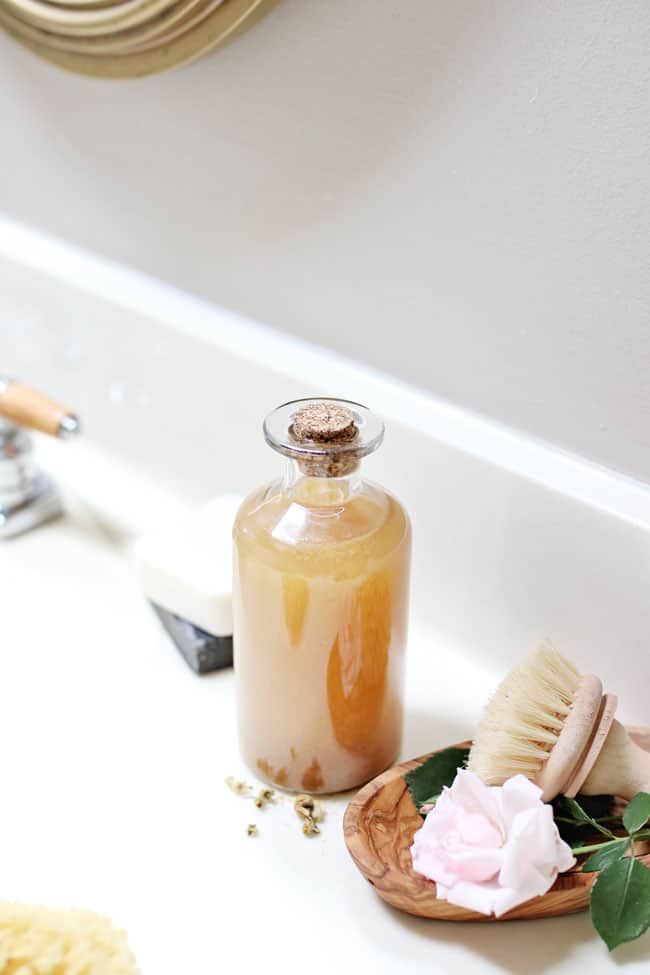
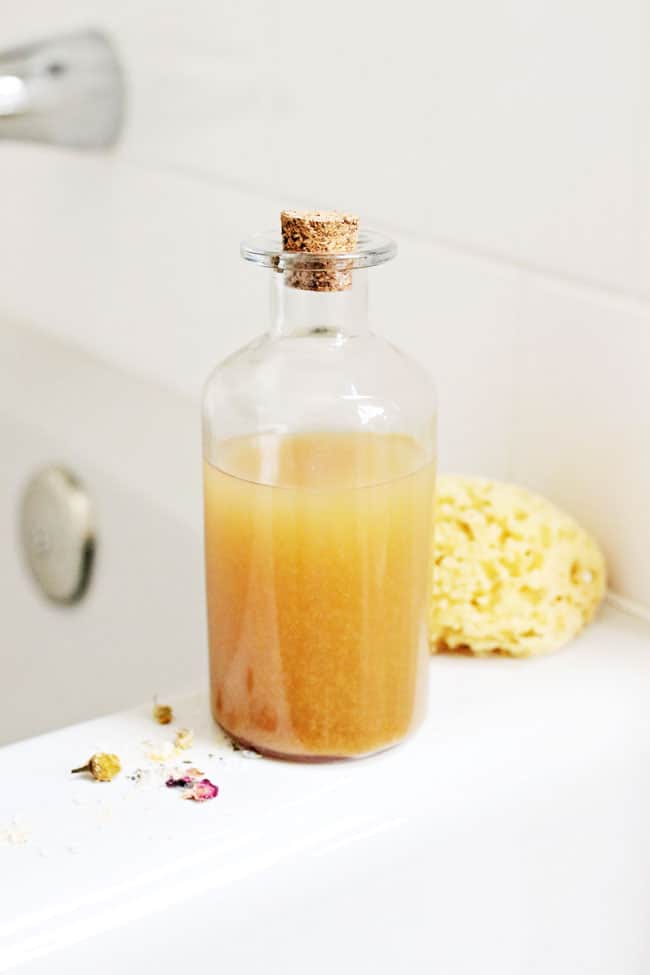
DIY Apple Cider Vinegar Bath

To reap the benefits of ACV, you can simply add some directly to bathwater. But to really kick things up a notch, why not try combining it with an anti-inflammatory ginger bath soak?

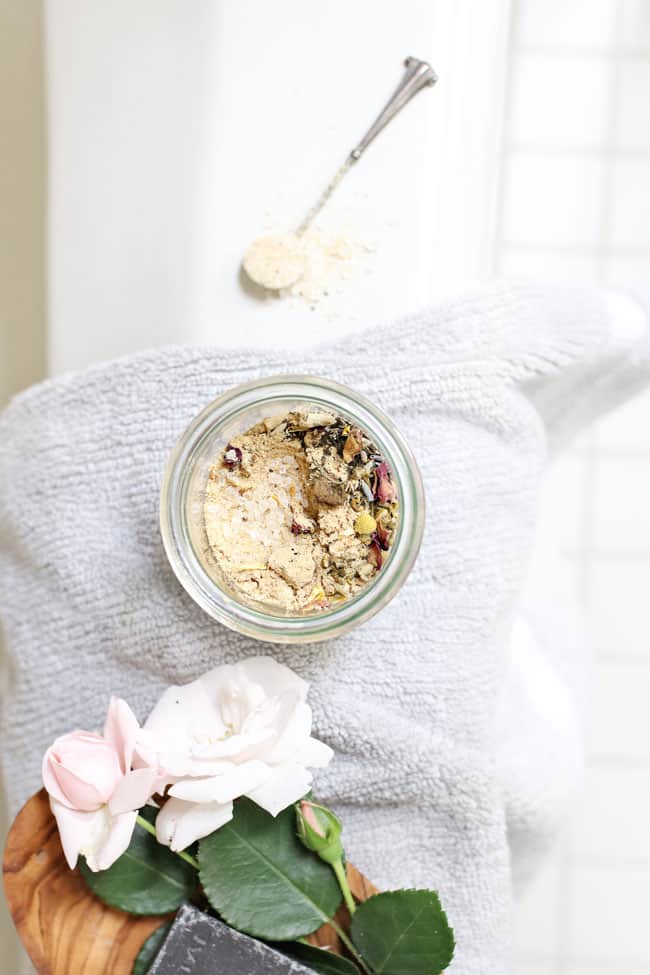
This apple cider vinegar bath is ridiculously easy to make, and chances are you already have everything you need in your kitchen. The Epsom salt helps to relax tired muscles and ease aches and pains, while the baking soda draws toxins from the body. The ginger has a thermogenic effect, which helps raise your body temperature and induce sweating for toxin elimination.

And last but not least, add some flower petals. While it doesn’t aid with the detox, flowers help make the whole thing look nice!

Apple Cider Vinegar Bath FAQs

Can I add oat flour or any flour substitutes to my apple cider vinegar bath?

Yes, definitely! Ground rice flour, oat flour, or even coconut milk powder would be great in this bath soak. I recommend adding about 1/4 cup to the mix.

Can I add essential oils to my bath instead of herbs?

It depends on the essential oils you use. Oils like lavender, frankincense, tea tree, and sandalwood oil can be an excellent addition to your bath. Dilute the essential oils with a carrier oil such as sweet almond or jojoba by combining 6-9 drops of essential oil to 1 tablespoon of carrier oil.

Read this article for more information on essential oils and how to mix CBD with your essential oils..

Can this be used in whirlpool tubs without affecting the jets?

Yes, it can. But, I would still check with the manufacturer and see if anyone has the same tub as you and see if they ever used essential oils and flowers to see their results. Or you can always research it, YouTube has become my best friend lol. If you’re still worried about it messing up your tub or your pipes, it’s better to be safe than sorry and just skip it. 

How much soak/vinegar should I use per bath?

I recommend using the whole thing: approximately 1 cup each of Epsom salt and vinegar. If you’d prefer, feel free to use less and store any remaining soak in your bathroom cabinet for up to a month.

How often should I do an ACV soak?

Soaking 1–2 times a week is considered safe. If you have sensitive skin or if you notice skin irritation getting worse, it’s best to take a break or consult a doctor. 

Advertisements

Other Beauty Uses for Apple Cider Vinegar

ACV shouldn’t just be relegated to the bath. You can also use it to clarify hair, clear up dandruff, and exfoliate dry skin. 

Apple Cider Vinegar Bath Soak

Vegan Gluten-free · This apple cider vinegar bath will soothe tired muscles, reduce inflammation, restore your skin’s pH balance, and detox the body. Add some fresh herbs for an anti-inflammatory healing boost.

Equipment

  • Small jar
  • Measuring cup

Materials

  • 1 tbsp Ginger, ground
  • 1 Rose petals or herbs, Dried (Optional)
  • 1/4 cup Baking soda
  • 3/4 cup Epsom salt
  • 1 1/2 cups Apple cider vinegar, raw
  • 1 Essential oils

Instructions

Combine everything except the vinegar in a jar and set aside.

Fill the tub with warm/hot water and add apple cider vinegar. Then add the entire cup of salt bath soak and stir with your hand until completely dissolved.

Notes

Hop in the tub and soak for at least 30 minutes. When you’re done, gently blot skin with a towel to remove excess water, and let the vinegar sink into the skin as much as possible. Now is a great time to apply moisturizer to seal in the benefits.

Advertisements

As always, this is not personal medical advice, and we recommend that you talk with your doctor. POST MAY CONTAIN AFFILIATE LINKS. BeautyLeeBar gets a small commission, whenever you lovely beauties purchase an item directly from the links that are provided in this post, past posts, and any other posts after this. However, this DOES NOT change the price or the value of the product(s) that BeautyLeeBar recommends. I repeat, this DOES NOT change the price or value of the product(s).

THANK YOU FOR READING. THANK YOU FOR ALL THE CONTINUOUS SUPPORT 🤍