Fragrances to Gift Your Loved Ones With, Purely Based on Personality

FTC Disclosure: Thank you to Dossier for gifting and sponsoring this post! All opinions are my own and is always honest. Also, be advised my videos and posts contain affiliate links, which means I may receive a small commission (pay) through links and codes that is provided. This does NOT change the quality of the product and this does NOT affect you in any way.

Advertisements

A signature style, drink, or selfie face—everyone has a certain something that makes them unique, and that often includes a signature scent. But we all know that finding a perfume that reflects all our personality traits is hard, and finding one for others is even harder. Will my free-spirited friend like something youthful or fresh? Would my mother wear something mysterious or timeless? These are the questions that can be too hard to answer on our own, especially when out holiday shopping.

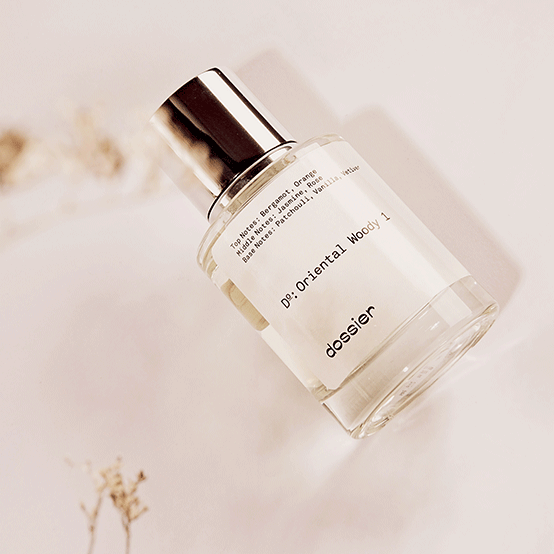
With that in mind, I was happy when Dossier reached out and asked if BeautyLeeBar wanted to do a collab…of course I said yes. What is Dossier? The dossier is a brand that offers affordable fragrances that has the same scents as a luxury brand like Chanel and Tom Ford. Dossier fragrances are also vegan, cruelty-free with 100% clean ingredients as well as a focus on sustainability. At $29 and $39, you can rest easy, knowing you made a smart choice for your skin, your health, and the environment.

grasse, a town on the french riviera

Dossier strives to design scents that exceed expectations. The dossier only sources their fragrances from Grasse, a town on the French Riviera long considered the world’s perfume capital. Using the same scent designers like many of the world’s most celebrated fragrance houses, Dossier strives to craft the best quality, cleanly made, products possible.

Advertisements

My scents consists of White floral, Jasmine, Lavender and Citrus. With that being said, it can be sometimes difficult to find scents that isn’t overbearing, but still has that classic loving fresh scent. Dossier helps match you to the perfect fragrance(s) by having you answer ONLY 6 easy questions. At the end of the questionnaire, are the scents that best reflect you. Dossier is having up to 25% off and I was gifted a special present for you guys. Dossier and I came up with code: LEE10 so all my BEAUTIES can save more this holiday without emptying the bank. And gentlements, this is for you too! Dossier is for anyone that is looking to smell good. When you smell good you feel good!

Dossier is my new go-to destination for fragrance. With Dossier having all your favorite luxury scents at a affordable cost, it is kinda hard to not share this news with everyone like coworkers, crushes, family and customers….Am I right or am I right! Everyone is cover including yourself. The best part is each fragrance comes with its’ own travel scent as well and if the scent isn’t up to your liking, you have 30-days to send it back and get your money back ( Full refund ). Just consider it our holiday/birthday present to you.

Dossier

Discover quality fragrances inspired by the iconic rich scents you love.

price depends, the fragrance is either $29 or $39. Use code: LEE10 for money off!

Here is the link: https://dossier.co/?utm_source=youtube&utm_campaign=bloggers&utm_medium=BELLA%E2%80%99S%20BOUTIQUE10

All I’m saying is, I have never had a complaint, ONLY COMPLIMENTS! Head over to Dossier now and purchase quality fragrances with iconic scents, the same scents that Armani and Chanel has just at a affordable price.

dossier.co

Advertisements

WHAT IS YOUR GO-TO FRAGRANCE SCENT(S)? AND HAS IT CHANGED SINCE WE BEEN IN PADEMIC? COMMENT BELOW!

FTC Disclosure: Thank you to Dossier for gifting and sponsoring this post! All opinions are my own and is always honest. Also, be advised my videos and posts contain affiliate links, which means I may receive a small commission (pay) through links and codes that is provided. This does NOT change the quality of the product and this does NOT affect you in any way.

POSTS YOU WILL ENJOY:

Why Keeping Your Skin Hydrated Is SO Important

When it comes to skin goals, one keyword that’s often overlooked is hydration. We’re often so busy trying to get rid of fine lines, minimize our pores, and get rid of hormonal pimples, that sometimes keeping our skin hydrated gets left behind. But the truth is, keeping your skin hydrated is one of the best things you can do for your skin – it’s a cornerstone of Korean skin routines – and you’ll likely find that by prioritizing this in your skincare routine that many of your other skin concerns will improve as a result.

New York-based dermatologist, Dr. Doris Day, explained, “Your skin is your first and best layer of protection for your body from the outside world. It functions at its best when it’s healthy and intact. When you have dry skin you have increased water loss from the skin which can end up not only leaving it dehydrated but also reduce its ability to naturally combat and repair damage from pollution, sun and other ‘insults.’” Therefore, making sure your skin is always hydrated means that your skin is able to function better.

Dehydrated skin lacks having enough water in it, which means it’s not a skin type, it’s something that everyone can experience, whether your skin is oily, normal or dry – in fact, sometimes excess oil can be caused by dehydration!

The Difference Between Dry and Dehydrated Skin

If you’re wondering what the difference is between dry and dehydrated skin, Dr. Day explains that “dry skin is related to the outermost layer of the skin, namely the stratum corneum,” whereas “dehydrated skin is skin that has had excess water loss due to both internal and external factors.” She continues to explain that “You can drink all the water there is and still have dry skin.”

However, dehydrated skin is usually down to a combo of internal and external factors, it could be that you’re not drinking enough water – you should aim for at least two liters a day – however, you can still have dehydrated skin while your body iis hydrated. Too much salty food, sugar, alcohol, and drinking too much caffeine are the most common contributors to dehydrated skin. External factors like “excess sun exposure and excess hot yoga, which essentially cook the water out of your skin,” will also cause skin dehydration.

Advertisements

The Difference Between Hydrated and Dehydrated Skin

“Your skin contains a key ingredient called hyaluronic acid. Its job is to help with the water balance of the skin and even of the entire body. When your skin is well hydrated, the hyaluronic acid in your body binds water and that gives your skin firmness (the medical term for that is turgor). When your skin is dehydrated it will start to sag and that can make it look older and more wrinkled,” Dr. Day explains.

Essentially, Dr. Day says that “Dehydrated skin can look saggy, crepey and tired,” and that you may also notice increased under-eye bags. As well as these tell-tale signs, other signs to look for including your moisturizer absorbing particularly fast (it’s literally trying to ‘drink’ in the moisture), and it could cause your makeup to look patchy. Well-hydrated skin is a sign of good barrier function, which is important for protecting your skin.

Another point to note is that as we age, our skin produces less natural moisturizing factors like ceramides, lipids, hyaluronic acid, and fatty acids, so as you age, keeping your skin hydrated and well moisturized becomes even more important.

RELATED POSTS:

How to Keep Your Skin Hydrated

Keeping your skin hydrated is a combination of ensuring you’re drinking enough water, going easy on the things we know dehydrate – and which are generally just not good for our body – like the aforementioned alcohol, sugar, and salt, and topically applying moisturizers to avoid water loss. If you’re dehydrated, Dr. Day says to “Avoid excess salt, moisturize well, especially at night.”

When it comes to products, Dr. Day says that ceramides and hyaluronic acid are the best for hydrating the face. When using hydrating products, it’s important to ensure you lock everything in with a moisturizer, which typically includes three types of ingredients: Emollients, humectants and occlusives. Dr. Day explains what each does;

Emollients: These ingredients moisturize the skin and help with skin barrier restoration. They smooth and soften the skin filling the gaps between cells with droplets of oils. Some emollients can also be considered occlusives. Emollients include, jojoba oil, ceramides, aloe vera, and oleic acid.

Occlusives: It creates a barrier on the skin and occludes (or blocks) water from leaving the skin from the inside, essentially trapping moisture in the skin and preventing other ingredients from penetrating the skin from the outside. These are typically thick and often greasy products. A classic example of occlusives include shea butter and petrolatum, which Dr. Day says are “great for the body and for those with very dry skin, but can be comedogenic and would not be ideal for those who are acne-prone or with oily skin.”

Humectants: “Ingredients like hyaluronic acid and lactic acid, they help pull water into the skin and hold it there. They are not usually occlusive,” Dr. Day tells us. Other humectants include honey, ceramides (which are essentially the building blocks of skin), glycerin, and amino acids.

Dr. Day also adds, “If you have very dry skin, you might select one that is richer and more occlusive. If you have combination skin, you would look for one that is lighter and more of a humectant.”

Dr. Day shares her top tips for keeping your skin hydrated:

Don’t over-exfoliate: “ That will strip the skin and lead to excess water loss.” Think about skipping out on your AHAs or opt for a more hydrating AHA, like lactic acid.

Hydrate deeply at nighttime: “ Use a richer moisturizer at night since you naturally lose more water from the skin at night.”

Go easy with actives: “ Don’t pile on the highest concentration of every acne medication; salicylic acid, glycolic acid, retinols are great but no need to use them all in their highest concentration or all at one time.”

Focus on your wellness: “ Getting enough sleep, minimizing alcohol intake, having a healthy diet all helps your skin function at its best.”

Choose skincare wisely: “ Using the right products for your skin will help it best use its own natural resources to repair and age beautifully.”

Advertisements

Dr. Day’s top product recommendations for instant hydration:

Doris Day M.D. Ultra Rich Peptide Renewal Cream, $103: “It contains ceramides, shea butter, peptides and vitamin E, and improves the skin barrier. You get an immediate healthy glow and a great anti-aging effect.”

Skinceuticals Triple Lipid Restore 2:4:2, $128: “It also contains ceramides and its claim is that it helps improve tolerability to retinol.” The formula also packs essential lipids to restore skin elasticity and hydration cycles, and vitamin E for skin repair and to defend against environmental damage.

When your skin is particularly parched and dehydrated, be sure to stay away from ingredients like retinol and AHAs and BHAs. Instead, load up on hydrating ingredients like ceramide serums and hyaluronic acid and glycerin facial mists, throw on a sheet mask, and lock it all in with a rich, hydrating moisturizer. Whenever we need an instant hit of moisture, we always go to our FARMACY Coconut Gel Sheet Mask, $6, which is packed with coconut, cucumber and sodium hyaluronate to soothe and hydrate your skin, and allantoin and niacinamide to brighten and protect. The mask is dripping in serum thanks to a unique double-layer-fiber technology that allows it to hold significantly more of the powerful vitamin-rich essence than any conventional sheet mask.

TATCHA Luminous Dewy Skin Sheet Mask, $12, is a silky soft, skin-fitting sheet mask that delivers a healthy drink of ultra-hydrating botanical oils and extracts for a dewy glow in just one use. Packed with Rice germ oil, Okinawa Red Algae, Wild thyme, and Sweet Marjoram. The mask feeds skin with Japanese anti-aging superfoods such as a fermentation of green tea, rice, and algae—ingredients at the heart of the Japanese diet and time-tested skincare rituals—that restore skin health and youthful radiance.

Check out some of our other fave intensely hydrating products here.
Advertisements

REN PERFECT CANVAS CLEAN PRIMER

Were do I describe my interest in makeup primers, it would hover between mild to semi-interested. Traditional primers? Not so much since I limit my makeup use to an occasional tinted moisturizer application when I’m in a rush or as an emergency intervention. A good eye cream under my Tom Ford Highlighting Illuminating Pen is all I need to avoid the midday crease. 

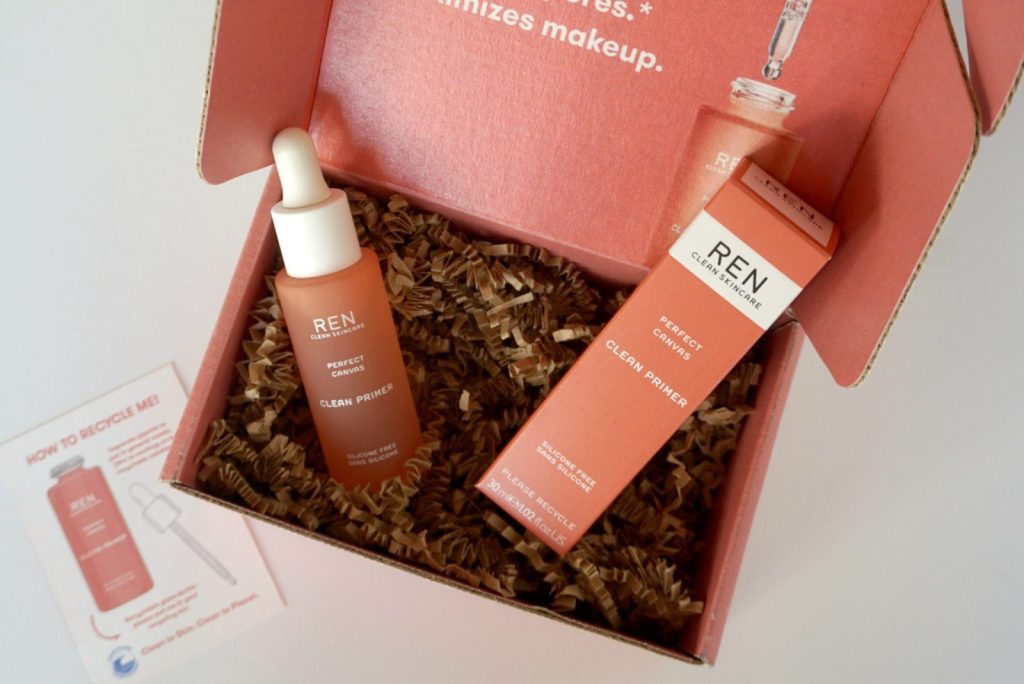
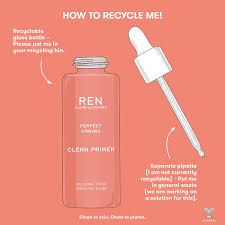
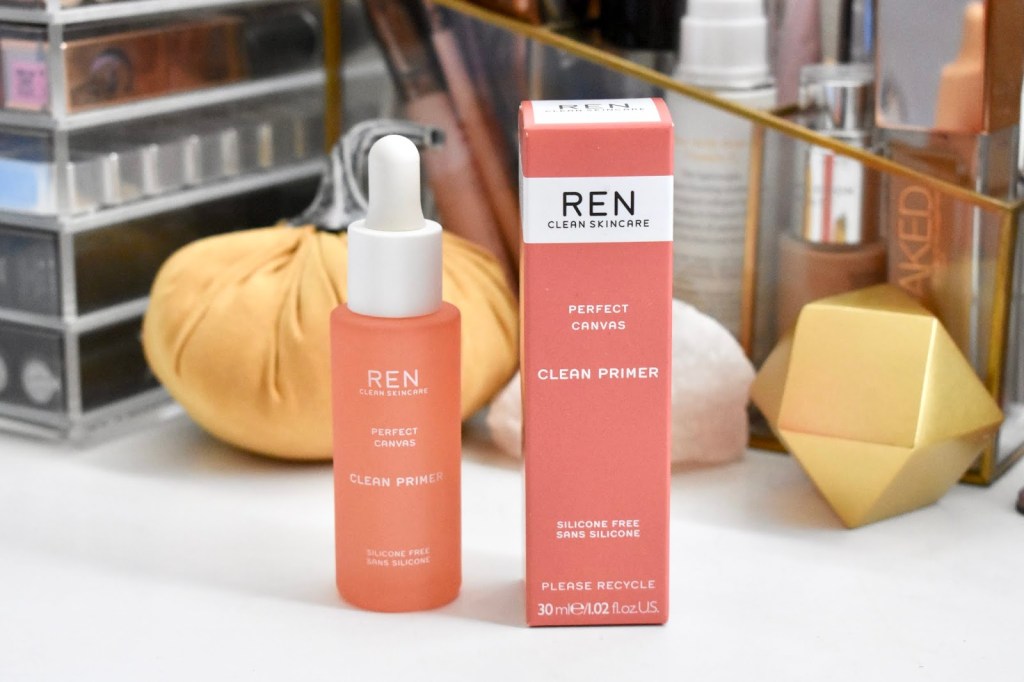
REN Clean Skincare has recently made a new look at their Clean Makeup Primer. The product now comes in recyclable glass bottle that you can put in your recycling bin once you are done. I love when companies find ways of reducing waste and REN has really made it simple. The REN Skincare Clean Makeup Primer is made to minimize pores and help to keep makeup stay put all day long. Find out more about this below and if it worked out for me. 

Over the last few years, however, I’ve come to see that the recently launched formulas make for intriguing skincare hybrids. The Silk Canvas from TATCHA, for example, fills in my crater-like pores flawlessly and the compact jar lasts forever. So when REN announced the re-launch of Perfect Canvas, their pore minimizing claims got me. I know it isn’t possible to change the size of a pore but if I combine deep cleansing efforts with a formula that helps to refine their appearance, who am I to argue?

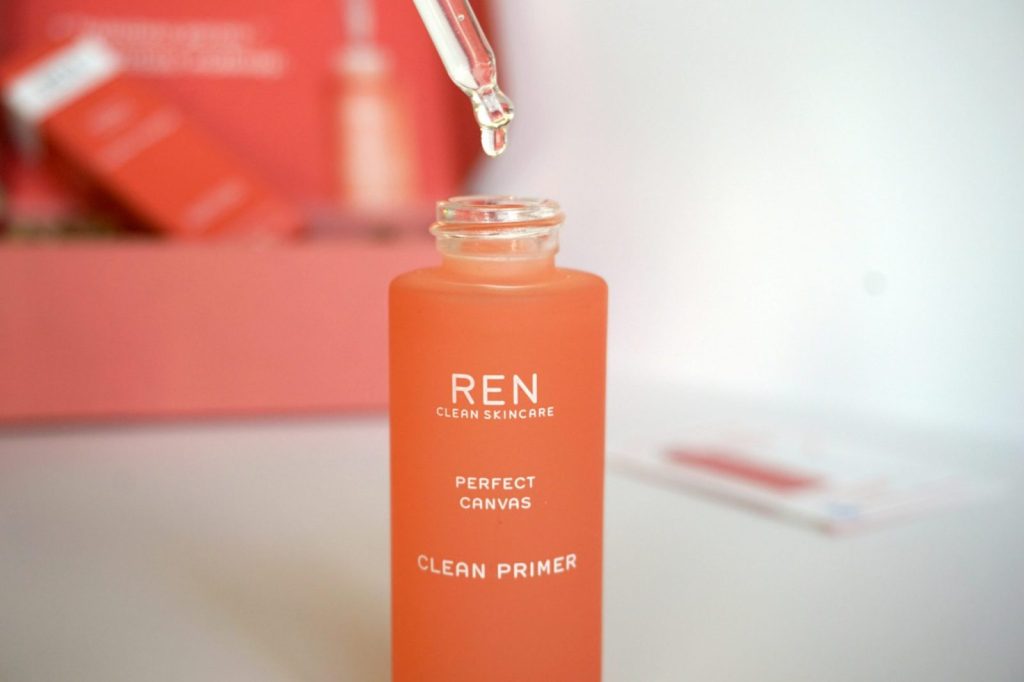
At first glance, the Perfect Canvas bottle with dropper dispenser looks just like any daily hydrating serum. The liquid solution has a slightly viscous texture but doesn’t feel sticky or slippery. Since the formula is silicone free, it doesn’t have the spackle-like slip that I forever associate with the original Smash box primer. It doesn’t feel oily and isn’t heavily fragranced. True to the name, it’s perfect in its simplicity.

SO WHAT DOES IT DO AND WHY DO I LIKE IT?

The REN Clean Skincare Perfect Canvas Clean Primer ($45) is Silicone-free, Pore-minimizing, and makeup-gripping.  A little bit of this product goes a long way so you only need about 2-3 drops. It works best when you pat it into the skin and then proceed with your makeup routine. It does have a matte finish making this the perfect primer for those with oily skin. Even though it’s matte, I still found the primer to work great on my skin which is on the dry/combination side. It helps to even out my skin and makes it smoother for my makeup to glide with ease. This is a primer that I can see working for everyone, but especially for those with oily skin. You will love this product because it locks makeup down for hours and you can recycle it when you’re done.

I use it as the last step in my skincare routine and it delivers a surprisingly tightening effect. Think super thin layer of latex hugging your skin but not in a creepy American Horror Story kind of way. It’s not quite Spanx for your face but it instantly firms and adds a real life filter effect. 

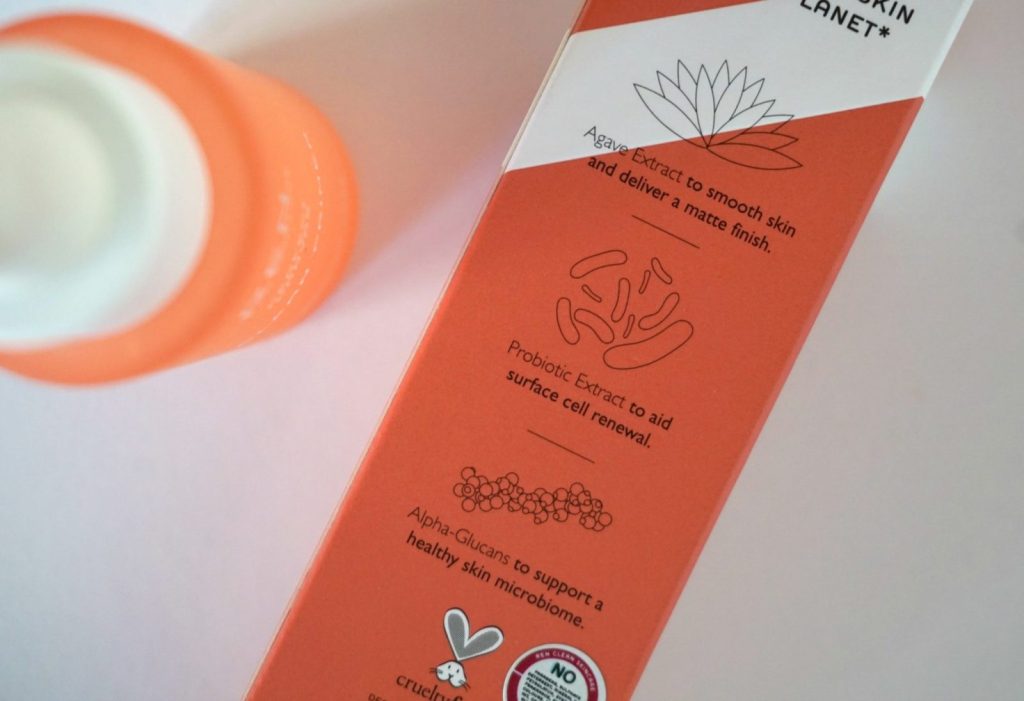
Whether I choose to wear makeup (and when I do, it’s Fenty Beauty Pro Filt’r Hydrating Primer) or not, Perfect Canvas serves as an impressive pore-refining and line-blurring veil. The glass-like smoothness results in a glow that makes me look like I do eat super-greens. In addition to its makeup extending benefits, the formula boasts alpha-glucans, agave, and probiotic extracts. It’s really a makeup primer with treatment serum benefits.

Do I use Perfect Canvas everyday? No. But I when I want to juice up and tighten my complexion before a tinted moisturizer prior to going out, it’s my go to application. It prolongs the longevity of the tint as well. If you’re not a fan of silicone-based makeup primers, the new and improved REN formula is the perfect choice. 

You can find this product at Sephora stores and online!

CLEAN BEAUTY– WHAT IS IT AND WHY IT’S IMPORTANT


The beauty buzzword and movement of the moment: “clean.” Along with other terms like “green” and “natural,” it’s used to describe every type of skincare, hair, makeup, and fragrance product, from moisturizer to makeup, shampoo to soap.

Ok, you guys have seen all the talk about switching to clean beauty on my Instagram feed, but what is clean beauty? Clean beauty is products that are not toxic to your body, and free of harmful ingredients. I was pretty shocked—actually, floored—to learn that the US beauty industry is one of the most unregulated industries. Companies can basically put any ingredients they want in a product—harmful or not. If you’re anything like me, you probably try to live your best to live a healthy lifestyle by eating well and reaching your fitness goal with the help of FlattummyApp. But then you are slathering yourself with chemicals, parabens, and silicones — it’s counterproductive!

Retailers know that consumers want cosmetics and beauty products that aren’t laden with potentially harmful ingredients — for example, Sephora recently launched “Clean at Sephora,” an initiative in which the beauty brand badged over of its 2,000 products as “clean,” in this case meaning free of ingredients like sulfates, parabens, formaldehydes, phthalates, and mineral oil.

But identifying the “cleanest” makeup products or “safest” cosmetic brands on the market isn’t all that simple. Despite a booming beauty industry, U.S. laws for cosmetics safety are virtually unchanged since they were created back in 1938. Here — unlike in Canada and Europe, where well over 1,300 unsafe ingredients are banned for use in beauty products — unbelievablythe FDA has prohibited only 11 ingredients or related compounds.

While legislation is pending to change this, progress is slow. The Personal Care Products Safety Act, supported by the Good Housekeeping Institute and beauty industry-leaders, would require the FDA to review the safety of at least five ingredients per year (at which rate it could take hundreds of years to even test for risks and dangers!). Yet this small step has remained stalled in the Senate since it was proposed in 2015. And there is no established industry-wide definition for “clean” or “natural” beauty claims. Being aware of what clean beauty is and educating yourself is so important which is why I wanted to share  Clean Beauty 101 today.

YOU MAY ALSO LIKE:
SELF-SOOTHING PRACTICES EVERYONE SHOULD KNOW
HAIR ACCESSORY SPOTLIGHT: SOIELI HAIR SLIP
WHY YOU’LL NEVER HAVE TO BUY ANOTHER MAKEUP WIPE AGAIN

CLEAN BEAUTY 101

So, what does “clean” beauty really mean?

The term “clean beauty” gets thrown around quite a bit, but few people know what the phrase actually means. Which is understandable: terms like “natural,” “botanical” and “green” are completely unregulated by the FDA, meaning anyone can use them. At its most basic level, a true clean product avoids the use of ingredients like parabens, sulfates, silicones, phthalates, and synthetic fragrances.

Essential oil dropping from leaf .Aromatherapy.

“Natural” or “All-Natural”

What it implies:
A product is made with ingredients sourced from nature — be they plant, mineral or animal — that are minimally modified.

GH Lab lowdown:
Few ingredients are used as-is from nature. “Natural” doesn’t always mean healthier: Some natural substances can even be harmful.

Trust it when:
You see the Ecocert Natural Cosmetic stamp, which confirms that at least half the ingredients are plant-based.

the scientist,dermatologist with the organic natural product in the laboratory.research and development beauty skincare concept.blank package,bottle,container .cream,serum.hand

“Organic”

What it means:
The product’s ingredients and formula are produced without harmful pesticides.

GH Lab lowdown:
This is the only government-regulated term in the “clean” beauty space.

Trust it when:
It is USDA-Certified Organic (contains at least 95% organically cultivated ingredients) or NSF Organic-Certified (contains at least 70% organic ingredients).

Creative layout made of flowers and leaves with paper card note. Flat lay. Nature concept

“Naturally Derived”

What it implies:
Natural ingredients in a product have undergone some chemical processing.

GH Lab lowdown:
When you see this term or a similar one like “natural origin” or “made with natural ingredients,” look for a qualifier that indicates what percentage of ingredients it applies to.

Trust it when:
The product carries the Good Housekeeping Seal, since the Good Housekeeping Institute Labs verify all product claims.

natural cosmetics, a leaf of a fern and a cone

“Chemical-Free”

What it implies:
A product doesn’t contain harmful chemicals like formaldehyde, toluene, and lead.

GH Lab lowdown:
Not all chemicals are created equal; plus, every ingredient (natural or synthetic) is made up of chemicals. They are even part of human biology!

Trust it when:
The claim is ingredient-specific, as in “paraben-free,” and the product has earned the Good Housekeeping Seal (we obtain data to validate all ingredient claims).

Herbal dermatology cosmetic hygienic cream with flowers skincare product

“Nontoxic”

What it implies:
A product is not harmful to humans.

GH Lab lowdown:
Such a wide-ranging term is meaningless unless it refers to a specific ingredient. Almost anything, even drinking water, can be harmful in large quantities.

Trust it when:
Never, since it cannot be proven or disproven.

Massage oil bottles with lemons and olive branch

“Green” or “Sustainable”

What it implies:
Products are developed with minimal present and future environmental impact.

GH Lab lowdown:
This broad term covers everything from what’s in a product to how it’s made, packaged, distributed and disposed of.

Trust it when:
You see certifications like Cradle to Cradle for sustainability and the Green Good Housekeeping Seal, which validates both sustainability and product performance.

Why is Clean Beauty Important?

Your skin is the biggest organ and absorbs up to 60% of what you put on it. Yet so many of us are completely unaware of what’s inside our products and believe the government will oversee our safety. The truth is, that there is a serious lack of regulation of U.S. Cosmetics.

The US has not passed a law regulation personal care products since 1938. Since then, more than 80,000 chemicals have been introduced into products on store shelves.  Only 10% of these have been tested for human safety.

Just as a comparison, while the UK has banned nearly 1,400 harmful ingredients in personal care products, the US only partially prohibits 11. The FDA even allows chemicals known to cause cancer including parabens (which are known to disrupt hormone function), phalates  (an industrial chemical that can damage the liver, lungs, and reproductive system), formaldehyde, lead and more.

How can you really go “clean” with your beauty routine?

The BLB Lab’s top tips on making truly natural and sustainable clean beauty choices:

1. Do an ingredient check.
For a deeper dive into ingredients, the Beauty Lab recommends consulting resources like the Made Safe Hazard List and the Environmental Working Group Skin Deep database. Both nonprofits aim to collect the latest science on ingredients and offer recommendations for safety-certified products across categories.

2. Choose fragrance- and dye-free.
Products that contain no fragrances or dyes are by nature better for the environment, as they use fewer ingredients, and people can have sensitivities to both. Even fragrance from natural sources can cause reactions. Plus, brands aren’t required to list the ingredients in “fragrance” on labels, so in many cases there’s no way to know what’s in those products.

3. Pick less packaging.
The more minimal the packaging, the better for the earth. Whenever possible, seek out products with fewer components and without parts or materials that can’t be recycled (aim for codes 1 and 2) and unnecessary elements like outer boxes. Keep your eye out for the winners of BLB’s new Sustainability Awards for beauty, home care and toys, to be announced this fall.

4. Buy (green!) beauty that gives back.
Seek out beauty brands that donate a portion of their proceeds or make a contribution to environmental causes.

What Can I Do Right Now to Protect Your Health?

When I am purchasing a new product from toothpaste or laundry detergent to shampoo or nail polish, I use the Environmental Working Group website. EWG created the Skin Deep Database that includes information on more than 61,000 products and rates them for safety.

My tip is to slowly switch out products one at a time so it doesn’t seem daunting and expensive. I would start with the products you use daily. I love Native Aluminum & Paraben Free deodorant and their sulfate and paraben free body wash! Make sure to stay tune for a full guide!