To give us all some credit, we’re sure a lot of us SPF enthusiasts are doing it correctly. Maybe even overdoing it. Which to us, is correct. One can never have too much sun protection! But there are many of us out there haphazardly slapping on the SPF sparingly, here and there, just to say we did it. Most often, that’s like not doing it at all.
Here are few expert opinions on how we should be applying sunscreen, day in and day out.
Reapply
People really need to understand the importance of re-application of your sunscreen, every day. Because that’s not just a thing our moms like to say to annoy us. SPF is only protectively active for so long, so if we never reapply, it’s literally not working hours later—we might as well have none on. FDA recommends that you reapply every two to three hours, and more often if you plan on engaging in high-intensity activities.
Make sure lips and eyes are covered
Lately, us beauties have been using an SPF mist as our go-to for full face, neck, and chest sunscreen every day because it’s great over makeup. It’s a personal preference whether or not one needs a different sunscreen for lips and eyes, but it’s super important if your eye area is extra sensitive, and many people’s are. What is crucial is that you stay covered, so if you’re avoiding sunscreen on your lips or eyes due to sensitivities, certainly get products just for that area.
Don’t forget the décolletage
You definitely want to remember sunscreen on the décolletage as well to avoid wrinkles and dark spots over time. I use it anywhere and everywhere my skin is constantly exposed—so that absolutely includes this gorgeous area of the body. The skin here is not as delicate as the face, but definitely more delicate and wrinkle-prone than other areas of the body, so don’t skimp on the neck and chest.
Especially while you’re driving, your hands are always exposed to the sun, which can often lead to skin damage. Some say our hands are the first to tell our true age, and that’s because they are so prone to wrinkling and sunspots. It’s easy to forget the hands, which arguably take the most beating over any other part of the body, and they are almost never unexposed.
If you sit in traffic often …
And if you live in Miami, you just might. When you’re driving, your entire upper body is exposed to the sun, and UV rays can definitely penetrate through the windows onto the skin. I highly recommend applying and reapplying sunscreen on your face, neck, chest, and arms even if you’re sitting in the car all day.
When things get wet
Swimming, versus just sweating? Not every day is going to be a wet and wild pool or beach day, but hot summer days have an effect on your level of protection as well. According to the FDA, there’s no such thing as waterproof sunscreen. So yes, sweating can lift your sun protection up from the skin through your pores, and any material that wipes or wicks sweeps it away along with the sweat. When I know I’m going to sweat a lot or plan on swimming, I make sure to reapply my sunscreen more often.
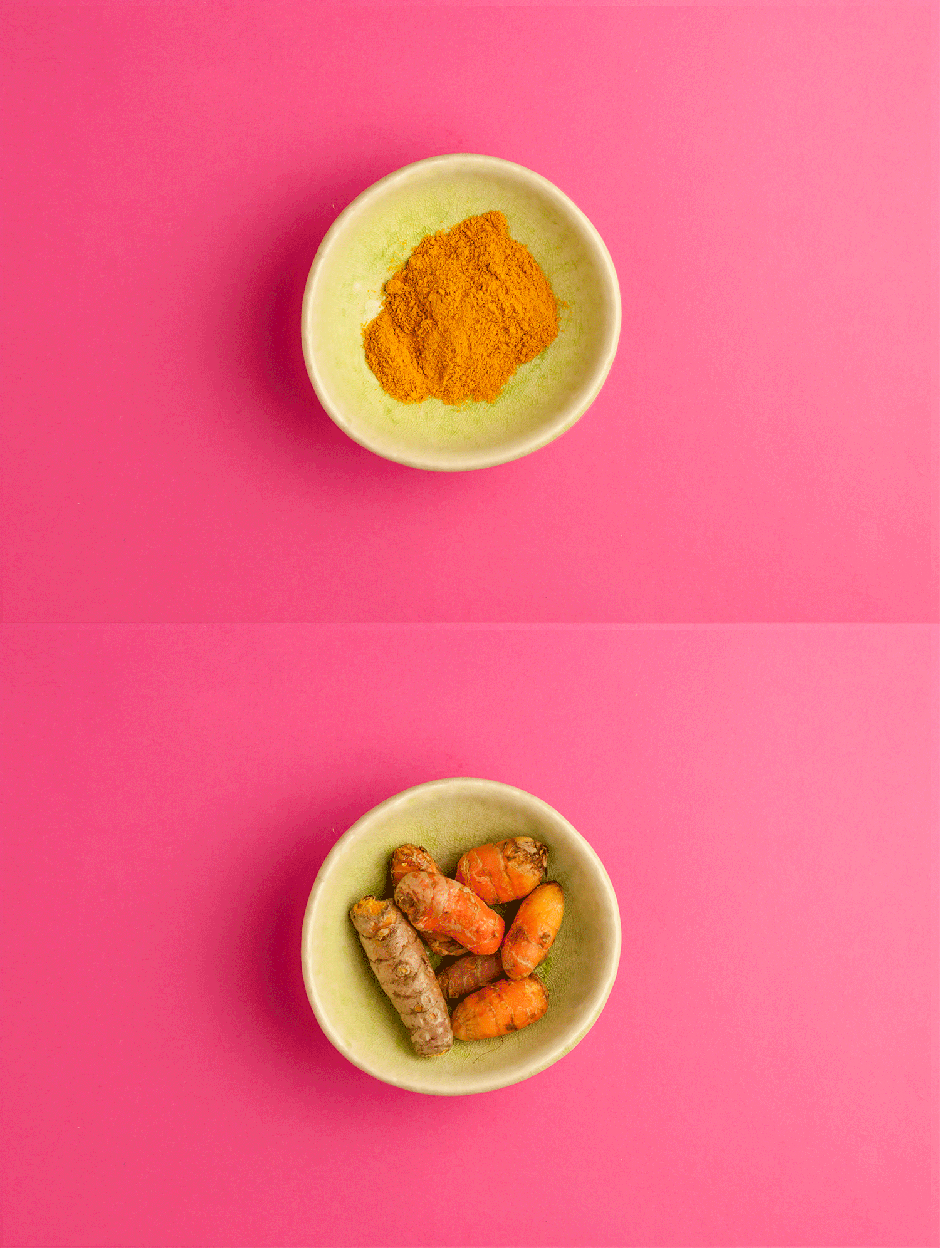
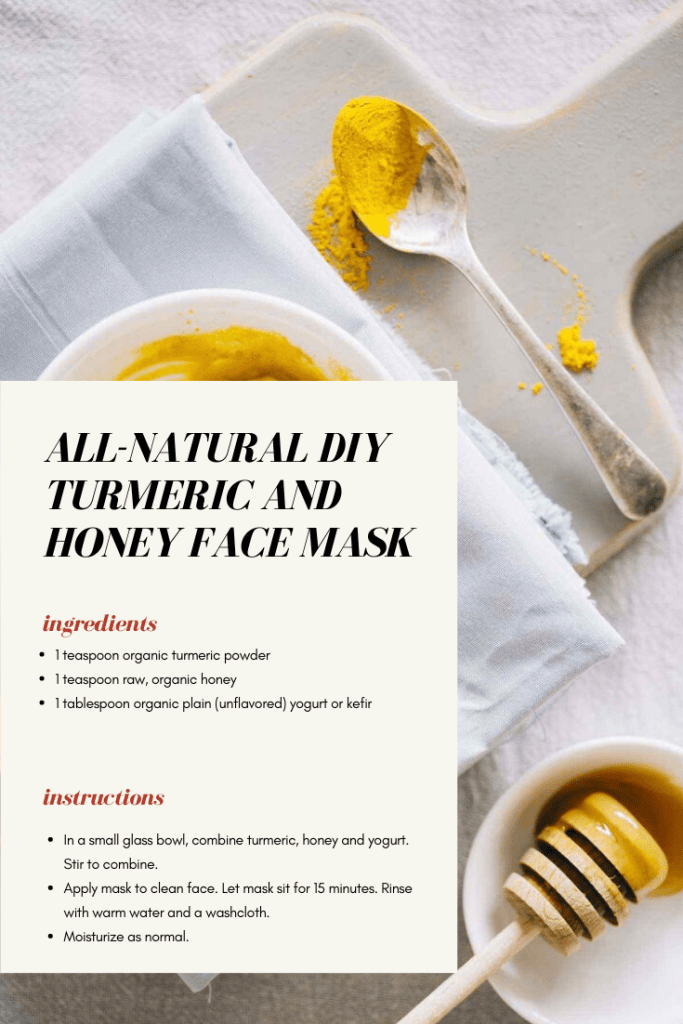
This quick, easy and inexpensive homemade turmeric and honey face mask is as simple as pouring 3 natural ingredients into a bowl, stirring and…THAT’S IT! You’re done. This post also includes helpful reader FAQs.
We’re back with another DIY homemade beauty recipe. I’m so excited to share one of my new favorite skincare masks: a 3-ingredient DIY Face Mask for clear, glowing skin!
Yep, you heard me right–with just three ingredients, you can make a homemade face mask in under two minutes flat that will have a MASSIVE impact on your skin. Here’s a few of the results you can expect after using this mask a few times:
Advertisements
🤍 Reduced acne, clogged pores, breakouts and blackheads
🤍 Dry skin will be hydrated with fewer wrinkles
🤍 Lightened dark spots and acne scars
🤍 Reduced redness and a more even, brightened skin tone
How is all of this possible with just one homemade face mask? Take a look!
Hello Beauties, by now everyone knows how Lee and her other Editors are obsessed with skincare. If you didn’t know then you have either been living under a rock or new here; so ” Welcome To BeautyLeeBar ” aka your new favorite beauty go-to blog. Of course, we are still learning about our skin and learning…
Did you know that turmeric is one of the most powerful herbs for preventing, fighting and even reversing disease? The dozens of healing properties found in the root make it just as effective (if not more) than conventional medicine. (source)
Typically, turmeric is ingested, either from food or in supplement form. But it can be just as healing when applied directly to your skin thanks to its anti-inflammatory abilities. The active ingredient in turmeric, called curcumin (it’s what gives turmeric it’s orange hue), is incredible at purifying and cleansing the skin, resulting in a healthy, bright glow (it’s a ritual at Indian weddings for this very reason!).
Turmeric is also great for acne due to its antiseptic and antibacterial properties, which fight pimples and breakouts, cleansing clogged pores and blackheads. Turmeric even reduces oil secretion from the sebaceous glands, preventing acne from recurring. And its anti-inflammatory properties help soothe flare-ups. (source)
If you want skin that glows with a capital “G,” it comes down to one thing: exfoliation, exfoliation, exfoliation. You’ve got options here: You could slather on an at-home peel with glycolic or lactic acids, pop the top on one of your favorite face scrubs, or whip up a scrub at home with a gentle exfoliant…
Using honey as part of your skincare routine is easily one of the best things you can do for your skin. But not just any honey. At the very least, you want to make sure you’re using an organic, raw, unpasteurized, unfiltered honey, ideally from a local source.
Why is this so important? Most conventional honey bears are not much different from high fructose corn syrup. Not only that, but when honey is processed using techniques like pasteurization or filtering, the nutrients are removed in the process, leaving with you nothing but sugar.
On the other hand, raw honey is full of amino acids, B vitamins and dozens of vitamins and minerals, like Copper, Iron, Magnesium, Potassium and Zinc.
Even better? Manuka honey, which is produced in New Zealand by bees that pollinate the Manuka bush, actually has four times the nutritional content of normal flower honey AND considerably higher level of enzymes, which create a natural hydrogen peroxide that works as an antibacterial. (source)
Starting to understand why honey is so amazing for your skin? Considering honey’s antimicrobial, anti-fungal, and anti-inflammatory properties, honey has been proven to calm redness and irritation, cleanse pores, and soothe and heal skin, whether your ailment is acne, eczema, or even burns and wounds (I’m looking at you, face picker…oh wait, that’s just my reflection in the mirror 😉 )
If you, like me, just can’t help yourself but to pop pimples, you’ll love the effect of honey on your skin! Honey is proven to lighten skin, decrease the appearance of scars and increase healing and tissue regeneration. (source)
Honey improves skin tone and texture, and thanks to its natural antioxidant levels, it’s an effective anti-aging treatment (read: fewer wrinkles). It’s also a natural humectant, meaning it draws moisture from the air into the skin where it’s penetrated and retained for long-lasting hydration. (source)
I have always been a fan of gold mask treatments and knew the benefits. But, truthfully, I just started using gold masks around March of this year. If you follow me @beautyleebar then you know I am a firm believer in self care which sometimes include me trying on different face masks. Discriminating against beauty…
As if this mask wasn’t amazing enough just with the honey and turmeric, I’ve pushed it full-on over-the-top (in the best way, of course) by adding some natural probiotics in the form of yogurt or kefir.
I actually recommend using coconut kefir for this recipe, as you’ll remove all dairy and lactose concerns and add insane amounts of probiotics to the face mask.
In fact, kefir is one of the most probiotic-rich foods in the world with incredible medicinal and healing benefits (source). But yogurt is totally fine too–just make sure it’s plain/unflavored.
I’m obsessed with DIYs and always have been since I was a teenager. This papaya and honey DIY mask is one of my all-time faves as it brightens, hydrates, improves tone and texture, and most importantly leaves your skin glowy AF. It’s also great for acne-prone skin as it can help reduce inflammation and fight acne-bacteria,…
With its natural anti-bacterial and anti-fungal properties, yogurt and kefir are also chockfull of protein, calcium and vitamin D, which help fight acne, nourish your skin, leaving if soft and hydrated. (source)
Not only that, but the lactic acid in yogurt will help dissolve dead skin and tighten pores by gently exfoliating your skin to create a natural glow and prevent breakouts. Did I mention this natural acid will also diminish the appearance of lines and wrinkles?
AND AND AND, when used regularly, yogurt has very mild bleaching properties to help with discoloration, blotchiness, acne scars and age spots. YES!
If it wasn’t enough that half of our lovely faces must remain covered by masks these days, now we are starting to suffer breakouts as a result. It doesn’t help that we are entering a heat wave and the height of summer is around the corner, just in time to bundle up an area we typically let…
If you’ve been following BEAUTYLEEBAR, you know that the sheer amount of toxic and harmful chemicals and additives allowed in our skincare products is truly APPALLING!
Unfortunately, face masks are no different. Most store-bought options are brimming with artificial colors and preservatives, hormone-disrupting chemicals like parabens and phthalates, harsh alcohols and acids that irritate our skin and cause allergies, and even carcinogenic additives.
If those toxic chemicals weren’t enough to convince you to make your own, consider the AMAZING MONEY SAVINGS you’ll find when you make your own face masks.
How four eyes become five After months of procrastinating to get a new prescription, I finally decided to splurge on a pair of glasses… can’t wait! But with them came a surprise: acne. It seemed like there was a new pimple on the bridge of my nose basically every other day. Because I hadn’t purchased my new…
And, of course, by now you know that I’ve gotta take a minute to just talk about how easy it is to make your own skincare products.
I often get comments from readers saying things like “I just wish I had the time” or “If only I had the discipline to make my own products.”
Listen, this recipe is literally as simple as pouring THREE natural ingredients into a bowl, stirring and… THAT’S IT! You’re done. It’s been less than 30 seconds and you’ve made an incredible face mask!
BUT, if you’re still not convinced you want to make your own face mask, there are a few safer store-bought options I’d recommend:
But just note that none of these face masks combine the healing powers of honey AND probiotics! For that, you’ll just have to add in those ingredients.
Advertisements
FAQS FOR THIS DIY TURMERIC HONEY FACE MASK
Inevitably, I always get a lot of questions about DIY skincare products. No complaints–I LOVE hearing from you! But to help a baddie out, I thought I’d share some of the most frequently asked questions I get about this homemade face mask:
🤍 How to prepare this DIY Turmeric and Honey Face Mask? I’ve already talked about how easy it is to make this mask, and the detailed recipe below should help answer any remaining questions you have. But if not, feel free to leave a question in the comments and I’ll be sure to answer.
🤍 How to apply a Turmeric Honey Mask? If you’re looking at this mask and wondering how to use it, don’t worry–it couldn’t be easier. Simply use your fingers or a clean paint brush and apply the mixture directly onto clean skin, covering your entire face except for your eyes, nostrils and lips. Leave the mask on for 10-15 minutes.
🤍 How to remove a Turmeric Honey Mask? Likewise, you might be wondering how to get this mask off. Again, it’s easy as pie. Over the sink, splash your face with water, gently massaging the mask off your face until there’s no more left on your skin. It’s just like any other face mask you’ve tried before 🙂
🤍 How to store homemade face masks? Unlike store-bought masks that are filled with toxic preservatives, this homemade face mask recipe is just for one batch, or a single-use that should be applied to your skin as soon as it’s made. Otherwise, the mask will harden if left out too long, so make it as needed.
🤍 How often should you use this Turmeric Honey Mask? The skin on our faces is extremely delicate, and even if you don’t think you have sensitive skin, I’d recommend using a mask no more than 2-3 times per week, max. I try to use this mask once a week, and then this DIY Charcoal + Clay Mask a few days after. Usually I’ll put the mask on during or after I take a DIY Epsom Salt Detox Bath.
🤍 Does this turmeric face mask stain? I recommend only leaving them on for 10-15 minutes to avoid staining your skin temporarily. If you follow the instructions, you should be able to use this turmeric face mask without staining. BUT, if you run into any trouble, don’t worry! Simply apply this DIY Makeup Removerto a cotton pad and swipe it over your skin until all yellow/orange residue of the mask is removed. You can also try washing your face with a mild cleanser. Be careful not to get it on your clothes, as the turmeric will stain. p.s. turmeric will stain your clothes. it could stain your skin, so just use a thin layer. The thicker the mask, the more likely it is to stain you skin. If your skin does get stained, wash your face twice and it should easily go away!
🤍 Can turmeric cause allergic reactions? Some people have reported allergic reactions to turmeric after skin exposure, so I recommend testing this mask on a small area of your skin first, like your wrist or a small patch on your face. Most people only have positive results, but everybody reacts differently, so it’s important to test your own skin’s reaction before applying it all over your face.
Disclaimer: This post includes affiliate links, and I will earn a commission if you purchase through these links. Please note that I’ve linked to these products purely because I recommend them and they are from companies I trust. There is no additional cost to you.
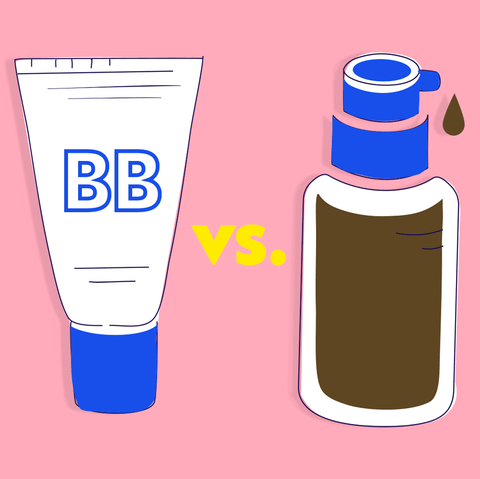
If you take a walk down any makeup aisle, it’s clear there are so many complexion products to choose from. There’s something for every skin type (read: oily, dry, mature) and an endless amount of finishes (think: dewy, matte, velvet). The sheer number of BB creams, CC creams and foundations can be overwhelming. To help you find your perfect match, we gathered all the tips and tricks we have learned over the years. Below, we share the difference between BB cream, CC cream and foundation — and tips for applying each.
What Is BB Cream?
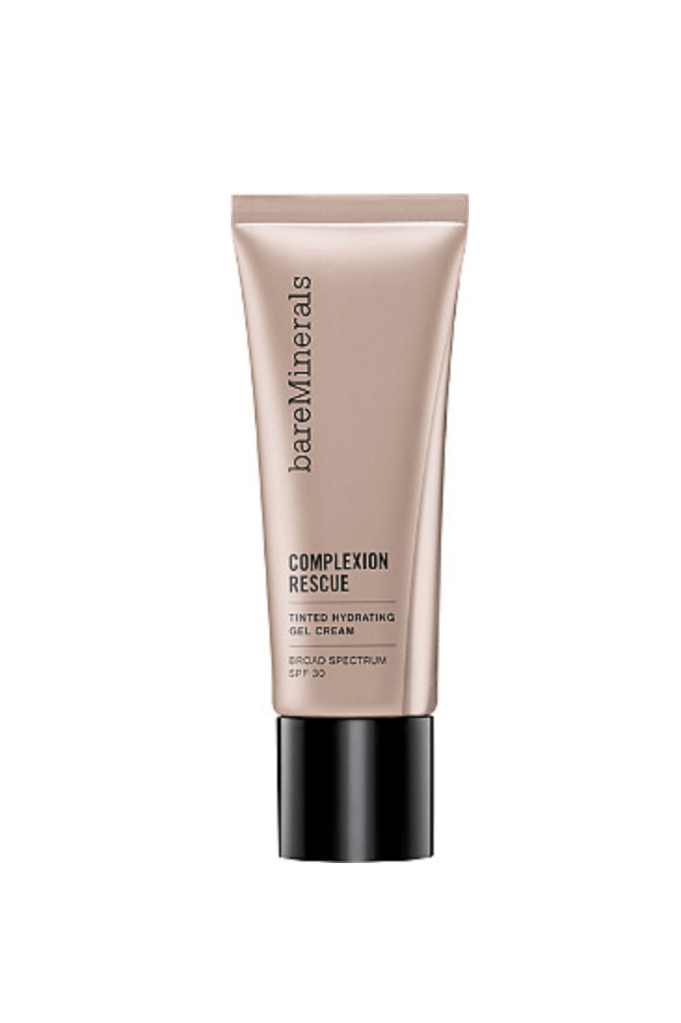
BB cream is an all-in-one makeup product. It traditionally has good-for-your-skin ingredients like SPF and sufficient coverage to still even out redness and smooth rough texture. BB creams range anywhere from a barely-there tint to medium coverage. What’s more, BB creams also have the added benefit of helping breakout-prone skin. “If you’re acne-prone, using a BB cream that’s oil-free is a good way to go. We recommend the Complexion Rescue BareMinerals, which is formulated with salicylic acid to address acne. This BB cream moisturizes, tints, and provides SPF protection. It’s a great choice for darker skin tones.
Cut from the same cloth as a BB cream, a CC cream, or color correcting cream, is an all-in-one product intended to address redness, darkness and sallowness. It blends skin care with light-diffusing properties to give you a smoother complexion, but it doesn’t give the same amount of coverage as a BB cream.
How to Apply BB Cream and CC Cream
BB creams and CC creams are a true time-saver in the morning and impossible to mess up. “Anything that combines sunscreen, skin-care ingredients, antioxidants and light coverage is ideal for the busy woman who doesn’t have time for a more in-depth regimen. Just rub a pea-sized or dime-size amount between your hands to warm it up and apply to bare, freshly cleansed skin. You can use a sponge or brush for application, too. Just note, if you have extra dry skin, you can benefit from applying a moisturizer underneath your BB or CC to give your skin an added boost of hydration.
How to Apply Foundation
Considering most women use foundation to cover up things like under-eye circles, pimples, uneven skin tone and other imperfections, the application needs to be a bit more precise. You can use your hands, however, you’ll get the most even coverage using a sponge or brush.
Start by dabbing dots of foundation down the center of your face — forehead, nose, upper lip and chin — and blend your foundation outwards using your tool of choice. Be sure to pay extra attention to your hairline and chin as you want to blend those areas out the most for a seamless and invisible foundation line.
Raise your hand if you use the words hydrating and moisturizing interchangeably. Yes, a lot of us do that all the time.
When it comes to the beauty industry, there are a lot of terms to be learned. And the biggest culprits we’ve noticed falling into this category are the words ‘hydrate’ and ‘moisturize’. While they both address the importance of nourishing our skin, they should not be treated as the same thing.
Which is why we’ve put together a simple guide detailing the difference between the two, to ensure that you get optimum benefits out of both.
Dry versus dehydrated skin – is there a difference?
Yes.
The term ‘dehydrated‘ is used to describe lack of water, while the term ‘dry’ loosely translates to lack of oil. Hence, dehydrated skin needs to be hydrated (as it lacks water), and dry skin needs to be moisturized (as it lacks oil).
Hydrating adds moisture to the skin
If there’s one thing that Korean skincare has taught us is that hydrating makes all the difference when it comes to healthy and glowy skin.
When skin cells are well hydrated they swell to be plump, bouncy and reflect light effectively. If water flows out of the cells they become dehydrated and can shrivel up, which leads to lackluster skin. Imagine your skin cells are mini water balloons. In their healthiest state, they are full of water, firm, bouncy, plump and reflect light.
Now imagine these mini balloons have a slow leak where the water is steadily escaping. What happens to the balloon? It loses its rounded plump shape, it is less bouncy and as the water gets low it shrivels up and becomes dull looking.
Even if we find the leak and patch it up, the skin still needs a fresh infusion of water to refill what’s been lost. In addition, it needs support to hold onto the water.
This is where skin hydrators come in. Hydration refers to the amount of water in the skin. And hydrator are products formulated with special ingredients to increase the water content of the skin.
And what are these special ingredients? Humectants. Humectants absorb moisture from the environment and deliver it down to the skin’s layers, facilitating hydration. Glycerin and honey are some great examples.
Therefore, hydration replenishes all the water that the skin has lost and adds some more for good measure.
So, up the water content of your skin by incorporating a hydrator into your daily routine and drinking enough water. A water-based daily cream like TATCHAWater Cream ( $20), hydrates the skin deeply while lending it a moisturized finish all through the day. Not only will doing so help your skin regain its proper moisture balance, but will also increase the powers of your moisturizer.
Moisturizing locks moisture into the skin
Hydration is a like a glass of water for your skin. It doesn’t matter how many glasses your skin drinks every day, if there’s nothing keeping this water in, it’ll evaporate, leaving your skin dry.
Enter moisturizing. Moisturizing forms a barrier on the skin that locks water in so it can’t run away anymore and works towards retaining what moisture is present on the skin at the time of application. By forming a protective seal on the skin’s surface, moisturizers are able to reduce the risk of the evaporation throughout the day.
But you may ask if both moisturizers and hydrators provide our skin with moisture, how do we know which of the two our skin needs?
Well, the answer is both.
Dehydrated skin that is moisturized will still look dull and feel uncomfortably tight, without receiving hydration. And dry skin that is hydrated but not moisturized will still flake and have a rough texture. So, you need to stock up on both hydrators and moisturizers, or products that offer a combination of them together.
Hydrators and moisturizers are not just synonyms written on products as part of a clever marketing scheme, to make you buy more than you need. They really do have a purpose of their own and together, keep the skin looking plump and happy.
For best results, hydrators and moisturizers should be applied morning (before sunscreen) and night. You can apply moisturizing lotions or creams after applying your hydrator so it doesn’t peel.
Wait… here are 3 waysto hydrate your skin
DRINK PLENTY OF WATER. If you drink caffeine or alcohol drink that much more water. I find that I need an app to help me stay on track with my water consumption. Tracking my consumption and getting little reminders throughout the day has made a huge difference in the amount of water I drink. There are many water tracker apps that are free. For the ladies: Flo is a women’s health app, that supports women at each stage of their reproductive cycle. It tracks menstruation, cycle prediction, preparation for conception, pregnancy, early motherhood and menopause. And, you know what else it tracks? Water intake! Download Flo for free to start tracking.
MIST YOUR SKIN. Carry a small bottle of hydrosol in your bag or backpack to mist your face throughout the day. Look for with a hydrosol mist of aloe with floral or herbal infusions for the best overall skin pick me up. Try e.l.f. Soothing Aloe Facial Mist ( $8 ) which moisturizes and refreshes skin with invigorating scent. Perfect to start or end your day with, or even as a mid-day refresher. Like a cool glass of water for parched skin After Sun Soothing Aloe Mist($20) provides breathable, lightweight hydration that skin will instantly drink up and MARIO BADESCUFacial Spray with Aloe, Herbs and Rosewater( $12 ) is another great choice! This floral face mist features complexion-loving rose and gardenia extracts, skin-softening bladderwrack (a type of mineral-rich seaweed) extract, and clarifying thyme extract to boost the complexion. Mist whenever, wherever for radiant and re-energized skin.
Note:Avoid any mists that contain alcohol. This can dry the skin and defeat the purpose of this hydration boost.] If you feel self-conscious misting yourself in public, you can always do it in the bathroom as a final refresher after you wash your hands.
APPLY SERUMS DAILY. Especially those that contain hyaluronic acid. I especially love to wear this in the morning to keep my skin supported throughout the day when it needs the most help staying hydrated. I rarely ever skip this step.
If you are in a hurry and need to cut down on your routine, find another way to shave off time in your morning prep and keep this step as a non-negotiable. Your skin will thank you today and years from now.
Primp Tip: While you’re shopping, look for serums that have a one percent concentration of hyaluronic acid, as higher levels can cause skin irritation. And choose serums that have natural hyaluronic acid, plus vitamin C, without irritating ingredients, such as alcohol, sulphates, and parabens.
Have any other tips and tricks? I look forward to hearing how you get your daily hydration and moisture fix!
















 beautyleebar.org