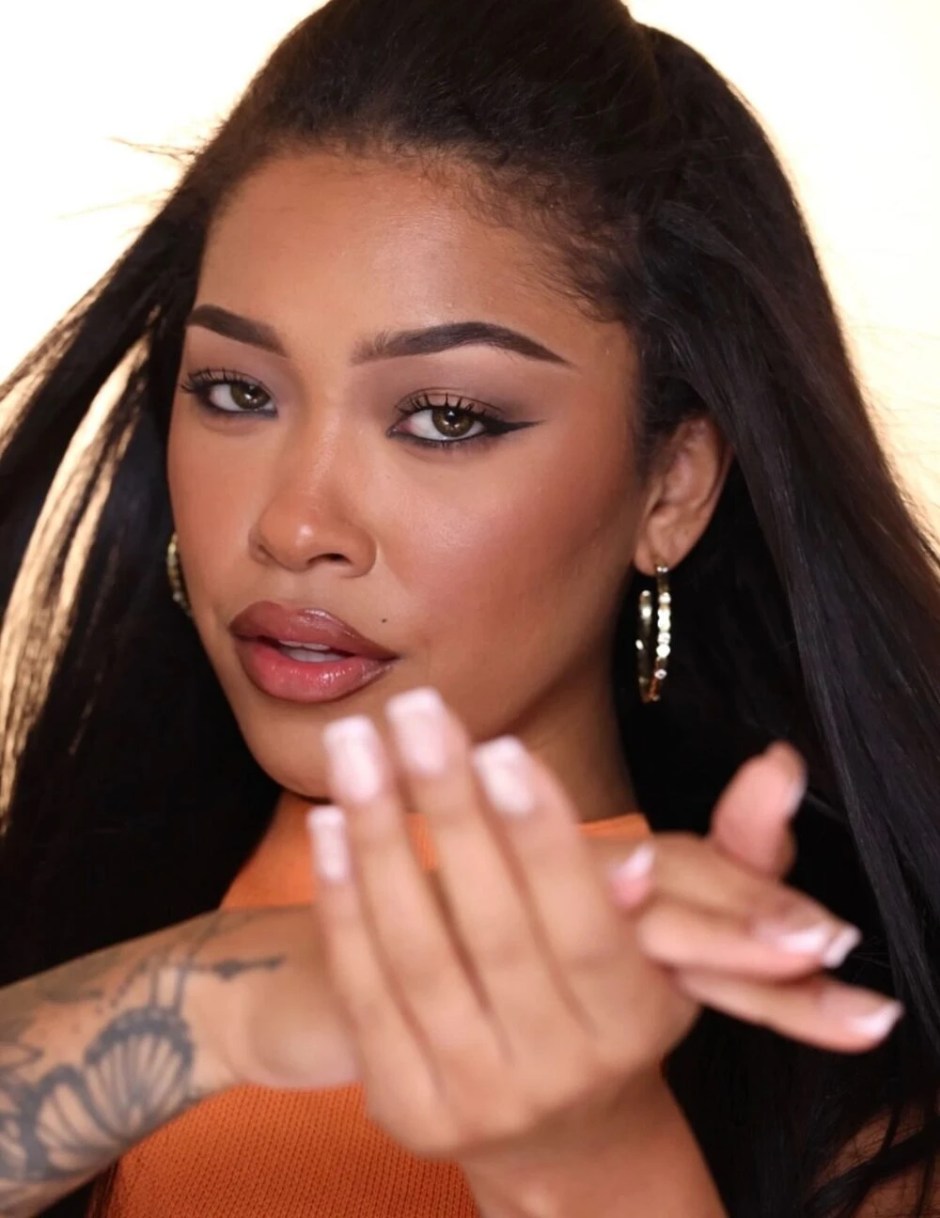
Filipino beauty culture is quietly reclaiming space in today’s digital landscape, with bebot makeup reemerging as a striking expression of confidence, glamour, and self-definition. Rooted in early-2000s Filipino pop culture, the bebot aesthetic is unapologetically bold—defined by ultra-thin brows, frosted lids, glossy lips, and sun-warmed skin that radiates intention rather than excess.
Across social platforms, beauty creators are revisiting this look through dramatic before-and-after transformations, often set to Bebot, a cultural touchstone that amplifies the nostalgia without reducing the look to parody. The timing feels especially resonant. As Y2K beauty continues its cyclical return, bebot makeup stands apart by blending sultry maximalism with a distinctly Filipino sensibility—one that values presence, polish, and personality in equal measure.
What makes Bebot makeup endure is its adaptability. It can be worn at full intensity or subtly distilled into modern routines, offering a way to experiment with bold femininity while remaining deeply personal. Ahead, we break down the defining elements of bebot makeup and how to interpret the look in a way that feels intentional, contemporary, and true to its roots.
Base
Bebot makeup begins with complexion work that reads polished, bronzed, and deliberately sculpted. Start with a foundation one to two shades deeper than your natural skin tone, blending seamlessly to create a sun-warmed finish rather than an obvious contrast. The goal is coverage that looks perfected, not heavy.
Use a full-coverage concealer strategically—brightening under the eyes and carving beneath the brows to emphasize their dramatic, lifted shape. Set only where necessary, pressing a finely milled powder into the T-zone to maintain a smooth, matte balance while allowing the skin to retain dimension.
Warmth is essential. Sweep a matte bronzer across the temples, cheekbones, and jawline, blending thoroughly to contour without harsh edges. Finish with a warm, pink-toned blush placed high on the outer cheeks and diffused upward toward the temples, reinforcing the lifted, confident structure that defines the bebot look.
Eyes & Lips
Brows are precise and architectural. Using a fine-tip pencil, sharpen and slightly exaggerate the natural arch, keeping the tail clean and intentional rather than softly diffused. This structure anchors the rest of the look.
For the eyes, trace the upper lash line with a black pencil liner, then softly smudge it using a fingertip to create a sultry, worn-in effect. Run the same liner through the lower waterline to deepen intensity. Sweep a gunmetal-gray shadow across the lids, then press a metallic-silver shade at the center to catch the light—this frosted contrast is essential to the bebot aesthetic. Finish with a crisp, elongated wing using liquid liner, then curl lashes and apply generous coats of mascara for emphasis.
Lips lean overtly nostalgic. Define them with a dark brown lip liner, slightly overlining if desired, then layer a lighter nude or cleargloss at the center. Resist blending too seamlessly—the visible contrast is deliberate, echoing the high-glam, early-2000s finish that gives bebot makeup its unmistakable attitude.
Blythe Doll makeup taps into a familiar kind of nostalgia—the wide-eyed collectibles, gothic-prep wardrobes, and hyper-feminine fantasy that defined early 2000s doll culture. Once a niche obsession, the Blythe aesthetic has resurfaced on TikTok as a beauty trend that feels both tender and uncanny. Translucent skin, exaggerated lashes, flushed pastel tones, and softly shadowed eyes borrow from Ulzzang-style makeup while pushing proportions into surreal territory. It’s a look rooted in memory but reframed for a new generation—romantic, eerie, and touched by a quiet gothic melancholy. More than a passing trend, Blythe Doll makeup is about mood, myth, and the emotional pull of beauty nostalgia—and right now, it’s everywhere.
Base
Blythe Doll makeup begins with skin that feels porcelain and otherworldly—smooth, pale, and softly lit. After a deeply hydrating skincare routine, press a lightweight foundation or cushion into the center of the face and diffuse outward for a seamless, almost translucent finish. Conceal sparingly, allowing natural shadows to remain for depth rather than erasing them entirely.
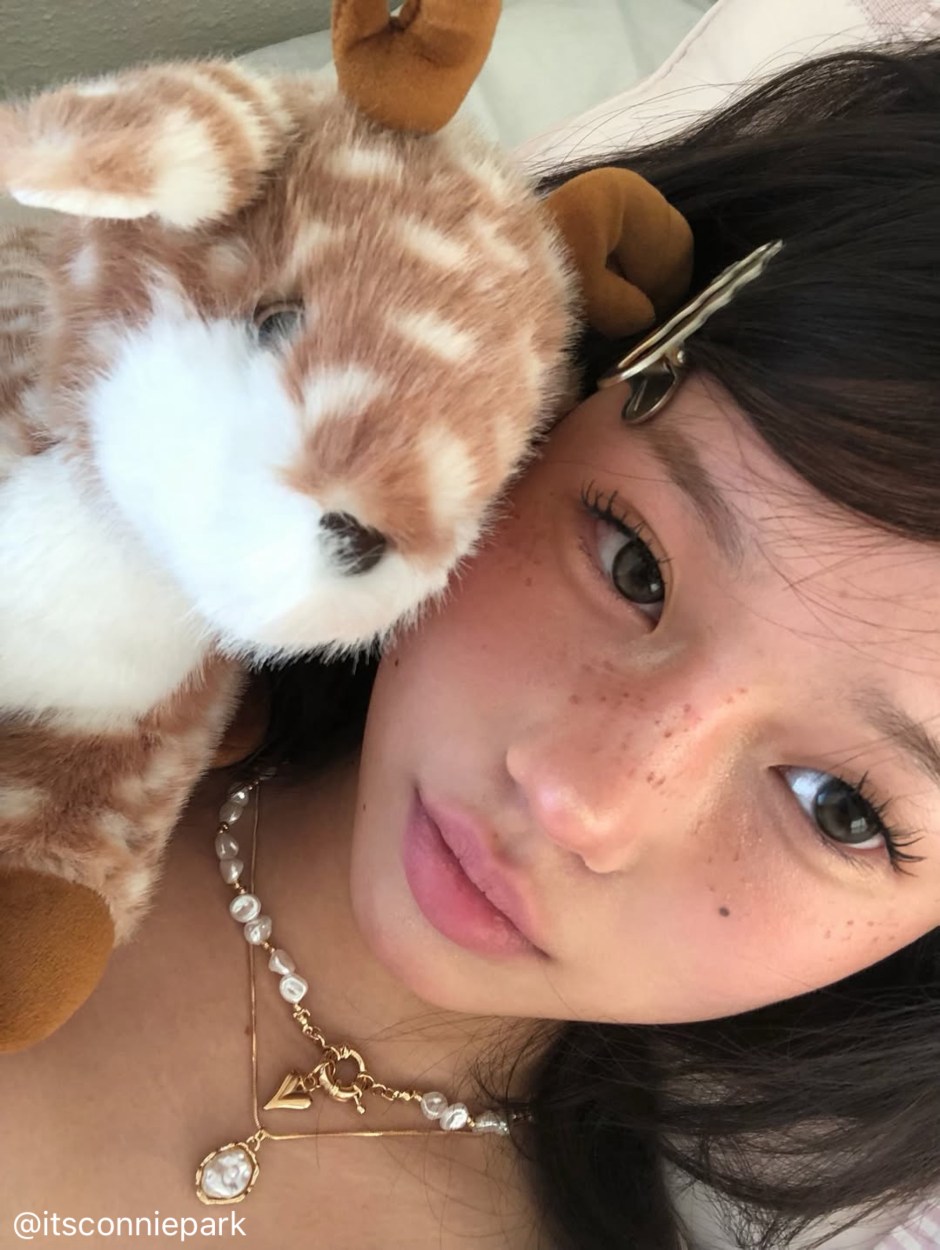
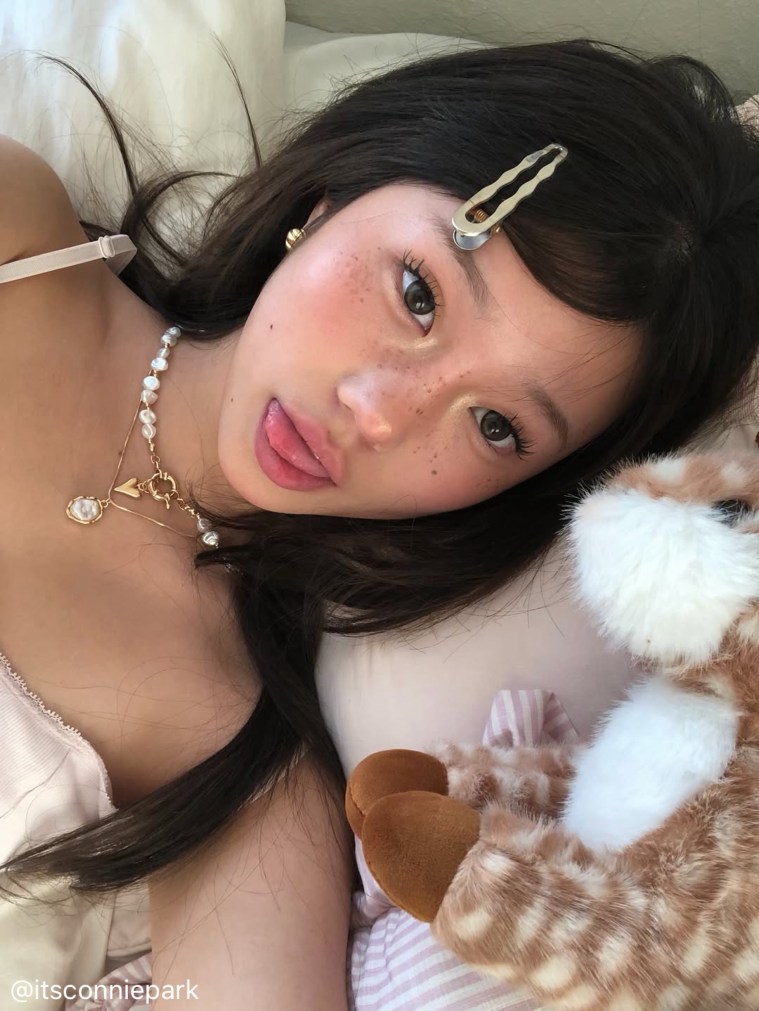
Subtle contour creates the illusion of structure: a whisper of matte definition along the upper cheekbones, nose, and jaw mimics delicate, doll-like shadows. Blush is placed high, and close to the eyes in muted peach or baby-pink tones, then swept across the bridge of the nose for a flushed, slightly melancholic warmth. To finish, add a scattering of faux freckles across the nose and cheekbones—soft, imperfect, and faintly eerie, like something borrowed from a storybook past.
Eyes & Lips
Eyes are the emotional heart of Blythe Doll makeup—wide, luminous, and slightly uncanny. Soft brown shadow is diffused through the crease and along the lower lash line to create gentle warmth without heaviness. A cooler taupe shade is then placed just beneath the lower eye pouch to subtly exaggerate the aegyo-sal, creating a slightly shadowed, haunting doe-eyed effect that feels both innocent and mysterious.
Lashes are long, deliberate, and ethereal. Curl thoroughly, then layer a lengthening mascara or apply wispy false lashes that flutter with a dramatic, almost ghostly intensity, amplifying the surreal, doll-like gaze.
Lips remain understated to balance the look. A sheer pink balm or glossy tint softens the mouth, lending a plush, fragile finish with an understated gothic undertone. The result is a delicate, storybook beauty—innocent yet haunting, sweet yet slightly eerie—perfect for editorial, evening, or elevated TikTok-ready styling.
The Blythe Doll trend is more than a passing beauty moment—it’s a cultural loop connecting early 2000s nostalgia, dollcore aesthetics, and modern social media fantasy. By blending innocence with subtle darkness, exaggerated proportions with delicate imperfection, this makeup style captures a collective longing for whimsy, mood, and emotional storytelling. TikTok’s fascination isn’t just with a look—it’s with the feeling it evokes: the tension between memory, fantasy, and the uncanny charm of the doll-like gaze.
Whether for a soft day look, a high-fashion editorial shoot, or a dreamy TikTok moment, Blythe Doll makeup proves that beauty can be both playful and haunting, ephemeral and unforgettable.
Soft, scented, and effortlessly elegant, dusting powder—once a quiet ritual on our grandmothers’ vanities— is finding its way back into modern body care. With a silk-light touch and a barely-there veil of fragrance, it feels less like a product and more like a moment: powder pressed into porcelain skin, a familiar scent lingering in the air. Reintroduced through TikTok by beauty creators who favor intimacy over excess, this simple DIY indulgence transforms everyday routines into something intentional, romantic, and quietly luxurious. Both practical and sensual, dusting powder smooths the skin, absorbs excess moisture, and enhances scent in the most delicate way—proof that the most timeless beauty rituals are also the most understated.
And as more women rediscover the beauty of slowing down, it’s no surprise that this forgotten step is once again becoming essential.
Why Dusting Powder Is Trending on TikTok
TikTok has a way of taking quiet beauty rituals and giving them new life—and dusting powder is the latest example. In a feed saturated with fast formulas and high-speed transformations, dusting powder stands apart: it’s slow, sensory, and rooted in nostalgia. Creators are drawn to its tactile appeal—soft puffs of powder cascading onto skin, the gentle cloud that swirls with each movement, and the delicate scent that lingers long after application.
But beyond the visuals, the trend resonates because it’s about feeling as much as looking good. In a world where body care often feels rushed, this ritual invites a pause: a moment to breathe, to connect with your body, and to savor the everyday luxury of softness. Whether shared through close-up videos, whispered narrations, or dreamy music, dusting powder content invites viewers into an intimate, tactile experience—one that feels quietly indulgent and beautifully personal.
This sensory appeal—combined with the allure of DIY customization and the romance of vintage beauty—has made dusting powder not just a trend, but a movement for those seeking beauty rituals that feel soulful and intentional.
Benefits of Dusting Powder in Your Body Care Routine
Dusting powder may look delicate, but its benefits are quietly transformative. At its core, it offers a feather-light way to keep skin comfortable, smooth, and softly scented throughout the day. Applied after showering or before dressing, it absorbs excess moisture without stripping the skin, leaving behind a dry-touch finish that feels clean, polished, and refined.
Beyond comfort, dusting powder elevates the art of fragrance layering. Its velvety base allows scent to linger closer to the skin, diffusing perfume in a softer, more intimate way. Instead of overpowering, the fragrance becomes a whisper—subtle, warm, and deeply personal.
There’s also a tactile pleasure that modern body care often forgets. The gentle sweep of powder across the body, the cool softness against warm skin, the faint cloud that settles like silk—these moments slow the ritual down. They turn routine into ceremony, encouraging presence and intention in even the smallest acts of care.
Practical yet indulgent, dusting powder smooths, refreshes, and refines, proving that true luxury in body care isn’t loud or complicated—it’s felt.
How to Make Your Own Dusting Powder for Her (DIY Recipe)
My favorite compliment will always be “you smell so good.” And this dusting powder is exactly why.
This DIY isn’t about perfection—it’s about layering, intention, and letting scent settle into something intimate and unforgettable. Think of it as fragrance, slowed down.
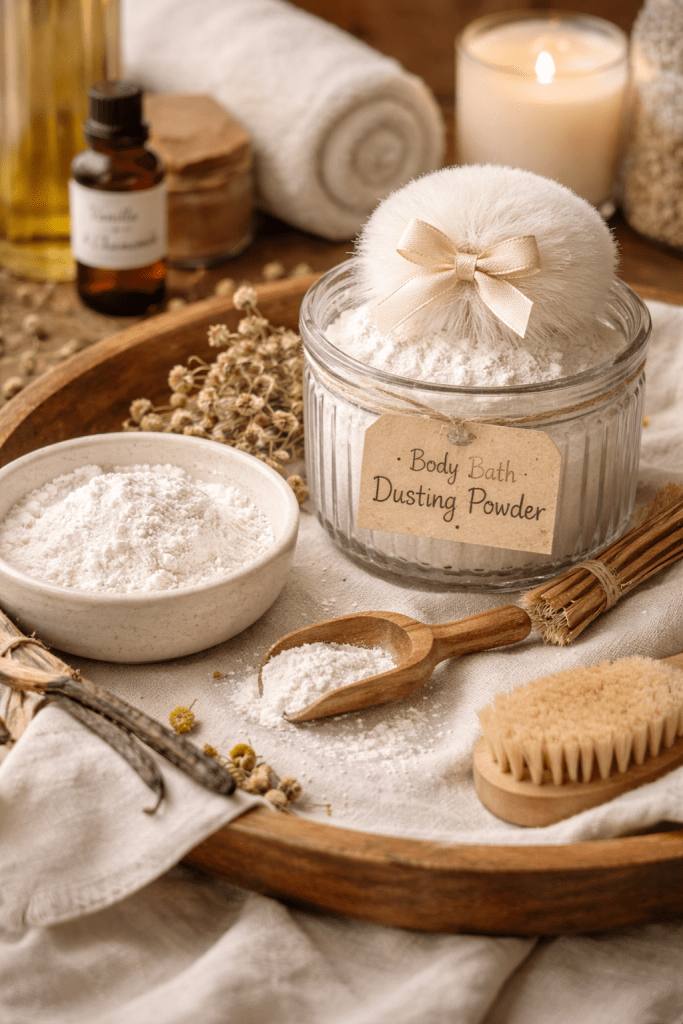
1. Start with your jar. Make sure it’s clean and dry. Pour in your first layer of cornstarch shower powder—this will be the foundation. Dusting powder works best when built in layers.
2. Add nourishment. Soak a cotton pad with vitamin E body oil and gently place it into the jar, resting it on top of the powder.
3. Seal it with softness. Add another layer of cornstarch shower powder, lightly covering the cotton pad.
4. Introduce your signature scent. Soak a fresh cotton pad with your perfume oil and place it inside the jar.
5. Layer again. Add more powder, then lightly spray your body spray directly into the mixture.
6. Balance the fragrance. Add another layer of powder. Space out the cotton pads, placing them on opposite sides of the jar so when you shake it, the scent distributes evenly throughout.
7. Time for perfume. Choose one—or blend a few perfumes together. Spray onto cotton pads and place them into the jar as well. This is where the magic happens.
8. Fill and finish. Fill the rest of the jar with powder, covering everything completely.
9. Optional glow. If you love a soft sheen, add a pinch of skin-friendly shimmer for that subtle, candlelit finish.
10. Close and shake. Seal the jar and shake gently but thoroughly. Let the fragrance bloom.
11. Add your powder puff. Leave it inside the jar so it absorbs the scent over time.
12. How to use. After the shower, apply body lotion, then body oil. Finish by dabbing your dusting powder on top—legs, arms, décolletage. The result? Soft skin, lingering scent, and that compliment every time.
This isn’t just body care—it’s memory-making. And once you start layering scent this way, you’ll never go back 🤍✨
How to Use Dusting Powder for Maximum Effect 🤍
Dusting powder is meant to be subtle—felt more than noticed. When used thoughtfully, it becomes the final veil in your body care ritual, enhancing scent, softness, and comfort throughout the day.
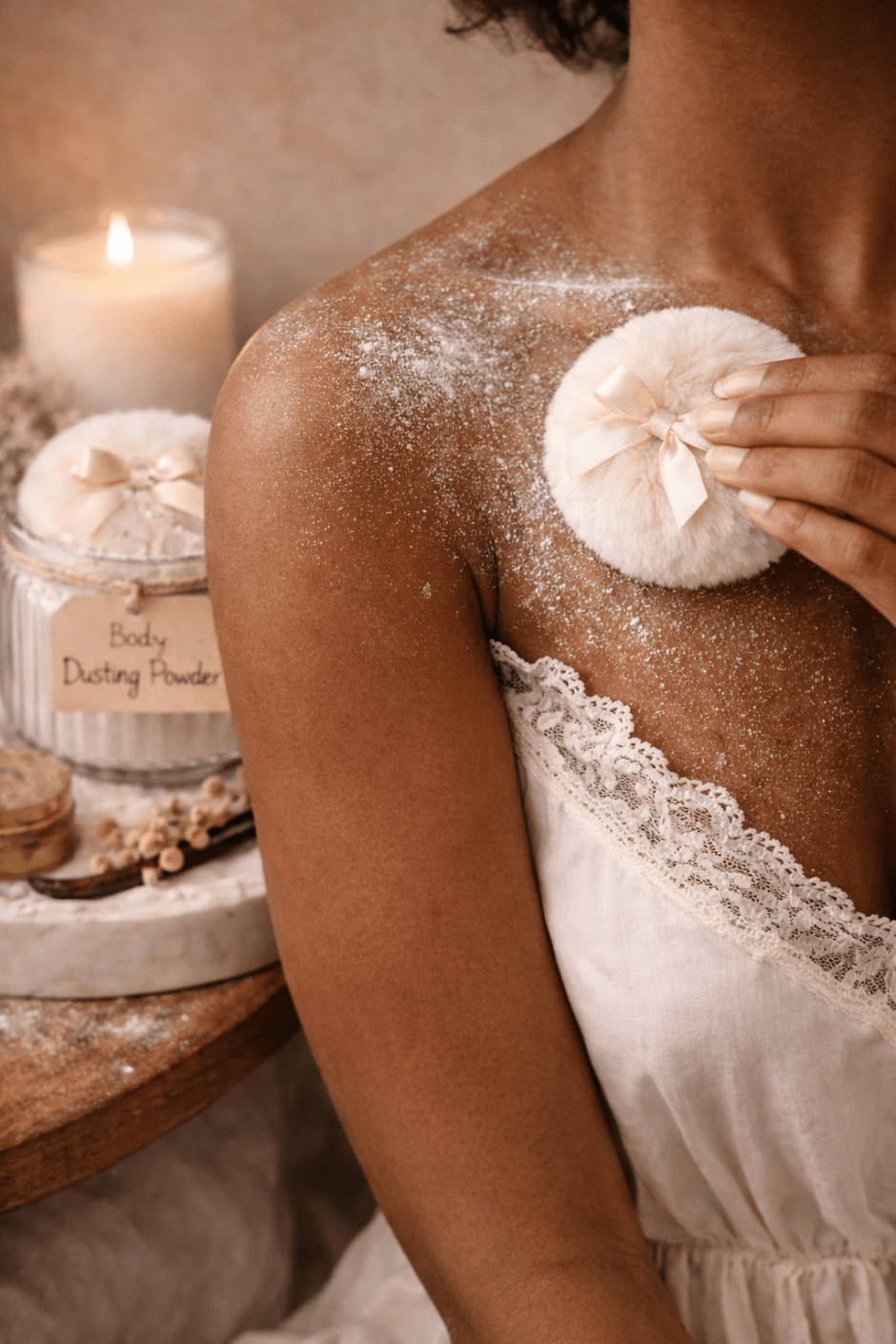
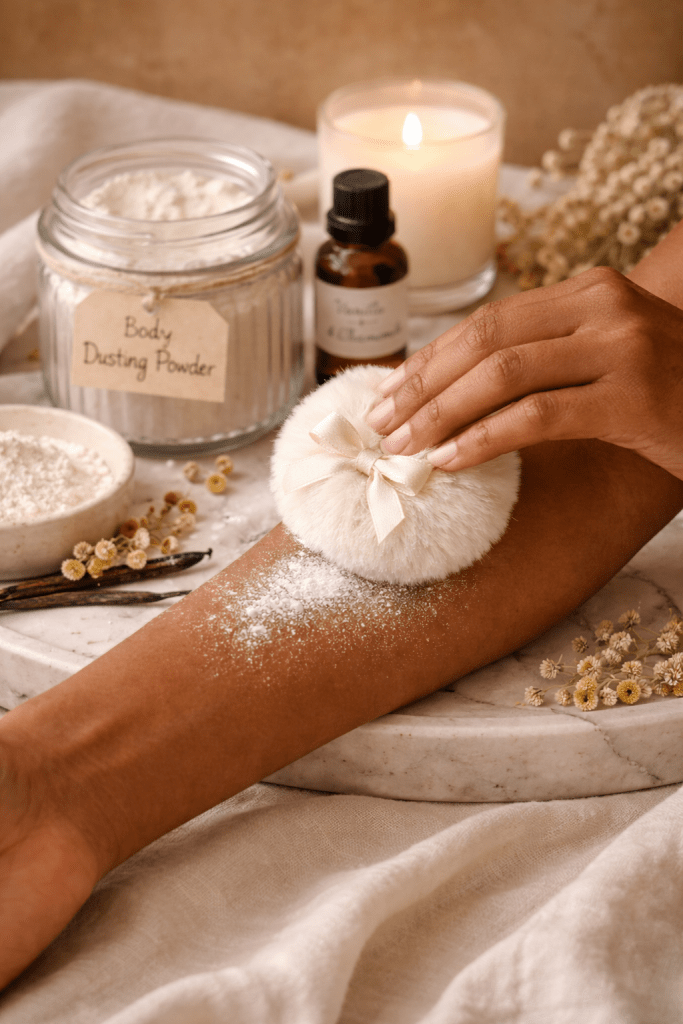
Begin after showering, once skin is semi-dry. Apply your body lotion first, then seal it in with body oil. Using a powder puff, gently dab (never rub) the dusting powder onto areas where you want softness and fragrance to linger—legs, arms, inner elbows, décolletage. Pressing the powder into the skin allows it to melt seamlessly rather than sit on top.
Expert Tips for Best Results
Be mindful when layering fragrance. Combining scents can be beautiful, but sensitive skin may react. Patch test when blending and avoid overcrowding the formula.
Choose your base wisely. Powders containing talc or arrowroot help reduce moisture and minimize the risk of clumping or molding—especially in warmer climates or on skin prone to sweating.
Opt for perfume oils over alcohol-based perfumes. TikTok creators note that traditional perfume tends to evaporate over time, while perfume oils saturate the powder, helping the fragrance remain longer and truer on the skin.
Too strong? Soften it. If the scent feels overpowering, add more powder and mix thoroughly to diffuse the fragrance.
Balance sweat-prone areas. Extra arrowroot powder increases absorption without compromising the softness or silky finish.
Notice clumps? Simply mix until smooth. Gentle blending usually resolves any texture issues.
Store with care. Remove fragrance-infused cotton pads after several hours or by the next day to keep the powder dry and fresh.
For warmth and glow. A small amount of cocoa powder adds a sheer tint, a soft aromatic note, and antioxidant benefits—like a whisper of bronzed skin.
When treated with care, dusting powder becomes more than a beauty step—it’s a quiet luxury, leaving behind softness, warmth, and a scent people remember.
As beauty trends return to ritual and refinement, dusting powder for any woman reveals itself as a timeless body care essential—where nostalgia meets modern elegance. Drawn to the intimacy of fragrance layering, the softness of elevated skin rituals, or simply the pleasure of being told you smell good, this DIY dusting powder offers a deeply personal way to slow down and savor the moment. Each use becomes a quiet indulgence, leaving behind a silken touch, lingering warmth, and a scent that feels uniquely yours.
Welcome to BeautyleeBar, where beauty is intentional, rituals feel romantic, and self-care is designed to linger long after the moment has passed.
Inspired By TikTok Beauty Creators:
Recreating these rituals at home allows you to bring a little TikTok magic into your own body care routine, blending tradition, romance, and modern indulgence.
Slightly uneven brows. A faint scar you’ve had for years. A smile that isn’t perfectly symmetrical. The small “imperfections” we once tried to fix are finally being seen for what they truly are—part of our natural beauty. And with the rise of wabi-sabi beauty on social media, more people are learning to embrace the features that make them uniquely themselves.
If your feed has been filled with creators highlighting their quirks while saying, “It’s got wabi-sabi,” you’re already seeing this trend grow. But wabi-sabi beauty isn’t just a look—it’s a mindset. It encourages us to slow down, release the pressure to be perfect, and appreciate the effortless confidence that comes from embracing our imperfections instead of hiding them.
So, what is wabi-sabi beauty?
Wabi-sabi is a Japanese philosophy that celebrates imperfection, impermanence, and the natural changes that come with time. Traditionally applied to art, architecture, and design—a cracked teacup, the worn lines of a wooden table, or a wall shaped by years of life—wabi-sabi has always found beauty in the unexpected.
Now, this philosophy is making its way into the world of beauty. In an era dominated by the “clean girl” aesthetic, flawless skin, and filters that erase every trace of imperfection, wabi-sabi beauty is a refreshing reminder: the tiny flaws, natural asymmetries, and marks of life are not flaws at all—they are what make us uniquely radiant. Embracing them isn’t just a trend; it’s a mindset that celebrates authentic, effortless beauty.
The viral origin of the wabi-sabi trend
The audio that sparked the wabi-sabi beauty trend comes from an unexpected source: the 2000s animated series King of the Hill. In one episode, Bobby Hill discovers a love for gardening and enters a rose competition, only to be told he must pick “the perfect one” according to a strict, rigid rulebook.
Bobby rebels, declaring the line that would go on to inspire a generation: “Mine is a little crooked… has wabi-sabi.”
More than 20 years later, his words have found a new life on social media. Nearly half a million TikTok videos now use this audio, with teens and young adults applying the concept to their faces, bodies, and unique features. Wabi-sabi beauty is no longer just a philosophy—it’s a viral movement that celebrates authenticity, individuality, and the natural imperfections that make us truly beautiful.
Wabi-sabi beauty isn’t about passively accepting imperfections—it’s about enhancing them with intention. A mole near your mouth? Highlight it. A slightly crooked nose? Contour it to accentuate, not hide. Freckles? Recreate them after your base. A natural unibrow? Let it live.
The philosophy is simple: wabi-sabi doesn’t erase—it celebrates. It doesn’t make everything uniform—it highlights what makes you unique. In a world where beauty standards often feel repetitive and rigid, wabi-sabi beauty is revolutionary. For years, makeup focused on covering, correcting, and “fixing.” Now, it’s a tool to celebrate individuality.
And yes, it feels like a quiet act of rebellion. Instead of chasing flawless, porcelain-like skin, wabi-sabi beauty invites us to embrace the marks, asymmetries, and textures that make us who we are. That slightly crooked smile. The eyebrow that arches differently. The mole you’ve always hidden. The real texture of your skin, no filter, can erase. Wabi-sabi doesn’t ask you to change—it asks you to see yourself differently, and to recognize that your natural features are what make you truly beautiful.




 beautyleebar.org