MOISTURIZING LIP BALMS THAT WILL SAVE YOUR DRY, WINTER LIPS

Admittedly, if you went through our purses right now, you’d probably find a pile of half-used lip balms loosely floating around at the bottom. As far as we’re concerned, it’s seemingly impossible to have too many lip balms during any time of year, but when the weather turns cold, we double down. Come winter, we cling to the most moisturizing lip balms we can find in the hopes of alleviating our dehydrated, dry or chapped lips. Ahead, you’ll find a list of our favorite hydrating lip balms guaranteed to give your winter lips the extra love and moisture they deserve. 

Kiehl’s Lip Balm #1
Shield your lips from the drying effects of wind and cold weather with this Kiehl’s fan-favorite lip balm. Made with hydrating aloe vera, antioxidants like vitamin E and replenishing squalane, this nourishing formula provides the ultimate lip care. 

best-moisturizing-lip-balms-and-products-for-winter

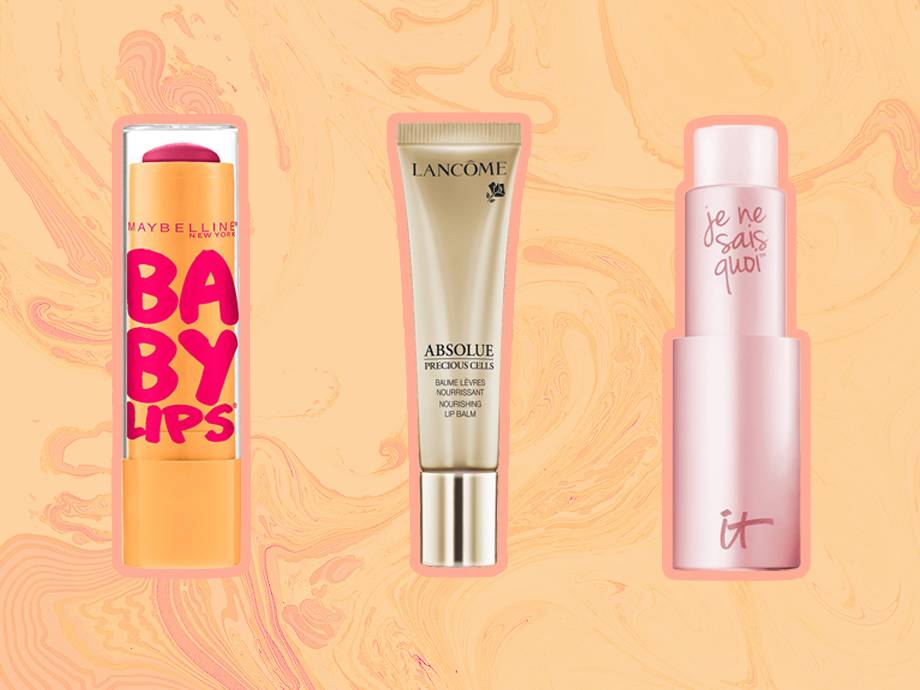
IT Cosmetics Je Ne Sais Quoi Hydrating Lip Balm Treatment
For those that can’t resist a little color on their pout, reach for this innovative lip-reviving balm. Not only will it provide intense hydration thanks to its essential butters and oils, but the Vitality Lip Flush Technology will even react with the warmth of your lips to provide a perfect flush of pink that lasts all day. 

best-moisturizing-lip-balms-and-products-for-winter


Maybelline New York Baby Lips Moisturizing Lip Balm

It’s called Baby Lips for a reason and that’s because, well, you know where we’re going with this — it offers hydrating benefits that last for up to eight hours. Available for a humble $4.49, we won’t judge you if you buy one in every color. 

best-moisturizing-lip-balms-and-products-for-winter

Mario Badescu Lip Balm
Give your lips a kiss of hydration with the Mario Badescu Lip Balm. Formulated with cocoa butter, shea butter, coconut oil and almond oil, this ultra-rich balm is a great choice to replenish and renew your lips all winter long. 

best-moisturizing-lip-balms-and-products-for-winter

Lano The Original 101 Ointment Multipurpose Superbalm
Cold temperatures mean dry lips, hands, elbows and so much more. This Lano Super-balm will save you during those desperate dry times where you need a quick fix of hydration everywhere, including your pout. 

best-moisturizing-lip-balms-and-products-for-winter

YSL Volupté Tint-in-Balm
This lipstick-lip-balm hybrid will care for your lips while giving you a glowing, sheer touch of color. The macadamia and apricot butter formula will keep your lips hydrated, protected and looking amazing with each use. It’s definitely a bit of a splurge, but trust us when we say it’s worth every penny. 

best-moisturizing-lip-balms-and-products-for-winter

Lancôme Absolue Precious Cells Nourishing Lip Balm
Treat your lips to the luxuriously rich and nourishing salve that is the Lancôme Absolue Precious Cells Nourishing Lip Balm. The formula will keep your lips moisturized and reduce the appearance of fine lines and wrinkles around the lip area. Not to mention, the inclusion of acacia honey, beeswax and rosehip seed oil will leave your pout feeling soft, supple and plump.

best-moisturizing-lip-balms-and-products-for-winter

Read More:
HOW TO BANISH GREASY HAIR FOR GOOD (IN ONE WASH)
HYPE OR NOT: AZTEC SECRET INDIAN HEALING CLAY REVIEW
DIY: GOLD FACE MASK

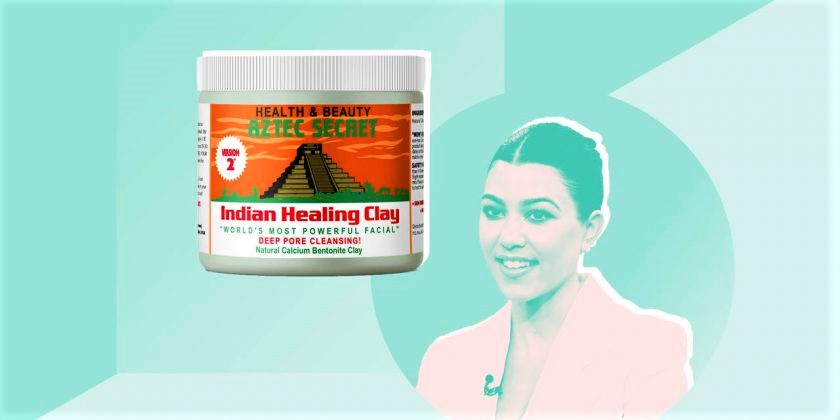
Hype or Not: Aztec Secret Indian Healing Clay Review

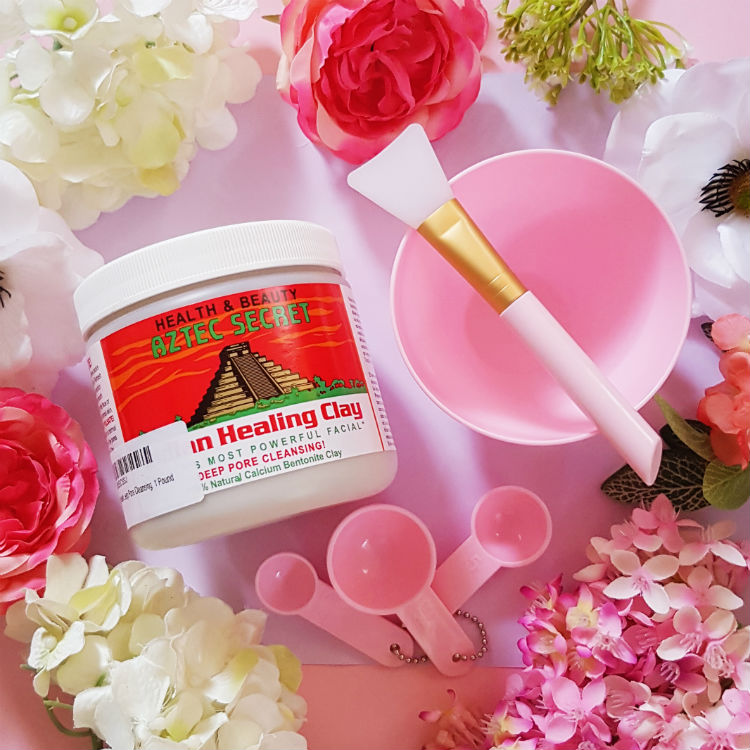
While there are hundreds (if not thousands) of face masks options available, you’d be hard pressed to find one that boasts more five-star reviews and celeb love than the Aztec Secret Indian Healing Clay Mask. Amazon customers are practically writing novels about how it has transformed their skin, sharing astonishing Aztec Clay Mask before-and-after photos.

Since going viral a few years ago, the mask has racked up over 13,000 positive reviews from Amazon shoppers who have referred to is as the “holy grail of face masks” for acne—and it makes sense because it’s made with 100 percent bentonite clay, which helps to draw out the skin’s impurities. Unlike most face masks—which come ready to apply—you’ll have to whip up your own concoction using equal parts Aztec Indian Healing clay and apple cider vinegar or water. Yes, it’s a little extra work, but reviewers and stars alike agree it’s totally worth the time because it leaves their pores feeling so refreshed.

WHAT IS IT: AZTEC SECRET INDIAN HEALING CLAY is natural Calcium Bentonite Clay from Death Valley, California, where it is sun- dried for up to six months in temperatures that sometimes reach 134 degrees. The unique structure of the molecules in Aztec Secret Indian Healing Clay carry a negative electron charge. This comes from the valance electron count from the specific minerals found in Aztec Secret Indian Healing Clay. This Indian Healing Clay lifts the pimple and blackheads into the clay bed to cause accelerated healing and nourishment to the skin with over 50 minerals.

  1. 100% NATURAL
  2. Deep pore cleaning with 100% natural calcium Bentonite Clay
  3. Does not contain: additives, fragrances or animal products
  4. Use for acne and blemishes. Use it once per week

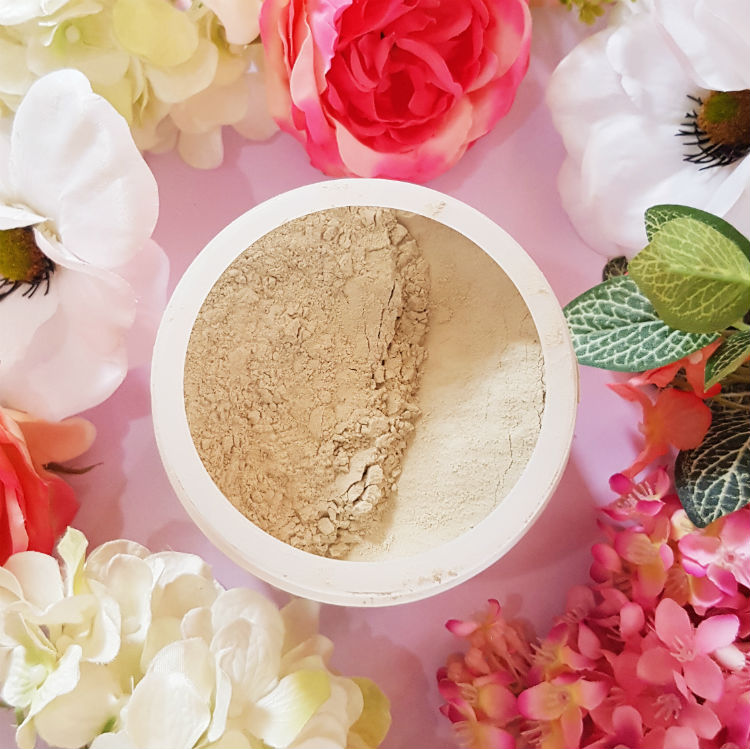
HOW TO USE: After mixing with vinegar, apply the smooth, paste-like substance to the skin using your fingertips or, as reviewers recommend, with a silicone brush applicator, and allow it to dry for up to 20 minutes. (Note: Dry time can vary depending on your skin’s sensitivity.) As it dries, you’ll feel a pulling and tightening sensation, which is just the deep pore cleansing in action. The mask is so powerful that many customers recommend only using it once a week and moisturizing right after, as it’ll leave your skin feeling a tad on the dry side.

WARNING: Please note that when you rinse off the mask your face may be red and this is normal with this clay mask. This redness will be gone within 20 to 30 minutes.

PRIMP TIP: It’s easy to customize this clay mask depending on your skin’s mood. If you want a shot of moisture, add a teaspoon of raw honey to your mixture. For a more soothing formula, add some Aloe Vera gel, and if blemishes are an issue, a few drops of Tea Tree Oil will do the trick. Aztec Secret Indian Healing Clay is as powerful as it is versatile.

“This product is AMAZING. It’s an official Holy Grail product of mine,” another reviewer wrote. “I ideally use it once-a-week, and it feels as if angels themselves have taken the time, to delicately renew my skin with the magical touch of their wings.”

Dramatic, yes, but the mask is so popular, it even has a long list of celeb fans, including Kourtney Kardashian—the latest A-list to chime in on her love for it. In a recent post on her website, Poosh, she shared that the Aztec clay mask is one of three products she rotates in her “self-care Sunday masking routine.” As it turns out, her sister Khloé Kardashian is also a huge fan, along with Mindy Kaling and Lili Reinhart.

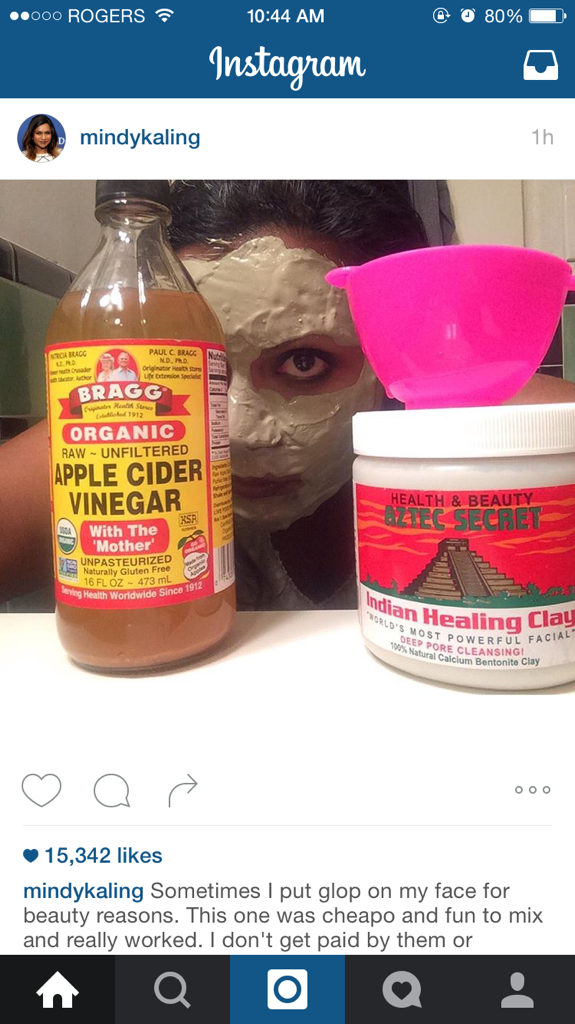
In 2015, Kaling shared a photo on Instagram wearing the Aztec mask that she mixed with Bragg’s organic raw apple cider vinegar (also available on Amazon).

PRIMP TIP: I learned from some people that you should spray a hydrating facial mist on your face while the Aztec Secret Indian Healing Clay is on your face. That way it will be kept moist and easier to remove and the clay will not take moisture off from your skin. It’s the same logic with sheet masks.

MY EXPERIENCE: This pulsating sensation is pretty intense as the clay mask is working hard to rid your skin of all the dirt and grime. You will feel some tugging! After the recommended 20 minutes, the clay concoction hardens and makes your face feel a little tight. That’s your cue to wash it all off. I was left with slightly reddish skin, but this dissipated after five to ten minutes. I looked in the mirror, and an unbelievably squeaky clean face greeted me. “Is this really MY skin?” I marveled.

That’s not all. After prolonged use, you will find that your skin is no longer as prone to breakouts. And there’s still so much clay left in the tub!

This clay mask is truly no joke. It leaves a wonderful sensation on your skin but more than that, it is healing. It heals by getting rid of all the grit and sebum that causes breakouts. With a great price to boot, great reviews by thousands of users and some pampering time on offer, you can’t go  wrong with this one.

*This product may or may not help you. If the pimple persists, you may need to know the type of pimple you have or better, consult a doctor.

Did you try the Aztec Secrets Indian Healing Clay Mask – the world’s most powerful facial!? Lemme know about your experience….

CLEAN BEAUTY– WHAT IS IT AND WHY IT’S IMPORTANT


The beauty buzzword and movement of the moment: “clean.” Along with other terms like “green” and “natural,” it’s used to describe every type of skincare, hair, makeup, and fragrance product, from moisturizer to makeup, shampoo to soap.

Ok, you guys have seen all the talk about switching to clean beauty on my Instagram feed, but what is clean beauty? Clean beauty is products that are not toxic to your body, and free of harmful ingredients. I was pretty shocked—actually, floored—to learn that the US beauty industry is one of the most unregulated industries. Companies can basically put any ingredients they want in a product—harmful or not. If you’re anything like me, you probably try to live your best to live a healthy lifestyle by eating well and reaching your fitness goal with the help of FlattummyApp. But then you are slathering yourself with chemicals, parabens, and silicones — it’s counterproductive!

Retailers know that consumers want cosmetics and beauty products that aren’t laden with potentially harmful ingredients — for example, Sephora recently launched “Clean at Sephora,” an initiative in which the beauty brand badged over of its 2,000 products as “clean,” in this case meaning free of ingredients like sulfates, parabens, formaldehydes, phthalates, and mineral oil.

But identifying the “cleanest” makeup products or “safest” cosmetic brands on the market isn’t all that simple. Despite a booming beauty industry, U.S. laws for cosmetics safety are virtually unchanged since they were created back in 1938. Here — unlike in Canada and Europe, where well over 1,300 unsafe ingredients are banned for use in beauty products — unbelievablythe FDA has prohibited only 11 ingredients or related compounds.

While legislation is pending to change this, progress is slow. The Personal Care Products Safety Act, supported by the Good Housekeeping Institute and beauty industry-leaders, would require the FDA to review the safety of at least five ingredients per year (at which rate it could take hundreds of years to even test for risks and dangers!). Yet this small step has remained stalled in the Senate since it was proposed in 2015. And there is no established industry-wide definition for “clean” or “natural” beauty claims. Being aware of what clean beauty is and educating yourself is so important which is why I wanted to share  Clean Beauty 101 today.

YOU MAY ALSO LIKE:
SELF-SOOTHING PRACTICES EVERYONE SHOULD KNOW
HAIR ACCESSORY SPOTLIGHT: SOIELI HAIR SLIP
WHY YOU’LL NEVER HAVE TO BUY ANOTHER MAKEUP WIPE AGAIN

CLEAN BEAUTY 101

So, what does “clean” beauty really mean?

The term “clean beauty” gets thrown around quite a bit, but few people know what the phrase actually means. Which is understandable: terms like “natural,” “botanical” and “green” are completely unregulated by the FDA, meaning anyone can use them. At its most basic level, a true clean product avoids the use of ingredients like parabens, sulfates, silicones, phthalates, and synthetic fragrances.

Essential oil dropping from leaf .Aromatherapy.

“Natural” or “All-Natural”

What it implies:
A product is made with ingredients sourced from nature — be they plant, mineral or animal — that are minimally modified.

GH Lab lowdown:
Few ingredients are used as-is from nature. “Natural” doesn’t always mean healthier: Some natural substances can even be harmful.

Trust it when:
You see the Ecocert Natural Cosmetic stamp, which confirms that at least half the ingredients are plant-based.

the scientist,dermatologist with the organic natural product in the laboratory.research and development beauty skincare concept.blank package,bottle,container .cream,serum.hand

“Organic”

What it means:
The product’s ingredients and formula are produced without harmful pesticides.

GH Lab lowdown:
This is the only government-regulated term in the “clean” beauty space.

Trust it when:
It is USDA-Certified Organic (contains at least 95% organically cultivated ingredients) or NSF Organic-Certified (contains at least 70% organic ingredients).

Creative layout made of flowers and leaves with paper card note. Flat lay. Nature concept

“Naturally Derived”

What it implies:
Natural ingredients in a product have undergone some chemical processing.

GH Lab lowdown:
When you see this term or a similar one like “natural origin” or “made with natural ingredients,” look for a qualifier that indicates what percentage of ingredients it applies to.

Trust it when:
The product carries the Good Housekeeping Seal, since the Good Housekeeping Institute Labs verify all product claims.

natural cosmetics, a leaf of a fern and a cone

“Chemical-Free”

What it implies:
A product doesn’t contain harmful chemicals like formaldehyde, toluene, and lead.

GH Lab lowdown:
Not all chemicals are created equal; plus, every ingredient (natural or synthetic) is made up of chemicals. They are even part of human biology!

Trust it when:
The claim is ingredient-specific, as in “paraben-free,” and the product has earned the Good Housekeeping Seal (we obtain data to validate all ingredient claims).

Herbal dermatology cosmetic hygienic cream with flowers skincare product

“Nontoxic”

What it implies:
A product is not harmful to humans.

GH Lab lowdown:
Such a wide-ranging term is meaningless unless it refers to a specific ingredient. Almost anything, even drinking water, can be harmful in large quantities.

Trust it when:
Never, since it cannot be proven or disproven.

Massage oil bottles with lemons and olive branch

“Green” or “Sustainable”

What it implies:
Products are developed with minimal present and future environmental impact.

GH Lab lowdown:
This broad term covers everything from what’s in a product to how it’s made, packaged, distributed and disposed of.

Trust it when:
You see certifications like Cradle to Cradle for sustainability and the Green Good Housekeeping Seal, which validates both sustainability and product performance.

Why is Clean Beauty Important?

Your skin is the biggest organ and absorbs up to 60% of what you put on it. Yet so many of us are completely unaware of what’s inside our products and believe the government will oversee our safety. The truth is, that there is a serious lack of regulation of U.S. Cosmetics.

The US has not passed a law regulation personal care products since 1938. Since then, more than 80,000 chemicals have been introduced into products on store shelves.  Only 10% of these have been tested for human safety.

Just as a comparison, while the UK has banned nearly 1,400 harmful ingredients in personal care products, the US only partially prohibits 11. The FDA even allows chemicals known to cause cancer including parabens (which are known to disrupt hormone function), phalates  (an industrial chemical that can damage the liver, lungs, and reproductive system), formaldehyde, lead and more.

How can you really go “clean” with your beauty routine?

The BLB Lab’s top tips on making truly natural and sustainable clean beauty choices:

1. Do an ingredient check.
For a deeper dive into ingredients, the Beauty Lab recommends consulting resources like the Made Safe Hazard List and the Environmental Working Group Skin Deep database. Both nonprofits aim to collect the latest science on ingredients and offer recommendations for safety-certified products across categories.

2. Choose fragrance- and dye-free.
Products that contain no fragrances or dyes are by nature better for the environment, as they use fewer ingredients, and people can have sensitivities to both. Even fragrance from natural sources can cause reactions. Plus, brands aren’t required to list the ingredients in “fragrance” on labels, so in many cases there’s no way to know what’s in those products.

3. Pick less packaging.
The more minimal the packaging, the better for the earth. Whenever possible, seek out products with fewer components and without parts or materials that can’t be recycled (aim for codes 1 and 2) and unnecessary elements like outer boxes. Keep your eye out for the winners of BLB’s new Sustainability Awards for beauty, home care and toys, to be announced this fall.

4. Buy (green!) beauty that gives back.
Seek out beauty brands that donate a portion of their proceeds or make a contribution to environmental causes.

What Can I Do Right Now to Protect Your Health?

When I am purchasing a new product from toothpaste or laundry detergent to shampoo or nail polish, I use the Environmental Working Group website. EWG created the Skin Deep Database that includes information on more than 61,000 products and rates them for safety.

My tip is to slowly switch out products one at a time so it doesn’t seem daunting and expensive. I would start with the products you use daily. I love Native Aluminum & Paraben Free deodorant and their sulfate and paraben free body wash! Make sure to stay tune for a full guide!


CBD and Essential Oils: A Few Mixes You Can Try

With more and more research coming out that shines a light on the reported health benefits of CBD and essential oils, people are starting to experiment with combining the two and achieving some surprising results.

While there are many potential benefits, it’s important to combine your CBD oil and essential oils carefully to avoid unwanted effects.

Before jumping in and mixing up your own CBD and essential oil blend, it’s important that you educate yourself on these beneficial compounds and their potential uses. Continue on for an explanation of how essential oils and CBD act on your body separately, as well as how certain combinations of the two could provide maximum relief from certain conditions.

What Are Essential Oils and How Do They Work?

Essential oil is a generalized term that describes a concentrated oil derived from plant material. These highly concentrated oils and are usually made by cold-pressing the plant parts, or through a steam-distillation process. Essentials oils can be made from the seeds, leaves, stems, roots, and even the fruits of plants.

Many essential oils are reported to have a variety of health benefits when used properly. Reportedly, by way of stimulating the limbic system, many of these essential oils are able to elicit positive physiological and psychoactive effects.

Some potential use cases for essential oils include:

  • Alleviating symptoms of anxiety and depression
  • Aiding digestion
  • Pain relief
  • Skincare
  • Sleep aid

Essential oils derived from lavender and sandalwood may provide calming effects from their smell alone. Others, such as peppermint oil, may calm your digestive system when taken orally in small amounts.

Terpenes in CBD Oil and Essential Oils

While CBD oil and essential oils are talked about quite a bit, terpenes have flown under the radar until very recently. Terpenes are naturally occurring compounds that give plants their distinct aromas, flavors, and colors. Unsurprisingly, terpenes are found in essential oils and certain types of CBD oils.

The cannabis plant produces over 100 different terpenes and researchers have found many to offer various potential health benefits. Pinene, for example, is found both in pine trees and cannabis plants and has shown potential as an effective anxiety reducer.

To access the benefits of terpenes in your CBD oil, you’ll likely need to find a product that’s broad- or full-spectrum. Full-spectrum CBD oils are made from the whole hemp plant, so they keep the other compounds, like THC and terpenes, intact; broad-spectrum CBD products include everything a full-spectrum CBD oil does except THC. Alternatively, some items made with CBD isolate will include terpenes that have been added to the finished product.

Whether producing a refreshing scent, enhancing your mood, or exerting benefits on your physical body, terpenes are crucial components of essential oils and CBD oil alike. Through a phenomenon known as the entourage effect, terpenes work with the other natural compounds in CBD oil to produce amplified benefits. For this reason, adding more terpenes to the mix via essential oils could boost the positive effects you receive from your CBD oil.

CBD and Essential Oil Potential Uses

CBD and essential oils have many claimed uses and benefits, many of which have overlap in their methods of application and action.

Many essential oils elicit effects when simply breathed in, while others need to be applied topically. Oral ingestion is also an option, though it’s important you educate yourself on the individual oil you are interested in, as some essential oils, such as birch, cedar wood, or eucalyptus are dangerous when eaten or drank.

CBD oil is available in many forms, and can easily be combined with a lot of the more popular essential oils. Edibles, vaporizers, capsules, topicals, and drops are available which make combining CBD with essential oils easy.

Here’s a closer look at some of the ways essential oils can be combined with CBD oil to increase their potential benefits.

Bergamot Essential Oil and CBD Oil to Calm Anxiety

Bergamot oil is an essential oil derived from the bergamot orange and has a citrus scent. Researchers have found that inhaling bergamot oil improves mood and even relieve symptoms of anxiety.

Quite a few studies have also looked into CBD oil’s potential anti-anxiety effects. The National Institute on Drug Abuse says that during animal studies, CBD had the potential to reduce stress and decreased signs of anxiety in test subjects.

Furthermore, a study conducted on test subjects with social anxiety disorder found those who were given 600 mg of CBD before a public speaking test showed significantly fewer signs of anxiety and discomfort than those given a placebo.

To enjoy and capitalize on the anti-anxiety effects of both bergamot and CBD oil, add a few drops of bergamot oil to a cloth, or apply it to your pulse points (wrists, neck, temples) for easy inhalation throughout the day. Combine this with a few drops of CBD oil under the tongue or a CBD edible for added long-lasting relief. If you need additional, on-the-spot anxiety relief, a CBD vape coupled with a few sniffs of bergamot oil should do the trick.

Chamomile Essential Oil and CBD Oil for Depression

Chamomile oil is derived from the chamomile plant and has a variety of uses. Aside from its calming and digestion-aiding properties, chamomile may also provide relief from the symptoms of depression and anxiety.

Researchers from Alternative Therapies in Health and Medicine and Pharmacognosy Review conducted a study examining the effect of ingested chamomile extract on patients with depression, anxiety, or a combination of the two. The results were meaningful, and the study concluded, “Chamomile may provide clinically meaningful antidepressant activity that occurs in addition to its previously observed anxiolytic [anti-anxiety] activity.”

CBD oil has been shown to have antidepressant qualities too, through its activation of the 5-HT1A receptor. By acting on this neural pathway, CBD is able to make more serotonin, the neurotransmitter responsible for feelings of wellbeing, available in the brain. Traditional antidepressant and anti-anxiety medications like selective serotonin reuptake inhibitors (SSRIs) are effective by similar mechanisms.

If you’re thinking about combining chamomile oil with CBD oil, there are a few different ways to do so. Chamomile oil is safe for consumption, so you can try adding it, along with a few drops of CBD oil, to a cup of tea, coffee, or water. You can also keep a bottle of chamomile oil handy for inhalation throughout the day, and take a CBD edible or capsule in the morning for longer-lasting relief from depressive symptoms.

Lavender Oil and CBD Oil for Better Sleep

Derived from the lavender plant, lavender oil is widely accepted as a natural sleep aid.

A 2005 study examining 31 young men and women who were “healthy sleepers” found lavender to produce mild sedative effects and promote slow-wave and deep-wave sleep. All participants reported feeling more vigorous and better rested the next morning.

Sleep is essential for cognitive function as well as muscle repair and relaxation. Like lavender oil, CBD oil has also shown promise as a sleep aid.

CBD has been found to decrease cortisol levels, reducing stress in the body. Cortisol is produced as a response to stress, keeping the body alert and prepared to react to external stressors or stimuli. Today, stress—and high cortisol levels—have become a part of daily life, which can take a toll on your mental and physical body. CBD regulates these cortisol levels, ultimately reducing stress and allowing your mind and body to relax and recover. When you’re at ease, you can more easily fall asleep and stay asleep.

CBD has also been found to reduce the involuntary muscle movements involved with REM behavior disorder (RBD). RBD often occurs in people with conditions like Parkinson’s disease and it can lead to self-injury and sleep disturbances.

Lavender oil and CBD oil can easily be used in combination. There are products available on the market, like tinctures and lotions, that already combine the two. But if you didn’t want to spring for yet another product, you can work with what you already have.

Add lavender oil to a diffuser, warm bath, or your pulse points for its aromatherapy benefits. Then, take your nightly CBD oil dose and it won’t be long before you feel the calming, stress-relieving benefits that help you to drift off for a peaceful, restorative sleep. Adding a few drops of CBD oil to a lavender tea is another way to reap the benefits of this combination.

Peppermint Oil and CBD Oil for Digestive Relief

Peppermint essential oil comes from the peppermint plant and has been identified as a potential remedy for indigestion.

In a review of 14 clinical trials done on nearly 200 children, peppermint showed potential to reduce the length, severity, and frequency or abdominal pain.

In another study with 200 participants who were receiving chemotherapy treatments for cancer, capsules containing peppermint oil appeared to reduce the occurrence and intensity of vomiting and nausea, compared to those given a placebo.

Like peppermint oil, CBD oil may provide relief from digestive upset. Researchers used several different methods to tests its effectiveness in reducing the inflammation associated with colitis. CBD was found to provide potential relief from gastrointestinal inflammation, and if taken prior to its onset, could potentially even prevent it.

One way to combine peppermint oil and CBD oil for relief of digestion problems is in the form of a tea. Adding a few drops of CBD oil to a freshly brewed cup of peppermint tea may be a great way to enjoy relief from indigestion and general stomach upset. If you’d prefer not to drink or taste the CBD oil, taking a CBD capsule with your tea is an easy alternative.

There is a great deal of potential for finding amplified relief and benefits when combining essential oils with CBD oil. As both are naturally occurring and typically gentle on the body, you should be able to safely experiment with different mixtures of your favorite essential oils and CBD products. However, if you experience adverse effects, talk to your doctor immediately.

If you liked this article, you may also be interested in: