The beauty buzzword and movement of the moment: “clean.” Along with other terms like “green” and “natural,” it’s used to describe every type of skincare, hair, makeup, and fragrance product, from moisturizer to makeup, shampoo to soap.
Ok, you guys have seen all the talk about switching to clean beauty on my Instagram feed, but what is clean beauty? Clean beauty is products that are not toxic to your body, and free of harmful ingredients. I was pretty shocked—actually, floored—to learn that the US beauty industry is one of the most unregulated industries. Companies can basically put any ingredients they want in a product—harmful or not. If you’re anything like me, you probably try to live your best to live a healthy lifestyle by eating well and reaching your fitness goal with the help of FlattummyApp. But then you are slathering yourself with chemicals, parabens, and silicones — it’s counterproductive!
Retailers know that consumers want cosmetics and beauty products that aren’t laden with potentially harmful ingredients — for example, Sephora recently launched “Clean at Sephora,” an initiative in which the beauty brand badged over of its 2,000 products as “clean,” in this case meaning free of ingredients like sulfates, parabens, formaldehydes, phthalates, and mineral oil.

But identifying the “cleanest” makeup products or “safest” cosmetic brands on the market isn’t all that simple. Despite a booming beauty industry, U.S. laws for cosmetics safety are virtually unchanged since they were created back in 1938. Here — unlike in Canada and Europe, where well over 1,300 unsafe ingredients are banned for use in beauty products — unbelievably, the FDA has prohibited only 11 ingredients or related compounds.
While legislation is pending to change this, progress is slow. The Personal Care Products Safety Act, supported by the Good Housekeeping Institute and beauty industry-leaders, would require the FDA to review the safety of at least five ingredients per year (at which rate it could take hundreds of years to even test for risks and dangers!). Yet this small step has remained stalled in the Senate since it was proposed in 2015. And there is no established industry-wide definition for “clean” or “natural” beauty claims. Being aware of what clean beauty is and educating yourself is so important which is why I wanted to share Clean Beauty 101 today.
YOU MAY ALSO LIKE:
SELF-SOOTHING PRACTICES EVERYONE SHOULD KNOW
HAIR ACCESSORY SPOTLIGHT: SOIELI HAIR SLIP
WHY YOU’LL NEVER HAVE TO BUY ANOTHER MAKEUP WIPE AGAIN

CLEAN BEAUTY 101
So, what does “clean” beauty really mean?
The term “clean beauty” gets thrown around quite a bit, but few people know what the phrase actually means. Which is understandable: terms like “natural,” “botanical” and “green” are completely unregulated by the FDA, meaning anyone can use them. At its most basic level, a true clean product avoids the use of ingredients like parabens, sulfates, silicones, phthalates, and synthetic fragrances.
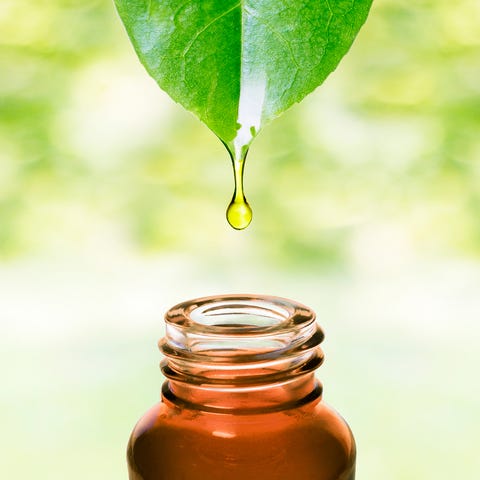
“Natural” or “All-Natural”
What it implies:
A product is made with ingredients sourced from nature — be they plant, mineral or animal — that are minimally modified.
GH Lab lowdown:
Few ingredients are used as-is from nature. “Natural” doesn’t always mean healthier: Some natural substances can even be harmful.
Trust it when:
You see the Ecocert Natural Cosmetic stamp, which confirms that at least half the ingredients are plant-based.
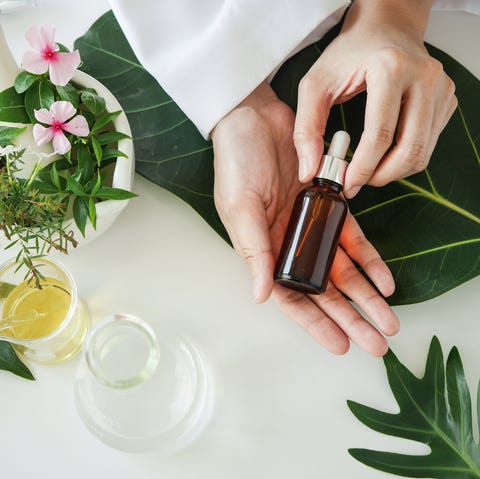
“Organic”
What it means:
The product’s ingredients and formula are produced without harmful pesticides.
GH Lab lowdown:
This is the only government-regulated term in the “clean” beauty space.
Trust it when:
It is USDA-Certified Organic (contains at least 95% organically cultivated ingredients) or NSF Organic-Certified (contains at least 70% organic ingredients).
“Naturally Derived”
What it implies:
Natural ingredients in a product have undergone some chemical processing.
GH Lab lowdown:
When you see this term or a similar one like “natural origin” or “made with natural ingredients,” look for a qualifier that indicates what percentage of ingredients it applies to.
Trust it when:
The product carries the Good Housekeeping Seal, since the Good Housekeeping Institute Labs verify all product claims.
“Chemical-Free”
What it implies:
A product doesn’t contain harmful chemicals like formaldehyde, toluene, and lead.
GH Lab lowdown:
Not all chemicals are created equal; plus, every ingredient (natural or synthetic) is made up of chemicals. They are even part of human biology!
Trust it when:
The claim is ingredient-specific, as in “paraben-free,” and the product has earned the Good Housekeeping Seal (we obtain data to validate all ingredient claims).
“Nontoxic”
What it implies:
A product is not harmful to humans.
GH Lab lowdown:
Such a wide-ranging term is meaningless unless it refers to a specific ingredient. Almost anything, even drinking water, can be harmful in large quantities.
Trust it when:
Never, since it cannot be proven or disproven.
“Green” or “Sustainable”
What it implies:
Products are developed with minimal present and future environmental impact.
GH Lab lowdown:
This broad term covers everything from what’s in a product to how it’s made, packaged, distributed and disposed of.
Trust it when:
You see certifications like Cradle to Cradle for sustainability and the Green Good Housekeeping Seal, which validates both sustainability and product performance.
Why is Clean Beauty Important?
Your skin is the biggest organ and absorbs up to 60% of what you put on it. Yet so many of us are completely unaware of what’s inside our products and believe the government will oversee our safety. The truth is, that there is a serious lack of regulation of U.S. Cosmetics.
The US has not passed a law regulation personal care products since 1938. Since then, more than 80,000 chemicals have been introduced into products on store shelves. Only 10% of these have been tested for human safety.
Just as a comparison, while the UK has banned nearly 1,400 harmful ingredients in personal care products, the US only partially prohibits 11. The FDA even allows chemicals known to cause cancer including parabens (which are known to disrupt hormone function), phalates (an industrial chemical that can damage the liver, lungs, and reproductive system), formaldehyde, lead and more.
How can you really go “clean” with your beauty routine?
The BLB Lab’s top tips on making truly natural and sustainable clean beauty choices:
1. Do an ingredient check.
For a deeper dive into ingredients, the Beauty Lab recommends consulting resources like the Made Safe Hazard List and the Environmental Working Group Skin Deep database. Both nonprofits aim to collect the latest science on ingredients and offer recommendations for safety-certified products across categories.
2. Choose fragrance- and dye-free.
Products that contain no fragrances or dyes are by nature better for the environment, as they use fewer ingredients, and people can have sensitivities to both. Even fragrance from natural sources can cause reactions. Plus, brands aren’t required to list the ingredients in “fragrance” on labels, so in many cases there’s no way to know what’s in those products.
3. Pick less packaging.
The more minimal the packaging, the better for the earth. Whenever possible, seek out products with fewer components and without parts or materials that can’t be recycled (aim for codes 1 and 2) and unnecessary elements like outer boxes. Keep your eye out for the winners of BLB’s new Sustainability Awards for beauty, home care and toys, to be announced this fall.
4. Buy (green!) beauty that gives back.
Seek out beauty brands that donate a portion of their proceeds or make a contribution to environmental causes.
What Can I Do Right Now to Protect Your Health?
When I am purchasing a new product from toothpaste or laundry detergent to shampoo or nail polish, I use the Environmental Working Group website. EWG created the Skin Deep Database that includes information on more than 61,000 products and rates them for safety.
My tip is to slowly switch out products one at a time so it doesn’t seem daunting and expensive. I would start with the products you use daily. I love Native Aluminum & Paraben Free deodorant and their sulfate and paraben free body wash! Make sure to stay tune for a full guide!




 beautyleebar.org