Do you feel like anxiety runs point in your day? Do you wonder what in the world is going on with you that you have these stressed-out reactions that feel disproportionate to the reality of what’s at hand?
Advertisements
The truth is that your reactions can get triggered in response to a real or imagined event. The part of you that overrides reality and kicks up a sometimes-surprising physical response does not know the difference between what’s actually taking place and what’s not real. That can be baffling because it can make you do things that don’t make sense. And no one likes to be the foolio or feel hijacked by their fight-or-flight response.
Let’s discuss: say you’re at a campground with friends, and you hear a loud noise that scares you. You then find you’ve hightailed it across the campground into your tent before you’ve had time to even sort through if that noise is actually a real and present danger. Stay with me—here’s what has happened. Your subconscious mind hijacked your conscious mind (the part that feels like you). You heard the noise. Your subconscious, which stores all your memories, downloaded a memory of a threat (i.e. a bear growl) that it had stored in its complex hard drive; your imagination envisioned a bear in your immediate environment. It then sent a message to your autonomic nervous system, which houses all hormones (like adrenaline, which makes you move fast), your senses became hyper-alert, and your heart rate increased—all for your survival. Before you could check to see if there indeed was a bear about to eat you, your body drove you to seek safety—all in seconds. But then what if your friends, while you were cowering, began to laugh at your folly, as one of them had merely opened the zipper on their bag, and that was the sound your subconscious deemed dangerous that caused you to run for shelter? It would undoubtedly feel like a bodily betrayal.
Advertisements
But you have to give thanks for the fight-or-flight response, because it has literally kept humankind alive for thousands of years of evolution as a species. It’s not as necessary day to day now because we aren’t being hunted by lions as we once were. We aren’t always fighting for our survival, and yet, our body still gets flooded with messages to flee or fight back. Makes you question how often you have automatically reacted in that irrational mode because of an unconscious download, then responded in kind, with an over-the-top, inappropriate response because you felt threatened—and that wasn’t actually the case. Anxiety disorders come into focus when that response becomes triggered easily and often, and the brain learns to perceive the world as more dangerous than it actually is. It becomes the norm, and that’s taxing on your whole system and your quality of life.
The more you can realize when the fight-or-flight is happening, the more you can be present with the reality of what’s truly unfolding. You can then allow your life to be directed by responding instead of reacting to daily events that pose no real threat. You start to see where your anxiety has you by the nose, where you consistently allow yourself to fly off the handle to attack, defend, or find yourself running from conflict. All are good indicators that these are areas where you can work on being more mindful, more present, more conscious. Breathing through automatic responses of fight-or-flight to stabilize your anxiety levels is helpful. It allows you to feel more in control and, ultimately, happier as a result. And your flight-or-flight response can show up for you in instances where it’s actually useful, when there’s a real need for its gift.
I say it all the time: “This is giving me anxiety.” What I often mean, however, is something slightly different: “This is stressing me out.” As someone who has actually been diagnosed with chronic anxiety, I should probably know better than to conflate the two. And yet, I know just in conversing with my friends and co-workers on a daily basis that among my generation, using the words “stress” and “anxiety” interchangeably has become the norm.
While it might seem like a matter of semantics, in reality, it’s a problematic habit. For one thing, using “anxiety” as a replacement term for “stress” diminishes the very real symptoms that those who suffer from anxiety have to negotiate on a daily basis. For another, it might prevent someone who has undiagnosed anxiety from seeking the correct kind of treatment because they can’t differentiate those symptoms from that of regular, day-to-day stress.
Advertisements
Psychology Today
“Both stress and anxiety can bedevil anyone’s psychological and physical health,” says Heather Silvestri, PhD, a New York City–based psychologist. “However, while often related, they are distinct phenomena.” Below, she helps us clear up the difference between the two—and how to manage both.
Advertisements
WHAT’S THE DIFFERENCE BETWEEN ANXIETY AND STRESS?
Let’s start with stress, which typically refers to a situational experience. “It’s a physiological and psychological response to a stressor, which is often obvious and explicitly identified,” says Silvestri. A crazy day at work, a traffic jam, a looming presentation—these can all be sources of stress and can all cause your cortisol levels (also known as the “stress hormone”) to spike. You probably know the symptoms of stress pretty well: anything from sweaty palms to a racing heart to butterflies in your stomach.
But here’s the key thing about stress: When the source of your stress is resolved, those symptoms tend to go away. That’s not the case with anxiety.
Advertisements
“With anxiety, the internal disquiet stubbornly persists, without heeding the actual conditions,” explains Silvestri. In other words, those who suffer from generalized anxiety experience those same stress-like symptoms on a chronic basis, no matter the external circumstances. That’s why anxiety often feels inexplicable or “out of proportion” to what’s going on in our lives.
“Stress responses are hard-wired into our nervous system because we need them to survive,” says Silvestri. “Anxiety can be seen as the lingering upheaval that doesn’t necessarily quiet down when the situation improves. In this way, anxiety is the horse that ran away from the stable.”
Advertisements
WHY ARE THEY USED SO INTERCHANGEABLY?
Silvestri suspects a few factors, not the least of which is our current political landscape and the breakneck pace of the digital age—both valid sources of stress and fear. It’s our new norm, which certainly impacts the way we talk about it. “Our modern lexicon has absorbed this idea and it now trades in terms connoting fear, anxiety, and neurotic apprehension,” she says. “You might even go so far as to argue that there has been a glorification of internal unrest insofar as proclaiming, ‘I’m so stressed out!’ or ‘I’m freaking out!’ have a certain cache, as if such frenetic nervous system activity means someone is doing something important or notable.”
This, she says, has led to misuse of both terms, as well as a lapse in distinction between the two. “This is lamentable because stress and anxiety can be sources of substantial suffering, and they are best treated with nuance and precision about what they are and how they operate,” she adds. “Nowadays we also run the risk that someone may be delayed or miss out entirely on getting needed help because they mistake their clinically treatable anxiety disorder for a more normalized and watered-down idea of being ‘stressed out.'”
CAN ONE LEAD TO THE OTHER?
“Chronic stress can absolutely give way to anxiety,” says Silvestri. “We need rebound time to recover. When we experience chronic stress, we lose our ability to recover, and elevated physiological arousal becomes the new normal.” If you’re perpetually stressed, turning off that “switch” and finding relief becomes more difficult.
Advertisements
That’s why with anxiety, we tend to scan for things that might be worrying us when there aren’t any obvious stressors at a given moment—kind of like a self-fulfilling prophecy. But the good news is that there are many ways to manage both chronic stress and generalized anxiety.
HOW CAN I NIP STRESS IN THE BUD?
Honestly, a lot of it is reflecting and figuring out what works for you. If you know that nothing clears your head like a sweaty jog, make time for that. If you notice that stress feels much more manageable when you get a good night’s sleep (as tends to be the case for most of us), be sure to get plenty of shut-eye when you know you’re about to be put in a stressful situation. Being both self-aware and proactive is key.
HOW DO I KNOW IF I HAVE ANXIETY, AND WHAT CAN I DO ABOUT IT?
“If someone continues to feel preoccupied after a stressor has resolved or if the course of the worry doesn’t really track external events, this can be a sign that something more significant than generic stress is going on,” says Silvestri. This recognition is the first step. “By acknowledging your anxiety, you can be more mindful of triggers and more purposeful about your choices,” she says.
Also, know that it’ll be much easier and more efficient to treat your anxiety if you can approach it with curiosity instead of judgment. Then, you can start to play around with different rituals to manage it: Silvestri suggests starting with common aids like yoga, mindfulness, and journaling. “Really, any activity of self-care that lends a sense of agency to your lifestyle,” she says, since anxiety can rob us of our sense of control.
Advertisements
But if those initial steps aren’t offering any relief, then it’s probably time to seek help elsewhere. “For the first line treatment, I would recommend either cognitive behavioral or insight-oriented psychotherapy, depending on how interested someone is in delving into historical causes or sticking with a focus on symptoms, especially the triad of thoughts, feelings, behavior,” she says. You and your doctor or therapist can then discuss the best treatment plan for you.
Either way, know that you have options—and knowing the difference between stress and anxiety is a solid first step to feeling better.
Aromatherapy can help. There are some essential oils that have a calming effect, like lavender and bergamot. A diffuser is an easy way to use essential oils.
A bath is probably one of the best forms of self-care. This CBD soak also contains Epsom salt, pink Himalayan salt, calendula petals, and essential oils.
These supplements from Hum are formulated to help you stay calm and focused thanks to the adaptogenic plant, rhodiola. Take one capsule with food when you need it.
Add a teaspoon of this powder to your water before you go to bed, or whenever you need to de-stress. It contains magnesium and L-theanine to calm, improve move, and promote healthy digestion.
Advertisements
This article is provided for informational purposes only and is not intended to be used in the place of advice of your physician or other medical professionals. You should always consult with your doctor or healthcare provider first with any health-related questions.
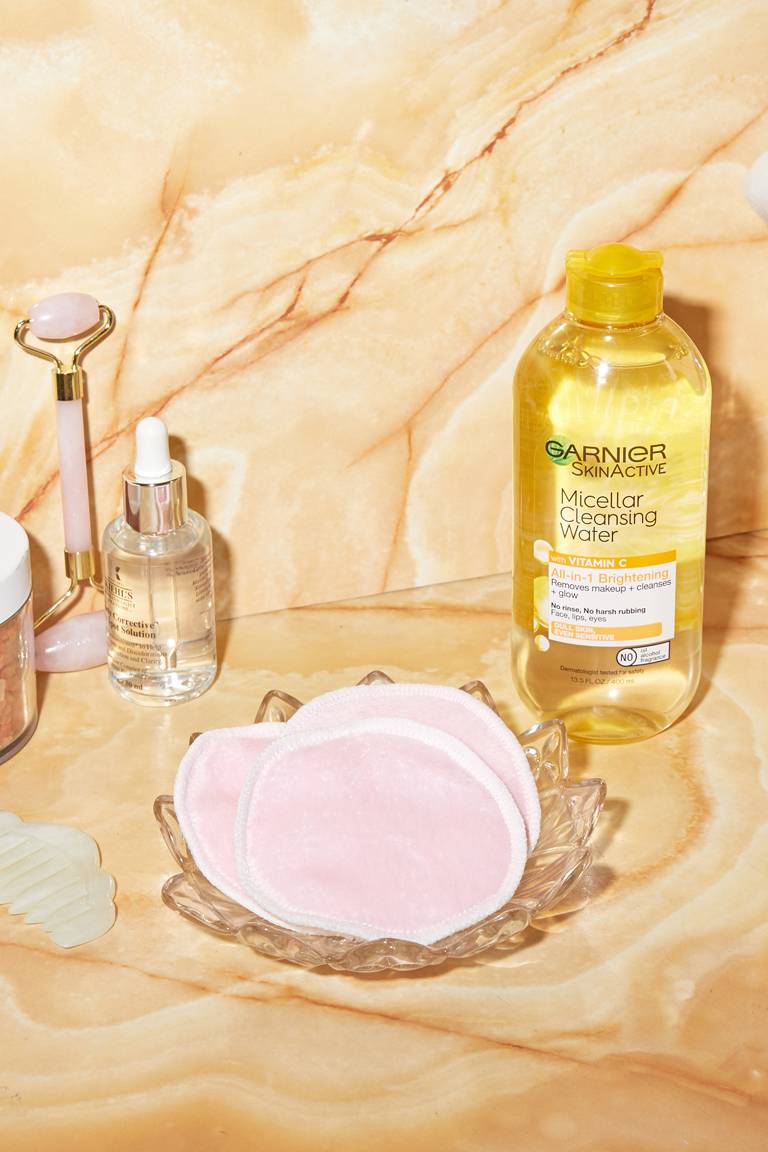
If you use micellar water, toner or any kind of makeup removerin your routine, you probably go through a lot of makeup-removing pads. While these cotton rounds might seem better for the environment than makeup wipes (which are often made of non-biodegradable materials such as polyester), filling your trash with so many single-use pads can have a negative environmental impact, too. This is why we love using reusable makeup pads. Not only are they eco-friendly, but also they help you save money in the long run.
Garnier has made reusable rounds even more accessible with its launch of the Micellar Cleansing Eco Pads. The rounds, which come in packs of three and cost less than $10, are made of soft microfiber. Each pad can last up to 1,000 washes and help effectively and gently remove makeup and impurities without leaving any residue behind. We’re obsessed! Here’s how to use one in your routine.
Gently sweep the pad over your skin (it’s safe to use the pads over your eyes) until all makeup is removed or you’ve saturated your skin with your toner.
STEP 3: Clean Your Pad
After each use, hand wash the pad with soap and water until clean. You can give it a deeper clean once a week by tossing it into the laundry. Lay the pad flat to dry. We like to store them in a soap dish or a small mesh laundry bag to keep them dry and hygienic.
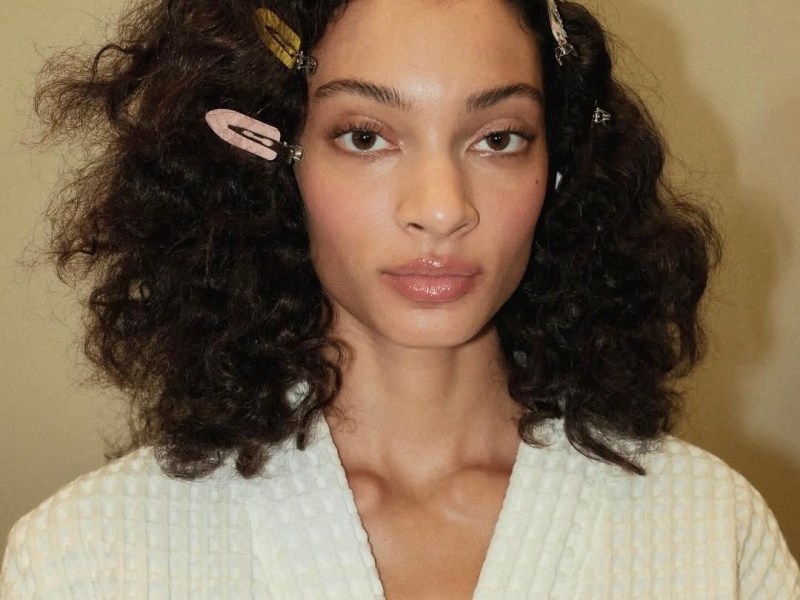
Sleepy girl makeup emerged as one of NYFW’s softest beauty trends at Sandy Liang’s FW26 show. Created by makeup artist Romy Soleimani in collaboration with Rare Beauty, the look focuses on luminous skin, pastel pink blush, subtly emphasized under-eyes, and glassy lips for an intentionally undone, just-woke-up effect that’s surprisingly wearable in real life.
The climax. The big “O.” Coming. Cleave the pin. Let go. Crack your marbles. You’ve heard all the euphemisms, but you haven’t quite been able to get there yourself. So, whenever you have sex, you’re so focused on getting to the finish line yourself that you just can’t seem to quite get there.
We’re here to help! Your sexual pleasure is important, and not being able to orgasm is stressful, uncomfortable, and frustrating. Ready to climax but not sure how? Come (ha) along with me!
Advertisements
You’re expecting a giant explosion of emotion
The movies (and friends sometimes, too!) can make an orgasm sound like a firework is exploding in your body. Not every orgasm feels like that. As I once said, orgasms are like snowflakes — they’re all unique!
Don’t orgasm-compare either! As much as I love talking to friends about sex, make sure you understand that their experiences are going to be different from yours.
You’re too tense
Relax girl! When you get too overworked making sure you climax, your body can’t “let go.”
As much as I hate to write this one, it could be something in your relationship that’s making orgasming difficult. Whether you’re not connected physically, you’re both stressed about something, you’re miscommunicating, or something else is going on between the two of you, it might make your body tense up or your mind might be in a different place.
Practice somemindfulness. It might sound weird (and difficult!), but stay in the present while you’re having sex. Really be there with your partner and stay focused on what’s happening in the present moment. You’ll feel more gratitude toward your partner, and have better sex (!!!).
Try masturbating
If you haven’t tried getting off on your own, YOU MUST. Ok, it’s not that dramatic, but I would definitely recommend you start here! Masturbation helps you get an idea of what you enjoy, and once you’re able to make yourself orgasm, it’s easier to tell your partner what he or she can do to get you there.
Advertisements
If you’re struggling to get off from masturbation as well, try adding in toys and trying different positions.
Sex is painful
If sex hurts, obviously you’re not going to enjoy it enough to orgasm. Make an appointment with your doctor ASAP.
If you’re taking some medications
Certain medications can decrease your libido and lower your ability to climax. If this is really bothering you, bring this up with your doctor as well.
You’re afraid of losing control
Self-proclaimed control freak here, and I can say first-hand that being afraid to lose control and let your body go is actually a very common reason for not being able to orgasm. If you’re with a new partner, dealing with body image issues, or dealing with other areas of stress in your life, it’s easy to feel like you don’t want to lose control of your sex life.
Communicate with your partner that you’re struggling with this aspect of your sex life. Getting it off your chest is the first step in relinquishing control, and your partner might be able to ease your mind of some of the (probably false!) narratives you’re telling yourself.










 beautyleebar.org