At this point, all beauty junkies worth their weight in mascara know their way around highlighter and can differentiate between a powder formula that packs a punch and a cream formula that adds just a little something. Every once in a while, however, a new product enters the category that causes even the most devoted and experienced to pause and investigate. Cue highlighter sprays, a new take on the (now) classic beauty product. It offers shimmer rather than glitter, and differs from pigment-infused sprays meant to be spritzed all over. Spray highlighters are meant to be applied to a concentrated area, which can be difficult to achieve at first spritz. That’s why we tapped celebrity makeup artist and brand founder Patrick Ta to share his best tips and tricks for mastering the look.
It’s All About Focus
The key to getting a lit-from-within glow is concentrating the highlighter on specific parts of the face. Ta’s Major Glow Highlighting Mist works well for this thanks to its super-fine mist, which offers sheen rather than sparkle. When applying, “make sure you target certain areas of the face,” says Ta, whose go-to spots are the tops of the cheekbone and “C” around the temple.
Distance Is Key
To ensure you don’t look like you dipped your cheek in glitter, it’s important to get the distance right. Ta recommends six inches from the face, which will ensure you’re getting the benefit of the product without overdoing it. If you do go a little overboard, however, just use a clean beauty sponge to dab away excess product.
Use Your Resources
If you need help targeting specific areas, use a sheet of paper to block off the area you want to highlight — similarly to creating a wing using a business card. This will help to keep the highlighter in one place and concentrated in the areas you want to glow. If you want to be a little fancy (and have some extra coin to spend), pick up the Patrick Ta Beauty Major Glow Setting Fan, which can be used to help place the highlighter and set the mist.
It’s Not Just For the Face
According to Ta, the best way to finish off any look is to bring the highlighter down to your neck and décollatege, which helps everything to look cohesive and blended. You can spray the highlighter directly for an extra pop of glow, or buff it in using a brush for a diffused, sun-kissed look.
In the makeup world, foundation and bronzer have always gotten most of the glory. They’re go-to staples that people turn to for coverage and color. However, today we want to talk about highlighter, which has been stealing the spotlight lately.
In our opinion, highlighters are just as important as the two aforementioned makeup products because they deliver luminosity and brightening qualities that can completely transform your complexion. To show our devotion to highlighters everywhere, we’re breaking down the basics of both liquid and powder illuminators so you never have to question their roles in your life again.
A Tale of Two Highlighters
First and foremost, let’s be clear that liquid and powder highlighters are not the same, and therefore serve different purposes. Liquid illuminators are typically more pigmented than powder formulas and should be used to accentuate or brighten specific spots on the face. You know the strobing craze that’s been hitting the beauty scene? Liquid illuminators are perfect for that!
Powder illuminators typically have softer application and deliver more of a sheer, shimmery finish. These types of products work well over foundation or blush to lend your skin that all-over dewy look.
Liquid Highlighter
When using a liquid highlighter, make sure you use a blending sponge or finger to work it into your skin. After applying foundation — before you reach for concealer — dot the liquid along the areas of the face that are naturally hit by the sun (the top of cheekbones, bridge of nose, brow bone, Cupid’s bow, etc.).
Make sure to not go overboard and apply thick streaks of the formula, as it will look too drastic. The key is for the liquid to blend into skin naturally and subtly.
If you’ve got a bad case of under-eye bags or dark circles, simply dot highlighter under the eye area and in the inner corners, blending downward toward the lower cheekbone. This will brighten your eyes and make you look more awake (even if you’re running on a couple hours of sleep).
When using a powder-based illuminator, use either a medium-sized fluffy powder brush or an angled powder brush for application. After applying foundation, dust highlighter on the cheeks, chin, nose and top of forehead. Because the application is less localized than that of liquid highlighter, the result is more of an all-over dewy glow, as opposed to a contoured one. You can also swipe a little along the top of the brows to accentuate their shape!
This is a practice for the more maximalist makeup guru out there, but minimalist beauty lovers, hear us out. Start by applying a liquid illuminator or drops — our current favorite certainly has to be the Lancôme Teint Idole Custom Highlighting Drops in Rose Glow — to your cheekbones, down your nose and on your cupids bow. One to two drops is all you’ll need for this, and blend it out with your fingers or use a stippling brush. Next, lightly apply the center shades of Lancôme Bronze & Glow Palette in It’s Time To Glow overtop with a fan brush for the silkiest, sparkliest and softest touch. Your highlight will be officially blinding and beautiful, garnering double takes from far and wide (insert smirky emoji).
SHOP THIS STORY
L’Oreal True Match Lumi Powder Glow Illuminator
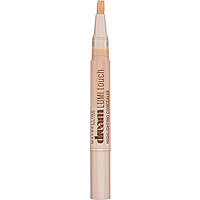
Maybelline Dream Lumi Highlighting Concealer
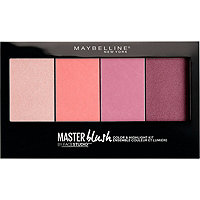
Maybelline FaceStudio Master Blush Color & Highlight Kit
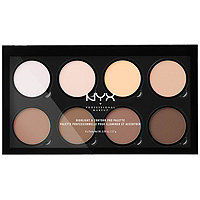
NYX Professional Makeup Highlight & Contour Pro Palette
The beauty buzzword and movement of the moment: “clean.” Along with other terms like “green” and “natural,” it’s used to describe every type of skincare, hair, makeup, and fragrance product, from moisturizer to makeup, shampoo to soap.
Ok, you guys have seen all the talk about switching to clean beauty on my Instagram feed, but what is clean beauty? Clean beauty is products that are not toxic to your body, and free of harmful ingredients. I was pretty shocked—actually, floored—to learn that the US beauty industry is one of the most unregulated industries. Companies can basically put any ingredients they want in a product—harmful or not. If you’re anything like me, you probably try to live your best to live a healthy lifestyle by eating well and reaching your fitness goal with the help of FlattummyApp. But then you are slathering yourself with chemicals, parabens, and silicones — it’s counterproductive!
Retailers know that consumers want cosmetics and beauty products that aren’t laden with potentially harmful ingredients — for example, Sephora recently launched “Clean at Sephora,” an initiative in which the beauty brand badged over of its 2,000 products as “clean,” in this case meaning free of ingredients like sulfates, parabens, formaldehydes, phthalates, and mineral oil.
But identifying the “cleanest” makeup products or “safest” cosmetic brands on the market isn’t all that simple. Despite a booming beauty industry, U.S. laws for cosmetics safety are virtually unchanged since they were created back in 1938. Here — unlike in Canada and Europe, where well over 1,300 unsafe ingredients are banned for use in beauty products — unbelievably, the FDA has prohibited only 11 ingredients or related compounds.
While legislation is pending to change this, progress is slow. The Personal Care Products Safety Act, supported by the Good Housekeeping Institute and beauty industry-leaders, would require the FDA to review the safety of at least five ingredients per year (at which rate it could take hundreds of years to even test for risks and dangers!). Yet this small step has remained stalled in the Senate since it was proposed in 2015. And there is no established industry-wide definition for “clean” or “natural” beauty claims. Being aware of what clean beauty is and educating yourself is so important which is why I wanted to share Clean Beauty 101 today.
The term “clean beauty” gets thrown around quite a bit, but few people know what the phrase actually means. Which is understandable: terms like “natural,” “botanical” and “green” are completely unregulated by the FDA, meaning anyone can use them. At its most basic level, a true clean product avoids the use of ingredients like parabens, sulfates, silicones, phthalates, and synthetic fragrances.
“Natural” or “All-Natural”
What it implies: A product is made with ingredients sourced from nature — be they plant, mineral or animal — that are minimally modified.
GH Lab lowdown: Few ingredients are used as-is from nature. “Natural” doesn’t always mean healthier: Some natural substances can even be harmful.
Trust it when: You see the Ecocert Natural Cosmetic stamp, which confirms that at least half the ingredients are plant-based.
“Organic”
What it means: The product’s ingredients and formula are produced without harmful pesticides.
GH Lab lowdown: This is the only government-regulated term in the “clean” beauty space.
Trust it when: It is USDA-Certified Organic (contains at least 95% organically cultivated ingredients) or NSF Organic-Certified (contains at least 70% organic ingredients).
“Naturally Derived”
What it implies: Natural ingredients in a product have undergone some chemical processing.
GH Lab lowdown: When you see this term or a similar one like “natural origin” or “made with natural ingredients,” look for a qualifier that indicates what percentage of ingredients it applies to.
Trust it when: The product carries the Good Housekeeping Seal, since the Good Housekeeping Institute Labs verify all product claims.
“Chemical-Free”
What it implies: A product doesn’t contain harmful chemicals like formaldehyde, toluene, and lead.
GH Lab lowdown: Not all chemicals are created equal; plus, every ingredient (natural or synthetic) is made up of chemicals. They are even part of human biology!
Trust it when: The claim is ingredient-specific, as in “paraben-free,” and the product has earned the Good Housekeeping Seal (we obtain data to validate all ingredient claims).
“Nontoxic”
What it implies: A product is not harmful to humans.
GH Lab lowdown: Such a wide-ranging term is meaningless unless it refers to a specific ingredient. Almost anything, even drinking water, can be harmful in large quantities.
Trust it when: Never, since it cannot be proven or disproven.
“Green” or “Sustainable”
What it implies: Products are developed with minimal present and future environmental impact.
GH Lab lowdown: This broad term covers everything from what’s in a product to how it’s made, packaged, distributed and disposed of.
Trust it when: You see certifications like Cradle to Cradle for sustainability and the Green Good Housekeeping Seal, which validates both sustainability and product performance.
Why is Clean Beauty Important?
Your skin is the biggest organ and absorbs up to 60% of what you put on it. Yet so many of us are completely unaware of what’s inside our products and believe the government will oversee our safety. The truth is, that there is a serious lack of regulation of U.S. Cosmetics.
The US has not passed a law regulation personal care products since 1938. Since then, more than 80,000 chemicals have been introduced into products on store shelves. Only 10% of these have been tested for human safety.
Just as a comparison, while the UK has banned nearly 1,400 harmful ingredients in personal care products, the US only partially prohibits 11. The FDA even allows chemicals known to cause cancer including parabens (which are known to disrupt hormone function), phalates (an industrial chemical that can damage the liver, lungs, and reproductive system), formaldehyde, lead and more.
How can you really go “clean” with your beauty routine?
The BLB Lab’s top tips on making truly natural and sustainable clean beauty choices:
1. Do an ingredient check. For a deeper dive into ingredients, the Beauty Lab recommends consulting resources like the Made Safe Hazard List and theEnvironmental Working Group Skin Deep database. Both nonprofits aim to collect the latest science on ingredients and offer recommendations for safety-certified products across categories.
2. Choose fragrance- and dye-free. Products that contain no fragrances or dyes are by nature better for the environment, as they use fewer ingredients, and people can have sensitivities to both. Even fragrance from natural sources can cause reactions. Plus, brands aren’t required to list the ingredients in “fragrance” on labels, so in many cases there’s no way to know what’s in those products.
3. Pick less packaging. The more minimal the packaging, the better for the earth. Whenever possible, seek out products with fewer components and without parts or materials that can’t be recycled (aim for codes 1 and 2) and unnecessary elements like outer boxes. Keep your eye out for the winners of BLB’s new Sustainability Awards for beauty, home care and toys, to be announced this fall.
4. Buy (green!) beauty that gives back. Seek out beauty brands that donate a portion of their proceeds or make a contribution to environmental causes.
What Can I Do Right Now to Protect Your Health?
When I am purchasing a new product from toothpaste or laundry detergent to shampoo or nail polish, I use the Environmental Working Group website. EWG created the Skin Deep Database that includes information on more than 61,000 products and rates them for safety.
My tip is to slowly switch out products one at a time so it doesn’t seem daunting and expensive. I would start with the products you use daily. I love Native Aluminum & Paraben Free deodorant and their sulfate and paraben free body wash! Make sure to stay tune for a full guide!
You feel raw and emotions are running high. You’ve had a stressful week at work, an over-the-top family weekend gathering, or a falling out with a close friend. You know you need some “me time,” and that it’s clearly a moment for you to regroup. What are your go-tos to reset? Your usual Netflix binge and a tub of ice cream sounds like a slippery slope hurtling toward a shame spiral. Instead, you may want to add some new self-soothing tools to your Honor Thyself Toolbox.
Here are some ways for you to productively reclaim balance to your nervous system and practice extreme self-care for those moments in life when you need it the most.
Give Yourself a Break
If you’re in need of some self-soothing, this is certainly not the moment to take an inventory of your life and your failings. Bring yourself into soft focus by practicing an important self-soothing tool: speaking to yourself with kindness and compassion. I often say to clients, when the proverbial mess hits the fan, “How much more can you love yourself right now, in this moment?” Loving and accepting who you are is a big part of emotional intelligence, especially when you feel raw and vulnerable. And positive self-talk is a valuable skill that can be developed over time. It’s learning to speak to yourself lovingly, even when you feel down, less-than, and at odds with the world around you, and sometimes that feels counterintuitive. So, crank up the kindness and give yourself some props.
Clean and Clear
Clear your home, your heart, your body, and your intimate space: • Sometimes putting on some music and tidying or organizing feels good to the soul! Making your sacred space beautiful can be uplifting and soothing. Lighting candles and putting flowers around your home once you’re done shifts a mood and can be deeply satisfying. Don’t forget to fire up the sage and to Palo Santo every room, releasing any old and stuck vibes lingering about. We don’t need any outside energies running interference on the home front.
• Often, we get cluttered on the inside too, and we’re in need of an inner Kondo session. You can release old, pent-up feelings by processing them through writing about what’s going on in your head, clearing away the cobwebs of heart and mind, so you can be up to speed with you.
• A purifying soak in a warm tub, with Epsom salt for 20 minutes, can literally draw toxins out of your system. Next-level self-soothing is adding baking soda and essential oils to the mix. And a “psychic shower” is always in order: when you allow the shower to pour over you while visualizing the water clearing all that you no longer need. Just imagine everything you were carrying around being blissfully washed away, spiraling down the drain, gone forevermore.
Hobby It Out
Make a list of things you can do with your hands that you’ve always wanted to, but haven’t made the time for. And then try them out. Painting, jewelry-making, vision boarding, coloring, or even cooking can get super creative. When you tap into your artistic self, the intuitive part of your brain becomes engaged and a calming sense of well-being can have its way with you. Order what you need ahead of time and store it in your closet for that rainy day. Creating itself is soothing, calming, and way more constructive than a binge-tastic Lifetime couch potato run (although that has its merits too).
The Center Is Where It’s At
The center being you, your inner core, your internal compass, your heart center—when you’re operating from the highest, best aspect of yourself. That’s your center. The goal is to live from that place in every area of life, in all circumstances. And that takes practice because it’s not our go-to. So, when we’re agitated or drained, we recalibrate, knowing nothing “out there” is going to soothe us at a soul level. Only we can do that for ourselves, by turning inward for solutions when we really want to look outside of ourselves for the quick fix. And every time we do this, we strengthen that all-important connection to ourselves, at the deepest level of being.
We can learn, over time, to lean into who we are, knowing we have our own back, we are our own best friend, and that every other relationship in our life flows from that place of self-love and true power. So, notice when you feel shaken up, and get quiet. Be with yourself, check in with yourself, and ask what you need next. Speak to yourself with kindness, the same as you would with a child you cared for deeply, who’s needing love and direction. Remind yourself that your relationship to you is the only constant there will ever be. This is the self-soothing master class: be with you, stay close to you, tune in to you, and treat yourself with all the love and respect you deserve. You’ll be amazed how this practice will radically shift your life and open you up to all good things, up-leveling you in ways you never knew were possible.
The truth is, honoring ourselves and self-soothing can mean many things to different people: taking yourself out to a wonderful dinner at your favorite restaurant, going to a day spa for pampering, sitting on a park bench watching dogs and children play with abandon, immersing yourself in a great book, meditating while listening to a great guided visualization. At the end of the day, it’s about taking time to fill up your well that’s dry—and not going to the hardware store for milk. We pause when agitated or on empty, recognize it’s time for some radical self-care, and move into gentle action around our vulnerability. Self-soothing is how we shift into alignment with who we are. And as you continue to expand your self-soothing toolbox, you will ultimately develop a deeper relationship to amazing you.








 beautyleebar.org