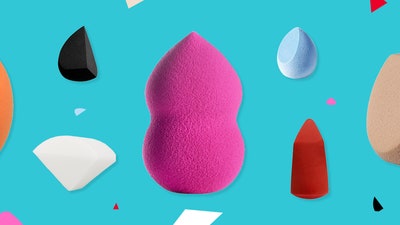
We make a pretty compelling argument that the basic makeup sponge is THE most versatile and important makeup tool in your kit. A makeup sponge does everything from airbrush your foundation, seamlessly blend your cream products, and it’s even great for applying a myriad of powder products too.
The beautyblender elevated the basic makeup sponge to icon status, but the multiple drugstore versions that emerged afterward made it a staple in everyone’s makeup bag – and are proof that a great makeup sponge doesn’t need to cost $20. For a tool with a lifespan of just a few months, we prefer to stick to these amazing drugstore makeup sponges that do the same job for less than half the price.
(Oh, and if makeup sponges aren’t for you, check out our top foundation brushes instead.) Here are our tried and tested favorites:
This bright orange sponge is our go-to and not just because of the great price. The latex-free sponge is firm when dry, but when damp it becomes a super soft, flexible sponge that gives the most seamless, airbrushed finish. When it’s damp it makes blending-out foundations extra quick thanks to the large surface. The flat side is great for applying powder products and the pointed tip is great for precision. It also lasts a lot longer than many other makeup sponges.
Made with EcoFoam® Technology that’s made with 70% plant-based material, these little and large makeup sponges have different densities so you can easily create your ultimate makeup look. The Large Base Blender is soft and flexible to create light, buildable makeup application while the Mini Detail Blender is firmer for more precise and detailed coverage. The little one is also a great size for on-the-go.
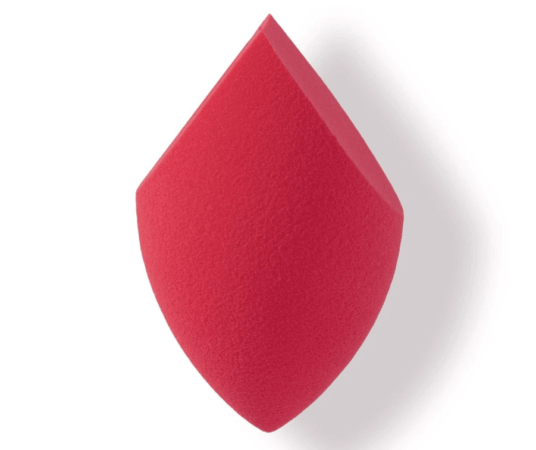
Morphe tools are iconic for a reason and we love this soft sponge with a chiseled edge that makes it the perfect contouring tool for those that love precision contouring. Use it with liquid, cream or powder formulas and use it damp for the most flawless finish with any formula.
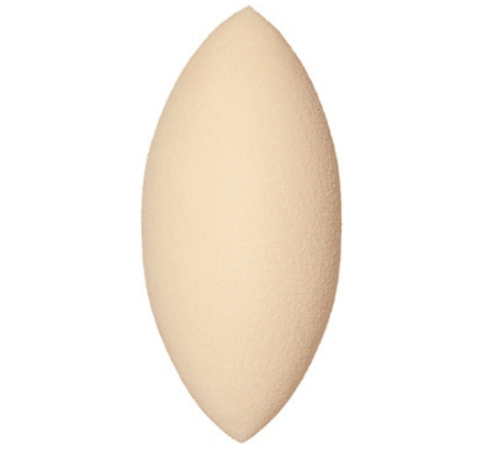
This uniquely-shaped sponge was specifically designed to work with e.l.f.’s Camo Concealer but it works amazingly with any concealer or foundation formula. The unique shape means it’s great for the undereye area and for blending concealer into any tricky spots with precision.
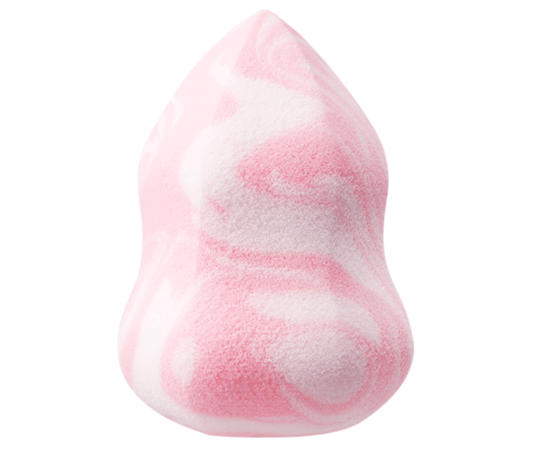
This unique pear-shaped blender has a super fine material that makes it great for creating a flawless, full-coverage base. With 13 different facets, the soft yet dense sponge is great for getting into every space.
Cosmetic company Skindinavia released a consumer-facing setting spray to the market, credited as being the first to do so. Ever since then, setting spray has become one of the greatest beauty inventions of all time and an integral step in every beauty guru makeup routine. Although not everyone feels this way, trust me, it’s the secret to long-lasting makeup with zero touch-ups! You just need to know how to use setting spray to its full potential, and you’ll be converted. Here are three setting spray hacks I swear by for flawless, long-lasting makeup.
Setting Spray Hack #1: For Creaseless Eyeshadow
It can be hella-frustrating when you spend what feels like forever, blending and buffing your eyeshadow for it to crease a few hours later. This setting spray hack will ensure your eyeshadow lasts all day long. Dip your eyeshadow brush into your eyeshadow of choice, then mist the brush a few times with setting spray, then apply as usual. This helps not only make the pigment pop, but it keeps it in place all day long. This also works amazingly for shimmers, as it helps to intensify them. Try spritzing the brush first, then dipping into a shimmer before applying for ultimate shine.
Note: If you’re working with glitter eyeshadow, it is advisable to use a setting spray before picking the pigment from the shadow as well as after.
Setting Spray Hack #2: For A Long-Lasting Glow
Discovered this hack when I was experimenting with Huda Beauty setting spray, Resting Boss Face. Now, I can’t imagine doing mine or anyone’s makeup without it, as it not only locks the makeup in place, but it gives skin a stunning luminosity. All you need is setting spray, a beauty blender, and a cream highlighter. A great drugstore product is the L’Oreal True Match Lumi Glow Amour Glow-Boosting Drops, $15; the shimmer is SO pretty, and the liquid formula will work perfectly for this hack.
Start by spraying a damp makeup sponge with setting spray, then dip it in your fave cream highlighter. Next dab it along your cheekbones, the bridge of your nose, and the Cupid’s bow, then bounce the remaining product over the rest of your face to set and add a soft glow. You’ll be left with a radiant skin that stays all day. Get ready for the compliments!
Setting Spray Hack #3: For Groomed Brows
Laminated brows are one of the biggest beauty trends right now, and the easiest way to get the look is using a spoolie and a little setting spray. Just douse a spoolie in setting spray, Huda Beauty Resting Boss Face Setting Spray, is bomb for this hack, then comb the spoolie through your brows in an upward direction. It will instantly add shape and definition, and it keeps your brows locked in! Use this on bare brows, or use it once you’ve applied your brow powder or pomade, and it’ll majorly enhance the look. This hack will give your brows that beautiful, editorial feathered finish without any effort.
A new year always puts our previous habits into perspective. From majorbeauty investments, pulling off new makeup trends, or our favorite skincare products, we’ve definitely had our fair share of beauty experiments in 2019. However, now that 2020 has arrived, our beauty forecast did too. A new year means a refreshed routine focusing on clear skin, the best brows (always), and lots and lots of self care.
Since our beauty routines are such a major staple in our lives, we wanted to share our 2020 beauty resolutions with you too. That way, you can follow along with us on our path to bolder looks, greener products, and great skin to jumpstart your new year. Scroll through to see our beauty resolutions that’ll have us conquering 2020…
1. Better Brows
Strive for greatness and perfect your brow game in 2020. Your brows, as you know, frame the windows to your soul, so we want you to be as religious as possible about having a foolproof regimen. Whether that means investing in microblading, getting them professionally shaped, or taking time to fill them in, put your brows first in your makeup routine. Your eyes {and the rest of your face, for that matter}, will thank you later.
2. Try a New Lip Color
It’s SO easy to get comfortable using the same color and wearing the same makeup look every day. We get it. Being comfortable in your routine is important. However, trying something new is the perfect refresh to your tried-and-true products. Even if that means wearing a new nude lip from a different brand or a bold and fierce berry hue, incorporating a new color into the mix always add a little adventure.
3. Focus on Your Skin
Your skin is the canvas and base for your makeup, so implementing products that will do your skin some good is your highest priority. Whether it’s anti-aging, acne fighting, or another skincare concern, find products that are going to treat your skin with the utmost care.
4. Stick to a Self-Care Routine
You’ve heard it before and you’ll hear it again: self-care is and will be an important staple in not only your beauty routine, but also the rest of your life. We have stressors all around us and they affect our hair, skins, nails, and overall health. Sticking to a self-care routine can create a more harmonious and focused part of your life that can help balance out all of the hectic points in your day.
5. Green-Out Your Beauty Bag
If some of your products have ingredients that you can’t even pronounce, it’s probably not the best product to be using on your body. There are a lot of amazing eco-friendly, green, and sustainable beauty products on the market, so take some time and do your research to find the ones that are a lot more beneficial to you {and the earth}.
What beauty resolutions are you going to try this year?
Let us know in the comments below—we love to hear them!
Whether you’ve just recently decided to go natural or if you’ve long been wearing your hair in its unprocessed form, there’s always so much to learn about having natural hair. Before you attempt to absorb all there is to know about caring for your curls, we’re here to provide you with a few useful terms that’ll likely be of service to you in the long run. This, of course, is in no way a guide to everything you’ve ever wanted to know about natural hair, but we’d say it’s a great start.
Ahead, you’ll find a glossary of sorts, featuring 20 haircare terms that should be in every natural’s vocabulary.
Curl pattern is a term used to describe the shape of your hair strands when they’re in their natural state. It’s usually broken down into four types: type 1 hair is typically bone straight; type 2 hair is wavy; type 3 hair is curly; and type 4 is coily. From there, the types are broken down into three subcategories each (a, b, and c) that are determined based on the width of your waves or curls.
Elasticity
This refers to your hair’s ability to return to its natural shape after being pulled, stretched, or heated in any way. Hair with low elasticity normally won’t return to its natural shape, while hair with high elasticity will.
Porosity
Porosity refers to your hair’s ability to absorb and retain moisture. It’s looked at in three different categories — low, medium, and high porosity — and it’s normally determined by the way your hair’s cuticles lay. Head over here for a more in-depth breakdown on what that means.
Sulfates
Think of sulfates as the reason why your shampoo lathers up and thickens the way it does when you work it into your hair. They are chemicals that are often found in cleaning products, and they’re widely debated in the hair community, since many people think they’re harmful and have the power to strip the hair of its natural oils and nutrients. On the other hand, there are also those who believe sulfates aren’t as bad for your hair as they’re made out to be.
Humectants
Humectants are chemicals found in hair products that promote moisture retention.
Sealant
Not to be confused with a moisturizer, a sealant is any product that sits on top of the cuticle to hold the moisture in your hair. These typically come in the form of oils and butters, and are to be applied after a moisturizer, since some of the oil molecules aren’t small enough to actually penetrate your hair shaft. Some popular sealants include jojoba oil, Jamaican black castor oil, and shea butter.
Moisturizer
On the flip side, a moisturizer is any product that — you guessed it — moisturizes your hair. When attempting to determine if a product will work as a good moisturizer, consider the amount of water that’s in the product; if water is the first ingredient listed on the label, you should be okay. Leave-in conditioners and light oils (coconut, avocado) often fall into this category.
Transition
Transitioning refers to the process of . . . well . . . “transitioning” from processed or relaxed hair to natural hair. A person who’s in the transitioning phase is someone who’s cut the use of harsh chemicals and heat from their haircare regimen and has opted to grow their hair out in its natural state while slowly trimming off their processed ends. They do this until their natural hair has grown to a length they’re comfortable with and their damaged ends are gone completely.
Big Chop
This process is often looked at as an alternative to transitioning, since big chopping your hair means cutting off all of your relaxed or processed hair at once. That said, you can also transition your hair before performing a big chop, growing it out slowly until you can clearly see where your natural hair and what’s left of your processed strands meet.
Shrinkage
Shrinkage refers to curly or coily hair’s ability to shrink up and look a few inches shorter than it actually is. When your hair is stretched — via twist outs, braid outs, blowouts, etc. (more on that later) — it should be able to shrink back to its normal state, as shrinkage is normally a sign that your hair is healthy and properly moisturized.
LOC Method
LOC is an acronym of “liquid, oil, cream,” and it’s basically a mnemonic device (think PEMDAS or ROYGBIV) that can be used to help you remember how to order certain products when you apply them to your hair. In this case, you’d use a liquid-based product or leave-in conditioner, followed by a sealing oil and a moisturizer.
Twist Out
This one’s a popular styling method achieved by installing several twists throughout a head of wet or damp hair before allowing them to set or dry for several hours. Some people also like to manipulate their twist outs by wrapping flexi rods at the end of each twist to give their ends a little more support in the curl department. Depending on how fast your hair dries, twists are typically taken out within a day or two of being installed, with the end result being a head of superdefined curls that can be worn for days at a time.
Braid Out
A braid out is essentially the same as a twist out, except it’s done with braids. Braid outs often stretch the hair more than twist outs do, which is good for anyone hoping to sport a style that shows off a little more length, but they often take a bit longer to dry as well.
Wash and Go
A wash and go is exactly what it sounds like, though there’s just a little more to it than literally just washing and going. It’s basically when a person washes their hair and wears it out in its natural state without twisting, braiding, or using tools to curl it. Typically leave-in conditioners and other products like curl creams or styling gels are added to keep frizz at bay for these styles.
A protective style is basically any hairstyle that tucks away the ends of your hair and protects them against possible damage from factors like weather, chemicals, and over-manipulation. Ideally, they require only a small amount of maintenance and are often a go-to for those looking to experiment with various colors and hair lengths without the risk of putting extra stress on their strands.
TWA
An abbreviation of “teeny weeny afro, a TWA is a natural hairstyle formed on hair that’s typically about 1-2 inches in length.
Co-Wash
“Co-wash” is an abbreviation for “conditioner-only washing,” which is pretty self-explanatory. People who use conditioner to cleanse their hair and scalp normally do so as a way to avoid the use of harsh, sulfate-filled shampoos that can often strip the hair of natural oils. Conditioners don’t technically cleanse the hair, though, these days, you can purchase conditioners that have special cleansing benefits.
Pre-Poo
A pre-poo (or pre-shampoo) is an oil or conditioning treatment that’s applied to the hair before shampoo. It’s normally necessary if you’re looking to detangle or add a little extra moisture to your hair ahead of a wash.
Protein Treatment
Protein treatments are reparative products that are used to help strengthen damaged and porous hair by attaching a variety of proteins and nutrients directly to the follicle. Because of how intensive they are, it’s best to limit yourself to using protein-rich products every four to six weeks.
Deep Conditioning Treatment
Not to be confused with protein treatments, deep conditioners are intensive conditioners that provide the hair with an extra boost of moisture after shampooing. They’re usually applied to the hair and allowed to sit for at least 30 mins before being rinsed out. Depending on how dry your hair is, they can normally be used one to two times a week.








 beautyleebar.org