HAPPY PEOPLE Do These 10 Things Differently

It’s more than normal to have some “happier” days than others, especially given everything going on in 2020. To help create big positive energy in everyday life, we’re taking a look at the habits genuinely happy people typically have in common. With the help of these practices and our simple self-care hacks, here’s to the power of self-soothing tips to get us through hectic times and land on the happier side. Learn the 10 things that happy people do differently below.

1. Happy people practice gratitude.

Having an attitude of gratitude is one of the most popular habits among the happy because it works. When you’re constantly noticing all the blessings and awesomeness in your life, it is physically impossible to be unhappy. Seeing the world through thankful eyes skews your perception toward positivity. 

What you can do today:

Keep a gratitude journal. I did this when I changed my life, and it seriously made all the difference.

2. Happy people put themselves first.

Happy people always put themselves first, so that they can take care of others second. I am talking about self-care. Putting your mental, emotional, physical, and spiritual health first is a must. Being balanced and feeling good about yourself and your life helps. Because when you’re happy, you have so much more to give.

What you can do today:

Do something nice for yourself today. Take care of your own needs.

3. Happy people give.

The fact of the matter is, giving makes us happy. As much as we think (and are taught) that obtaining more is the solution, it’s not. Studies have also shown that people who volunteer have shown better mental health, well-being, and even longevity. You can give your time, your love, and your presence, even if you can’t give money.

What you can do today:

Find a cause that you care about and learn how to get involved or support it.

4. Happy people stay inspired and have fun.

Happy people make it a point to have fun on a regular basis and do things that help them grow and learn. To them, having fun is not a lost ar—it’s part of the daily happiness upkeep. It’s important to experience and see new things, since it helps us stay inspired and excited.

What you can do today:

Do something thrilling today. Try a new activity, have a picnic, go on a day trip somewhere cool, or visit the zoo (animals always inspire).

Advertisements

5. Happy people stay present.

Happy people do their best to stay present as much of the time as possible. Think about it: if you’re living in the future, you’re probably anxious, and if you’re living in the past, you’re probably depressed. Which leaves the present as the one and only moment any of us really need to pay any attention to. That’s why happy people practice mindfulness, the art of staying present.

What you can do today:

Take a meditation or yoga class.

6. Happy people develop healthy coping strategies. 

Happy people encounter stressful life adversities, but they have developed successful coping strategies. Learning how to seek lessons after a challenging event gives people a renewed appreciation for life, the ability to recognize new paths for themselves, enhanced personal strength, and improved relationships with others. Happy people become skilled at seeing the good that might come from challenging times.

What you can do today:

Try reframing.

7. Happy people focus on health. 

Happy people take care of their mind and body and manage their stress. Focusing on health, though, doesn’t just mean exercising. Happy people actually act like happy people. They smile, are engaged, and bring an optimal level of energy and enthusiasm to what they do.

What you can do today:

Take a walk, run, bike ride, or read a book.

Advertisements

8. Happy people cultivate emotional awareness.

There is a growing body of science suggesting that emotionally aware people are happier, healthier, and recover more quickly from traumatic events because they understand what they are feeling. 

What you can do today:

Journal your highs and lows every day.

9. Happy people don’t dwell on problems. 

Where you focus your attention determines your emotional state. By fixating on your problems, you create and prolong negative emotions and stress, which hinder performance. Focus on actions to better yourself and your circumstances. 

What you can do today:

Reframe any situation with a positive ending.

10. Happy people finish what they start.  

Coming up with a great idea means absolutely nothing if you don’t execute on that idea. The most successful and happy people bring their ideas to fruition. 

What you can do today:

Create a step-by-step plan for your goals.

Advertisements

BEAUTYLEEBAR EDIT:

INTELLIGENT CHANGE

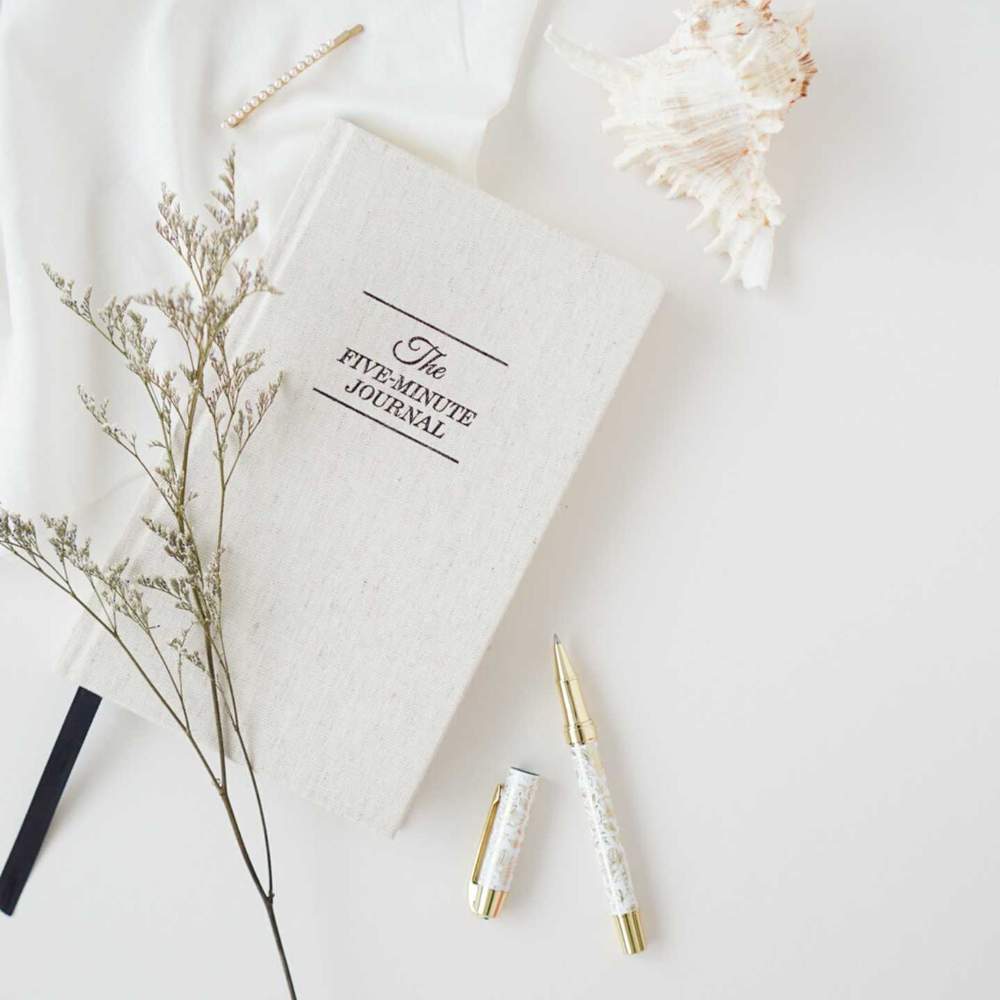
The Five-Minute Journal

US $24.95

PRODUCT DETAILS

We repeat: five-minute! Journaling can be a hard habit to keep, but this one—which leads the entrant to start and end each day with gratitude—is a joy to use and honors its promise. It’s a direct route to an uptick in happiness, optimism, and improved relationships, and the easiest way to finally keep that New Year’s resolution.

  • 268 pages

How to Know If It’s Anxiety or Just Stress

I say it all the time: “This is giving me anxiety.” What I often mean, however, is something slightly different: “This is stressing me out.” As someone who has actually been diagnosed with chronic anxiety, I should probably know better than to conflate the two. And yet, I know just in conversing with my friends and co-workers on a daily basis that among my generation, using the words “stress” and “anxiety” interchangeably has become the norm.

While it might seem like a matter of semantics, in reality, it’s a problematic habit. For one thing, using “anxiety” as a replacement term for “stress” diminishes the very real symptoms that those who suffer from anxiety have to negotiate on a daily basis. For another, it might prevent someone who has undiagnosed anxiety from seeking the correct kind of treatment because they can’t differentiate those symptoms from that of regular, day-to-day stress.

Advertisements
Psychology Today

“Both stress and anxiety can bedevil anyone’s psychological and physical health,” says Heather Silvestri, PhD, a New York City–based psychologist. “However, while often related, they are distinct phenomena.” Below, she helps us clear up the difference between the two—and how to manage both.

Advertisements

WHAT’S THE DIFFERENCE BETWEEN ANXIETY AND STRESS?

Let’s start with stress, which typically refers to a situational experience. “It’s a physiological and psychological response to a stressor, which is often obvious and explicitly identified,” says Silvestri. A crazy day at work, a traffic jam, a looming presentation—these can all be sources of stress and can all cause your cortisol levels (also known as the “stress hormone”) to spike. You probably know the symptoms of stress pretty well: anything from sweaty palms to a racing heart to butterflies in your stomach.

But here’s the key thing about stress: When the source of your stress is resolved, those symptoms tend to go away. That’s not the case with anxiety.

Advertisements

“With anxiety, the internal disquiet stubbornly persists, without heeding the actual conditions,” explains Silvestri. In other words, those who suffer from generalized anxiety experience those same stress-like symptoms on a chronic basis, no matter the external circumstances. That’s why anxiety often feels inexplicable or “out of proportion” to what’s going on in our lives.

“Stress responses are hard-wired into our nervous system because we need them to survive,” says Silvestri. “Anxiety can be seen as the lingering upheaval that doesn’t necessarily quiet down when the situation improves. In this way, anxiety is the horse that ran away from the stable.”

Advertisements

WHY ARE THEY USED SO INTERCHANGEABLY?

Silvestri suspects a few factors, not the least of which is our current political landscape and the breakneck pace of the digital age—both valid sources of stress and fear. It’s our new norm, which certainly impacts the way we talk about it. “Our modern lexicon has absorbed this idea and it now trades in terms connoting fear, anxiety, and neurotic apprehension,” she says. “You might even go so far as to argue that there has been a glorification of internal unrest insofar as proclaiming, ‘I’m so stressed out!’ or ‘I’m freaking out!’ have a certain cache, as if such frenetic nervous system activity means someone is doing something important or notable.”

This, she says, has led to misuse of both terms, as well as a lapse in distinction between the two. “This is lamentable because stress and anxiety can be sources of substantial suffering, and they are best treated with nuance and precision about what they are and how they operate,” she adds. “Nowadays we also run the risk that someone may be delayed or miss out entirely on getting needed help because they mistake their clinically treatable anxiety disorder for a more normalized and watered-down idea of being ‘stressed out.'”

CAN ONE LEAD TO THE OTHER?

“Chronic stress can absolutely give way to anxiety,” says Silvestri. “We need rebound time to recover. When we experience chronic stress, we lose our ability to recover, and elevated physiological arousal becomes the new normal.” If you’re perpetually stressed, turning off that “switch” and finding relief becomes more difficult.

Advertisements

That’s why with anxiety, we tend to scan for things that might be worrying us when there aren’t any obvious stressors at a given moment—kind of like a self-fulfilling prophecy. But the good news is that there are many ways to manage both chronic stress and generalized anxiety.

HOW CAN I NIP STRESS IN THE BUD?

Honestly, a lot of it is reflecting and figuring out what works for you. If you know that nothing clears your head like a sweaty jog, make time for that. If you notice that stress feels much more manageable when you get a good night’s sleep (as tends to be the case for most of us), be sure to get plenty of shut-eye when you know you’re about to be put in a stressful situation. Being both self-aware and proactive is key.

HOW DO I KNOW IF I HAVE ANXIETY, AND WHAT CAN I DO ABOUT IT?

“If someone continues to feel preoccupied after a stressor has resolved or if the course of the worry doesn’t really track external events, this can be a sign that something more significant than generic stress is going on,” says Silvestri. This recognition is the first step. “By acknowledging your anxiety, you can be more mindful of triggers and more purposeful about your choices,” she says.

Also, know that it’ll be much easier and more efficient to treat your anxiety if you can approach it with curiosity instead of judgment. Then, you can start to play around with different rituals to manage it: Silvestri suggests starting with common aids like yogamindfulness, and journaling. “Really, any activity of self-care that lends a sense of agency to your lifestyle,” she says, since anxiety can rob us of our sense of control.

Advertisements

But if those initial steps aren’t offering any relief, then it’s probably time to seek help elsewhere. “For the first line treatment, I would recommend either cognitive behavioral or insight-oriented psychotherapy, depending on how interested someone is in delving into historical causes or sticking with a focus on symptoms, especially the triad of thoughts, feelings, behavior,” she says. You and your doctor or therapist can then discuss the best treatment plan for you.

Either way, know that you have options—and knowing the difference between stress and anxiety is a solid first step to feeling better.

Advertisements

CALMING REMEDIES

Vitruvi Stone Diffuser ($119)

Vitruvi Stone Diffuser

Aromatherapy can help. There are some essential oils that have a calming effect, like lavender and bergamot. A diffuser is an easy way to use essential oils.

Lord Jones High CBD Formula Bath Salts ($65)

Lord Jones High CBD Formula Bath Salts

A bath is probably one of the best forms of self-care. This CBD soak also contains Epsom salt, pink Himalayan salt, calendula petals, and essential oils.

Hum Nutrition Big Chill ($20)

Hum Nutrition Big Chill

These supplements from Hum are formulated to help you stay calm and focused thanks to the adaptogenic plant, rhodiola. Take one capsule with food when you need it.

Moon Juice Magnesi-Om Berry Unstressing Drink ($42)

Moon Juice Magnesi-Om Berry Unstressing Drink

Add a teaspoon of this powder to your water before you go to bed, or whenever you need to de-stress. It contains magnesium and L-theanine to calm, improve move, and promote healthy digestion.

Advertisements

This article is provided for informational purposes only and is not intended to be used in the place of advice of your physician or other medical professionals. You should always consult with your doctor or healthcare provider first with any health-related questions.

How Can You Know For Sure That You’ve Had An Orgasm?

Yes, yes. Orgasms. Before we get semi-surface-level-knee-deep into this thing, let me just say that, if there are two times in life when the same response is probably annoying as hell to the people who personally can’t relate, it would have to be when it comes to being in love and having an orgasm. And what reply am I referring to specifically? It’s when someone asks, “So, how do you know when it’s actually happened?” and those who’ve been through it, pause, reflect, exhale and then say, “Girl, you just…know.”

Advertisements

On the climax tip, I get that, if you’ve never truly been to the mountaintop before, hearing that answer isn’t really offering up much help (although there is a ton of truth in that statement). And so, whether you’ve never had sex before and you’re curious or you’ve had a fair share of sexual experiences but things are still unclear as far as whether you’ve had as much fun as everyone else, I’m gonna try and break down how you can know that you’ve had an orgasm before. Get your glass of wine and sit back.

So, Really—What Is an Orgasm?

Anyway, it wasn’t until a License Therapist said “How can you get anyone to please you when you don’t even know how to please yourself?” ( She was saying this to make a valid point for a particular topic we were having at the moment. Don’t worry she was professional and very kind) I said, ” Yeah…” and entered into the world of masturbation (another topic that I’ll have to share my personal take on at another time). And when I compared that to the intercourse I was experiencing with my then-boyfriend, yes—I definitely knew when I had my first orgasm and he definitely wasn’t in the picture. I then started experiencing orgasms via oral sex with my second sexual partner and lawd—talk about cuing in Peobo Bryson and Regina Belle’s “A Whole New World” (with a DeVante Swing remix to it)! Ever since my early years and experiencing sexual instances when I truly felt like my body was gonna explode, I know, without question, that I’ve had an orgasm before. At this point in my life, many times over too.

Advertisements

And just what exactly is an orgasm?

I think the best way to describe it, without it looking like a science paper, is to say that an orgasm is the pinnacle of sexual tension that comes as the result of rhythmic contractions that occur within your uterus, pelvic floor and vagina—all at the same time.

It typically transpires in three phases:

Excitement: Which is when you’re aroused (typically during foreplay) and then blood starts to rush to your genital region. It’s also when there is an increase of testosterone, dopamine and serotonin in your system which makes you feel warm and stimulated.

Plateau: This is when sexual tension builds, right up to the point where you feel a mixture of thinking you might have to pee (that’s the best way to describe it, I think) and you having very little control over yourself. When you hear people on movies doing all of the yelling ‘n stuff? It’s usually right at this point.

Orgasm: This is when the contractions come. They aren’t painful (like when a woman is giving birth). They feel really good—and a bit overwhelming. The warmth that you started to feel during the excitement phase then spreads all throughout your body, a huge release transpires and you finally are able to catch your breath and start to resume a regular breathing pattern. As far as how long orgasms last, the average is somewhere between 18-51 seconds apiece (I say, “a piece” because some people can have multiple orgasms).

OK, so now that you know what an orgasm is, let me just briefly go (back) over what some of the signs are:

  • Increased heart rate and breathing
  • Warm feelings, starting in your genital region
  • Multiple vaginal contractions
  • Hyper-sensitivity immediately following (especially in your vaginal region)
  • An immediate feeling of calm and serenity after
  • Basically, when you can’t feel your legs, your breathing is on a all time high. It feels like you can’t catch your breath, there isn’t any oxygen in your heart. And, your Clitoris will feel like a heart beat going like 80mph. The clit will be super sensitive and everything.

There Are Multiple Kinds of Orgasms. Vaginal Being the Most Challenging.

Now that you know what an orgasm is from a technical standpoint, it’s important that I reiterate that orgasms don’t only happen via intercourse. I’ve already shared that my first ones came from masturbation and receiving oral sex. The two things that both of these acts have in common is the focus is put on stimulating my clitoris (including my clitoral hood).

The clitoris is amazing because there is no scientific reason for why it exists other than sexual stimulation. So, the chances of you having an orgasm increase, astronomically so, if the focus is put onto your clitoris, along with your erogenous zones. In fact, this is why a lot of medical and sex experts believe that there are (at least) 11 different types of orgasms a woman can have including a clitoral, anal, nipple, blended and vaginal one.

So, the first thing to keep in mind—and it truly can’t be stated enough—is it’s important to know the difference between an orgasm and a vaginal orgasm. If you’ve experienced many of the things that I’ve described, then there’s still a good chance that you’ve had one before. However, it’s the vaginal one that can give women a bit of trouble; around 70 percent of women, to be exact.

Advertisements

Why is that? A lot of medical and sex experts believe that, physically, it may be tied into the fact that the closer a woman’s clitoris is to her vaginal opening, the easier it is for her to experience a vaginal orgasm. That makes sense if you think about the fact that it’s our clit, not our vagina, that stimulates us the most. So basically, this means that probably the main reason why a lot of women don’t have vaginal orgasms is due to how their body is naturally designed (if their clitoris is able to be directly stimulated during intercourse)—not because anything is necessary “wrong” with them.

Yet what if you’re one of those kinds of people who don’t like being told “no”, in any area and so, you’re simply not content with accepting that maybe you should shift your focus on having orgasms period and not just a vaginal one? In walks my final point for today.

What Can You Do to Increase Your Chances of Experiencing One?

Advertisements

I write about orgasms a lot. That’s how much I dig ’em. I really do think that striving for an orgasm period, should be the greater goal, but if you want to give having a vaginal orgasm a more intentional shot, here are five things that you can do.

Try some orgasmic meditation. Stress is the enemy of, just about everything. And the reality is that one of the main reasons why a lot of us have a hard time climaxing is because we have a really difficult time relaxing. If you can relate, something that can help is something that is known as orgasmic meditation. In short, it’s when you and your partner practice a form of “mindful touching”. You get quiet, you deep breathe and he intentionally focuses on stroking your clitoris as a form of an erotic build-up. Think of it as meditative edging. It’s erotic AF while also extremely calming at the same time. You can read more about it by checking out “What Exactly Is ‘Orgasmic Meditation’?“.

Bring more foreplay into the mix. On average, men can climax within five minutes while it takes us somewhere between 15-20. A lot of that time has very little to do with the orgasm itself; it’s all about getting to the exciting part that we talked about earlier. What helps that to happen is foreplay. One of the reasons why I wrote the articles, “9 Sex-Related Questions You & Your Partner Should Ask Each Other. Tonight.“, “8 Men & 8 Women Told Me What They Wish Their Partner Would STOP Doing In Bed” is because, if there’s one thing that all of those posts have in common, it’s driving home the point of how important communication is.

Real talk, a lot of people aren’t “sexually incompatible“, so much as they are not being truly open and honest about their sexual wants and needs. Trust me, if the foreplay is on point, it is so much easier to have an orgasm—any kind but especially a vaginal one.

Advertisements

Get into the right/best positions. All sexual positions serve a purpose, but certain ones can accomplish certain goals quicker than others. When it comes to trying to have a vaginal orgasm, some of the positions that can help you to best achieve your goal include the reverse cowgirl (it’s a great way for your partner’s penis to stimulate your clitoris during penetration); being on your side (he can rub your clitoris during penetration); what I call the “cat position” (it’s just like the doggy style but you’re on your stomach rather than on your knees; deeper penetration can happen that way); the chest bump (which is when you’re in the missionary position but your arch your back while being thrust; it angles your clitoris to touch his shaft) and, when your legs are over his shoulders (again…deeper penetration).

Have an emotional connection. If you go to your favorite search engine and you put “married sex is best” in the search field, you’ll see quite a few links to articles on why sex is best when you’re in a long-term and fully committed relationship. A big part of why is because you can fully trust your partner with your desires, your fantasies, your vulnerabilities, what has worked (and has not) worked in the past. Listen, you can have good mechanical sex with a whole lot of people. But even the most sexually active (or sexually cynical) person will vouch for the fact that when there’s an emotional connection with the person you’re “engaging with”, sex really doesn’t get much better than that—physically or otherwise.

Don’t overthink it. It’s kinda crazy that so many of us overthink when, more times than not, all that really does is create problems that don’t exist. When it comes to trying to have a vaginal orgasm, please never let it leave your mind that your partner enjoying you as you enjoy them should be the main focal point. If you chill out, relax and let things naturally happen (as your clitoris is getting well taken care of), you’ve got a far greater chance of having one than if you worry about “getting there” all of the time. Orgasms are wooooooooooonderful. Don’t let anyone tell you that they’re not. But you are still a sexy, beautiful, amazing woman whether you have one or you don’t—vaginal or not. Keep that in mind and watch how many fireworks go off for you. Most likely when you least expect them to…too. #wink

5 Black-Owned CBD Brands To Add To Your Self-Care Routine

It comes as no surprise that the cannabis industry and the legalization of marijuana is yet another barrier that Black business owners face. A new report released by Grand View Research, Inc stated that the global legal marijuana market size is expected to reach $73.6 billion by 2027. However, many states have very specific guidelines that stand as barriers for many people of color looking to get into the cannabis business and Black and brown people are still serving harsher sentences for the possession and distribution of drugs than their white counterparts.

Advertisements

In tandem with that, Black people across the country lack the capital and access to venture into the marijuana business due to the various restrictions as to who can own cannabis businesses. While the fight continues to dismantle another area in which systemic racism oppresses our community, these business owners are propelling forward to be the diversity that the whitewashed wellness industry so desperately needs. Here are five Black-owned CBD brands to support with varying products.

1. brwnbox

The Jersey-based CBD dispensary founded by Almaz Adeigbolo offers everything from pre-rolls and honey, to bath bombs that reduce anxiety. They also sell strains of CBD flower to help with depression and insomnia. Additionally, Adeigbolo is also a chef, and she curates cannabis-infused culinary experiences with her boutique food company, brwnbox kitchen.

2. BROWN GIRL jane 

BROWN GIRL jane is owned by sisters Malaika and Nia Jones and beauty and wellness expert Tai Beauchamp. The Spellman grads started the company after Malaika fell in love with the healing properties of plants and CBD, and felt frustrated with the lack of representation of people of color. Their products range from facial serums to body butter and yoni oils.

Advertisements

3. Undefined Beauty 

Founded by Dorian Morris, Undefined Beauty combines cannabis and skincare. The clean beauty advocate’s line features firming serums, cruelty-free lip balms, and bath salts.

4. Budzy Box 

Not sure where to begin your CBD journey? This company provides a monthly subscription service of products such as calming wearable patches, chocolates that fight anxiety, nourishing facial masks, feel-good teas, healthful treats, and soothing balms all delivered to your door.

Advertisements

5. Satan’s Breath CBD Hot Sauce

Yes, you read that right, hot sauce. Chef Paul Booker intends to blend up his passion for food and cannabis for all to enjoy. The former athlete shared that after enduring injuries and extreme physical stress on his body after his college football days, Satan’s Breath was born.

If you’re curious about exploring CBD, support these Black-owned brands as you venture into this area of wellness!

Advertisements

POSTS YOU WILL LOVE: