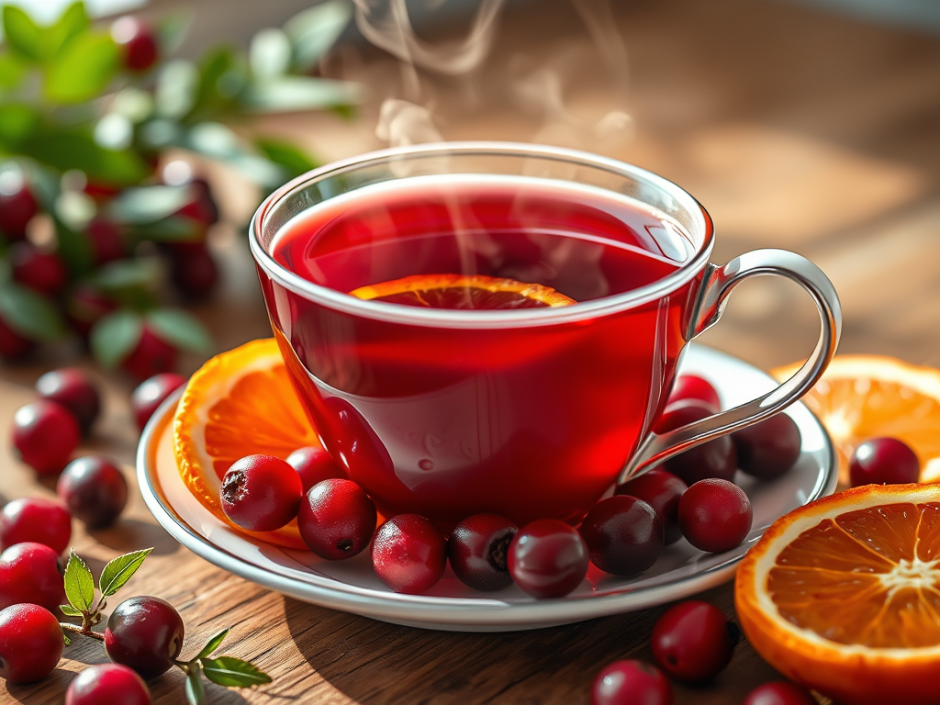
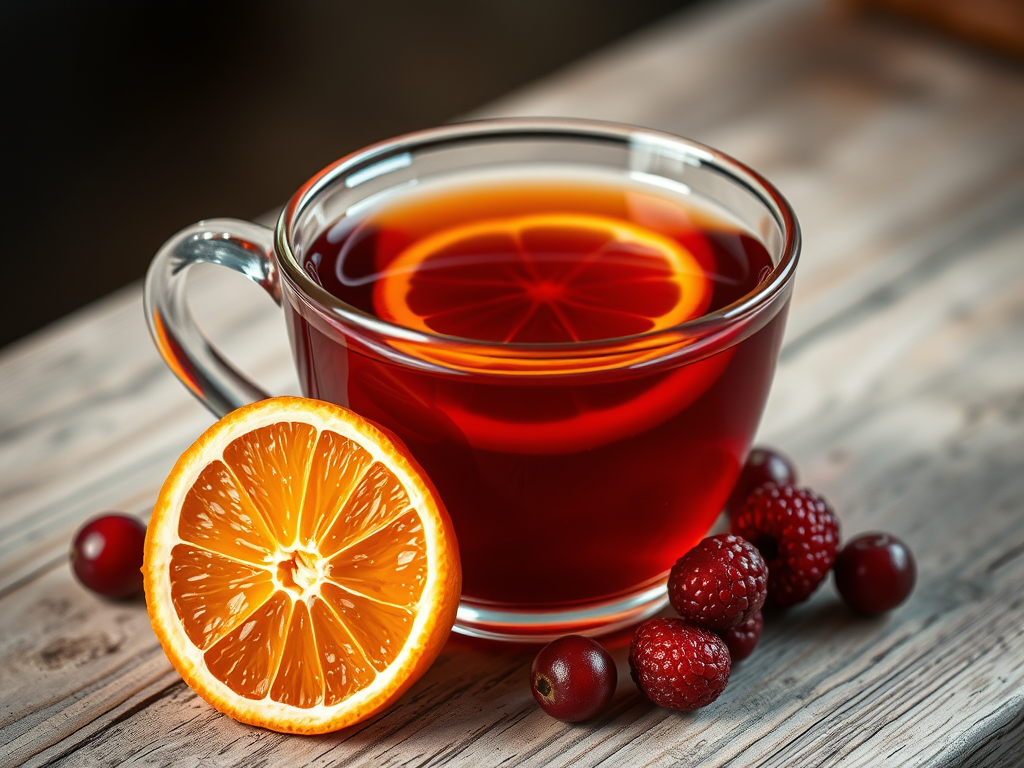
When the chill of winter settles in, there’s nothing more comforting than a warm, soothing cup in your hands—especially if you feel a cold coming on. This immune-boosting Cranberry Orange Tea from @cherylshealthylife is the ultimate cozy pick-me-up. Tart cranberries and bright citrus pack a punch of vitamin C and antioxidants, ginger adds a gentle warming kick, and rosemary and mint keep it fresh, not heavy. A drizzle of Manuka honey softens the edges, making wellness support feel indulgent rather than medicinal. It’s a simple ritual that warms you from the inside out while giving your body a little extra defense this winter.
Cranberry Orange Immune-Boosting Tea
Warm up this winter with Cranberry Orange Immune-Boosting Tea—a cozy, vitamin C-rich beverage packed with antioxidants, ginger, rosemary, and a touch of Manuka honey. Perfect for sipping when you feel a cold coming on or whenever you want a comforting, wellness-focused tea ritual.
Recipe Type: Beverage Servings: 2–4 cups Prep Time: 5 mins Cook Time: 10–15 mins Total Time: 20 mins
Gather your ingredients and place them, except the honey, into a glass teapot or small pot. Take a moment to inhale the fresh scents—cranberries, citrus, and herbs.
Pour hot water over the mixture, stir gently, and cover. Let the flavors mingle for 10–15 minutes—this is your quiet winter pause.
Pour the tea into your favorite mug, drizzle with Manuka honey to taste, and wrap your hands around it.
Sip slowly, letting the warmth and aroma soothe you, while giving your body a gentle boost of vitamin C, antioxidants, and immune support.
Optional Tips:
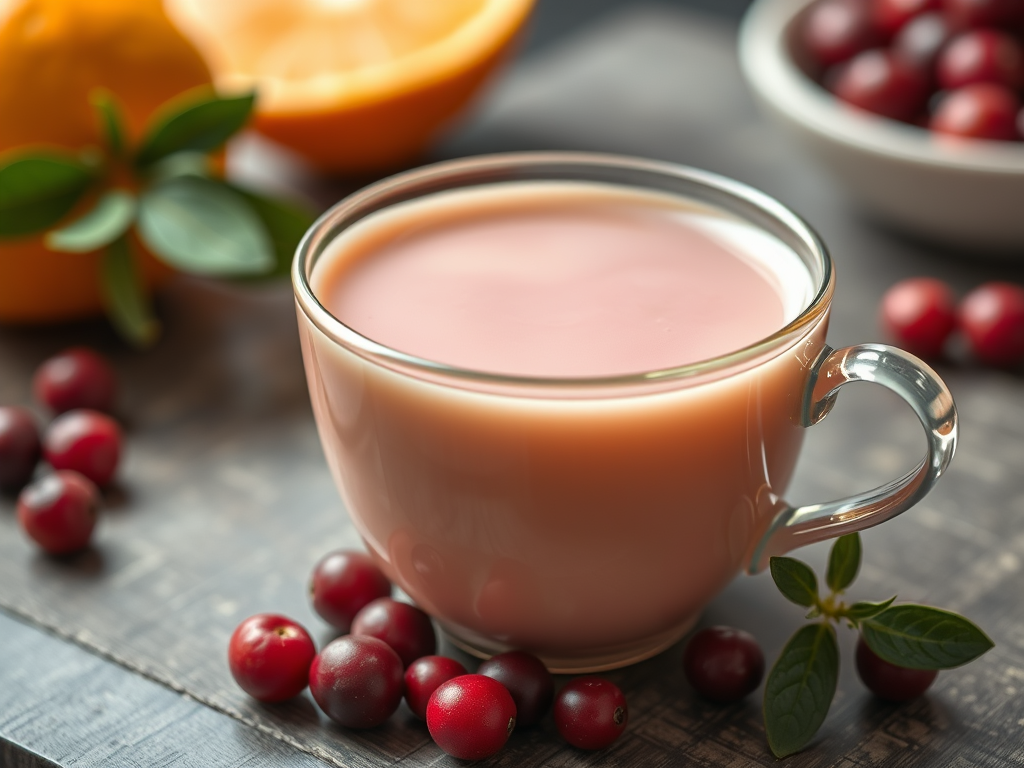
For an extra cozy twist, add a splash of almond or oat milk, or your favorite creamer—it softens the citrus and gives the tea a comforting, milk-tea feel.
Sprinkle a tiny pinch of ground nutmeg or cinnamon sugar on top for a lightly sweet, warming finish.
Double the recipe to share a warm cup with a loved one—wellness tastes better together.
Ever heard of Japanese Walking? It’s a gentle, mindful way to move that’s been quietly winning hearts—and for good reason. In a world full of intense workouts and fitness apps, this simple stroll brings a breath of fresh air: effortless, calming, and surprisingly energizing. Think of it as your new wellness secret—like a little daily step of kawaii self-care that’s both smart and soothing. Ready to walk your way to better health? Let’s take that first step together!
So, where does Japanese Walking come from? The trend began with actor Mike Ryosuke, who swears by this clever technique for his weight loss success. Inspired by age-old Japanese practices that focus on breath, posture, and mindful movement, it’s not about walking more—it’s about walking better (and with a little omotenashi, or thoughtful care, for your body). By tuning into spinal alignment and engaging your core, Japanese Walking turns simple steps into a gentle, mindful dance that feels as good as it is smart.
Here’s how it works:
Spinal Alignment: Maintains a graceful and strong posture.
Core Activation: Powers your balance with every step.
Mindful Breathing: Breath and movement flow in harmony, calming your mind.
Deliberate Pace: Slow, smooth steps to connect body and soul.
Together, these create a walking style that’s less about speed and more about a shibui—that quiet, understated elegance and ease in motion.
How do you actually practice Japanese Walking? No fancy gear or gym needed—just you, your body, and a little mindful intention. Start by standing tall: spine straight, shoulders soft, and your core gently engaged. Next, tune into your breath—inhale deeply through your nose for a count of three, then exhale slowly through your mouth for seven, pulling your belly in as you do.
When you begin moving, take slow but purposeful steps, paying close attention to your alignment and rhythm. The magic happens when you alternate three minutes of brisk walking with three minutes of a gentler pace, repeating this cycle for about 30 minutes total. It’s like a gentle mawari (meaning “turn” or “cycle”) for your body—a beautiful balance of effort and ease that keeps you moving without feeling overwhelmed.
Why is Japanese Walking capturing so much love today? Because it moves with the rhythm of our busy lives—simple, effective, and gentle enough for everybody. It’s more than exercise; it’s a kokoro (心) practice, a mindful dance that connects body and spirit with each step.
This flowing movement, paired with deep breath and graceful posture, helps ease stress, awaken digestion, and invite restful sleep—like a quiet hara (腹) hug for your well-being. It’s wellness woven into your day, one serene step at a time.
Ready to add a little ikigai—your reason for being—to your daily steps? Japanese Walking isn’t just about moving; it’s about moving with intention, grace, and a touch of joy. So, lace up your favorite shoes, take a deep breath, and step into a wellness ritual that’s as kind to your body as it is to your soul. Here’s to walking your way to balance, beauty, and genki energy—one mindful step at a time.
Who says flowers are just for pretty tablescapes? From cocktails to lattes to weekend waffles, floral syrups are the easiest way to add a luxe, botanical twist to your favorite sips and bites. Plant stylist and author Carolyn Dunster—aka the queen of edible blooms—shares her go-to recipe for transforming fresh petals into a sweet, fragrant syrup that’s as gorgeous as it is good for you.
✨ Bonus: Many edible flowers come with skin-loving, wellness-boosting benefits, too.
Ready to sip in style? Here’s how to make it.
🌸 Flowers, but Make Them Functional
For plant stylist and author Carolyn Dunster, flowers aren’t just pretty—they’re a way of life. Known for her books Cut & Dryand Urban Flowers, Carolyn has long championed the art of growing, styling, and enjoying blooms beyond the vase. But it wasn’t until she wrote her third book, A Floral Feast, that she truly fell in love with cooking them.
After tasting countless petals and exploring how different cultures have infused flowers into their meals for centuries, Carolyn discovered a delicious truth: edible blooms don’t just elevate your plate—they nourish your body, uplift your mood, and bring a little joy into everyday rituals.
“If we start growing varieties with high nutritional value on a larger scale,” Carolyn shares, “flowers could move beyond decoration and become essential to how we eat and care for ourselves. Plus, the act of growing and tending to plants? It’s a form of self-care in itself.”
Think of floral syrups as the perfume of the kitchen—only instead of spritzing, you’re sipping. “They’re a way of bottling the essence of a flower,” Carolyn explains, “and turning its scent into flavor.”
Instead of extracting essential oils like perfumers do, you gently soak fresh petals in warm water, then add sugar to preserve that dreamy fragrance. Once bottled, your syrup will last up to a year—aka four seasons of petal-powered lattes, cocktails, and desserts.
🌞 Pro tip: For the most vibrant flavor and aroma, harvest your flowers at their peak—ideally when they’ve soaked up plenty of sun.
🌸 DIY Floral Syrup Recipe
Because every dreamy sip deserves a botanical upgrade…
Ready to turn fresh blooms into a fragrant, sweet elixir? Here’s how to bottle the beauty of flowers in just a few simple steps.
What You’ll Need:
Choose highly fragrant flowers for the best flavor payoff. Here’s a quick guide for how much to use per cup of water:
Elderflower – 10 elderflower heads
Violet – 3 cups sweet violet flowers
Lilac – 2 cups lilac florets
Rose – 2 cups rose petals
Lavender – 3 tablespoons lavender flowers
How to Make It:
Make the base syrup In a saucepan, combine equal parts water and sugar (start with 1 cup of each). Simmer gently until the sugar dissolves and the mixture slightly thickens.
Infuse with flowers Remove from heat, add your chosen blooms, and gently stir to coat. Let the mixture cool completely, then cover and let it steep overnight.
Strain + store Pour your syrup into sterilized bottles or jars. For a clean look, strain out the petals—or leave a few in for a gorgeous visual touch. Label, seal, and store in a cool, dark place. ✨ Once opened, keep it refrigerated.
🌸 Your Bloom Moment Starts Now
Ready to drizzle, sip, and swirl? Whether it’s in a cocktail, over pancakes, or stirred into a latte, your homemade floral syrup is proof that everyday rituals deserve a little beauty.
✨ Tag @BeautyLeeBar when you try it—because we love a good bloom moment.
Acupressure, Nausea, and My Ongoing Search for Relief
Let’s be honest—nausea and I go way back. Thanks to some medical issues, I’ve spent more time than I’d like in hospitals, and yep, I’ve definitely thrown up more times than I can count in my late 20s (still living it, honestly). I don’t have emetophobia (the fear of throwing up), but do I enjoy being nauseous or sick? Absolutely not. It’s just something I’ve had to deal with more often than most.
That’s probably why I’m always open to trying anything that might help—even a little. A few months ago, I started exploring acupressure, but funny enough, I realized I’d been unknowingly doing it for years. My cousin once told me that pressing on the inside of my wrist—right between the two tendons—can help ease nausea. Back then, it felt like a random tip, but over time, it became something I’d instinctively do anytime I felt off. Was it a miracle cure? Not exactly. But it gave me a sense of control when my body felt anything but.
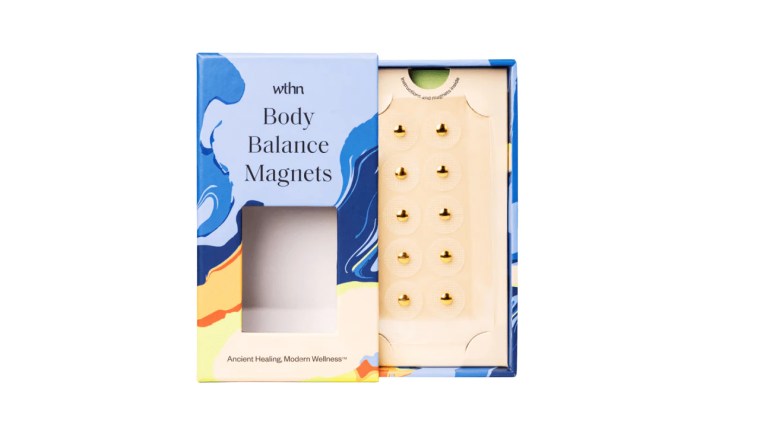
So when I heard about WTHN Body Balance Magnets—a fusion of ancient acupressure and modern cellular science—I was instantly curious.
Think of these as wearable wellness tools that bring the benefits of acupressure—and a little bit of ancient energy work—into your everyday life. No needles, no appointments, just small magnets you stick onto your skin and go about your day.
Each set comes with 30 raw ferrite magnets (basically, iron oxide magnets that hold a steady, gentle charge). They sit on latex-free, medical-grade adhesive, so they stay put and don’t irritate your skin—perfect for sensitive babes.
The idea? These magnets work with your body’s natural electromagnetic field, delivering steady pressure to key acupressure points. That pressure is believed to help move your energy (or Qi) into balance. Some also believe the magnetic charge may support circulation, relaxation, and cellular communication on a deeper level.
⚠️ Safety PSA: These are safe for most people, but if you’re pregnant or have an implanted medical device (like a pacemaker), talk to your doctor before trying.
What Can They Help With?
Wellness lovers use them for:
Stress relief
Better sleep
Hormonal balance
Head tension
General body comfort
Motion sickness + digestion support
Basically, if you’re looking for a non-invasive, natural way to feel a little more balanced—these might be worth trying.
30 raw ferrite magnets with latex-free, medical-grade adhesive
A simple guide showing different acupressure points on the body
Suggested combos for everything from stress relief to digestion to hormone balance
Right off the bat, I appreciated how easy it was to use. You just pick your goal—whether it’s calming stress or easing tension—and place the magnets on the related points. (Just make sure your skin is clean and dry first.) No need to stress about exact placement. It’s more about targeting the general area, and honestly, “close enough” is good enough here.
For my first try, I went with the “head tension” combo—which included points on my feet, hands, shoulders/back, and wrist. A few of these also double as stress relief points, which I definitely wasn’t mad about.
A few minutes after applying them, I literally paused and thought, “Wait, am I imagining this?” because I felt my shoulders relax on their own—like someone had gently lowered them away from my ears. That’s when I was like, okay… maybe these tiny magnets are actually doing something.
You can wear them for up to four days straight, but things like showers or sweat can loosen them sooner (I had to reapply one after a workout). It’s also suggested to wait a day in between uses to give your skin a break.
Throughout the day, I’d notice random tingly sensations—super subtle, like a soft buzzing or a warm ripple under the skin. Honestly, it reminded me of that fluttery feeling when you accidentally brush hands with someone you like. Weird? Maybe. But I kind of loved it.
Overall, the shift was subtle but real. It wasn’t like flipping a switch—it was more like a quiet “you got this” from your body. And for someone like me, who’s constantly navigating stress and physical discomfort, I’ll take any gentle nudge toward balance I can get.
So, are WTHN’s acupressure magnets a wellness must-have? For me, they’re not a magic fix—but they offered a real sense of relief when I needed it most. If you’re looking for a non-invasive, low-effort way to feel more balanced (and maybe a little more in tune with your body), they’re absolutely worth a try.
Yes—especially on days when my body feels off or I need help unwinding. I love that they’re easy to wear, discreet, and honestly just feel good. They’re now part of my wellness toolkit—right next to herbal teas, cozy socks, and deep breathing.
Curious to try them? Learn more about WTHN Body Balance Magnets [here]. Have you tried acupressure before? Let’s chat in the comments 💬
⚠️ Wellness Disclaimer
This is not medical advice. Always consult your doctor before starting any new wellness product or routine—especially if you’re pregnant, nursing, or managing a health condition. What works for me may not be right for you, so listen to your body and do what feels best.
Some products featured may include affiliate links. As always, I only share what I genuinely use and love. Your support means the world 💖




 beautyleebar.org