
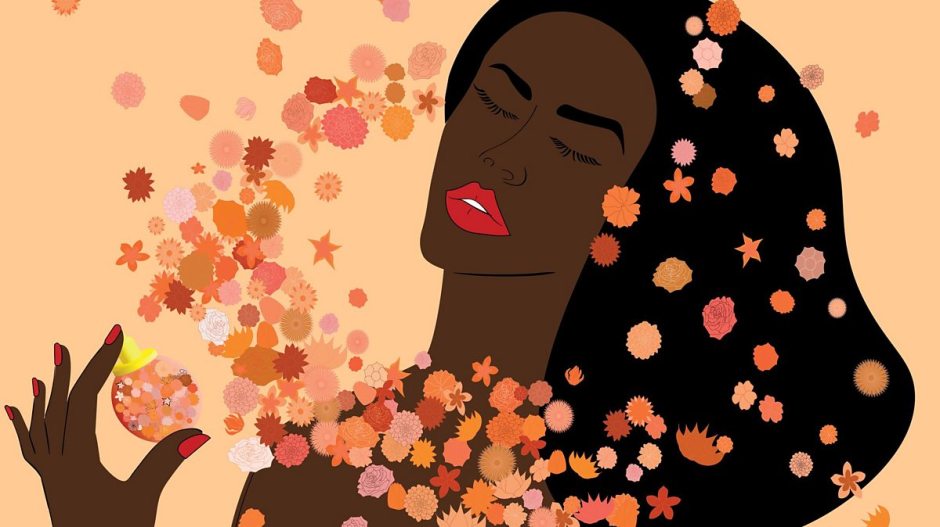
HEALTHIER WAYS to Use Fragrance

THIS BLOG POST WAS SPONSORED BY DOSSIER! HOWEVER, ALL OPINIONS ARE MINE! I SAID WHAT I SAID!

By now it’s been made woefully clear that some of our old tried and true favorite beauty products might not be the very best for our bodies. Potentially harmful chemicals and synthetics can build up in our systems, cause imbalances, and are generally toxic. So what’s a girl to do when her signature scent isn’t squeaky clean?

We won’t make you throw out a fragrance that makes you feel special. You know what we mean—that nostalgic, warm and fuzzy smell that makes tears spring to your ex’s eyes because you’ve always smelled like that—it’s your special smell. Or, maybe you’ve fallen head over heels for a new fragrance and you just can’t get it out of your mind. Chances are, you’re not finding an exact replica that does the same magical mingling with your body chemistry in a non-toxic brand.

Dossier

Discover quality fragrances inspired by the iconic rich scents you love.

price depends, the fragrance is either $29 or $39. Use code: LEE10 for money off!

Here is the link: https://dossier.co/?utm_source=youtube&utm_campaign=bloggers&utm_medium=BELLA%E2%80%99S%20BOUTIQUE10

Advertisements

What you can do is try using your favorite (not-so-clean-beauty) scents in smarter, healthier ways. Instead of dousing your delicate endocrine system, aka spraying directly onto your lymph nodes at your throat, wrist, or other sensitive places, try somewhere else.

Give your hair a spritz after it’s styled. The scent will cling to your fibrous strands in a heavenly cloud around your face, and create a little breeze of your favorite aroma when you whip around town. It doesn’t need to land directly on your scalp or seep into your skin, and you don’t need a lot.

Or, try misting your clothes. You can spritz it on a scarf, a sweater, or your top, all before putting the piece on so your scent lingers without clinging to your sensitive areas all day, or requiring reapplication. You can spritz a cotton kerchief and tuck it into a drawer to have a subtle tinge of your scent last all day on all your foldables as well!
Advertisements

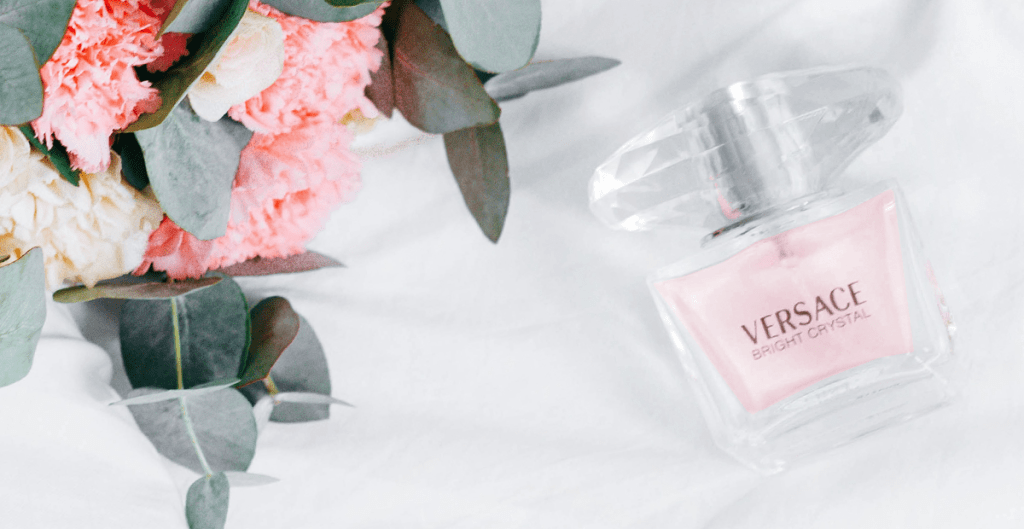
Most people assume that applying fragrance is easy. One spritz on your neck and another on your wrist, and that’s pretty much it, right? Trust us, there’s so much more to it! And considering the average price point of designer perfume, we don’t want to waste a drop. The good news is, once you’ve read this post, you’ll be ready to make the most of every last gorgeous drop of your fragrance. Here are four common fragrance mistakes and what you should be doing instead.

Storing Fragrances Incorrectly

Storing fragrances incorrectly degrades the fragrance. Hot temperatures affect the chemical bonds in fragrance while if the temperature is too low, that can also alter the fragrance more quickly. Ideally, your perfumes need to be stored in a cool, dark place with a room temperature between 16 to 22 degrees. This means storing perfume in your bathroom or anywhere the temperature fluctuates is a big no-no. Similarly, direct sunlight will also break down fragrance so do not store them on a window or even shelves near a window. Look for bottles with dark or opaque glass packaging, which will help protect the perfume from sunlight.

Applying Fragrance to Dry Skin

Perfume doesn’t wear well on dry skin, which is just another reason to moisturizer daily. Ideally, you should use the accompanying body lotion that comes with your fragrance or an unscented moisturizer to keep your skin hydrated. This will also ensure that there’s no olfactory interference.

Our fave perfume hack: Perfume lasts longer when applied to oily, damp skin, so to lock in the scent, rub vaseline onto your pulse points before application.

Carrying Fragrance in Your Purse

If you carry your fragrance in your purse, you’re not only exposing it to different temperatures, but you’ll also cause the bottle to move around constantly. By shaking the bottle, you’ll expose the perfume to excess air, which will breakdown and disrupt the fragrance over time.

If you do want to carry a scent with you while you’re on the go, we’d recommend the travel scent Dossier gives you when you purchase a 50mL fragrance, $29. You can also buy these Portable Mini Refillable Perfume Spray Bottles, $10, that you can fill with your fave fragrances, which are perfect for when you travel or to keep in your handbag while your perfume is safely stored at home.

Advertisements

Savoring your Fragrance

As much as we love to savor our beauty products, holding onto your favorite fragrance means that more often than not, by the time you reach the end of the bottle, the fragrance will have altered slightly. The more oxygen into the bottle (like when you’ve used 70% of your perfume), the more the fragrance molecules will break down and modify the fragrance.

This means investing in a large bottle is not always a good idea, in fact, it often better to purchase a smaller bottle to keep the fragrance fresh. If your go-to fragrance is only available in a large bottle, decant the liquid into small vials and store your half-empty bottles in the fridge.

For more fragrance inspo, check out FRAGRANCES TO GIFT YOUR LOVED ONES WITH, PURELY BASED ON PERSONALITY.

THIS BLOG POST WAS SPONSORED BY DOSSIER! HOWEVER, ALL OPINIONS ARE MINE! I SAID WHAT I SAID!

POSTS YOU WILL LOVE:

Can’t Orgasm? Here’s Why

The climax. The big “O.” Coming. Cleave the pin. Let go. Crack your marbles. You’ve heard all the euphemisms, but you haven’t quite been able to get there yourself. So, whenever you have sex, you’re so focused on getting to the finish line yourself that you just can’t seem to quite get there.

We’re here to help! Your sexual pleasure is important, and not being able to orgasm is stressful, uncomfortable, and frustrating. Ready to climax but not sure how? Come (ha) along with me!

Advertisements

You’re expecting a giant explosion of emotion

The movies (and friends sometimes, too!) can make an orgasm sound like a firework is exploding in your body. Not every orgasm feels like that. As I once said, orgasms are like snowflakes — they’re all unique!

Don’t orgasm-compare either! As much as I love talking to friends about sex, make sure you understand that their experiences are going to be different from yours.

You’re too tense

Relax girl! When you get too overworked making sure you climax, your body can’t “let go.”

Yoga, stretching, really any kind of exercise, and meditation can help you relax and get over all the stress you’re putting your body through. It might also be a good idea to let your partner know that you’re struggling. He or she might be able to help calm your nerves and get your body to relax.  

You and your partner aren’t connecting

As much as I hate to write this one, it could be something in your relationship that’s making orgasming difficult. Whether you’re not connected physically, you’re both stressed about something, you’re miscommunicating, or something else is going on between the two of you, it might make your body tense up or your mind might be in a different place.

Practice some mindfulness. It might sound weird (and difficult!), but stay in the present while you’re having sex. Really be there with your partner and stay focused on what’s happening in the present moment. You’ll feel more gratitude toward your partner, and have better sex (!!!).

Try masturbating

If you haven’t tried getting off on your own, YOU MUST. Ok, it’s not that dramatic, but I would definitely recommend you start here! Masturbation helps you get an idea of what you enjoy, and once you’re able to make yourself orgasm, it’s easier to tell your partner what he or she can do to get you there.

Advertisements

If you’re struggling to get off from masturbation as well, try adding in toys and trying different positions.

Sex is painful

If sex hurts, obviously you’re not going to enjoy it enough to orgasm. Make an appointment with your doctor ASAP.

If you’re taking some medications

Certain medications can decrease your libido and lower your ability to climax. If this is really bothering you, bring this up with your doctor as well.

You’re afraid of losing control

Self-proclaimed control freak here, and I can say first-hand that being afraid to lose control and let your body go is actually a very common reason for not being able to orgasm. If you’re with a new partner, dealing with body image issues, or dealing with other areas of stress in your life, it’s easy to feel like you don’t want to lose control of your sex life.

Communicate with your partner that you’re struggling with this aspect of your sex life. Getting it off your chest is the first step in relinquishing control, and your partner might be able to ease your mind of some of the (probably false!) narratives you’re telling yourself.

Advertisements

POSTS YOU”LL ENJOY:

What Is HAVENING THERAPY?

How do you manage traumatic events that have happened or are happening in your life? How do you remove emotions from your brain related to certain challenging situations, either from your past or your present? How do you change your connection to these emotional setbacks, forever?

Advertisements

Let’s go back to the beginning of humankind and how we have learned to exist through certain survival methods. Depending on the life situation, it can either take your body into a state of “danger” or a state of “safe.” Let’s go even deeper. The autonomic nervous system is controlled by the vagus nerve, which begins in the brain and goes all the way down and throughout the endocrine system, bonding all of your organs together. Your autonomic nervous system functions aren’t consciously controlled, such as heart rate, breathing, and digestion. It is divided into two halves: the parasympathetic, or “safe” and calm resting state, and sympathetic, the “fight or flight” danger mode.

When you find yourself in a stressful situation, the vagus nerve sends electrical currents down your spine, stimulating a response of fight or flight, where you resist forcibly or run away. In today’s world, you would be stunned at how much time you and even your children spend in the fight-or-flight mode. But it’s possible to manage your central nervous system so that you can disconnect your emotional attachments to certain stressful or traumatic situations. You can control your emotional-brain-body connection.

Advertisements

Here’s how…

Havening

Havening is a psycho-sensory therapy technique (a mind-body connection) that’s easy to use every day of the week. In just a few minutes, it can change your brainwave state so that you can disconnect the emotions that are stuck in your brain related to certain traumatic and stressful events.

Here’s how it works. First, identify the stressful event. Then, identify your emotions attached to that event (you can even write this down). Then, create an affirmation that will help disconnect your emotions from the challenging situation, such as, “I am calm, I am at peace, I am safe,” “I am open to being compassionate,” “I am hopeful,” “I open my heart to friendship,” or “I open my mind to learning.” Then find a quiet, out-of-the-way space, sitting or standing, and close your eyes. Next, bend your arms at the elbows and cross them in front of you. Resting the palm of each hand on the opposing shoulder, gently stroke your arm, starting at your shoulder down to your elbow. When you have reached your elbow, raise your hands back to your shoulders and repeat this stroking motion, all the while repeating to yourself or out loud your affirmation or mantra. Do this for five to seven minutes.

Advertisements

Once you have completed your session of this relaxation therapy method, open your eyes, take a few deep breaths, and then make your evaluation. Ask yourself, “Do I still have emotions attached to this stressful event? Have I moved away from the unlikely event toward the life outcome that I want?” To no surprise, you will discover that not only have you immediately had a positive change in your physiological (body) state but that you no longer have certain negative emotions attached to the situation—they will have all but gone away.

This sensory relaxation technique relieves a tremendous amount of life stressors, such as learning disabilities, depression associated with traumatic events, autism, insomnia, high blood pressure, and auditory hypersensitivity.

Always remember your values, strengths, and skills. In doing this technique, you will remember the kind of person that you want to be and how you choose to respond to current challenges or stressful traumatic memories.

YOU MAY ALSO LIKE…

In these times, Kate offers virtual sound-healing sessions on Instagram at House of Profound, and as a Reiki Master, she is also able to offer distance healing. Additionally, she holds certificates as an Integrative Nutrition Coach and in kundalini and astrology. Visit her website and follow her on Instagram for more information.

Advertisements

The content provided in this article is provided for information purposes only and is not a substitute for professional advice and consultation, including professional medical advice and consultation; it is provided with the understanding that BeautyLeeBar, LLC is not engaged in the provision or rendering of medical advice or services. The opinions and content included in the article are the views of the author only, and BeautyLeeBar does not endorse or recommend any such content or information, or any product or service mentioned in the article. You understand and agree that BeautyLeeBar shall not be liable for any claim, loss, or damage arising out of the use of, or reliance upon any content or information in the article.

How to Recognize YOUR TRIGGERS

It’s easy to say something triggers us. “Triggered” is essentially a hashtag when it comes to our generation of colloquialisms these days, and it’s true, many things are triggering, especially with the widespread dispersal of information via social media. But not everyone is triggered by the same things. We are all shaped by our emotional responses and past traumas.

Advertisements

Erica Spiegelman is an author, therapist, and addiction and wellness specialist who is familiar with how triggers work, including her own. She shared with us that learning to identify your triggers is an important skill, and even a tool to manage your emotional well-being. Understanding what can set us off into an unproductive spiral can help to eliminate what doesn’t serve us or allow us to be our best.

The hardest part is maintaining awareness when we find ourselves amid an emotional episode. These emotional responses can be incredibly physical, such as shortness of breath, panic attacks, nausea or indigestion, sweating, and more. Spiegelman tells us to “try and notice when you are triggered by paying attention to when you feel flooding of emotion and identify where you feel it in your body. For example, when someone triggers me, I usually feel it in my throat area.”

Spiegelman’s reaction is a lump in her throat, a typical but sometimes debilitating emotional response. “When most people feel triggered, they feel it in their stomach, throat, sweaty palms, or racing heart, or they may have trouble breathing. Identifying where in your body helps you recognize that you are triggered, and we then can begin to deal with it.”

Advertisements

It’s a practice of mindfulness. Spiegelman encourages us to pause at the first feeling of sadness or anger and take five deep breaths as best we can, in through our nose, and out of our mouth. If we can, we should walk away from what we were doing, if only for a moment. “That way, we have time to gather our thoughts and decide how to proceed with this new information.” We have to thoughtfully communicate our way out of the response, even if that communication is within ourselves.

It’s not possible to avoid every situation that may emotionally trigger us, and that’s not the goal. We want to be aware of our triggers so that we can be emotionally sound in the face of real-life issues in the future, and to work through the issues, learn, and heal. Recognition is important to take actionable steps and develop our intuition. If we only learn to avoid triggers instead of acknowledging them, we will end up avoiding the real issues that trigger us, which becomes unhealthy suppression.

The goal is to protect our mental health, garner strength, and navigate through the muck of life with minimal collateral damage. We must protect our energy at all costs to be the best, most powerful, and productive version of ourselves, so we can serve our joy and others.

YOU MAY ALSO LIKE…

Advertisements

The content provided in this article is provided for information purposes only and is not a substitute for professional advice and consultation, including professional medical advice and consultation; it is provided with the understanding that BeautyLeeBar, LLC is not engaged in the provision or rendering of medical advice or services. The opinions and content included in the article are the views of the interviewee only, and BeautyLeeBar does not endorse or recommend any such content or information, or any product or service mentioned in the article. You understand and agree that BeautyLeeBar shall not be liable for any claim, loss, or damage arising out of the use of, or reliance upon any content or information in the article.