
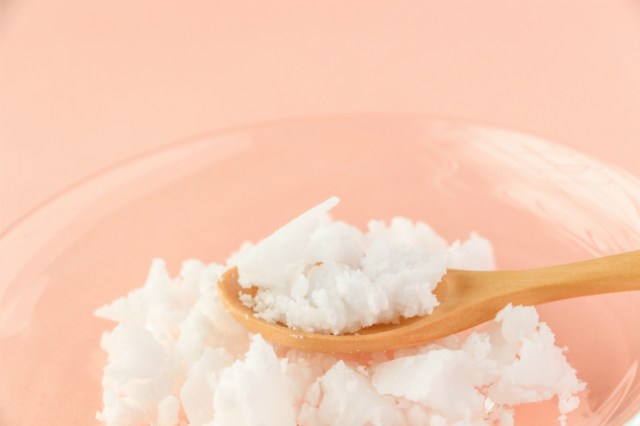
Odds & Ends: 5 Amazing Uses for Coconut Oil

Years ago, if someone were to tell me that there was one single product that solved dozens of health and beauty woes, I most likely wouldn’t have believed them. One product that you can use to cook, moisturize your hair, remove your makeup, and hydrate your skin? Not possible, I would have thought. However, this little miracle does exist. And, unlike much fancy beauty and cooking products out there, it is free of chemicals and 100 percent natural. This wonder is none other than coconut oil.

I use coconut oil every day on my skin, my hair, and even in the kitchen. In fact, most of the time when a friend comes to me asking for a quick fix for a beauty or skin problem, my answer is “just put some coconut oil on it.” Now that you know a little bit about my obsession with coconut oil, today I’m going to share five ways you can incorporate it into your own lifestyle…

1. Face and Body Moisturizer
If you rub a little bit of coconut oil between your hands, you will immediately notice how incredibly moisturizing it feels on your skin. As a face and body moisturizer, coconut oil is much more hydrating than average store-bought lotions because the oil penetrates deep layers of the skin and actually helps to strengthen underlying tissues (
Huffington Post). It will also help remove dead skin cells, removing any rough or flaky texture from your skin’s surface and giving you a full body glow. You can use coconut oil as a moisturizer for your entire face, but I like to put it under my eyes and on my lips before bedtime. For my body, I mix equal parts coconut oil and body lotion together to create an ultra-hydrating cream, and I apply it right when I get out of the shower. You can also add essential oils like lavender or vanilla to scent your oil, but many people love the natural, tropical scent as it is. The best part about this oil is that it will absorb into your skin without feeling oily or greasy.

2. Hair Mask
Just as coconut oil works wonder for your skin, it will also give your hair a silky texture and tons of shine. I use coconut oil as a hair mask at night after I’ve washed my hair. Simply heat up about 3 to 5 tablespoons of coconut oil in the microwave, so that it’s a warm liquid. Then, after it has cooled, apply it to your hair as you would any hair mask. Put on a plastic shower cap or wrap an old T-shirt around your head, and leave the oil in while you sleep. When you wake up, wash your hair and discover your best hair day yet. You can thank me later.
Note: Unlike store-bought hair masks, coconut oil is all natural and great for your skin. So, if a little bit happens to rub off onto your pillow while you’re sleeping, you don’t have to worry about dealing with clogged pores or a breakout the next day.

3. Makeup Remover
One of my favorite uses for coconut oil that I discovered all on my own is its gentle power to remove makeup. I was applying a bit under my eyes one night before bed, and I noticed that it was easily removing some extra mascara that hadn’t washed off with my face wash. Now, before I wash my face, I use my finger to gently rub downward on my eyes and eyelashes to remove my eye makeup from the day. Tip: Leaving a little oil on the base of your eyelashes can actually help them grow a bit, so it’s ok if you don’t rinse it all completely off afterward.

4. Cooking Oil
Coconut oil is also one of the healthiest oils to use when cooking. Our favorite nutritionist
Shira Lenchewski, RD., explains that unlike animal fats, which are made up of long-chain triglycerides (LCT), coconut oil is made up of medium chain triglycerides (MCT). MCTs are metabolized more rapidly in the body than LCTs, so there’s increased fat burning potential. Many healthy oils (like olive and flax) break down into harmful compounds when heated to their “smoke-point.” But coconut oil remains stable at higher temperatures, so it’s a great option for stir-frying and pan-searing. For cooking, Shira recommends using unrefined coconut oil, also called raw or virgin.

5. Baking Ingredient
Coconut oil is a great ingredient to have in the pantry if you love baking. Shira says that because coconut oil is a saturated fat, it’s a great substitute for butter in baked goods. Saturated fats are the typical fat of choice in baking, due to their favorable effects on texture. And while saturated fats don’t have the same beneficial effect on good cholesterol as mono- and polyunsaturated oils, they do play a role in various brain and body functions, explains Shira.

Tip: Always buy unrefined, extra virgin coconut oil, since it goes through the least process and is closest to its natural state. For cooking, make sure your coconut oil indicates that it can stand high-heat, not just medium heat.

I also take a coconut oil supplement with my daily vitamins to make my hair shiny and my skin blemish-free. And I’ve been using coconut oil to experiment with oil pulling. I’ve been trying it for the past two weeks, so I’ll be sharing my results here on BeautyLeeBar.com in the coming weeks…stay tuned!

Do you have one favorite multi-purpose product you swear by?
Tell me about it in the comments below.

Xx
Team Hello Beauties

These 6 Mistakes You Make In The Shower Are Ruining Your Skin

So you probably think how you’ve been showering for the last 20 years was on point. Like really, how wrong can you go in the shower – as long as you get your body clean, goal achieved, right? Well yes, but it’s like your skincare routine – you can get WAAAY better results just by layering your products in the right order – and showering is the same. By doing different steps at the optimum time, it’ll result in cleaner and softer skin. Intrigued? Here’s what you’re doing wrong, and how to shower the right way:

showering tips (2)

1. Blasting the heat too high

We know, we know, it feels great, but soaking your skin in hot water is actually drying your skin out. Super hot showers strip your skin of their natural oils and dehydrate it, making it feel dry and itchy; it can even lead to rashes. You should also cut back on how long you spend showering, 5 to 10 minutes is ideal – if you’re washing your hair, aim for 15 minutes max, to avoid stripping the skin of its natural moisture levels. The drier your skin, the more likely you are to get rashes, as it’s easier for bacteria to penetrate the cracks in your skin.

2. Not washing in the right order

If you’re in a rush, you most likely take advantage of those few minutes when you let your conditioner do its thang, and wash your body. But doing this could be the reason you get pimples on your chest, body or back, as when you wash out the conditioner, it leaves a film on your skin that can block your pores. Try the Bioderma Atoderm Shower Gel; it’s hypoallergenic, soap and paraben-free, moisturizes dry skin and is also amazing for getting rid of body acne. Also, Glow Goddess bar soap, $10.00 is another good choice as well. Goddess bar soap has lavender essential oil that can be used for treating burns, inflammation, eczema, acne, nervous tension, asthma, arthritis, acne, and bacterial infections. This gentle bar soap is soft on the skin and is packed with lavender flowers as a soft exfoliant. Another tip is to use your shower gel only in the places where your skin is oily, your lady parts (look for fragrance-free), underarms, and feet – unless you’ve been exercising and sweating excessively. Because your arms and legs have much less oil to spare, using soap here regularly can make your skin drier.

3. Not masking in the shower

This is juicy news to us, but it makes so much sense! The experts say the best time to do your face mask is in the shower when your pores are open from the warmth of the water. This means that hydrating and nourishing masks will be able to deliver all their vitamins and minerals as they can soak into your pores more easily. Similarly, ‘extracting’ masks like clay, mud, and charcoal can pull more toxins from your open pores, without running the risk of dehydrating your skin as the mask won’t completely dry out. For a quick nourishing and moisturizing DIY, you can apply a thin sticky layer of organic honey over your skin for 5 minutes while you shower.

4. Shaving at the beginning of your shower

Shaving is an eternal pain in my butt – no matter how much you do it, it keeps coming back. If you want to maximize on your silky soft skin for as long as possible, the key is to wait until the end of your shower, about ten minutes in (or while you have your conditioner in). By this time, your hairs will have softened and your pores will have opened, making it much easier to get a closer, smoother shave. Another hack, don’t keep your razor in the shower, as the steam will gradually rust the blade and speed up blunting. Instead, leave it to soak in baby oil, which keeps the metal from oxidizing, so it’ll stay sharper for longer. Try Nad’s Natural Hair Removal Cream, $5.99 for a smooth, razor bump free look and feel.

5. Using old sponges and loofahs

We know it’s painful to throw something away that seems like it still has at least another six months of effective use, but sometimes it’s what you can’t see that you need to be cautious of. Loofahs and sponges collect bacteria and mold due to the damp conditions they’re stored in, which can lead to rashes or dry patches. Ideally, you shouldn’t use either for longer than a month. To keep your loofah or sponge in the best condition, ring it out as much as possible after using it, and allow it to dry completely before you next use it, storing it in a dry place, not directly in your steamy shower.

6. Not moisturizing immediately after showering

First things first, instead of vigorously rubbing your skin dry with a towel, try gently patting it instead. The aim is not to be completely dry, but to use any leftover moisture on your skin to your advantage when you moisturize. Experts agree that within three to five minutes after you shower is the best time to rehydrate your skin so that you can trap any excess water on the surface of your skin without it evaporating. Moisturizer and body oils act as a barrier to lock in moisture; I love using Gloww Goddess Body Oils, $20 as these contain rich vitamins, antioxidants, and essential fatty acids to help restore your skin. Otherwise rich moisturizers like shea butter or cocoa butter are amazing natural moisturizers.

Which of these showering mistakes are you guilty of?

**FTC: This post is not sponsored. No monetary compensation was received for this post, however, products were sent to me. Opinions are 100% my own, of course.

Skin Saver: What the SPF?

When I walk into the sunscreen aisle I always feel a bit overwhelmed. So many numbers, so many acronyms (SPF, UVA, UVB, COTZ, WTF?!), and so not sure what to look for… I figured many of you might feel the same way so I did a little research and put together this simple, no-brainer guide about SPF.

Aside from using retinoid creams and topical antioxidants, sunscreen is the most powerful ammo us girls have against wrinkles and rough skin. While it’s smart to wear sunscreen when you know you’ll be outdoors (beach, shopping, brunching, running, or whatever)  it’s still important to wear it every day, even if you’re going to be indoors–no exceptions. Rain or shine, summer or winter, SPF is a must.

Okay so enough about when to wear it. Let’s talk shop about picking the right SPF and how to wear it.

Most of us would think that the higher the SPF number, the better. Right? Wrong. Without going into too much detail, the SPF number is simply a standard for how long you can tolerate the sun without burning. So if you can stay in the sun for 10 minutes without burning, an SPF of 15 would allow you to spend 150 minutes in the sun before burning. It’s all very confusing. But the bottom line here is that anything over SPF 30 isn’t going to protect your any better. The numbers are based on time spent in the sun, which is why reapplication is essential. Also, for those of you who think that layering on SPF 15 over your SPF 10 will give the protection of SPF 25–think again. Layering does not increase the SPF. I suppose the only benefit is that it ensures that every area is covered. Ideally, you should wear SPF 30 or greater according to the American Academy of Dermatology.

Bottom line: Wear SPF 30 or greater with broad-spectrum UVA/ UVB protection. Apply it to your face, neck, and hands every single day and smother it onto your body when you are going to be outdoors in the sun.

What’s your favorite facial SPF?

XO Lee

P.S. Fun fact: Sunscreen typically maintains its strength for about 3 years. After that time period, it is less effective. So if your SPF doesn’t have an expiration date, be sure to write it onto the bottle when you get it so you can keep track.

instagram-button


Primp Tip: How to Make Your Pores Appear Smaller

Recently, I’ve gotten quite a few requests to do a blog post on pore minimizing tips. I’ve covered so many skincare issues here on the site, from acne to under eye circles. But this is one topic I haven’t talked about yet, so I thought I’d give it a go! While I’m pretty well versed in the world of beauty, I’m not an aesthetician or dermatologist. These are just some helpful tips I’ve gathered over the years. Check it out below…

What are pores?

First, let’s start with the basics. Pores are the tiny openings in the skin where oil and sweat is released to keep skin naturally moisturized, cool, and healthy. Pores are also home to your hair follicles. You have pores all over the surface of your skin, but they tend to be more prominent on your face because that is where your sebaceous (oil) glands are the largest. When your pores get clogged with dead skin cells, dirt, oil, or makeup, that’s what causes acne. So it goes without saying that you want to prevent buildup and keep your pores clean.

Why do some people’s pores look larger than others?

Not to state the obvious, but we all have wildy different skin. Some women deal with discoloration, some are plagued by breakouts, and others have visible pores. A lot of it is left to genetics. For instance, your pores are more likely to look larger if you have an olive complexion or a darker skin tone. Skin type and age also affect the size of your pores. People with oily skin tend to have larger pores (because their pores are more active). And as we age, we lose elasticity in skin, which can make pores appear larger. Accumulation of dead skin cells, sebum (oil), and dirt and picking at a pimple can also stretch pores.

How can I make my pores appear smaller?

While it’s not possible to actually physically shrink your pores, you can make them look smaller and give your skin a smooth, radiant appearance. The first step is ridding your skin of all the things that potentially clog pores and make them more prominent (dirt, oil, dead skin cells, etc.). With proper cleansing and steaming, exfoliation, regular professional facials, and the use of noncomedogenic products can minimize the appearance of pores.

Cleanse

Never going to sleep without properly cleansing your skin is a given. I recommend the ‘double cleanse’ where you use a makeup wipe to remove impurities on the surface and then apply a cleanser to penetrate deeper. Incorporating steam can help to open pores and release impurities while softening the skin.

Shop This Story…

Exfoliate

Exfoliation is also key in keeping pores clear. Kate recommends making exfoliation a part of every skincare regimen (2-3 times a week). Always exfoliate with steam (the shower is a great place), and look for a product that has both physical and enzymatic exfoliation. Products with alpha hydroxy acids such as lactic acid will also help refine the appearance of pores.

Shop This Story…

Prime

Primer might be one of those products that you think you can do without or never really understood the purpose of. But using a primer is another great way to minimize the appearance of pores. Primers sit on the surface of the skin and create a barrier between skin and makeup. Primers prevent makeup from sinking into your pores and create more of an even skin tone.

Shop This Story…

Professional Facials

A professional facial treats your skin to a deep pore cleansing that you simply can’t achieve with every day cleansing. Regular, professional extractions will help keep skin clear and prevent scarring in the long run. I recommend getting a facial every 4-6 weeks for maintenance.

Do you have any other skincare topics you’ve like me to cover?

Let me know in the comments.

XO Lee