These 6 Mistakes You Make In The Shower Are Ruining Your Skin

So you probably think how you’ve been showering for the last 20 years was on point. Like really, how wrong can you go in the shower – as long as you get your body clean, goal achieved, right? Well yes, but it’s like your skincare routine – you can get WAAAY better results just by layering your products in the right order – and showering is the same. By doing different steps at the optimum time, it’ll result in cleaner and softer skin. Intrigued? Here’s what you’re doing wrong, and how to shower the right way:

showering tips (2)

1. Blasting the heat too high

We know, we know, it feels great, but soaking your skin in hot water is actually drying your skin out. Super hot showers strip your skin of their natural oils and dehydrate it, making it feel dry and itchy; it can even lead to rashes. You should also cut back on how long you spend showering, 5 to 10 minutes is ideal – if you’re washing your hair, aim for 15 minutes max, to avoid stripping the skin of its natural moisture levels. The drier your skin, the more likely you are to get rashes, as it’s easier for bacteria to penetrate the cracks in your skin.

2. Not washing in the right order

If you’re in a rush, you most likely take advantage of those few minutes when you let your conditioner do its thang, and wash your body. But doing this could be the reason you get pimples on your chest, body or back, as when you wash out the conditioner, it leaves a film on your skin that can block your pores. Try the Bioderma Atoderm Shower Gel; it’s hypoallergenic, soap and paraben-free, moisturizes dry skin and is also amazing for getting rid of body acne. Also, Glow Goddess bar soap, $10.00 is another good choice as well. Goddess bar soap has lavender essential oil that can be used for treating burns, inflammation, eczema, acne, nervous tension, asthma, arthritis, acne, and bacterial infections. This gentle bar soap is soft on the skin and is packed with lavender flowers as a soft exfoliant. Another tip is to use your shower gel only in the places where your skin is oily, your lady parts (look for fragrance-free), underarms, and feet – unless you’ve been exercising and sweating excessively. Because your arms and legs have much less oil to spare, using soap here regularly can make your skin drier.

3. Not masking in the shower

This is juicy news to us, but it makes so much sense! The experts say the best time to do your face mask is in the shower when your pores are open from the warmth of the water. This means that hydrating and nourishing masks will be able to deliver all their vitamins and minerals as they can soak into your pores more easily. Similarly, ‘extracting’ masks like clay, mud, and charcoal can pull more toxins from your open pores, without running the risk of dehydrating your skin as the mask won’t completely dry out. For a quick nourishing and moisturizing DIY, you can apply a thin sticky layer of organic honey over your skin for 5 minutes while you shower.

4. Shaving at the beginning of your shower

Shaving is an eternal pain in my butt – no matter how much you do it, it keeps coming back. If you want to maximize on your silky soft skin for as long as possible, the key is to wait until the end of your shower, about ten minutes in (or while you have your conditioner in). By this time, your hairs will have softened and your pores will have opened, making it much easier to get a closer, smoother shave. Another hack, don’t keep your razor in the shower, as the steam will gradually rust the blade and speed up blunting. Instead, leave it to soak in baby oil, which keeps the metal from oxidizing, so it’ll stay sharper for longer. Try Nad’s Natural Hair Removal Cream, $5.99 for a smooth, razor bump free look and feel.

5. Using old sponges and loofahs

We know it’s painful to throw something away that seems like it still has at least another six months of effective use, but sometimes it’s what you can’t see that you need to be cautious of. Loofahs and sponges collect bacteria and mold due to the damp conditions they’re stored in, which can lead to rashes or dry patches. Ideally, you shouldn’t use either for longer than a month. To keep your loofah or sponge in the best condition, ring it out as much as possible after using it, and allow it to dry completely before you next use it, storing it in a dry place, not directly in your steamy shower.

6. Not moisturizing immediately after showering

First things first, instead of vigorously rubbing your skin dry with a towel, try gently patting it instead. The aim is not to be completely dry, but to use any leftover moisture on your skin to your advantage when you moisturize. Experts agree that within three to five minutes after you shower is the best time to rehydrate your skin so that you can trap any excess water on the surface of your skin without it evaporating. Moisturizer and body oils act as a barrier to lock in moisture; I love using Gloww Goddess Body Oils, $20 as these contain rich vitamins, antioxidants, and essential fatty acids to help restore your skin. Otherwise rich moisturizers like shea butter or cocoa butter are amazing natural moisturizers.

Which of these showering mistakes are you guilty of?

**FTC: This post is not sponsored. No monetary compensation was received for this post, however, products were sent to me. Opinions are 100% my own, of course.

Primp Tip: How to Make Your Pores Appear Smaller

Recently, I’ve gotten quite a few requests to do a blog post on pore minimizing tips. I’ve covered so many skincare issues here on the site, from acne to under eye circles. But this is one topic I haven’t talked about yet, so I thought I’d give it a go! While I’m pretty well versed in the world of beauty, I’m not an aesthetician or dermatologist. These are just some helpful tips I’ve gathered over the years. Check it out below…

What are pores?

First, let’s start with the basics. Pores are the tiny openings in the skin where oil and sweat is released to keep skin naturally moisturized, cool, and healthy. Pores are also home to your hair follicles. You have pores all over the surface of your skin, but they tend to be more prominent on your face because that is where your sebaceous (oil) glands are the largest. When your pores get clogged with dead skin cells, dirt, oil, or makeup, that’s what causes acne. So it goes without saying that you want to prevent buildup and keep your pores clean.

Why do some people’s pores look larger than others?

Not to state the obvious, but we all have wildy different skin. Some women deal with discoloration, some are plagued by breakouts, and others have visible pores. A lot of it is left to genetics. For instance, your pores are more likely to look larger if you have an olive complexion or a darker skin tone. Skin type and age also affect the size of your pores. People with oily skin tend to have larger pores (because their pores are more active). And as we age, we lose elasticity in skin, which can make pores appear larger. Accumulation of dead skin cells, sebum (oil), and dirt and picking at a pimple can also stretch pores.

How can I make my pores appear smaller?

While it’s not possible to actually physically shrink your pores, you can make them look smaller and give your skin a smooth, radiant appearance. The first step is ridding your skin of all the things that potentially clog pores and make them more prominent (dirt, oil, dead skin cells, etc.). With proper cleansing and steaming, exfoliation, regular professional facials, and the use of noncomedogenic products can minimize the appearance of pores.

Cleanse

Never going to sleep without properly cleansing your skin is a given. I recommend the ‘double cleanse’ where you use a makeup wipe to remove impurities on the surface and then apply a cleanser to penetrate deeper. Incorporating steam can help to open pores and release impurities while softening the skin.

Shop This Story…

Exfoliate

Exfoliation is also key in keeping pores clear. Kate recommends making exfoliation a part of every skincare regimen (2-3 times a week). Always exfoliate with steam (the shower is a great place), and look for a product that has both physical and enzymatic exfoliation. Products with alpha hydroxy acids such as lactic acid will also help refine the appearance of pores.

Shop This Story…

Prime

Primer might be one of those products that you think you can do without or never really understood the purpose of. But using a primer is another great way to minimize the appearance of pores. Primers sit on the surface of the skin and create a barrier between skin and makeup. Primers prevent makeup from sinking into your pores and create more of an even skin tone.

Shop This Story…

Professional Facials

A professional facial treats your skin to a deep pore cleansing that you simply can’t achieve with every day cleansing. Regular, professional extractions will help keep skin clear and prevent scarring in the long run. I recommend getting a facial every 4-6 weeks for maintenance.

Do you have any other skincare topics you’ve like me to cover?

Let me know in the comments.

XO Lee

Beauty 911: What Are Your Breakouts Telling You?

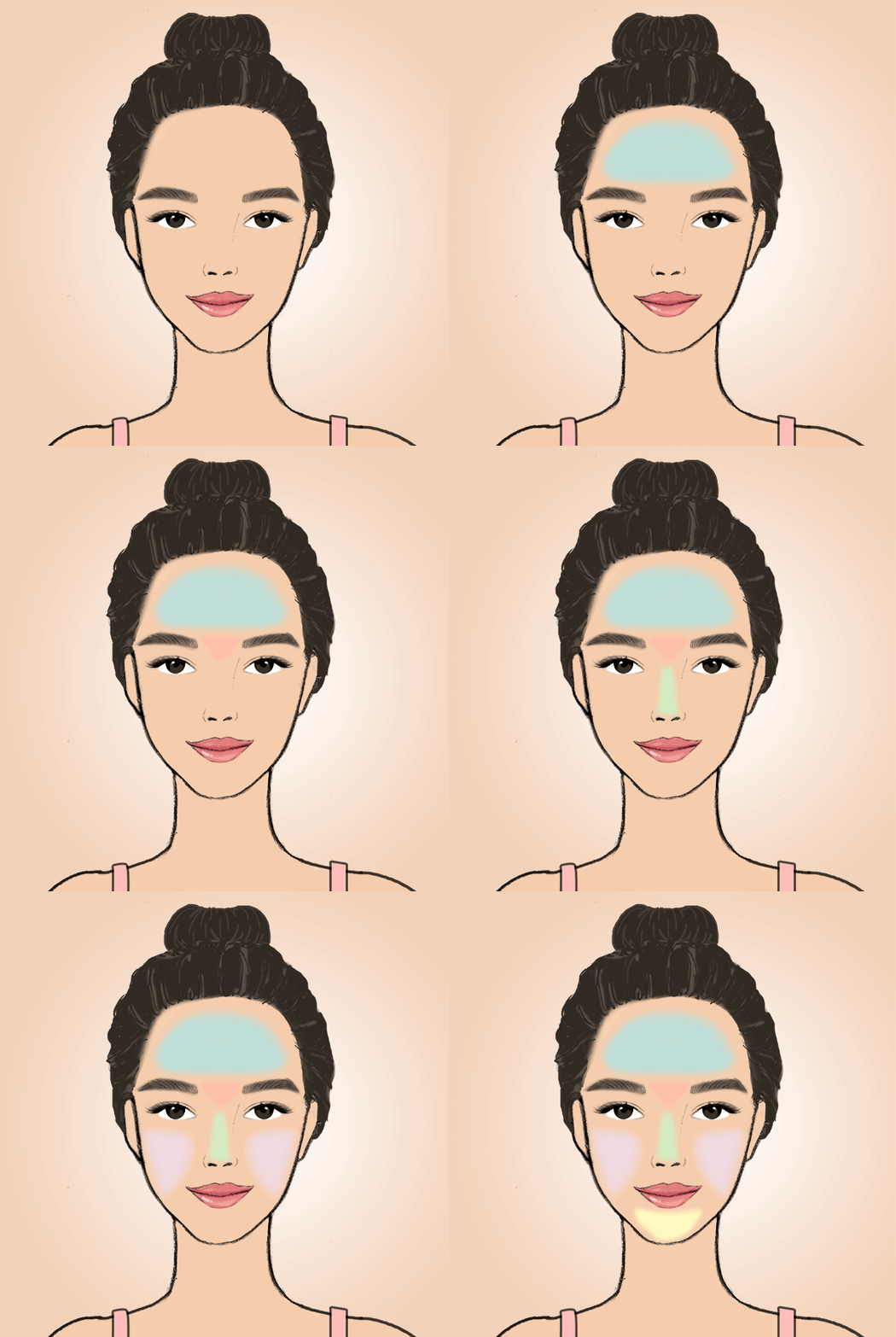
In recent weeks, I’ve become fascinated with the Eastern tradition of face mapping. Face mapping, which combines modern dermatology with ancient Chinese medicine, is the idea that there’s a correlation between your internal organs and different zones of your face. 

Face mapping makes a lot of sense when you consider the fact you’re your skin is an organ too (the largest organ in your body, in fact). My aesthetician can also tell when I’ve just been sick or am about to get sick based on the area right above my brows. I don’t know about you, but I find it all very fascinating! Besides just being an interesting topic, educating yourself about face mapping can actually help to clear up your skin. Once you’ve identified what’s causing your acne, it’s easier to prevent it. While some causes are unavoidable (monthly hormone swings, for instance), diet and lifestyle changes can definitely help to clear up your skin.

Without further ado, here are what your breakouts are telling you in five different zones of your face…

1. Forehead. Breakouts across the forehead are often triggered by stress or sleep deprivation. Make sure to log 7 to 9 hours of beauty rest a night to keep your forehead clear.
2. Above the brow. The area above the brow is affected by your immune system. Breakouts here tend to happen right before, after, or during a cold or flu. If you notice a breakout in this zone, slow down for a couple days, drink plenty of water and eat these 10 immune boosting foods.
3. Between brows. Breakouts between the brows can be caused by overindulgence of unhealthy foods or a food allergy. Cutting back on sugar, dairy, rich foods, and alcohol can help clear up skin in this zone.
4. Cheeks. Your cheeks are linked to your respiratory system. Smoking or breathing polluted air can cause breakouts here.
5. Side of chin. The sides of your chin are affected by hormones. Breakouts here occur around the time of your period and happen on one side or another depending on which ovary is ovulating that month.

Let me know what beauty crisis you’d like me to cover in my next Beauty 911 post!

XO, Lee

10 Benefits of Warm Water and Lemon in the Morning


Related image

Warm lemon water works all kinds of miracles. I initially started drinking it to aid with weight loss, but have since found numerous benefits that I thought I would share with you all too. There’s really no reason not to be taking advantage of this morning health ritual and everyday detox drink.

INSTRUCTIONS

Squeeze 1/2 lemon (organic if possible) into a cup of lukewarm filtered water, first thing in the morning. Avoid using boiling or ice cold water as it takes longer for your body to digest and uses more energy in the process.

BONUS: try adding freshly grated ginger or a little cayenne for a boost.

THE BENEFITS

1. Aids digestion. It flushes out unwanted materials & toxins from the body. It also helps to relieve symptoms of indigestion, such as heartburn and bloating.

2. Boosts your immune system. Lemons are filled with vitamin C, which helps fight colds. They’re high in potassium which stimulates brain and nerve function.

3. Detoxes your system. It acts as a natural diuretic, releasing toxins at a faster rate as the citric acid maximises enzyme function which stimulates the liver.

4. Balances pH levels. Due to the alkalising properties of lemons, they help remove uric acid in your joints, which is one of the main causes of inflammation.

5. Clears skin. The antioxidants and vitamin C in lemons help decrease wrinkles and blemishes. The alkaline nature also kills some types of bacteria known to cause acne.

6. Aid in weight loss. Lemons are high in pectin fiber, which helps fight hunger cravings.

7. Energizes & enhances your mood. Lemons contain negative charged ions which provides your body with energy when it enters the digestive tract. The smell and scent of lemon can brighten your mood and help clear your mind. Lemon can also help reduce anxiety and depression.

8. Promotes Healing. Ascorbic acid found in abundance in lemons, promotes wound healing, and is an essential nutrient in the maintenance of healthy bones, connective tissue, and cartilage.

9. Freshens breath. It’s also been known to help relieve tooth pain and gingivitis. However, be aware that citric acid can erode tooth enamel. It is best to brush your teeth first.

10. Hydrates Your Lymph System. Warm water and lemon juice supports the immune system by hydrating and replacing fluids lost by your body. When your body is deprived of water, you can definitely feel the side effects, which include: feeling tired, sluggish, decreased immune function, constipation, lack of energy, low/high blood pressure, lack of sleep, lack of mental clarity and feeling stressed, just to name a few.


Related image  Do you drink warm lemon water in the morning?

How do you take your lemons?