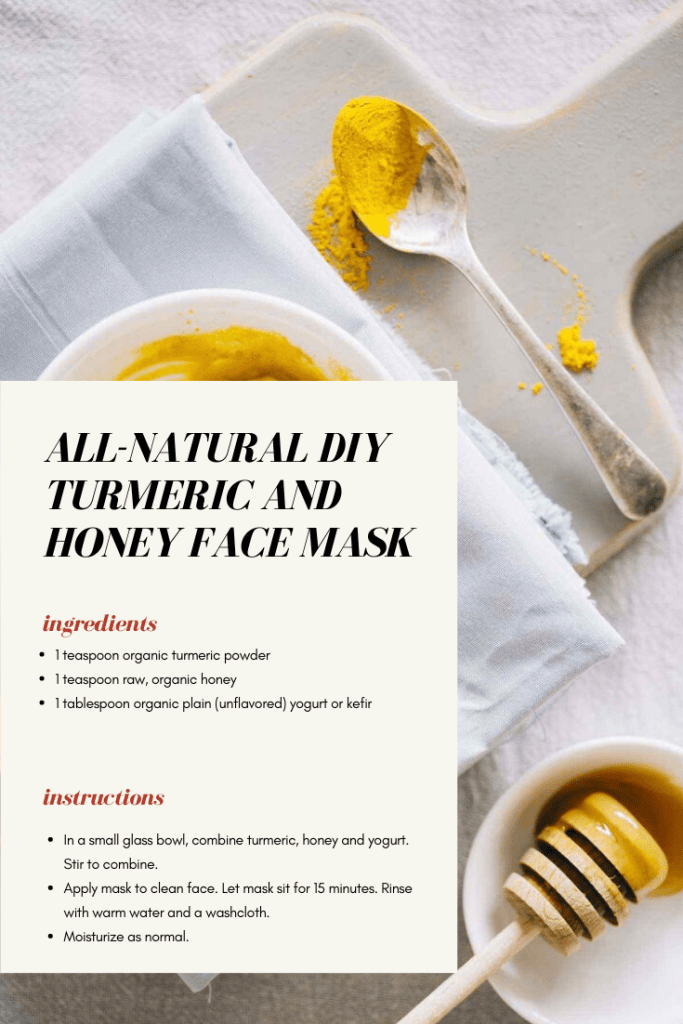
ALL-NATURAL DIY TURMERIC AND HONEY FACE MASK USING PURE TROPIX

This quick, easy and inexpensive homemade turmeric and honey face mask is as simple as pouring 3 natural ingredients into a bowl, stirring and…THAT’S IT! You’re done. This post also includes helpful reader FAQs.

We’re back with another DIY homemade beauty recipe. I’m so excited to share one of my new favorite skincare masks: a 3-ingredient DIY Face Mask for clear, glowing skin!

Yep, you heard me right–with just three ingredients, you can make a homemade face mask in under two minutes flat that will have a MASSIVE impact on your skin. Here’s a few of the results you can expect after using this mask a few times:

Advertisements

🤍 Reduced acne, clogged pores, breakouts and blackheads

🤍 Dry skin will be hydrated with fewer wrinkles

🤍 Lightened dark spots and acne scars

🤍 Reduced redness and a more even, brightened skin tone

How is all of this possible with just one homemade face mask? Take a look!

RELATED POSTS:

Joanna Vargas Skincare Bible

Hello Beauties, by now everyone knows how Lee and her other Editors are obsessed with skincare. If you didn’t know then you have either been living under a rock or new here; so ” Welcome To BeautyLeeBar ” aka your new favorite beauty go-to blog. Of course, we are still learning about our skin and learning…

TURMERIC BENEFITS FOR SKIN

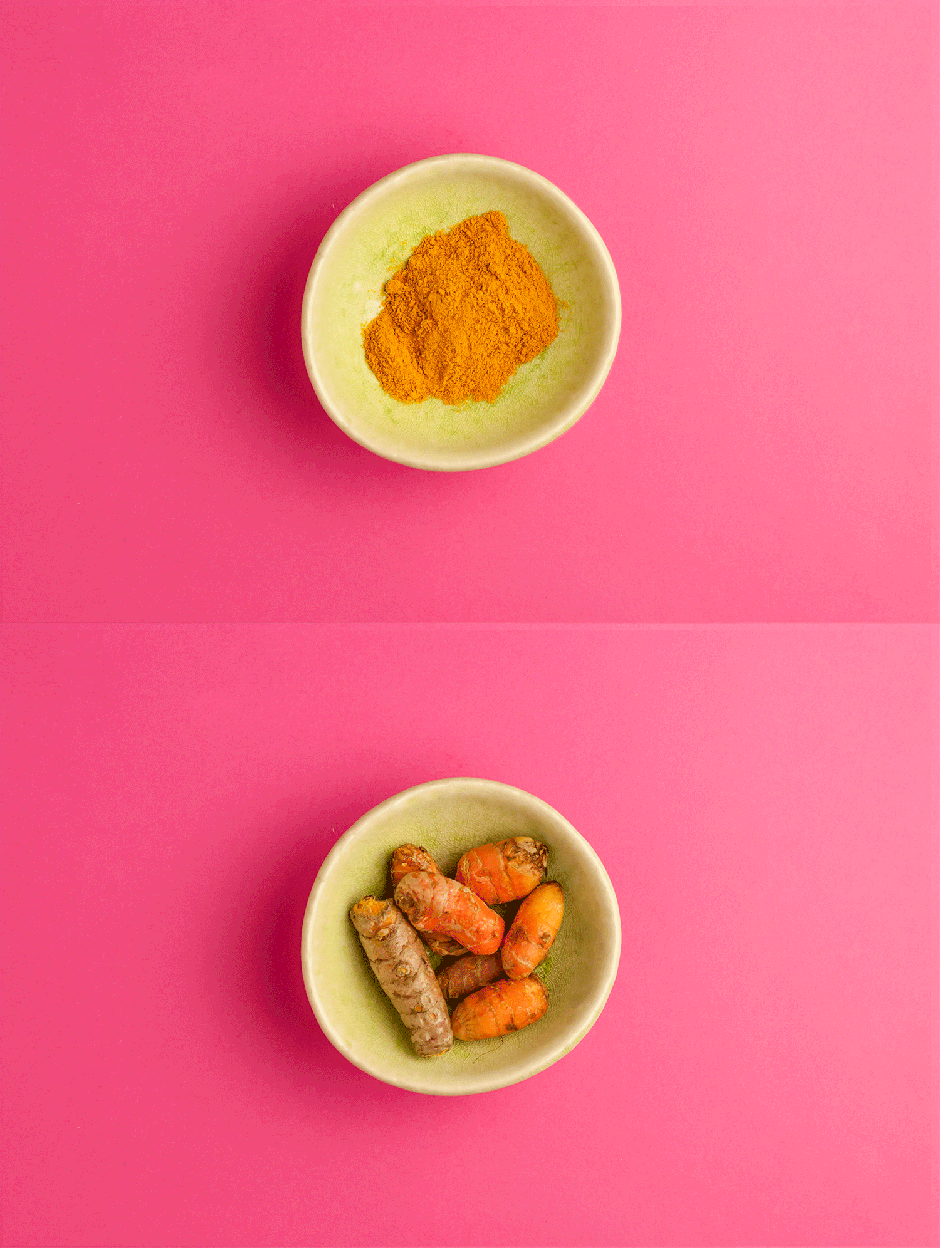
Did you know that turmeric is one of the most powerful herbs for preventing, fighting and even reversing disease? The dozens of healing properties found in the root make it just as effective (if not more) than conventional medicine. (source)

Typically, turmeric is ingested, either from food or in supplement form. But it can be just as healing when applied directly to your skin thanks to its anti-inflammatory abilities. The active ingredient in turmeric, called curcumin (it’s what gives turmeric it’s orange hue), is incredible at purifying and cleansing the skin, resulting in a healthy, bright glow (it’s a ritual at Indian weddings for this very reason!).

Turmeric is also great for acne due to its antiseptic and antibacterial properties, which fight pimples and breakouts, cleansing clogged pores and blackheads. Turmeric even reduces oil secretion from the sebaceous glands, preventing acne from recurring. And its anti-inflammatory properties help soothe flare-ups. (source)

RELATED POSTS:

This Easy DIY Coffee Scrub Can Be Tweaked to Suit Every Skin Type

If you want skin that glows with a capital “G,” it comes down to one thing: exfoliation, exfoliation, exfoliation. You’ve got options here: You could slather on an at-home peel with glycolic or lactic acids, pop the top on one of your favorite face scrubs, or whip up a scrub at home with a gentle exfoliant…

Advertisements

BENEFITS OF HONEY ON FACE AND SKIN

Using honey as part of your skincare routine is easily one of the best things you can do for your skin. But not just any honey. At the very least, you want to make sure you’re using an organic, raw, unpasteurized, unfiltered honey, ideally from a local source.

Why is this so important? Most conventional honey bears are not much different from high fructose corn syrup. Not only that, but when honey is processed using techniques like pasteurization or filtering, the nutrients are removed in the process, leaving with you nothing but sugar.

On the other hand, raw honey is full of amino acids, B vitamins and dozens of vitamins and minerals, like Copper, Iron, Magnesium, Potassium and Zinc.

Even better? Manuka honey, which is produced in New Zealand by bees that pollinate the Manuka bush, actually has four times the nutritional content of normal flower honey AND considerably higher level of enzymes, which create a natural hydrogen peroxide that works as an antibacterial. (source)

Starting to understand why honey is so amazing for your skin? Considering honey’s antimicrobial, anti-fungal, and anti-inflammatory properties, honey has been proven to calm redness and irritation, cleanse pores, and soothe and heal skin, whether your ailment is acne, eczema, or even burns and wounds (I’m looking at you, face picker…oh wait, that’s just my reflection in the mirror 😉 )

If you, like me, just can’t help yourself but to pop pimples, you’ll love the effect of honey on your skin! Honey is proven to lighten skin, decrease the appearance of scars and increase healing and tissue regeneration. (source)

Honey improves skin tone and texture, and thanks to its natural antioxidant levels, it’s an effective anti-aging treatment (read: fewer wrinkles). It’s also a natural humectant, meaning it draws moisture from the air into the skin where it’s penetrated and retained for long-lasting hydration. (source)

Advertisements

RELATED POSTS:

DIY: Gold Face Mask

I have always been a fan of gold mask treatments and knew the benefits. But, truthfully, I just started using gold masks around March of this year. If you follow me @beautyleebar then you know I am a firm believer in self care which sometimes include me trying on different face masks. Discriminating against beauty…

ADDING YOGURT OR KEFIR FOR NATURAL PROBIOTICS

As if this mask wasn’t amazing enough just with the honey and turmeric, I’ve pushed it full-on over-the-top (in the best way, of course) by adding some natural probiotics in the form of yogurt or kefir.

I actually recommend using coconut kefir for this recipe, as you’ll remove all dairy and lactose concerns and add insane amounts of probiotics to the face mask.

In fact, kefir is one of the most probiotic-rich foods in the world with incredible medicinal and healing benefits (source). But yogurt is totally fine too–just make sure it’s plain/unflavored.

This Quick & Easy DIY Mask Will Give You An Instant Glow!

I’m obsessed with DIYs and always have been since I was a teenager. This papaya and honey DIY mask is one of my all-time faves as it brightens, hydrates, improves tone and texture, and most importantly leaves your skin glowy AF. It’s also great for acne-prone skin as it can help reduce inflammation and fight acne-bacteria,…

With its natural anti-bacterial and anti-fungal properties, yogurt and kefir are also chockfull of protein, calcium and vitamin D, which help fight acne, nourish your skin, leaving if soft and hydrated. (source)

Not only that, but the lactic acid in yogurt will help dissolve dead skin and tighten pores by gently exfoliating your skin to create a natural glow and prevent breakouts. Did I mention this natural acid will also diminish the appearance of lines and wrinkles?

AND AND AND, when used regularly, yogurt has very mild bleaching properties to help with discoloration, blotchiness, acne scars and age spots. YES!

RELATED POSTS:

WHY YOU SHOULD MAKE HOMEMADE FACE MASKS

If you’ve been following BEAUTYLEEBAR, you know that the sheer amount of toxic and harmful chemicals and additives allowed in our skincare products is truly APPALLING!

Unfortunately, face masks are no different. Most store-bought options are brimming with artificial colors and preservatives, hormone-disrupting chemicals like parabens and phthalates, harsh alcohols and acids that irritate our skin and cause allergies, and even carcinogenic additives.

If those toxic chemicals weren’t enough to convince you to make your own, consider the AMAZING MONEY SAVINGS you’ll find when you make your own face masks.

RELATED POSTS:
The Acne-Prevention Strategies Glasses Wearers Need to Know

How four eyes become five After months of procrastinating to get a new prescription, I finally decided to splurge on a pair of glasses… can’t wait! But with them came a surprise: acne. It seemed like there was a new pimple on the bridge of my nose basically every other day. Because I hadn’t purchased my new…

And, of course, by now you know that I’ve gotta take a minute to just talk about how easy it is to make your own skincare products.

I often get comments from readers saying things like “I just wish I had the time” or “If only I had the discipline to make my own products.”

Listen, this recipe is literally as simple as pouring THREE natural ingredients into a bowl, stirring and… THAT’S IT! You’re done. It’s been less than 30 seconds and you’ve made an incredible face mask!

BUT, if you’re still not convinced you want to make your own face mask, there are a few safer store-bought options I’d recommend:

🤍 PURE TROPIX TURMERIC ACNE MASK $24.00 NOW $21.99

🤍 GLEAMIN VITAMIN C CLAY MASK $39.99

But just note that none of these face masks combine the healing powers of honey AND probiotics! For that, you’ll just have to add in those ingredients.

Advertisements

FAQS FOR THIS DIY TURMERIC HONEY FACE MASK

Inevitably, I always get a lot of questions about DIY skincare products. No complaints–I LOVE hearing from you! But to help a baddie out, I thought I’d share some of the most frequently asked questions I get about this homemade face mask:

🤍 How to prepare this DIY Turmeric and Honey Face Mask? I’ve already talked about how easy it is to make this mask, and the detailed recipe below should help answer any remaining questions you have. But if not, feel free to leave a question in the comments and I’ll be sure to answer.

🤍 How to apply a Turmeric Honey Mask? If you’re looking at this mask and wondering how to use it, don’t worry–it couldn’t be easier. Simply use your fingers or a clean paint brush and apply the mixture directly onto clean skin, covering your entire face except for your eyes, nostrils and lips. Leave the mask on for 10-15 minutes.

🤍 How to remove a Turmeric Honey Mask? Likewise, you might be wondering how to get this mask off. Again, it’s easy as pie. Over the sink, splash your face with water, gently massaging the mask off your face until there’s no more left on your skin. It’s just like any other face mask you’ve tried before 🙂

🤍 How to store homemade face masks? Unlike store-bought masks that are filled with toxic preservatives, this homemade face mask recipe is just for one batch, or a single-use that should be applied to your skin as soon as it’s made. Otherwise, the mask will harden if left out too long, so make it as needed.

🤍 How often should you use this Turmeric Honey Mask? The skin on our faces is extremely delicate, and even if you don’t think you have sensitive skin, I’d recommend using a mask no more than 2-3 times per week, max. I try to use this mask once a week, and then this DIY Charcoal + Clay Mask a few days after. Usually I’ll put the mask on during or after I take a DIY Epsom Salt Detox Bath.

🤍 Does this turmeric face mask stain? I recommend only leaving them on for 10-15 minutes to avoid staining your skin temporarily. If you follow the instructions, you should be able to use this turmeric face mask without staining. BUT, if you run into any trouble, don’t worry! Simply apply this DIY Makeup Remover to a cotton pad and swipe it over your skin until all yellow/orange residue of the mask is removed. You can also try washing your face with a mild cleanser. Be careful not to get it on your clothes, as the turmeric will stain. p.s. turmeric will stain your clothes. it could stain your skin, so just use a thin layer. The thicker the mask, the more likely it is to stain you skin. If your skin does get stained, wash your face twice and it should easily go away!

🤍 Can turmeric cause allergic reactions? Some people have reported allergic reactions to turmeric after skin exposure, so I recommend testing this mask on a small area of your skin first, like your wrist or a small patch on your face. Most people only have positive results, but everybody reacts differently, so it’s important to test your own skin’s reaction before applying it all over your face.
Disclaimer: This post includes affiliate links, and I will earn a commission if you purchase through these links. Please note that I’ve linked to these products purely because I recommend them and they are from companies I trust. There is no additional cost to you.


The Acne-Prevention Strategies Glasses Wearers Need to Know

How four eyes become five

After months of procrastinating to get a new prescription, I finally decided to splurge on a pair of glasses… can’t wait! But with them came a surprise: acne.

It seemed like there was a new pimple on the bridge of my nose basically every other day. Because I hadn’t purchased my new glasses yet and because those pimples always appeared in that specific spot, my beautiful now old glasses were unfortunately the primary suspect.

Sure, being able to see is cool and all, but wouldn’t it be great if it didn’t also cause breakouts? Yes! It would!!! In fact, I talked to an expert about how to deal with this exact situation. Here’s what I learned.

How to know if it’s actually acne

The biggest clue that your glasses are causing acne is where the acne is showing up: The bridge of your nose, your cheeks where the rims sit, and the ears where they might rub are all common places.

The other major sign is if you can say, ‘I didn’t have it,’ and then all of a sudden you develop it, which is exactly what happened to me. Maybe this is your first pair of frames, maybe you took a break from your glasses or alternate with wearing contacts. Whatever the reasoning is, the point is you have and you’re getting pimples in places you’ve never seen before. And, now you’re wearing glasses, that’s another clue that your glasses are to blame.

But other conditions can mimic acne, even in those areas. One to look out for is called acanthoma fissurataum, which is a patch of thickened skin that experts think develops after repeated trauma to an area—and it specifically occurs in people who wear glasses. So if your frames are constantly rubbing on the top of your ears or the bridge of your nose, they might cause this.

How do glasses cause acne?

It’s really from too much pressure. This form of acne—acne mechanica—develops when something is pushing down on the skin, which prevents the normal shedding of skin cells. Instead, those skin cells clog up your pores and lead to acne. Having oily skin and wearing thicker makeup just add to the issue.

Acne mechanica is also common among those who play sports or wear restrictive athletic clothing because those clothes can trap sweat and heat, making it even more likely that the pressure from clothing or equipment will cause acne in areas that those garments touch.

Here’s how to deal.

Luckily, once you’re sure it’s acne, there are specific ways to treat the bumps in those sensitive areas on your face as well as to prevent them from coming back.

  • Get your glasses adjusted. If you find that you’re having to push your glasses up your nose frequently or they’re so thick or heavy that they’re causing acne in the cheek area where the lenses touch your face, you should go to your eye doctor or wherever you got your glasses to have them adjusted. Sometimes the answer is getting new bridges put on the nose so you spread the pressure.
  • Wipe your glasses down frequently. Make sure you’re cleaning your glasses. We suggest getting a basic alcohol wipe and swabbing it over every part that touches your face every night.
  • Use an over-the-counter acne wash. Using an over-the-counter acne wash with salicylic acid in it at night is an easy way to manage mild acne all over the face, especially if you notice it on your cheeks and not just on the bridge of your nose.
  • Use an over-the-counter spot treatment. If your acne bumps are primarily confined to one area of your face, such as the bridge of your nose, a spot treatment containing salicylic acid or benzoyl peroxide is the way to go. Other options include acne patches you can wear overnight and prescription topical antibiotics.
  • Take breaks from wearing your glasses if possible. Your glasses obviously serve a very important purpose. But if it’s possible for you to take breaks from them during the day, taking advantage of that cuts down on the likelihood that they’ll cause acne.
  • Use a makeup remover before cleansing. Make sure that you’re really getting your makeup off. The buildup of makeup under your glasses can definitely contribute to acne, so it’s important to make sure it’s all off—with the help of a makeup remover or micellar water—even before you wash your face. And when it comes to washing, opt for a cleanser that isn’t oil-based.
  • Use concealers with salicylic acid. While your acne is healing, we suggest going with concealers that contain salicylic acid to keep treating them while covering up any bumps.

When to check with a derm

If you’re not sure if you have acne or something else is going on, it’s always a good idea to talk to a professional. And if what you think is acne isn’t going away with those measures, or if you have a lot of acne on other parts of your face, too, it’s important to check with your derm about the best way to manage it. They may be able to prescribe you an antibiotic medication that can take better care of all the acne.

And if your bumps aren’t going away or don’t seem to be healing, they may be a sign of another condition—including, possibly, skin cancer—that you’ll want to get checked out sooner rather than later.

But for most of us with glasses, acne is a common yet manageable annoyance.

Related:

BEAUTYLEEBAR does not provide medical advice, diagnosis, or treatment. Any information published on this website or by this brand is not intended as a substitute for medical advice, and you should not take any action before consulting with a healthcare professional.

How to Treat and PREVENT MASK-NE AKA “Mask Acne” – It’s A Thing!

If it wasn’t enough that half of our lovely faces must remain covered by masks these days, now we are starting to suffer breakouts as a result. It doesn’t help that we are entering a heat wave and the height of summer is around the corner, just in time to bundle up an area we typically let breathe, literally and figuratively, 24/7.

Higher temps and covering up equals sweat, and it’s not the only culprit. Masks trap moisture from our breath, oil from our skin, and dirt and makeup underneath as well, for a nice little brew of bacteria bubbling over like a witch’s cauldron ready to make trouble. Friction and pressure amplify the issue by rubbing the irritants, particles, and trapped moisture, essentially grinding them into your pores.

Also, since most of us don’t have access to professional-grade masks and are using homemade masks or thin fashion masks, we are constantly adjusting them, causing us to touch them and our faces, defeating the very purpose of the masks in the first place. Truly a face-palm moment. But please don’t touch your palm to your face.

So how do we prevent, treat, or minimize the issue? If the symptoms of mask-wearing are taking a big toll on your skin, you’ll want to heed all of these suggestions carefully.

OH WAIT…. Before diving into the fix, let’s first talk about why face masks are giving people so much trouble. Regarding acne, there are two primary issues to consider.  

Why Face Masks Cause Breakouts and Chafing 

First, direct friction promotes inflammation in the skin and breakouts, known as ‘acne mechanica.’ Second, face masks trap humidity [from simply breathing], oil, and sweat on the skin and allow for overgrowth of microorganisms, which collectively block the pores and lead to acne flares,” he explains. “As for chafing, this is essentially skin barrier disruption and inflammation from chronic rubbing of an external surface against the skin. For face mask to be effective, they need to form a tight seal on the skin, which leads to chafing.” 

 Anyone can develop acne, inflammation, and chafing from wearing masks – even those who usually have super clear skin. That said, those who are more prone to the aforementioned issues, such as people with sensitive skin, thin skin, chronic skin ailments, and acne-prone skin, are more likely to experience trouble.  

Have a week long supply of masks.

If you go out a lot, or at least daily (and as businesses begin to re-open, we will all begin to reacclimate with the outside world again and, yes, leave the house more), you should have at the very least a mask for each day. In fact, it’s been suggested that we think of our masks like underwear. You wouldn’t wear a pair of panties again without washing them, would you? And those don’t get exposed to the outside world or our constant fondling. Unless they do. Do you boo.

Avoid makeup.

This one may be hard for some to stick with 100% of the time, but it’s something to seriously consider. When half of our face remains covered anyway, there is no point in laying on a thick layer of concealer or foundation only to have it clog the pores that are trapped with excess sweat, moisture, oil, and daily grime. Keep your makeup minimal around the masked area, and opt for some mascara. It’s really our eyes that do the talking with this new-normal look, anyway.

YOU MAY ALSO LIKE…

Opt for natural fibers.

There are lots of cute masks out there, but polyester, satin, and even rayon aren’t doing your skin any big favors unless it’s a high-quality, thick rayon. Opt for silk or soft cotton materials so that your skin can breathe and you have some airflow. Polyester essentially works like plastic wrap to trap moisture until you take it off, so natural and breathable is absolutely the way to go.

Double cleanse, and then cleanse again.

If double-cleansing has always come off a bit extreme to you, now might be the time to change your mind, or at least make an exception for the days you wear a mask. Massaging thoroughly with a cleansing oil or balm pulls impurities from your pores without stripping your skin of all moisture. Follow up with another thorough cleanse with either your first cleanser or a gentle, non-drying gel to completely remove any remaining traces of makeup or dirt that have been pushed into your pores. And, if you typically just rinse in the morning, up your routine to cleansing then, too.

Up your exfoliation game.

If you typically exfoliate once a week, it might be OK to exfoliate a little more often, especially around the lower half of your face. Since it’s subject to extra congestion right now, lighten the load with a gentle peeling pad twice a week.

Use a clay mask at least once a week around the area, and spot treat at night. If you’re in and out of a mask during the day, you might even want to keep gentle toner pads on hand to give your skin an extra cleansing swipe between washings. Make sure to moisturize thoroughly at night and use a heavier cream to avoid drying.

Apply a Zinc-Based SPF.

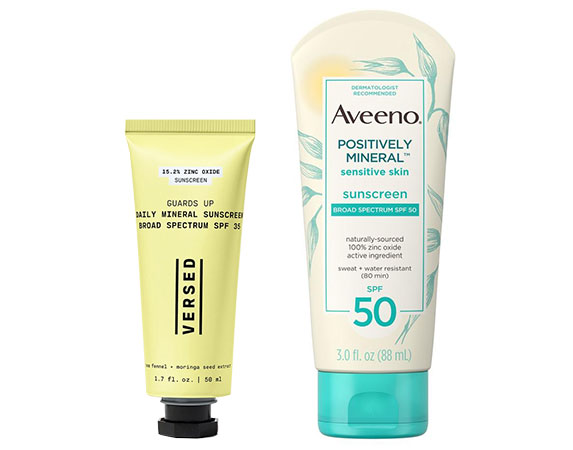
Before putting on your mask, apply a layer of zinc oxide-based SPF. Zinc oxide is both a mineral UV blocker and skin protectant that is a main ingredient in baby diaper creams. It helps form a seal over the skin to provide some level of protection from the mask itself. We’re fond of Versed Skin Guards Up Daily Mineral Sunscreen, $22, and Aveeno Positively Mineral Sensitive Sunscreen, $10. 

Treat Your Acne Head-On.

Those dealing with unforgiving, stubborn acne despite following the advice above should also take the spot-treatment approach. We recommend a product that contains benzoyl peroxide – such as Neutrogena On the Spot Acne Treatment, $9 – which helps lower levels of acne–causing bacteria to reduce inflammation of the skin. We also like Hero Cosmetics Micropoint for Blemishes, $13.  

Have more questions about maskne? Let’s chat in the comment section below! 

Beginner Beauty FAQ

Just starting out with makeup? Whether you’re a complete beginner or the ultimate beauty enthusiast, there are a couple of questions that we’ve all asked ourselves at some point. To make things easier for you, here’s a list of the most frequently asked questions about beauty and skincare!

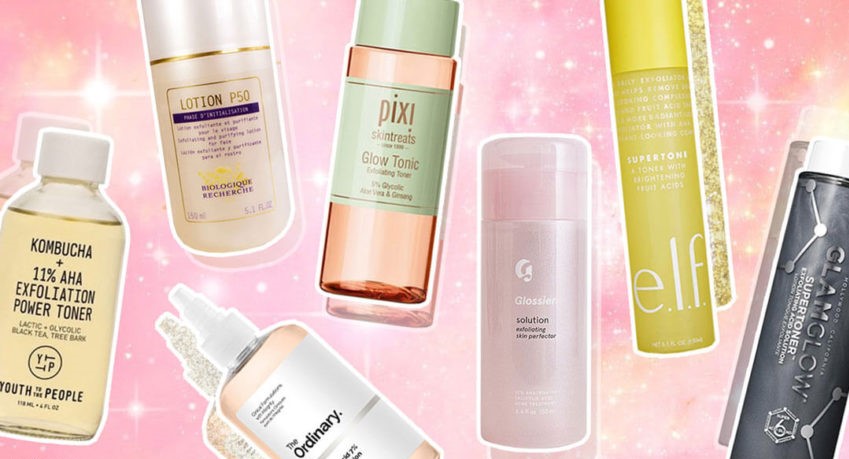
Do you need to use toner?

This has crossed all our minds at one point or another: Do we really need to use toner? Or is it just an extra step that we can skip?

The short answer – yes, you should use toner.

Regardless of skin type, toner is definitely an essential step when it comes to achieving healthy glowing skin. After cleansing, toner helps remove stubborn dirt and grime, and any traces of makeup you may have missed.

A good toner can provide the skin with a much-needed boost of hydration along with other skin-supporting ingredients. Adding this step into your skincare regimen sets the perfect foundation for your other skincare products to perform better.

How often should you wash your makeup brushes?

We know, washing your brushes can feel like a total chore – but it’s soo worth it. You should aim to wash your brushes at least every 7 days or so to get rid of any germs or bacteria that will build up over time.

Not cleaning your brushes often enough could contribute to breakouts or other common skin problems. And honestly, your makeup looks so much better when you’re working with clean brushes!

Is “baking” just a trend?

“Baking” has been trending for quite some time now. The real question is, is it completely necessary or just another fleeting beauty trend? Well, let’s just say… if you want your makeup to last longer, then you definitely need to add “baking” onto your to-do list.

“Baking” is essentially setting your face makeup with a loose setting powder to mattify your complexion. Adding this additional step into your makeup routine extends the staying power of your face makeup by soaking up excess oil during the day.

All you need to do is apply a generous amount of loose setting powder over your face makeup with a damp beauty sponge. Let it sit on your face for a couple of minutes (5 or so) and then buff it out with a fluffy powder brush. Pro tip: For the ultimate staying power, spray your beauty sponge with some setting spray before you pick up the powder.

Do you have to use moisturizer if you have oily skin?

When you’re dealing with oily skin, adding more moisture into the equation is probably the last thing on your mind. But moisturizing your skin properly will make a huge difference when it comes to controlling oil.

When our skin is dehydrated, it actually overcompensates by producing even more oil to make up for the moisture it desperately needs. To minimize shine, oily skin types can benefit from staying hydrated by drinking more water throughout the day and moisturizing regularly in the morning and at night.

Did we miss anything? Let us know in the comments down below if you have any other questions for us!