
The Acne-Prevention Strategies Glasses Wearers Need to Know

How four eyes become five

After months of procrastinating to get a new prescription, I finally decided to splurge on a pair of glasses… can’t wait! But with them came a surprise: acne.

It seemed like there was a new pimple on the bridge of my nose basically every other day. Because I hadn’t purchased my new glasses yet and because those pimples always appeared in that specific spot, my beautiful now old glasses were unfortunately the primary suspect.

Sure, being able to see is cool and all, but wouldn’t it be great if it didn’t also cause breakouts? Yes! It would!!! In fact, I talked to an expert about how to deal with this exact situation. Here’s what I learned.

How to know if it’s actually acne

The biggest clue that your glasses are causing acne is where the acne is showing up: The bridge of your nose, your cheeks where the rims sit, and the ears where they might rub are all common places.

The other major sign is if you can say, ‘I didn’t have it,’ and then all of a sudden you develop it, which is exactly what happened to me. Maybe this is your first pair of frames, maybe you took a break from your glasses or alternate with wearing contacts. Whatever the reasoning is, the point is you have and you’re getting pimples in places you’ve never seen before. And, now you’re wearing glasses, that’s another clue that your glasses are to blame.

But other conditions can mimic acne, even in those areas. One to look out for is called acanthoma fissurataum, which is a patch of thickened skin that experts think develops after repeated trauma to an area—and it specifically occurs in people who wear glasses. So if your frames are constantly rubbing on the top of your ears or the bridge of your nose, they might cause this.

How do glasses cause acne?

It’s really from too much pressure. This form of acne—acne mechanica—develops when something is pushing down on the skin, which prevents the normal shedding of skin cells. Instead, those skin cells clog up your pores and lead to acne. Having oily skin and wearing thicker makeup just add to the issue.

Acne mechanica is also common among those who play sports or wear restrictive athletic clothing because those clothes can trap sweat and heat, making it even more likely that the pressure from clothing or equipment will cause acne in areas that those garments touch.

Here’s how to deal.

Luckily, once you’re sure it’s acne, there are specific ways to treat the bumps in those sensitive areas on your face as well as to prevent them from coming back.

  • Get your glasses adjusted. If you find that you’re having to push your glasses up your nose frequently or they’re so thick or heavy that they’re causing acne in the cheek area where the lenses touch your face, you should go to your eye doctor or wherever you got your glasses to have them adjusted. Sometimes the answer is getting new bridges put on the nose so you spread the pressure.
  • Wipe your glasses down frequently. Make sure you’re cleaning your glasses. We suggest getting a basic alcohol wipe and swabbing it over every part that touches your face every night.
  • Use an over-the-counter acne wash. Using an over-the-counter acne wash with salicylic acid in it at night is an easy way to manage mild acne all over the face, especially if you notice it on your cheeks and not just on the bridge of your nose.
  • Use an over-the-counter spot treatment. If your acne bumps are primarily confined to one area of your face, such as the bridge of your nose, a spot treatment containing salicylic acid or benzoyl peroxide is the way to go. Other options include acne patches you can wear overnight and prescription topical antibiotics.
  • Take breaks from wearing your glasses if possible. Your glasses obviously serve a very important purpose. But if it’s possible for you to take breaks from them during the day, taking advantage of that cuts down on the likelihood that they’ll cause acne.
  • Use a makeup remover before cleansing. Make sure that you’re really getting your makeup off. The buildup of makeup under your glasses can definitely contribute to acne, so it’s important to make sure it’s all off—with the help of a makeup remover or micellar water—even before you wash your face. And when it comes to washing, opt for a cleanser that isn’t oil-based.
  • Use concealers with salicylic acid. While your acne is healing, we suggest going with concealers that contain salicylic acid to keep treating them while covering up any bumps.

When to check with a derm

If you’re not sure if you have acne or something else is going on, it’s always a good idea to talk to a professional. And if what you think is acne isn’t going away with those measures, or if you have a lot of acne on other parts of your face, too, it’s important to check with your derm about the best way to manage it. They may be able to prescribe you an antibiotic medication that can take better care of all the acne.

And if your bumps aren’t going away or don’t seem to be healing, they may be a sign of another condition—including, possibly, skin cancer—that you’ll want to get checked out sooner rather than later.

But for most of us with glasses, acne is a common yet manageable annoyance.

Related:

BEAUTYLEEBAR does not provide medical advice, diagnosis, or treatment. Any information published on this website or by this brand is not intended as a substitute for medical advice, and you should not take any action before consulting with a healthcare professional.


How to Treat and PREVENT MASK-NE AKA “Mask Acne” – It’s A Thing!

If it wasn’t enough that half of our lovely faces must remain covered by masks these days, now we are starting to suffer breakouts as a result. It doesn’t help that we are entering a heat wave and the height of summer is around the corner, just in time to bundle up an area we typically let breathe, literally and figuratively, 24/7.

Higher temps and covering up equals sweat, and it’s not the only culprit. Masks trap moisture from our breath, oil from our skin, and dirt and makeup underneath as well, for a nice little brew of bacteria bubbling over like a witch’s cauldron ready to make trouble. Friction and pressure amplify the issue by rubbing the irritants, particles, and trapped moisture, essentially grinding them into your pores.

Also, since most of us don’t have access to professional-grade masks and are using homemade masks or thin fashion masks, we are constantly adjusting them, causing us to touch them and our faces, defeating the very purpose of the masks in the first place. Truly a face-palm moment. But please don’t touch your palm to your face.

So how do we prevent, treat, or minimize the issue? If the symptoms of mask-wearing are taking a big toll on your skin, you’ll want to heed all of these suggestions carefully.

OH WAIT…. Before diving into the fix, let’s first talk about why face masks are giving people so much trouble. Regarding acne, there are two primary issues to consider.  

Why Face Masks Cause Breakouts and Chafing 

First, direct friction promotes inflammation in the skin and breakouts, known as ‘acne mechanica.’ Second, face masks trap humidity [from simply breathing], oil, and sweat on the skin and allow for overgrowth of microorganisms, which collectively block the pores and lead to acne flares,” he explains. “As for chafing, this is essentially skin barrier disruption and inflammation from chronic rubbing of an external surface against the skin. For face mask to be effective, they need to form a tight seal on the skin, which leads to chafing.” 

 Anyone can develop acne, inflammation, and chafing from wearing masks – even those who usually have super clear skin. That said, those who are more prone to the aforementioned issues, such as people with sensitive skin, thin skin, chronic skin ailments, and acne-prone skin, are more likely to experience trouble.  

Have a week long supply of masks.

If you go out a lot, or at least daily (and as businesses begin to re-open, we will all begin to reacclimate with the outside world again and, yes, leave the house more), you should have at the very least a mask for each day. In fact, it’s been suggested that we think of our masks like underwear. You wouldn’t wear a pair of panties again without washing them, would you? And those don’t get exposed to the outside world or our constant fondling. Unless they do. Do you boo.

Avoid makeup.

This one may be hard for some to stick with 100% of the time, but it’s something to seriously consider. When half of our face remains covered anyway, there is no point in laying on a thick layer of concealer or foundation only to have it clog the pores that are trapped with excess sweat, moisture, oil, and daily grime. Keep your makeup minimal around the masked area, and opt for some mascara. It’s really our eyes that do the talking with this new-normal look, anyway.

YOU MAY ALSO LIKE…

Opt for natural fibers.

There are lots of cute masks out there, but polyester, satin, and even rayon aren’t doing your skin any big favors unless it’s a high-quality, thick rayon. Opt for silk or soft cotton materials so that your skin can breathe and you have some airflow. Polyester essentially works like plastic wrap to trap moisture until you take it off, so natural and breathable is absolutely the way to go.

Double cleanse, and then cleanse again.

If double-cleansing has always come off a bit extreme to you, now might be the time to change your mind, or at least make an exception for the days you wear a mask. Massaging thoroughly with a cleansing oil or balm pulls impurities from your pores without stripping your skin of all moisture. Follow up with another thorough cleanse with either your first cleanser or a gentle, non-drying gel to completely remove any remaining traces of makeup or dirt that have been pushed into your pores. And, if you typically just rinse in the morning, up your routine to cleansing then, too.

Up your exfoliation game.

If you typically exfoliate once a week, it might be OK to exfoliate a little more often, especially around the lower half of your face. Since it’s subject to extra congestion right now, lighten the load with a gentle peeling pad twice a week.

Use a clay mask at least once a week around the area, and spot treat at night. If you’re in and out of a mask during the day, you might even want to keep gentle toner pads on hand to give your skin an extra cleansing swipe between washings. Make sure to moisturize thoroughly at night and use a heavier cream to avoid drying.

Apply a Zinc-Based SPF.

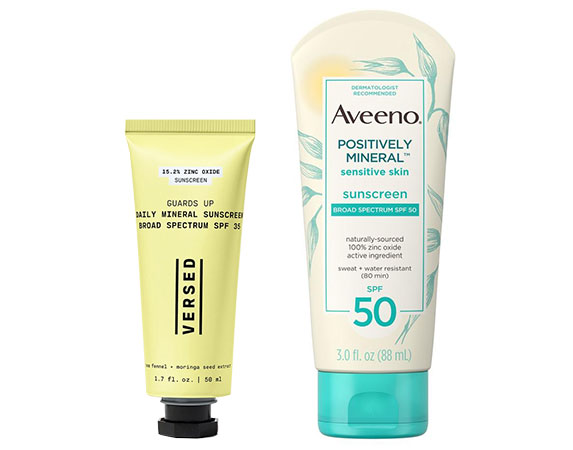
Before putting on your mask, apply a layer of zinc oxide-based SPF. Zinc oxide is both a mineral UV blocker and skin protectant that is a main ingredient in baby diaper creams. It helps form a seal over the skin to provide some level of protection from the mask itself. We’re fond of Versed Skin Guards Up Daily Mineral Sunscreen, $22, and Aveeno Positively Mineral Sensitive Sunscreen, $10. 

Treat Your Acne Head-On.

Those dealing with unforgiving, stubborn acne despite following the advice above should also take the spot-treatment approach. We recommend a product that contains benzoyl peroxide – such as Neutrogena On the Spot Acne Treatment, $9 – which helps lower levels of acne–causing bacteria to reduce inflammation of the skin. We also like Hero Cosmetics Micropoint for Blemishes, $13.  

Have more questions about maskne? Let’s chat in the comment section below! 

Blackheads vs Whiteheads?

Did you know that there are a number of different types of pimples? It can be difficult to classify exactly what kind of blemish you’re dealing with, but two of the most common forms are blackheads and whiteheads. You’re probably already familiar with them — one looks like a small, dark spot while the other tends to look more like a raised bump. 

Both blackheads and whiteheads are clogged pores, but the opening of the pore is different in each. In a blackhead, the part of the pore at the surface of the skin is stretched and open. The black color you see consists of dead skin cells, bacteria and oil that’s oxidized and stuck down in the pore. Because the top of the pore is open, the scientific term for a blackhead is an open comedone. 

A whitehead is also a clogged pore, but unlike a black head, the top of the pore is not stretched open. The surface of the pore is closed, so dermatologists call this a closed comedone.

Let us tap in together to find the break down of what makes blackheads different from whiteheads, what causes these blemishes, and of course, the best plan of attack for both. 

How to Treat Blackheads and Whiteheads

Luckily, treating blackheads and whiteheads is relatively simple.

If you have clogged pores of any kind — blackheads or whiteheads — we recommend using a cleanser that contains exfoliating and acne-fighting ingredients like salicylic acid. Start out with a gentle cleanser like the La Roche-Posay Effaclar Medicated Gel Acne Face Wash ( $14.99 ), that removes dirt, oil and makeup while also gently exfoliating to prevent pores from clogging in the first place. 

To prevent excess oil that can clog pores, it’s important not to dehydrate your skin by over cleansing (cleanse twice daily and if your skin feels tight or itchy afterwards, look for a more gentle option). Use a non-comedogenic cream like the CeraVe Daily Moisturizing Lotion ( $9.99 ).

Dr. Nazarian says that a retinol product like ProactivMD or Differin gel is a good place to start. This loosens the blackheads and makes it easier, and less dangerous to push out,” she explains. But while retinol works to decrease oil production and minimize the sebaceous glands, you should be cautious — over-using it can make skin too dry. Once or twice a week is a safe bet. Differin Adapalene Gel 0.1% Acne Treatment ( $12.99 ), contains the first OTC Rx-strength acne-fighting retinoid. Retinoids play a crucial role in the treatment of acne by regulating skin cell turnover & reducing inflammation deep in the skin to clear & prevent pimples. What makes the retinoid in Differin (Adapalene) so cool is that, unlike other topical prescription retinoids, Differin is gentler on your skin, while still effective — and you don’t have to do things like completely avoid sunlight forever!

As for picking your blackheads, proceed with caution. After a few weeks of using a treatment, the blackheads will typically pop out with gentle pressure. If they’re not budging, see your dermatologist to avoid damaging your tissue and causing scarring!

When dealing with whiteheads, retinol or salicylic acid can help clear the buildup out of pores. “For whiteheads, salicylic acid is great because it breaks up the ‘glue’ that keeps dead skin cells together, and can degrade the keratin plug in the whitehead,” Dr. Nazarian explains. 

How to Prevent Blackheads and Whiteheads 

Whether you get blackheads and whiteheads, it boils down to genetics. However, there’s a few steps you can take in your skincare routine to minimize both types of breakouts. Look for products that say they’re “non-comedogenic” because they don’t contain ingredients that clog pores. 

You also need to be consistent with your skincare routine. Retinoids and salicylic acid are great at dissolving blackheads and whiteheads, but you need to continue using them to prevent them from refilling and reforming. It typically take about four to six weeks to dissolve blackheads and whiteheads, so be patient.

You can also talk to your dermatologist about prescription options if breakouts persist. Prescribed solutions like vitamin A-based creams can prevent pores from becoming clogged as well as prevent the formation of larger acne lesions. 

And whatever you do, don’t squeeze either of them! Squeezing may seem satisfying in the moment, but can do damage in the long term.

DO YOU HAVE BLACKHEADS OR WHITEHEADS? COMMENT BELOW ON HOW YOU TAKE CARE OF IT!

SKIN POSTS YOU’LL LOVE:

MOISTURISING VS HYDRATING

Raise your hand if you use the words hydrating and moisturizing interchangeably. Yes, a lot of us do that all the time.

When it comes to the beauty industry, there are a lot of terms to be learned. And the biggest culprits we’ve noticed falling into this category are the words ‘hydrate’ and ‘moisturize’. While they both address the importance of nourishing our skin, they should not be treated as the same thing.

Which is why we’ve put together a simple guide detailing the difference between the two, to ensure that you get optimum benefits out of both.

Dry versus dehydrated skin – is there a difference?

Yes.

The term ‘dehydrated‘ is used to describe lack of water, while the term ‘dry’ loosely translates to lack of oil. Hence, dehydrated skin needs to be hydrated (as it lacks water), and dry skin needs to be moisturized (as it lacks oil).

Hydrating adds moisture to the skin

If there’s one thing that Korean skincare has taught us is that hydrating makes all the difference when it comes to healthy and glowy skin.

When skin cells are well hydrated they swell to be plump, bouncy and reflect light effectively. If water flows out of the cells they become dehydrated and can shrivel up, which leads to lackluster skin. Imagine your skin cells are mini water balloons. In their healthiest state, they are full of water, firm, bouncy, plump and reflect light.

Now imagine these mini balloons have a slow leak where the water is steadily escaping. What happens to the balloon? It loses its rounded plump shape, it is less bouncy and as the water gets low it shrivels up and becomes dull looking.

Even if we find the leak and patch it up, the skin still needs a fresh infusion of water to refill what’s been lost. In addition, it needs support to hold onto the water.

This is where skin hydrators come in. Hydration refers to the amount of water in the skin. And hydrator are products formulated with special ingredients to increase the water content of the skin.

And what are these special ingredients? Humectants. Humectants absorb moisture from the environment and deliver it down to the skin’s layers, facilitating hydration. Glycerin and honey are some great examples.

Therefore, hydration replenishes all the water that the skin has lost and adds some more for good measure.

So, up the water content of your skin by incorporating a hydrator into your daily routine and drinking enough water. A water-based daily cream like TATCHA Water Cream ( $20 ), hydrates the skin deeply while lending it a moisturized finish all through the day. Not only will doing so help your skin regain its proper moisture balance, but will also increase the powers of your moisturizer.

Moisturizing locks moisture into the skin

Hydration is a like a glass of water for your skin. It doesn’t matter how many glasses your skin drinks every day, if there’s nothing keeping this water in, it’ll evaporate, leaving your skin dry.

Enter moisturizing. Moisturizing forms a barrier on the skin that locks water in so it can’t run away anymore and works towards retaining what moisture is present on the skin at the time of application. By forming a protective seal on the skin’s surface, moisturizers are able to reduce the risk of the evaporation throughout the day.

Hence, moisturizing is non-negotiable (even if your skin is oily). For oily skin, choose a gel based moisturizer like KIEHL’S SINCE 1851 Ultra Facial Cream Mini ( $22 ) and ORIGINS GinZing™ Oil- Free Energy Boosting Gel Moisturizer ( $30 ). For dry skin, choose something that intensely hydrates like TATCHA The Dewy Skin Cream ( $68 ) and OLEHENRIKSEN C-Rush™ Vitamin C Gel Moisturizer ( $46 ). If you have combination skin, try FARMACY Daily Greens Oil-Free Gel Moisturizer with Moringa and Papaya ( $38 ), and TATA HARPER Hyaluronic Acid Gel Moisturizer ( $116 ).

What your skin needs

But you may ask if both moisturizers and hydrators provide our skin with moisture, how do we know which of the two our skin needs?

Well, the answer is both.

Dehydrated skin that is moisturized will still look dull and feel uncomfortably tight, without receiving hydration. And dry skin that is hydrated but not moisturized will still flake and have a rough texture. So, you need to stock up on both hydrators and moisturizers, or products that offer a combination of them together.

Hydrators and moisturizers are not just synonyms written on products as part of a clever marketing scheme, to make you buy more than you need. They really do have a purpose of their own and together, keep the skin looking plump and happy.

For best results, hydrators and moisturizers should be applied morning (before sunscreen) and night. You can apply moisturizing lotions or creams after applying your hydrator so it doesn’t peel.

Wait… here are 3 ways to hydrate your skin

DRINK PLENTY OF WATER. If you drink caffeine or alcohol drink that much more water. I find that I need an app to help me stay on track with my water consumption. Tracking my consumption and getting little reminders throughout the day has made a huge difference in the amount of water I drink. There are many water tracker apps that are free. For the ladies: Flo is a women’s health app, that supports women at each stage of their reproductive cycle. It tracks menstruation, cycle prediction, preparation for conception, pregnancy, early motherhood and menopause. And, you know what else it tracks? Water intake! Download Flo for free to start tracking.

MIST YOUR SKIN. Carry a small bottle of hydrosol in your bag or backpack to mist your face throughout the day. Look for with a hydrosol mist of aloe with floral or herbal infusions for the best overall skin pick me up. Try e.l.f. Soothing Aloe Facial Mist ( $8 ) which moisturizes and refreshes skin with invigorating scent. Perfect to start or end your day with, or even as a mid-day refresher. Like a cool glass of water for parched skin After Sun Soothing Aloe Mist ($20) provides breathable, lightweight hydration that skin will instantly drink up and MARIO BADESCU Facial Spray with Aloe, Herbs and Rosewater ( $12 ) is another great choice! This floral face mist features complexion-loving rose and gardenia extracts, skin-softening bladderwrack (a type of mineral-rich seaweed) extract, and clarifying thyme extract to boost the complexion. Mist whenever, wherever for radiant and re-energized skin.

Note: Avoid any mists that contain alcohol. This can dry the skin and defeat the purpose of this hydration boost.] If you feel self-conscious misting yourself in public, you can always do it in the bathroom as a final refresher after you wash your hands.

APPLY SERUMS DAILY. Especially those that contain hyaluronic acid. I especially love to wear this in the morning to keep my skin supported throughout the day when it needs the most help staying hydrated. I rarely ever skip this step.

If you are in a hurry and need to cut down on your routine, find another way to shave off time in your morning prep and keep this step as a non-negotiable. Your skin will thank you today and years from now.

Choices of Serums: THE ORDINARY Hyaluronic Acid 2% + B5 ( $6.80 ), Neutrogena Hydro Boost Hydrating Serum ( $24.99 ), Peter Thomas Roth Water Drench Hyaluronic Cloud Serum ( $65 ), DRUNK ELEPHANT B-Hydra™ Intensive Hydration Serum ( $48 ), PAULA’S CHOICE Resist Hyaluronic Acid Booster Concentrated Serum ( $39 ), kiehl’s Powerful-Strength Vitamin C Serum ( $68 ), Fresh Rose Deep Hydration Face Serum ( $48 ), Juice Beauty Stem Cellular Booster Serum ( $80 ), Estée Lauder Advanced Night Repair Synchronized Recovery Complex II ( $103 ), CeraVe Hydrating Hyaluronic Acid Face Serum ( $18.99) and L’Oréal Paris Revitalift Derm Intensives Hyaluronic Acid Serum ( $23.99 ).

Primp Tip: While you’re shopping, look for serums that have a one percent concentration of hyaluronic acid, as higher levels can cause skin irritation. And choose serums that have natural hyaluronic acid, plus vitamin C, without irritating ingredients, such as alcohol, sulphates, and parabens.

Have any other tips and tricks? I look forward to hearing how you get your daily hydration and moisture fix!