If it wasn’t enough that half of our lovely faces must remain covered by masks these days, now we are starting to suffer breakouts as a result. It doesn’t help that we are entering a heat wave and the height of summer is around the corner, just in time to bundle up an area we typically let breathe, literally and figuratively, 24/7.
Higher temps and covering up equals sweat, and it’s not the only culprit. Masks trap moisture from our breath, oil from our skin, and dirt and makeup underneath as well, for a nice little brew of bacteria bubbling over like a witch’s cauldron ready to make trouble. Friction and pressure amplify the issue by rubbing the irritants, particles, and trapped moisture, essentially grinding them into your pores.
Also, since most of us don’t have access to professional-grade masks and are using homemade masks or thin fashion masks, we are constantly adjusting them, causing us to touch them and our faces, defeating the very purpose of the masks in the first place. Truly a face-palm moment. But please don’t touch your palm to your face.
So how do we prevent, treat, or minimize the issue? If the symptoms of mask-wearing are taking a big toll on your skin, you’ll want to heed all of these suggestions carefully.
OH WAIT…. Before diving into the fix, let’s first talk about why face masks are giving people so much trouble. Regarding acne, there are two primary issues to consider.
Why Face Masks Cause Breakouts and Chafing
First, direct friction promotes inflammation in the skin and breakouts, known as ‘acne mechanica.’ Second, face masks trap humidity [from simply breathing], oil, and sweat on the skin and allow for overgrowth of microorganisms, which collectively block the pores and lead to acne flares,” he explains. “As for chafing, this is essentially skin barrier disruption and inflammation from chronic rubbing of an external surface against the skin. For face mask to be effective, they need to form a tight seal on the skin, which leads to chafing.”
Anyone can develop acne, inflammation, and chafing from wearing masks – even those who usually have super clear skin. That said, those who are more prone to the aforementioned issues, such as people with sensitive skin, thin skin, chronic skin ailments, and acne-prone skin, are more likely to experience trouble.
Have a week long supply of masks.
If you go out a lot, or at least daily (and as businesses begin to re-open, we will all begin to reacclimate with the outside world again and, yes, leave the house more), you should have at the very least a mask for each day. In fact, it’s been suggested that we think of our masks like underwear. You wouldn’t wear a pair of panties again without washing them, would you? And those don’t get exposed to the outside world or our constant fondling. Unless they do. Do you boo.
Avoid makeup.
This one may be hard for some to stick with 100% of the time, but it’s something to seriously consider. When half of our face remains covered anyway, there is no point in laying on a thick layer of concealer or foundation only to have it clog the pores that are trapped with excess sweat, moisture, oil, and daily grime. Keep your makeup minimal around the masked area, and opt for some mascara. It’s really our eyes that do the talking with this new-normal look, anyway.
YOU MAY ALSO LIKE…
Opt for natural fibers.
There are lots of cute masks out there, but polyester, satin, and even rayon aren’t doing your skin any big favors unless it’s a high-quality, thick rayon. Opt for silk or soft cotton materials so that your skin can breathe and you have some airflow. Polyester essentially works like plastic wrap to trap moisture until you take it off, so natural and breathable is absolutely the way to go.
Double cleanse, and then cleanse again.
If double-cleansing has always come off a bit extreme to you, now might be the time to change your mind, or at least make an exception for the days you wear a mask. Massaging thoroughly with a cleansing oil or balm pulls impurities from your pores without stripping your skin of all moisture. Follow up with another thorough cleanse with either your first cleanser or a gentle, non-drying gel to completely remove any remaining traces of makeup or dirt that have been pushed into your pores. And, if you typically just rinse in the morning, up your routine to cleansing then, too.
Up your exfoliation game.
If you typically exfoliate once a week, it might be OK to exfoliate a little more often, especially around the lower half of your face. Since it’s subject to extra congestion right now, lighten the load with a gentle peeling pad twice a week.
Use a clay mask at least once a week around the area, and spot treat at night. If you’re in and out of a mask during the day, you might even want to keep gentle toner pads on hand to give your skin an extra cleansing swipe between washings. Make sure to moisturize thoroughly at night and use a heavier cream to avoid drying.
Apply a Zinc-Based SPF.
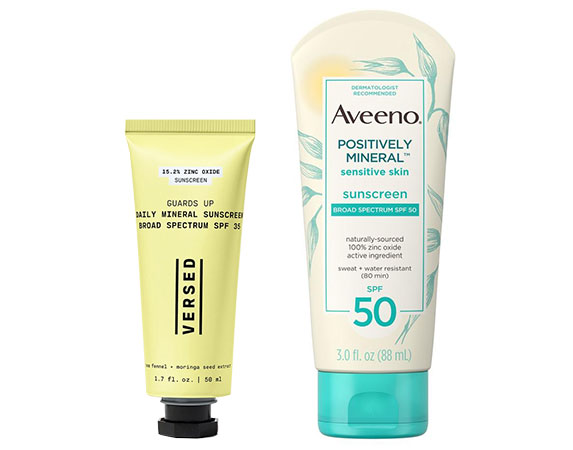
Before putting on your mask, apply a layer of zinc oxide-based SPF. Zinc oxide is both a mineral UV blocker and skin protectant that is a main ingredient in baby diaper creams. It helps form a seal over the skin to provide some level of protection from the mask itself. We’re fond of Versed Skin Guards Up Daily Mineral Sunscreen, $22, and Aveeno Positively Mineral Sensitive Sunscreen, $10.
Treat Your Acne Head-On.
Those dealing with unforgiving, stubborn acne despite following the advice above should also take the spot-treatment approach. We recommend a product that contains benzoyl peroxide – such as Neutrogena On the Spot Acne Treatment, $9 – which helps lower levels of acne–causing bacteria to reduce inflammation of the skin. We also like Hero Cosmetics Micropoint for Blemishes, $13.
Have more questions about maskne? Let’s chat in the comment section below!
















 beautyleebar.org