Just like beauty and life hacks, yes, there’s an app for that. From front-door service to neighborhood alerts, we have the knowledge and tools at our fingertips to ease our daily routines with just one swipe. The apps we use can a) drain our bank account (Postmates, we’re looking at you) or b) today’s focus, make our lives way easier. Below, we’re highlighting the apps we use nonstop to make adulting a little less stressful. Scroll on for a peek at what’s on the BeautyLeeBar team’s phones.
Advertisements
Mint: Budgeting made simple. Mint syncs with your bank account to track and file your spending activity through digestible graphs. Dare we say it makes figuring out your finances fun?
Citizen: Receive live safety notifications about what’s going on in your neighborhood through the Citizen’s emergency response system. Consider this the digital version of being a nosy neighbor (all in the name of safety, of course).
Venmo: What was life even like before the convenience of Venmo? Send and receive money with three simple clicks.
Flo: Never worry about when your cycle starts/ends again. Flo makes it easy to track menstruation and menopause through its user-friendly calendar. It also offers quizzes to educate about and monitor women’s health. The app Clue is another great option for ovulation tracking.
Happy, Not Perfect: Prioritize self-care with this guided meditation app. Use your smartphone to reduce stress and anxiety. It’s a great way to start or end your day.
EWG/Skin Deep: A free app that gives you access to a database that ranks ingredients in skincare and beauty products so you can avoid dangerous chemicals and toxins.
Planta:Planta keeps track of when you watered your plants and reminds you when to water based on the type of plant. It also gives you tips on how to care for your greenery. You can even lookup plants by uploading a photo. And if your plant dies, they create a plant graveyard for you, lol.
Canva: The graphic design editing app has templates for invites, resumes, business cards—anything you can think of. Step up your next hosting duties with an easy-to-create invitation.
Hopper: If you’re not already using Hopper to watch for airline tickets, let today be the day you download it. After you’ve selected a destination and date range, it alerts you when flight prices jump and are at their lowest. Book your next trip the smart and savvy way.
Co-Star: If you’re into astrology, this is a gem. It sends push notifications and one-liners for the day.
What apps do you use to make your life less chaotic? We want to know in the comments.
I say it all the time: “This is giving me anxiety.” What I often mean, however, is something slightly different: “This is stressing me out.” As someone who has actually been diagnosed with chronic anxiety, I should probably know better than to conflate the two. And yet, I know just in conversing with my friends and co-workers on a daily basis that among my generation, using the words “stress” and “anxiety” interchangeably has become the norm.
While it might seem like a matter of semantics, in reality, it’s a problematic habit. For one thing, using “anxiety” as a replacement term for “stress” diminishes the very real symptoms that those who suffer from anxiety have to negotiate on a daily basis. For another, it might prevent someone who has undiagnosed anxiety from seeking the correct kind of treatment because they can’t differentiate those symptoms from that of regular, day-to-day stress.
Advertisements
Psychology Today
“Both stress and anxiety can bedevil anyone’s psychological and physical health,” says Heather Silvestri, PhD, a New York City–based psychologist. “However, while often related, they are distinct phenomena.” Below, she helps us clear up the difference between the two—and how to manage both.
Advertisements
WHAT’S THE DIFFERENCE BETWEEN ANXIETY AND STRESS?
Let’s start with stress, which typically refers to a situational experience. “It’s a physiological and psychological response to a stressor, which is often obvious and explicitly identified,” says Silvestri. A crazy day at work, a traffic jam, a looming presentation—these can all be sources of stress and can all cause your cortisol levels (also known as the “stress hormone”) to spike. You probably know the symptoms of stress pretty well: anything from sweaty palms to a racing heart to butterflies in your stomach.
But here’s the key thing about stress: When the source of your stress is resolved, those symptoms tend to go away. That’s not the case with anxiety.
Advertisements
“With anxiety, the internal disquiet stubbornly persists, without heeding the actual conditions,” explains Silvestri. In other words, those who suffer from generalized anxiety experience those same stress-like symptoms on a chronic basis, no matter the external circumstances. That’s why anxiety often feels inexplicable or “out of proportion” to what’s going on in our lives.
“Stress responses are hard-wired into our nervous system because we need them to survive,” says Silvestri. “Anxiety can be seen as the lingering upheaval that doesn’t necessarily quiet down when the situation improves. In this way, anxiety is the horse that ran away from the stable.”
Advertisements
WHY ARE THEY USED SO INTERCHANGEABLY?
Silvestri suspects a few factors, not the least of which is our current political landscape and the breakneck pace of the digital age—both valid sources of stress and fear. It’s our new norm, which certainly impacts the way we talk about it. “Our modern lexicon has absorbed this idea and it now trades in terms connoting fear, anxiety, and neurotic apprehension,” she says. “You might even go so far as to argue that there has been a glorification of internal unrest insofar as proclaiming, ‘I’m so stressed out!’ or ‘I’m freaking out!’ have a certain cache, as if such frenetic nervous system activity means someone is doing something important or notable.”
This, she says, has led to misuse of both terms, as well as a lapse in distinction between the two. “This is lamentable because stress and anxiety can be sources of substantial suffering, and they are best treated with nuance and precision about what they are and how they operate,” she adds. “Nowadays we also run the risk that someone may be delayed or miss out entirely on getting needed help because they mistake their clinically treatable anxiety disorder for a more normalized and watered-down idea of being ‘stressed out.'”
CAN ONE LEAD TO THE OTHER?
“Chronic stress can absolutely give way to anxiety,” says Silvestri. “We need rebound time to recover. When we experience chronic stress, we lose our ability to recover, and elevated physiological arousal becomes the new normal.” If you’re perpetually stressed, turning off that “switch” and finding relief becomes more difficult.
Advertisements
That’s why with anxiety, we tend to scan for things that might be worrying us when there aren’t any obvious stressors at a given moment—kind of like a self-fulfilling prophecy. But the good news is that there are many ways to manage both chronic stress and generalized anxiety.
HOW CAN I NIP STRESS IN THE BUD?
Honestly, a lot of it is reflecting and figuring out what works for you. If you know that nothing clears your head like a sweaty jog, make time for that. If you notice that stress feels much more manageable when you get a good night’s sleep (as tends to be the case for most of us), be sure to get plenty of shut-eye when you know you’re about to be put in a stressful situation. Being both self-aware and proactive is key.
HOW DO I KNOW IF I HAVE ANXIETY, AND WHAT CAN I DO ABOUT IT?
“If someone continues to feel preoccupied after a stressor has resolved or if the course of the worry doesn’t really track external events, this can be a sign that something more significant than generic stress is going on,” says Silvestri. This recognition is the first step. “By acknowledging your anxiety, you can be more mindful of triggers and more purposeful about your choices,” she says.
Also, know that it’ll be much easier and more efficient to treat your anxiety if you can approach it with curiosity instead of judgment. Then, you can start to play around with different rituals to manage it: Silvestri suggests starting with common aids like yoga, mindfulness, and journaling. “Really, any activity of self-care that lends a sense of agency to your lifestyle,” she says, since anxiety can rob us of our sense of control.
Advertisements
But if those initial steps aren’t offering any relief, then it’s probably time to seek help elsewhere. “For the first line treatment, I would recommend either cognitive behavioral or insight-oriented psychotherapy, depending on how interested someone is in delving into historical causes or sticking with a focus on symptoms, especially the triad of thoughts, feelings, behavior,” she says. You and your doctor or therapist can then discuss the best treatment plan for you.
Either way, know that you have options—and knowing the difference between stress and anxiety is a solid first step to feeling better.
Aromatherapy can help. There are some essential oils that have a calming effect, like lavender and bergamot. A diffuser is an easy way to use essential oils.
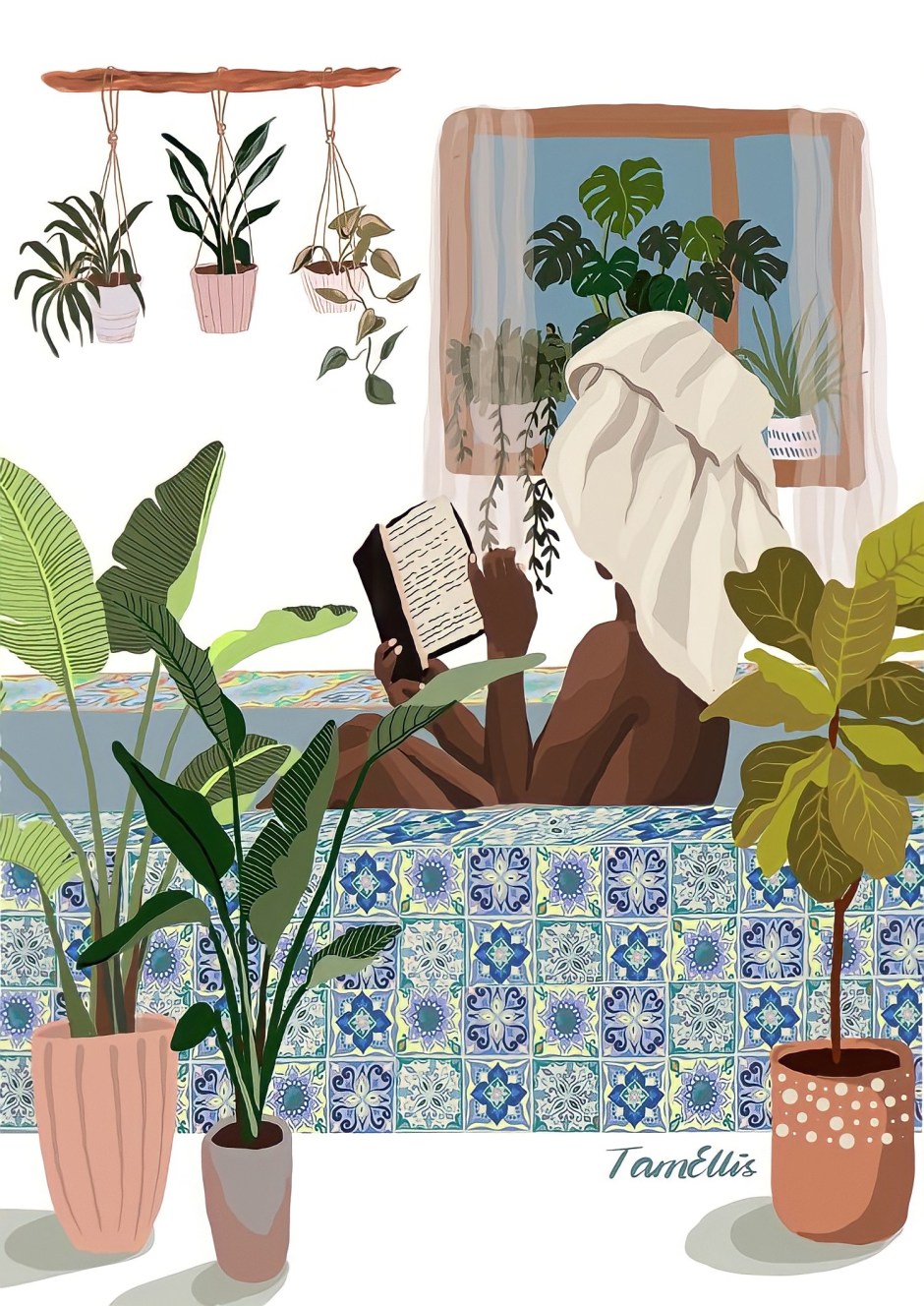
A bath is probably one of the best forms of self-care. This CBD soak also contains Epsom salt, pink Himalayan salt, calendula petals, and essential oils.
These supplements from Hum are formulated to help you stay calm and focused thanks to the adaptogenic plant, rhodiola. Take one capsule with food when you need it.
Add a teaspoon of this powder to your water before you go to bed, or whenever you need to de-stress. It contains magnesium and L-theanine to calm, improve move, and promote healthy digestion.
Advertisements
This article is provided for informational purposes only and is not intended to be used in the place of advice of your physician or other medical professionals. You should always consult with your doctor or healthcare provider first with any health-related questions.
It’s easy to say something triggers us. “Triggered” is essentially a hashtag when it comes to our generation of colloquialisms these days, and it’s true, many things are triggering, especially with the widespread dispersal of information via social media. But not everyone is triggered by the same things. We are all shaped by our emotional responses and past traumas.
Advertisements
Erica Spiegelman is an author, therapist, and addiction and wellness specialist who is familiar with how triggers work, including her own. She shared with us that learning to identify your triggers is an important skill, and even a tool to manage your emotional well-being. Understanding what can set us off into an unproductive spiral can help to eliminate what doesn’t serve us or allow us to be our best.
The hardest part is maintaining awareness when we find ourselves amid an emotional episode. These emotional responses can be incredibly physical, such as shortness of breath, panic attacks, nausea or indigestion, sweating, and more. Spiegelman tells us to “try and notice when you are triggered by paying attention to when you feel flooding of emotion and identify where you feel it in your body. For example, when someone triggers me, I usually feel it in my throat area.”
Spiegelman’s reaction is a lump in her throat, a typical but sometimes debilitating emotional response. “When most people feel triggered, they feel it in their stomach, throat, sweaty palms, or racing heart, or they may have trouble breathing. Identifying where in your body helps you recognize that you are triggered, and we then can begin to deal with it.”
Advertisements
It’s a practice of mindfulness. Spiegelman encourages us to pause at the first feeling of sadness or anger and take five deep breaths as best we can, in through our nose, and out of our mouth. If we can, we should walk away from what we were doing, if only for a moment. “That way, we have time to gather our thoughts and decide how to proceed with this new information.” We have to thoughtfully communicate our way out of the response, even if that communication is within ourselves.
It’s not possible to avoid every situation that may emotionally trigger us, and that’s not the goal. We want to be aware of our triggers so that we can be emotionally sound in the face of real-life issues in the future, and to work through the issues, learn, and heal. Recognition is important to take actionable steps and develop our intuition. If we only learn to avoid triggers instead of acknowledging them, we will end up avoiding the real issues that trigger us, which becomes unhealthy suppression.
The goal is to protect our mental health, garner strength, and navigate through the muck of life with minimal collateral damage. We must protect our energy at all costs to be the best, most powerful, and productive version of ourselves, so we can serve our joy and others.
YOU MAY ALSO LIKE…
Advertisements
The content provided in this article is provided for information purposes only and is not a substitute for professional advice and consultation, including professional medical advice and consultation; it is provided with the understanding that BeautyLeeBar, LLC is not engaged in the provision or rendering of medical advice or services. The opinions and content included in the article are the views of the interviewee only, and BeautyLeeBar does not endorse or recommend any such content or information, or any product or service mentioned in the article. You understand and agree that BeautyLeeBar shall not be liable for any claim, loss, or damage arising out of the use of, or reliance upon any content or information in the article.
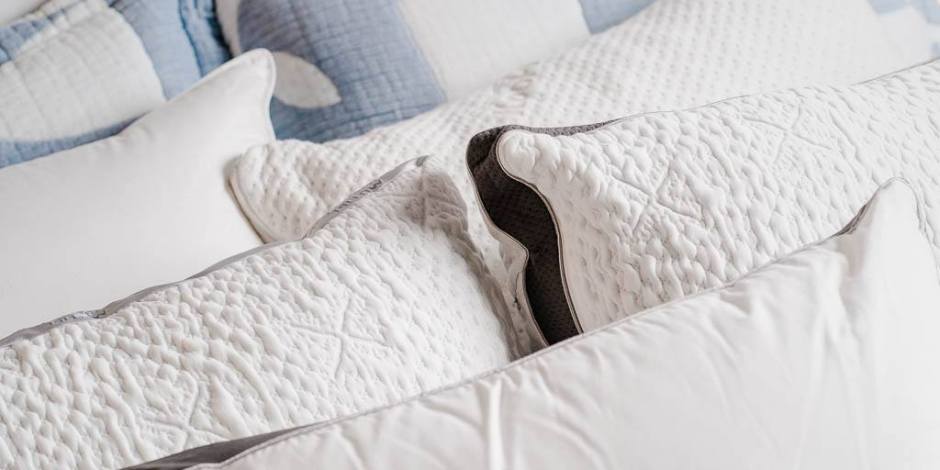
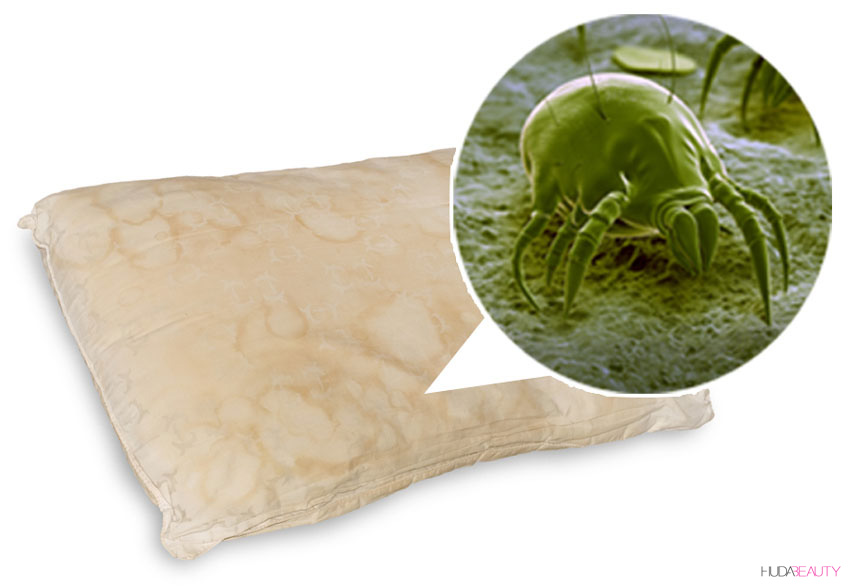
Here’s a gross fact: your body sheds around 600,000 particles of skin every hour (give or take) and over the course of your life you’ll lose around half your weight in skin cells. What does this have to do with your pillow? Well, every night you shed millions of skin particles onto your pillow, along with sweat, dead hair, saliva, and oil, which all get absorbed into your pillow. Here’s where it gets really gross… Some studies have estimated that up to a third of the weight of old pillows are made up of dead skin, dust and dust mites.
What does that mean? You really need to be washing your pillow as well as your pillowcase a lot more regularly. The longer your pillow goes unwashed (every few months is recommended) the more dead skin and dust build-up there is to attract more dust mites to feast on your dead skin.
Besides all this being super nausea-inducing, using the same pillow for years without washing (guilty) is especially bad for allergy sufferers, but it also essentially ‘dirties’ your outer pillowcase more quickly, and that’s not good for your skin. So even if you’re washing your pillowcase every week (which we recommend), that pillowcase is still coming into contact with your nasty old pillow and all the lingering dust mites that go along with it.
How often do you wash your pillows?
So, what should you do? If you’ve had a pillow for more than three years and never washed it, start by washing it in the machine (if it’s feather you can have it dry cleaned) and then perhaps consider buying yourself a new pillow. In general, try to wash your pillows every three months and consider buying a new one every three years. You can also leave pillows out on a hot sunny day when you change your sheets, as pillows build up moisture, which becomes the perfect breeding ground for bacteria and bugs. After a day in the sun, you’ll notice your pillows will have ‘fluffed up’ considerably thanks to moisture evaporating in the sun.
Moral of the story? Unless you want to be sleeping on a pillow packed with thousands of dust mites, dead skin and sweat, we suggest you get washing those pillows asap… We’re just about to buy ourselves a new set!







 beautyleebar.org