Odds & Ends: The Difference Between Kosher Salt, Table Salt, Sea Salt, and More

I’ve always considered having options a good thing, especially in the kitchen. There are so many unique flavors to choose from, which makes cooking even more fun in my book. There are certain ingredients that can both overpower a dish or significantly amplify it. For me, salt is that ingredient. A pinch of salt can be the difference between perfectly savory or feeling like your crunching on a salt lick. The amount of salt you put into a dish isn’t the only things that can pose a potential problem though—with so many salt options on the market, how’s a girl to choose which one to use in a recipe?

Since I recently found myself asking the same question, I decided to do a little research. To my surprise, I discovered a handful of different salts suitable for cooking, brining and pickling. Some are used as flavor enhancers while other are used as garnishes or essential ingredients. If you’ve found yourself wondering which salt is best for your favorite dishes, I’ve done the dirty work for you. Below you’ll find six of the most common salts, what their composition is made of, and how you should be using them in the kitchen. Keep scrolling to get the lowdown on salt 101…
Kosher Salt

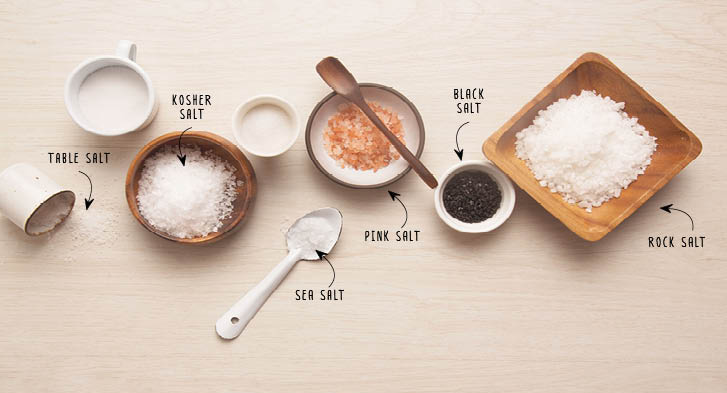
Let’s start with kosher salt. This salt is originally known for seasoning meat and has a flaky, coarse structure that differentiates itself from table salt. Kosher salt is less likely to contain additives like iodine and anti-caking agents used in table salt to keep it from clumping. This type of salt is ideal for using in cooking—it dissolves quickly and is good to use before, during and after cooking.

Table Salt

Probably the most well-known of the salts, table salt is highly refined, heavily ground and is almost pure sodium chloride. Most of the impurities and trace minerals in table salt are removed and iodine is almost always added into it. Like I mentioned above, table salt usually has anti-caking agents in it so that it doesn’t get all clumpy in your salt shaker. While you can still add this kind of salt into your favorite dishes, table salt is best used for last minute seasoning.

Sea Salt

Sea salt gets its name because it is made by evaporating seawater. Like table salt, sea salt is mostly composed of sodium chloride with some amount of trace minerals like potassium, iron and zinc. Sea salt is coarser than table salt and the size affects how quickly it will dissolve. To add bursts of flavor to your cooking, sprinkle a little sea salt to add the finishing touch to meals.

Himalayan Pink Salt

This next salt may sound a little bit familiar to my BeautyLeeBar.com readers. Himalayan pink salt contains 84 trace minerals and elements, making it more nutritious for your body that most other salts. It often contains small amounts of calcium, iron, potassium and magnesium just to name a few. Himalayan salt contains slightly lower amounts of sodium that table salt too, making it more appealing to consume. Fun fact: the iron oxide found in Himalayan salt gives it its pink color. Cook with Himalayan pink salt or sip some water infused with it after your next workout.

Fleur De Sel

This salt is one of my favorites and one that I became very familiar with while working on some new receipes. Fleur de sel is more delicate than other salts and looks like little snowflakes. This salt is not meant for seasoning a dish while cooking since it will melt and lose its soft, powdery shape. Because fleur de sel is the most complex in flavor of the different salts, use this one lightly. Sprinkle fleur de sel on food right before it is consumed since it is the saltier of salts.

Pickling Salt

Last but not least we have pickling salt. The name itself gives away what it is used for, but pickling salt is also great for brining, canning and preserving as well. Pickling salt is pure, granulated salt and does not contain anti-caking ingredients or iodine like table salt does.

After reading this, you’re now a guaranteed salt pro. Here’s to improving your cooking skills one grain of salt at a time.

Which one of these salts do you use most often?

Let me know your thoughts in the comments!

XO Lee

Odds & Ends: 5 Amazing Uses for Coconut Oil

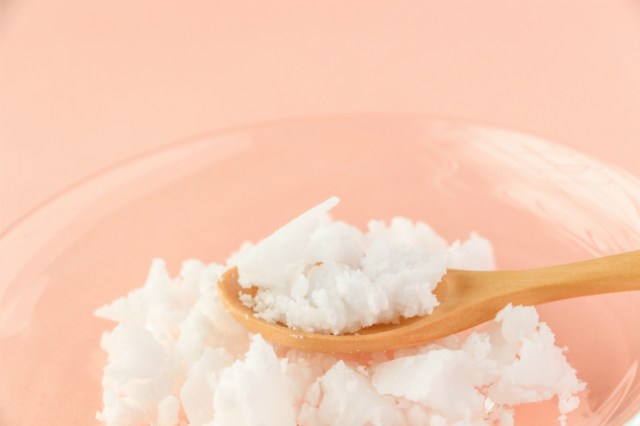
Years ago, if someone were to tell me that there was one single product that solved dozens of health and beauty woes, I most likely wouldn’t have believed them. One product that you can use to cook, moisturize your hair, remove your makeup, and hydrate your skin? Not possible, I would have thought. However, this little miracle does exist. And, unlike much fancy beauty and cooking products out there, it is free of chemicals and 100 percent natural. This wonder is none other than coconut oil.

I use coconut oil every day on my skin, my hair, and even in the kitchen. In fact, most of the time when a friend comes to me asking for a quick fix for a beauty or skin problem, my answer is “just put some coconut oil on it.” Now that you know a little bit about my obsession with coconut oil, today I’m going to share five ways you can incorporate it into your own lifestyle…

1. Face and Body Moisturizer
If you rub a little bit of coconut oil between your hands, you will immediately notice how incredibly moisturizing it feels on your skin. As a face and body moisturizer, coconut oil is much more hydrating than average store-bought lotions because the oil penetrates deep layers of the skin and actually helps to strengthen underlying tissues (
Huffington Post). It will also help remove dead skin cells, removing any rough or flaky texture from your skin’s surface and giving you a full body glow. You can use coconut oil as a moisturizer for your entire face, but I like to put it under my eyes and on my lips before bedtime. For my body, I mix equal parts coconut oil and body lotion together to create an ultra-hydrating cream, and I apply it right when I get out of the shower. You can also add essential oils like lavender or vanilla to scent your oil, but many people love the natural, tropical scent as it is. The best part about this oil is that it will absorb into your skin without feeling oily or greasy.

2. Hair Mask
Just as coconut oil works wonder for your skin, it will also give your hair a silky texture and tons of shine. I use coconut oil as a hair mask at night after I’ve washed my hair. Simply heat up about 3 to 5 tablespoons of coconut oil in the microwave, so that it’s a warm liquid. Then, after it has cooled, apply it to your hair as you would any hair mask. Put on a plastic shower cap or wrap an old T-shirt around your head, and leave the oil in while you sleep. When you wake up, wash your hair and discover your best hair day yet. You can thank me later.
Note: Unlike store-bought hair masks, coconut oil is all natural and great for your skin. So, if a little bit happens to rub off onto your pillow while you’re sleeping, you don’t have to worry about dealing with clogged pores or a breakout the next day.

3. Makeup Remover
One of my favorite uses for coconut oil that I discovered all on my own is its gentle power to remove makeup. I was applying a bit under my eyes one night before bed, and I noticed that it was easily removing some extra mascara that hadn’t washed off with my face wash. Now, before I wash my face, I use my finger to gently rub downward on my eyes and eyelashes to remove my eye makeup from the day. Tip: Leaving a little oil on the base of your eyelashes can actually help them grow a bit, so it’s ok if you don’t rinse it all completely off afterward.

4. Cooking Oil
Coconut oil is also one of the healthiest oils to use when cooking. Our favorite nutritionist
Shira Lenchewski, RD., explains that unlike animal fats, which are made up of long-chain triglycerides (LCT), coconut oil is made up of medium chain triglycerides (MCT). MCTs are metabolized more rapidly in the body than LCTs, so there’s increased fat burning potential. Many healthy oils (like olive and flax) break down into harmful compounds when heated to their “smoke-point.” But coconut oil remains stable at higher temperatures, so it’s a great option for stir-frying and pan-searing. For cooking, Shira recommends using unrefined coconut oil, also called raw or virgin.

5. Baking Ingredient
Coconut oil is a great ingredient to have in the pantry if you love baking. Shira says that because coconut oil is a saturated fat, it’s a great substitute for butter in baked goods. Saturated fats are the typical fat of choice in baking, due to their favorable effects on texture. And while saturated fats don’t have the same beneficial effect on good cholesterol as mono- and polyunsaturated oils, they do play a role in various brain and body functions, explains Shira.

Tip: Always buy unrefined, extra virgin coconut oil, since it goes through the least process and is closest to its natural state. For cooking, make sure your coconut oil indicates that it can stand high-heat, not just medium heat.

I also take a coconut oil supplement with my daily vitamins to make my hair shiny and my skin blemish-free. And I’ve been using coconut oil to experiment with oil pulling. I’ve been trying it for the past two weeks, so I’ll be sharing my results here on BeautyLeeBar.com in the coming weeks…stay tuned!

Do you have one favorite multi-purpose product you swear by?
Tell me about it in the comments below.

Xx
Team Hello Beauties