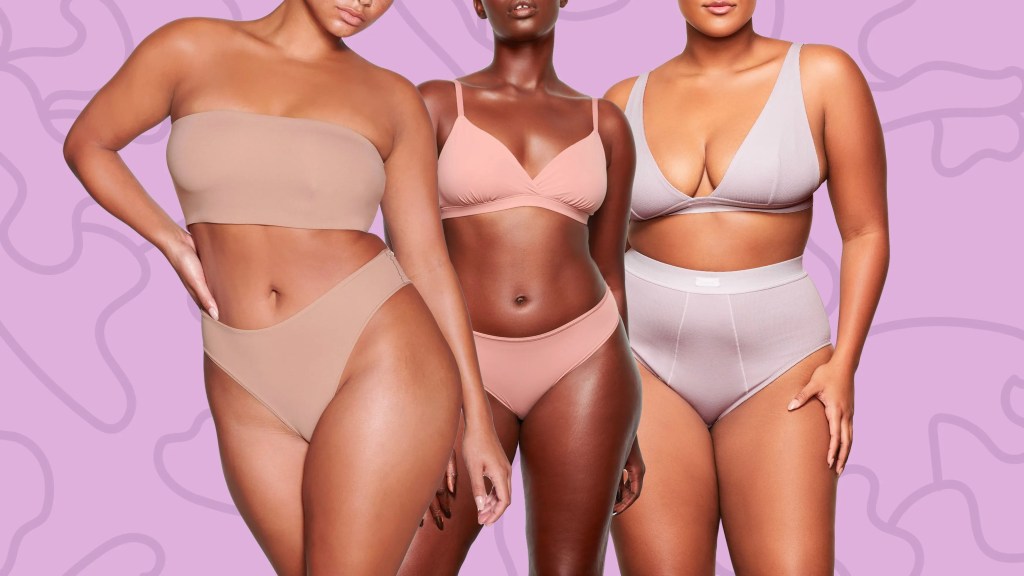
Skims is a brand that needs no introduction (especially if you’re on TikTok), but for anyone who isn’t familiar, it’s Kim Kardashian’s truly revolutionary underwear, loungewear, and shapewear brand. We feel confident when we say that anyone browsing all the offerings from Skims is sure to find at least one piece of clothing that fits them better than anything they’ve worn before: that’s how versatile the brand is.
However, because Skims has so many stylish and unique pieces on offer, including dozens of intimates that you’ll want to have as staples in your wardrobe, you might not know where to begin. So we’ve selected our favorite Skims pieces to jumpstart your journey to wearing more comfortable and flattering clothing.
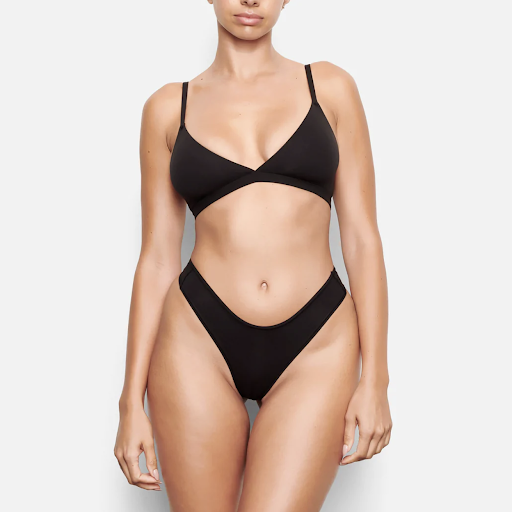
If you love the comfort of a bralette but haven’t had luck finding one that actually provides support, the Skims Fits Everybody Triangle Bralette is exactly what you need. It’s made of two-ply supportive, stretchy fabric that feels creamy on the skin and won’t ever be tight enough to leave a mark. The straps are adjustable, and it features triangle cups without any underwire, making it perfect for everyday wear. This is a great bra for clingy cotton t-shirts that are often tricky to wear with other bras, or for when you’re lounging at home.
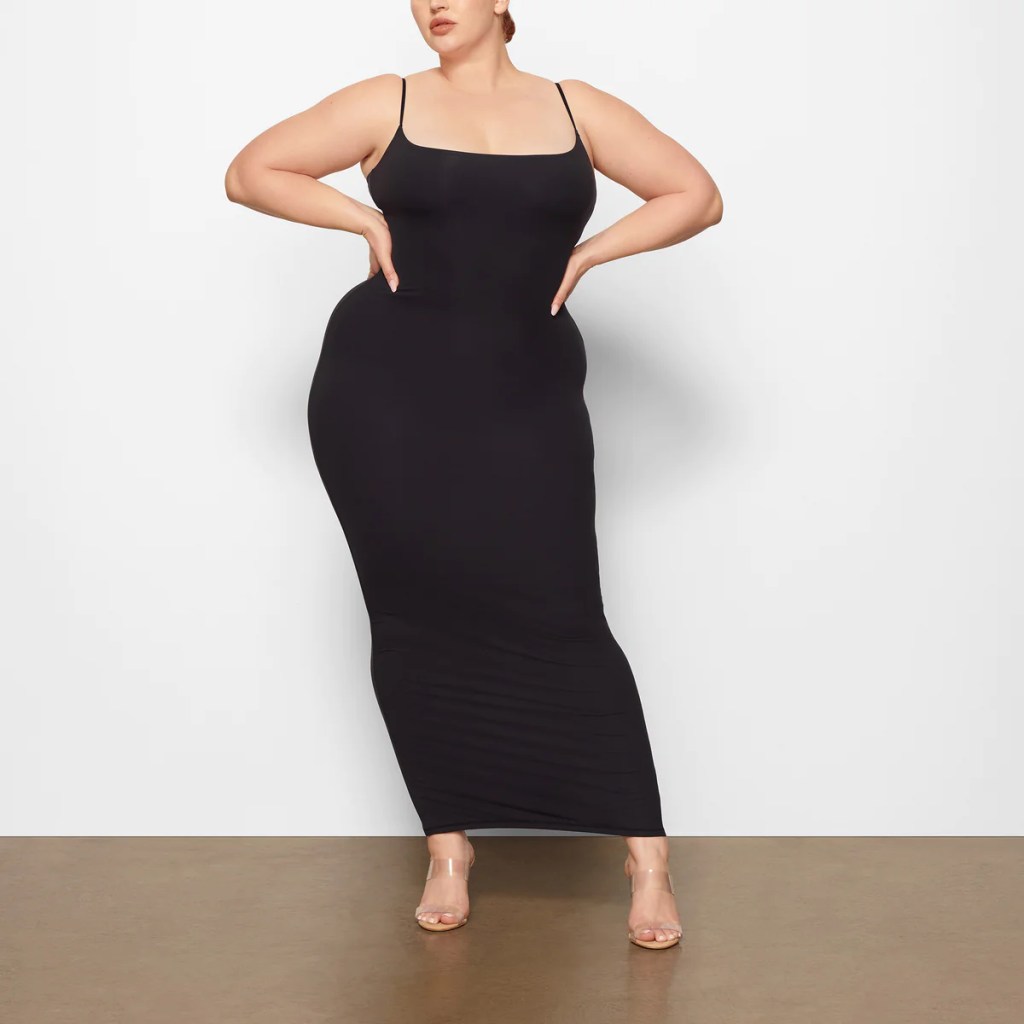
This is the dress you’ve probably seen all over Instagram and for good reason. Its simple, elegant silhouette sits snugly on the body and it’s the perfect accessory for your favorite statement necklace or pair of earrings. It’s one of those dresses you can easily wear all day and night while maintaining comfort. Because of its very stretchy fabric, it helps shape your body and it provides enough support that you won’t need to wear it with a bra.
How many times have you bought a bra online and had to return it for a different size? Almost every time, am I right? Though the Skims size guide for bras is one of the most comprehensive I’ve ever seen, you might still miss the mark while purchasing your own Fits Everybody Push-up Demi Bra. However, there’s no need to despair. This bra’s 360 stretch fabric makes it fit any in-between sizes and even though it has push-up foam pads, they won’t wildly distort your shape like other padded bras.
Out of all the Skims’ sculpting bodysuits, I love the High Neck silhouette the most because of how great it looks with a pair of jeans or a skirt. It has a thong back so that it remains invisible under other clothing and like all other Skims pieces, molds itself to your shape while compressing you at the same time.
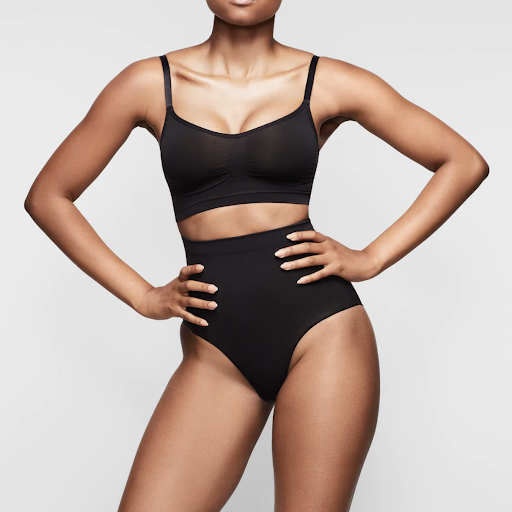
This is truly the best thing to own if your wardrobe consists mostly of form-fitting dresses. The Sculpting Mid Waist Brief won’t show under your tightest of clothing and an added benefit is that it provides core support while also shaping and lifting your derrière. Like many Skims items, each sizing option spans two sizes at a time, making it easy to get just the right fit for any body type.
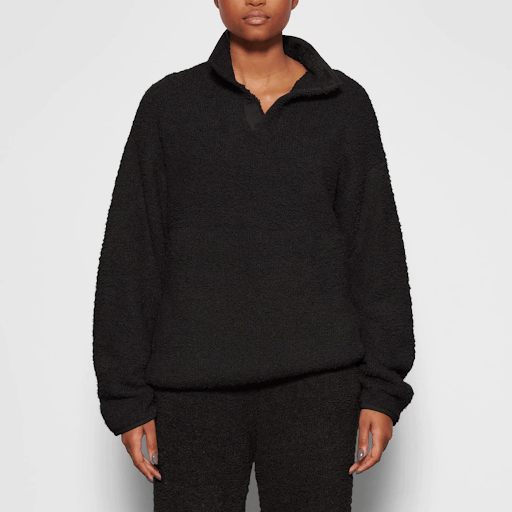
This is the teddy bear pullover of your dreams. It’s a little bit oversized; very, very plush; and the perfect thing to wear while lounging around at home. For optimized coziness, wear it on a rainy night when you decided to stay in (while all your friends are texting about being in the rain without umbrellas), and match it with theCozy Knit Short or the Cozy Knit Pant.
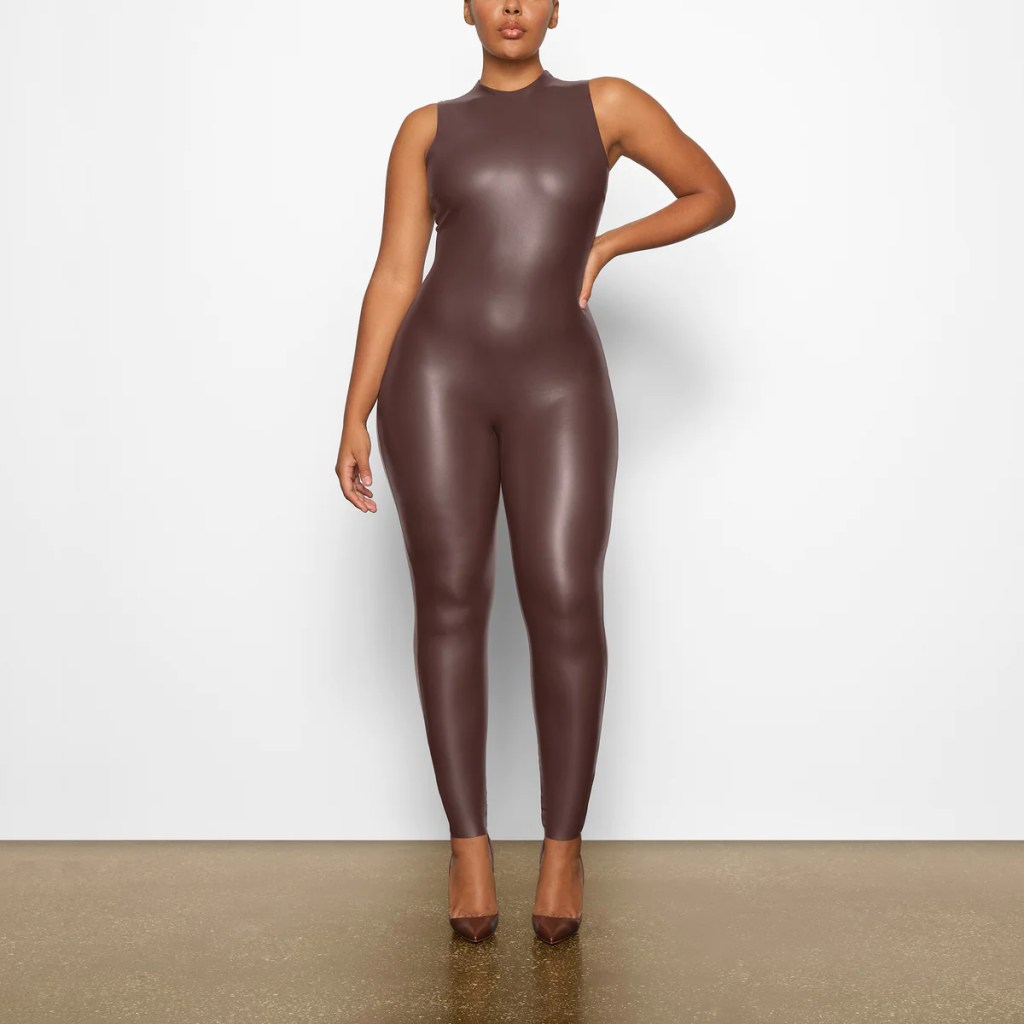
The Faux Leather Catsuit is definitely the antithesis of the Cozy Knit Pullover, but we love it for that. It’s great for a big night out when you don’t feel like thinking about a multi-piece outfit, and you can easily dress it up or down, depending on the occasion. Its built-in bra and invisible back zipper give it an even more seamless air.
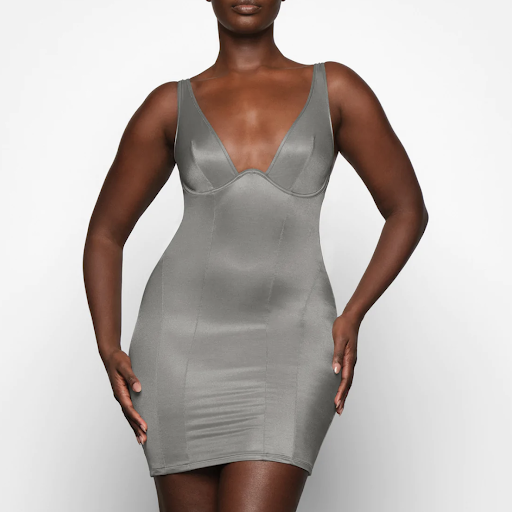
The Glissenette Slip Dress is great for anyone who’s ever wished they could wear their cute slip as a dress. Its lightly lined bra cups mean you won’t need additional support, and it easily molds to the shape of your body, glistening as you move in it. We love a dress that can stand on its own, or provide a canvas for your favorite accessories, and that’s exactly the kind of versatility you’ll find with this piece.
Advertisements
The hype is real — so what are you waiting for? It’s time to empty your underwear drawer and redefine the way clothing can make you feel.
Staying hydrated is essential for our skin, digestion, hormone balance, sleep quality, and mood–you name it. “The body needs to be hydrated to function at its best,” explained Bridgitte Mallinson, MS, RDN, a registered dietitian and Founder and CEO ofGutPersonal. “This means that our essential systems, such as our circulation, rely on hydration to perform well. When we are not hydrated, we can have symptoms like poor sleep, low energy, brain fog, difficulty concentrating, constipation, headaches, and dizziness.” It’s no wonder#WaterTok is a thing and TikTokers are creating and sharing water “recipes” with syrups and powders to make drinking water more appealing while making hydration look cool AF. Call it extra, but the 360 million views speak for themselves.
Whether we blame our busy lives, forgetfulness, or lack of motivation, we often fall short of our hydration goals. It’s no joke—according to a recent CivicScience poll, almost half (47%) of U.S. adults consume far below the recommended amount. Just how much water should we be drinking, and how can we ensure we’re drinking plenty of water on the reg? Ahead, dietitians spill their best tips for how to stay hydrated. Step 1: Grab your reusable water bottle, and let’s dive into Hydration 101.
Advertisements
How much water should we be drinking daily?
It’s a tale as old as time that most of us have ingrained: Drink eight glasses of water per day. It turns out the eight-glasses-a-day age-old myth stems from a 1945 recommendation from the Food and Nutrition Board of the National Research Council that suggested adults consume about 64 ounces of water daily, including from all their foods and beverages, which was misinterpreted as eight cups of water. Translation: That old-school rule is not rooted in science.
Based on new research, our water needs are individualized and depend on factors like age, sex, size, physical activity levels, and the climate that we live in. If you’re looking for a baseline, Mallinson stated that the general rule of thumb is to drink half of your body weight (in pounds) in ounces of water. “For example, if you weigh 140 pounds, you should drink at least 70 ounces of water every day. Most people tend to need more, especially if you struggle with constipation, eat a diet high in processed foods, live in warmer climates, or are physically active.”
Primp tip: Listen to your thirst cues to prevent dehydration and pay attention to your urine color as an indicator of hydration. “Pale yellow urine generally indicates proper hydration, while dark yellow or amber-colored urine may suggest dehydration,” conveyed Taylor Osbaldeston, a registered holistic nutritionist forDurand Health Group. “Aim for lighter-colored urine as a guide for maintaining adequate hydration.” While urine isn’t the sexiest topic, pretty cool how your body is always telling you what it needs, huh?
While this may seem like an obvious hack, Bianca Tamburello, RDN, a registered dietitian for FRESH Communications and Azuluna Foods, expressed that investing in a water bottle that will get you excited and motivate you can make or break your hydration goals. “Should it be insulated, include a straw, or fit in your car’s cup holder? Think about what your perfect water bottle should look like and choose your favorite.” Having water readily available at all times—whether you’re at your desk or out and about—will serve as a gentle nudge to consistently drink up.
Start your morning with a glass of water (yes, before yourcup of joe). And if you’re in the mood to up the ante, add some lemon to rev up your digestion (think: get things moving). It doesn’t hurt that the citrus-spiked beverage adds some pizazz to plain ol’ water, not to mention supports glowing skin.
Advertisements
Once you’ve given your body a hydration boost first thing in the morning, set small goals to drink a defined amount of water and schedule regular hydration breaks throughout the day. “Utilize reminders or smartphone apps to establish regular intervals for water consumption, aiming for a goal every hour,” Osbaldeston suggested. “Divide your total water intake target evenly across your waking hours to ensure consistent hydration throughout the day. This approach helps you stay on track and maintain a steady intake of water.” Consider apps like Waterlogged or WaterMinder your accountability partner that can help you set goals, send you friendly reminders, and track your daily intake.
Incorporate water-rich foods into your diet
While H2O is the go-to choice for meeting your daily hydration needs, there are foods high in water content that you can also reach for to give you a leg up. Your body typically gets about 20% of the water it needs from the foods you eat throughout the day while the remaining 80% usually comes from drinking. In other words, don’t skimp on that 20%. “The foods highest in water content include cucumber, lettuce, celery, radishes, tomatoes, zucchini, and strawberries,” Mallinson indicated. Throw together a veggie stir-fry or blend up a fruit and veggie smoothie to get in extra hydration. Foods packed with water can’t replace drinking water altogether, but adding them to the mix is a surefire way to give your body vitamins, minerals, and fiber while boosting your daily water intake.
Add electrolytes and flavor to your water
Water alone can’t lead to optimal hydration. The body requires electrolytes to absorb the water. “Amplify your hydration with electrolytes,” Mallinson prescribed. “Minerals like sodium, potassium, and magnesium help get hydration into your cells.” Osbaldeston is also a fan of the supplement: “Add electrolytes to your water to replenish essential minerals lost through sweating and aid in maintaining proper hydration levels during physical activity or hot weather.” Instead of guzzling water with sugary additives (looking at you, #WaterTok), add flavor to your water while optimizing hydration with electrolyte packets (just beware of sugary options with a ton of additives), or for a (basically) free version, add a pinch of sea salt to your water.
ICYMI,habit stacking is the way to go to create a new,healthy habit. If you want to introduce a new behavior to your routine, “stack” it onto a current task you already do to help you remember to do it, making it a more automatic habit. For example, bundle drinking water with your other to-dos, like drinking a glass while you prep your morning latte or taking a water bottle on your afternoon walk.
Another way to habit stack hydration is to pair a tall glass of water with your meals. “Always be sure to drink a glass of water with your meal,” Tamburello advised. “Drinking water helps slow the pace of eating at a meal and helps with digestion.” Side note: If consuming liquids with your food leaves you feeling bloated or with other unwanted side effects, stick to drinking them before or between meals.
Advertisements
Romanticize the hydration experience
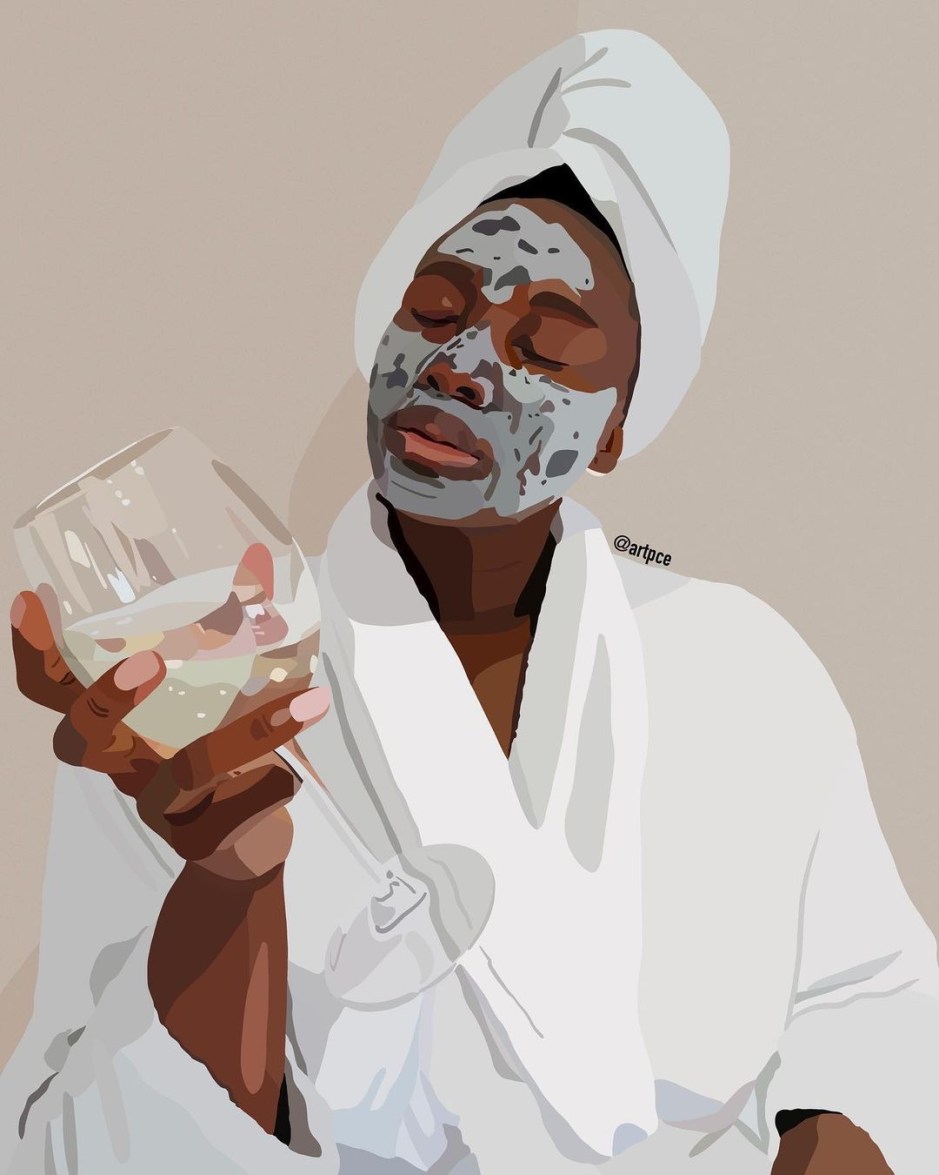
Let’s be real: Plain water isn’t exactly thrilling, but who says knocking back water has to be boring? Sip flat or sparkling water from a wine glass and add fruit ice cubes to make the experience indulgent, à la Tamburello. Freezing fruit and veggies, like strawberries, citrus slices, and cucumbers, or refreshments, like juice, tea, or coffee, into ice cubes can take your mundane cup of water from womp womp to huzzah! And, if you’re feeling extra, use ice cube trays that come in various shapes, like roses, hearts, or fruits. Since we’re prioritizing drinking more water, we might as well make it fancy.
BTW, you don’t have to be attached to just water—rotate in other hydrating beverages like decaf herbal tea, coconut water, or bone broth. Tamburello recommended bone broth since it hydrates and offers up important electrolytes to replenish calcium, potassium, sodium, and magnesium stores. The point is to make hydration something that you look forward to so you’re able to keep up with the habit.
Compensate for your caffeine and alcohol intake
Remember how hydration needs vary from person to person? They can also vary day to day, depending on what else you consume. Some foods and drinks are hydrating (veggies and fruit, decaffeinated tea, etc.) but some are dehydrating. “Both caffeine and alcohol have diuretic properties, which can increase urine production and contribute to fluid loss,” Osbaldeston stated. “If you consume these beverages, consider compensating by increasing your water intake to counteract their potential dehydrating effects.” On days you partake in enjoying alcohol or caffeine, don’t sweat it–just be mindful about getting in some extra hydration. You know the drill: After savoring your Starbucks afternoon pick-me-up, follow it up with a full glass of water to balance it out.
Does anyone else feel like the phrase ‘boundaries’ is trending? There’s always a new self-care / self-help focus that everyone’s talking about and all I’m hearing about lately is boundaries. Which got me thinking about my own.
To me, having boundaries means that you know when to let people/events/commitments into your life, and more importantly, when to NOT let them into your life. For the most part, I feel like I’ve conquered boundaries as an adult but there’s always room for improvement. Here are my thoughts on boundaries + what I do to respect my own:
Advertisements
+ Wait to respond
Anyone who has my cell number will tell you that I’m bad at texting, but I disagree. If I think about it from a boundaries perspective, I’m good at text boundaries.
Yes, it might mean I’m not always quick to respond but that’s because I’m choosey about when and how I respond. Everyone thinks they deserve a response (or need to give one) within a matter of minutes these days and IMO, that’s not realistic or healthy. Sometimes I get texts but I’m focused on school, work, emails, writing a blog post, or am with the family, so I won’t respond. Sometimes I get texts but I’m scrolling TikTok or Amazon and having my time, and I won’t respond right away. Sometimes texts I get are unnecessary or don’t necessarily need a response, so I don’t respond…ever. Which is OKAY!
This doesn’t mean I don’t care about the person texting me or what they’re saying, it means I have boundaries. I like to reply to text messages when I want to when I have the time, and when I’m not trying to be present with my family. 99.9% of the time, a text can wait until you’re at peace to respond. If it’s an emergency, they’ll call.
Try waiting to respond, whether it’s a text or email or whatever until you’re in the right mindset to respond. Or if you can’t help yourself, turn on Airplane mode so that you’re not tempted. This not only helps your peace of mind but sets up boundaries around when / how you respond. It also trains people to know that they can’t expect an immediate response from you (which I think is healthy!).
+ Get comfortable with saying ‘no’
Saying ‘yes’ out of habit or guilt is probably the number one reason why boundaries are broken. I fall for this, especially with the guilt part, but I’m usually able to say ‘no’ without feeling bad about it. Especially if I break down the honest reason behind why I need to say no. For example, ‘I’d love to attend but I need to be there for my mom, my aunt is having another episode or my mom just needs it, so I can’t make it. Hope the event is a success!’ Or, ‘This sounds like a great opportunity. I’m unfortunately feeling overwhelmed with my commitments right now so I’ll have to pass, but I’d love to stay in touch.’
+ Learn your boundaires
If you have no clue whether you have boundaries or not, learn about them. Lauryn from The Skinny Confidential podcast had a sought-after boundaries relationship expert on her show a while back so I’m linking that episodehere. The expert happened to be Licensed Therapist Nedra Glover Tawwab, MSW, LCSW, author of bestsellers Drama Free and Set Boundaries Find Peace. She has practiced relationship therapy for 15 years and is the founder and owner of the group therapy practice, Kaleidoscope Counseling.
Nedra has appeared as an expert on Red Table Talk, The Breakfast Club, Good Morning America, and CBS Morning Show to name a few. Her work has been highlighted in The New York Times, The Guardian, and Vice, and has appeared on numerous podcasts, including The School of Greatness, We Can Do Hard Things, and Ten Percent Happier. Tawwab runs a popular Instagram account where she shares practices, tools, and reflections for mental health and relationships.
Lauryn from The Skinny Confidential and the boundary licensed expert walks you through difficult boundary conversations, how to deal with setting your boundaries, etc.
Advertisements
Hereare more boundary tips with valuable talking points:
Advertisements
+ Voice them
I’m not great at voicing my feelings but I will speak up if I feel like my boundaries are being violated. This year, I felt like I was getting requests from family, friends, my partner, and from work. It was all too much. It felt overwhelming and like everywhere I turned, work was waiting and people constantly calling my name for everything. I spoke up and set some specific boundaries around work (like ‘no, I can not come on a Saturday my time off to help set up another classroom graduation) ( oh, it is mandatory for all teachers well that was never said when hiring me and I am just now finding out about it, so NO). And it was as easy as that. If someone had the same request, you better believe I’d respect their boundaries.
I’m sure we all have blurred boundaries with work, especially since most jobs don’t end when you ‘leave the office’. I suggest setting up boundaries so that your team/boss / whoever knows when and how to reach you (within reason, of course). Certain people I work with even put their availability in their email signature so it’s a clear reminder of their boundaries. You can also set offline notifications on most communication platforms like Slack or whatever, so utilize those.
Some boundaries are more sensitive than others. For example, in-laws or your parents stopping by unannounced 5x a week or a bitchy boss who thinks she owns your life. These cases will probably require you to write out the WHY behind your request for a boundary…and things might be awkward. But in the end, most of these convos are never as bad as we assume them to be. Be assertive and kind, and if they don’t understand, that’s on them.
Advertisements
+ Get alone time
As someone in their mid 20’s who works full time, goes to school full time, and is a caretaker to family members, I have zero physical boundaries in my life, which I LOVE at times, and it’s also overwhelming AF. There are days when I don’t shower, go to the bathroom, or sit alone for even 5 minutes. Add in having a partner who has all these needs and trauma. So I will feel touched out physically. When I feel like this, I know I need alone time ASAP, so I try to work it into the following day. There’s something about being alone and no one needing you physically or emotionally for even 30 minutes that can seriously help.
+ Trust your gut
I’m huge on following my intuition or gut in all situations, and it can help with boundaries. Whether you’re questioning if you’re the one overstepping on someone’s boundaries OR if someone is overstepping yours, your gut usually knows what’s up.
What’s good enough for Jennifer Aniston is good enough for us. So when word broke outthat she’s obsessed with the health-tracking device Oura Ring, let’s just say we were pretty much sold right then and there. But being the wellness diehards that we are, we had to put the gadget to the test ourselves (it’s practically our wellness editor’s job to weed out the fads from the legit trends, after all). Sure, it makes a solid fashion statement, but does it deliver on all its health metric promises? Could such a small piece of jewelry disguised as wearable technology accurately measure our sleep patterns, predict our menstrual cycles, and monitor our physical activity? Read on for our honest review of the Oura Ring and whether it lives up to the hype.
From Apple Watches to Fitbits and Whoops to Oura Rings, it seems there’s a tracker for every need and type of health-curious individual out there. So what makes the Oura Ring stand out? For starters, it’s not worn around your wrists like most health-monitoring devices. Rather, it’s a ring that weighs in at just 0.1 pounds and comes in sizes 6-13 and five colors: silver, black, matte black, gold, and rose gold.
In a nutshell: it’s a fitness tracker haha but what we love about it is it tracks SO MUCH more than ‘fitness’. It tracks your overall health and wellness, sleep, workouts, stress, HR, body temperature, cycles, and more.
When you order an Oura ring, Oura will ship you a ring sizing kit so you can pick the exact size you want and decide which finger to wear it on.
Advertisements
Advertised as inspiring “awareness of the intimate connection between mind and body,” it tracks sleep, activity, recovery, and your cycle in real-time by measuring from the palm side of your finger (where the pulse signal is strong) and provides three daily scores: sleep, readiness, and activity. According to Oura Ring’s website, “Your scores tell you how your body feels and what your body needs, every second of every day.” In other words, the Oura Ring takes the guesswork out of when it’s time to push yourself when you need rest and recovery, and when you might be getting sick by taking into consideration 20 different body signals—think temperature, heart rate, heart rate variability, and sleep—using infrared light, body temperature, and 3D accelerometer sensors.
Oura’s Infrared Photoplethysmography (PPG) sensor sends light through LEDs into the skin and captures how much light is reflected from your arteries to determine your heart’s activity, including resting heart rate, heart rate variability (AKA the constant variation in time between your heartbeats), and respiration. Heart rate variability can indicate whether you’re in a relaxed or stressed state, and when combined with body temperature, can be used to gather information about sleep. By monitoring your nighttime skin temperature, the Oura Ring takes note of your body temperature, which provides insights into the inner workings of the body, such as how well your body is recovering, if you’re coming down with an illness, or if hormones are hard at work. So that’s the science, but does it work in practice?
Advertisements
Our Editors’ Honest Reviews:
As mentioned above, the Oura ring tracks so much more than your steps or your fitness. Probably our favorite feature about it is tracking your sleep, analyzing your sleep data, giving you sleep insights, and more. Oura ring uses elements like the amount of sleep you got, your resting heart rate, your body temperature, deep sleep, etc to calculate your sleep score. One AMAZING example we got from this: one night we had a margarita or two before going to bed that night. the next day we had a low sleep score and the Oura app told us “Something caused your heart rate and body temperature to stay elevated last night, so you didn’t get great sleep. Try taking it easy today since you didn’t fully recover overnight.” WILD to see actual data on how alcohol affects our sleep!
Advertisements
It also analyzes your sleep data and gives you sleep insights. So after analyzing our sleep, my oura ring app advised us that our bedtime is between 8:45-9:45 pm. The nights we go to bed in that window are the nights we’ve gotten amazing sleep!
The Oura ring uses data from your sleep the night before to also calculate a “readiness” score for you. Your readiness score is based on how you slept, the level of activity you did the day before, your resting heart rate, and a few other things. So sometimes our Oura app will tell us our readiness score is at an all-time high because we slept great and had a rest day the day before. Other times it will say ‘You were active yesterday and it looks like your body could use some recovery time today’. We don’t need an app to tell us those things but it is cool to see how our daily activity and sleep can affect our “readiness” for the day!
Advertisements
You can’t necessarily ‘start a workout’ on the Oura ring like you can on the Apple watch, but you can manually add in a workout and it will factor that into your daily activity goal! Or if we are going for a walk or a run, it automatically picks that up and at the end of the workout it will say “workout detected” and we can confirm it or cancel it. But, it won’t automatically pick up like yoga or a peloton ride. You would just manually put in “cycling”, the length of time, and the intensity (light, moderate, hard) and then it calculates the caloric burn based on that (and we have found it to be very accurate).
The Oura ring can also help track your cycles and predict ovulation! If you are going through IVF then your doctor probably regulating all of that. But, for the ones who aren’t in that boat, the Oura ring will automatically do that for you since you wear the ring overnight, and help track your cycles + predict ovulation for you!
The Oura ring also has guided meditations in the app which we LOVE. What’s cool about it is if you do one of the guided meditations in the app…your ring will track how meditating affects your body. It tracks if your heart rate and body temperature are lowered which in turn helps to lower your stress and boost your readiness score.
Advertisements
The ring also detects naps! So if we lay down for an hour nap after church, when I wake up and check our app it will say ‘nap detected’ and you can confirm or cancel. When you confirm, the nap will boost your readiness score for the day!
Unlike the Apple watch which just has 3 rings you need to close every day lol the Oura ring has a ‘rest mode’. It can detect when you are tired or stressed by reading the changes in your key body signals associated with stress. It then automatically adjusts your daily goals to put your rest and recovery first instead of keeping the same ‘move goal’ you have every single day.
We are sure there are tons of other features the Oura ring has that we haven’t ventured into yet haha but the ones we shared above are some of our favorites and why we love the ring.
Advertisements
Why We wanted the Oura Ring:
Last summer while on a hot girl walk with our best gal pal, we noticed a new, chunky gold ring sitting prettily on her middle finger. Naturally, because we are nosy and easily influenced, we waited a mere 45 seconds before asking where she got it. When we discovered it was a wellness tracker our jaw was on the floor. Before impulsively hitting Add to Cart, we did research, weighed the pros and cons, and finally got one for ourselves almost a whole year later.
Our initial attraction to the Oura Ring was the aesthetic. We loved the idea of being able to have consistent tracking, no matter the outfit, and that it didn’t look like an unsightly tracker at all. After learning more about Oura’s insights (particularly, how it tracked your sleep), we knew that was an untapped area of data that I wanted to improve, and that sold us in the end.
How it compares to other tracking we’ve tried:
We’ve had the Oura Ring for almost two weeks and we’ve been using both the Oura Ring and the Apple Watch simultaneously so that we could get a grasp on how they directly compared. While we prefer the Oura Ring by a decent amount, we will note that the biggest adjustment that we had when switching over was having to open the Oura Ring app instead of relying on a screen from the device itself. As far as actual analytics go, Oura Ring gives you so much more health data than the Apple Watch. We are talking about sleep insights, activity data, and temperature tracking (which is huge if you track your cycle). It pulls so much more data than just calories, steps, and heart rate, plus, it’s easy on the eyes which makes us much more likely to use it.
Our experience:
Before we picked out our Oura Ring size, we used their free ring sizing kit which we highly recommend since you’ll be wearing it nearly all day and it’s not adjustable. They note that it works best on your pointer finger, though we have seen some users wear them on their middle or ring fingers as well. The app was super easy to navigate and after a few minutes of exploring the intro resources on the app and a quick 90-minute charge for the week, we had a great handle on how it worked to take it for a spin.
What we liked:
To us, the biggest selling point of the Oura Ring is the fact that your numbered goals adjust every day depending on how much your body is recovered. So many times with the Apple Watch we would be discouraged that to feel the validation of closing our rings, we would have to hit the same goals every day despite a horrible night of sleep, feeling like trash while on our period, or being incredibly sore after a hard workout the day before. The Oura Ring adjusts your activity goal each day based on your other analytics and we’ve found that this has allowed us to work with our body, rather than against it.
The sleep data that the Oura Ring pulls has also been a game-changer for us. Every morning, we click on the app to see our sleep score. If it’s low, we skip the gym for the morning and use the extra time to snooze or we’ll schedule a nap for later. If it’s optimal, we will make the most of the morning and the activity plans for the day. The Oura Ring sleep score is based on your total sleep, time in bed, sleep efficiency (percentage of time spent awake vs. asleep in bed), your resting heart rate, and how long you were in different sleep stages—truly things we never thought about before using this wellness tracker.
We could talk about the pros of the Oura Ring all day: the user-friendly app, the ability to sync with the Natural Cycles app, how long the battery lasts in comparison to how long you have to charge it, the overall look and feel of it, and more. If we could go back and do it all over again, we 100 percent would. After two weeks of using it, we know we’ve just barely scratched the surface of all it can do like using tags to track how we felt, note what we ate/drank, monitor symptoms we experienced on certain dates, keep a record of our emotions, track when we have sex, etc.
What we didn’t like:
The reality is that no tracking device is perfect and while we love the Oura Ring, there are some things we wish we could change about it. The first is that, atop the lofty price, you do have to pay monthly for the app (after the free trial, it’s $5.99 per month). While you can take advantage of some functions without the app, to get the most out of your ring, you’ll want the subscription.
We’ve heard mixed reviews about Oura’s activity tracking and here’s our two cents on it: it’s a little clunky compared to the Apple Watch. Overall, it captures the correct amount of calories burned (compared to the numbers we see on our Apple Watch), but figuring out how to track our workouts isn’t as easy to figure out and seems to be done retroactively as opposed to in the moment. Once again, could be user error but as a pretty average person, we would assume others may have trouble here as well.
Another note: Having our Oura Ring and Apple Watch both connected to our iPhone’s Bluetooth annihilates my phone battery. On an average day, we sit at 59 percent by 10 a.m. so we pray to the tech gods hoping this will get better without us having to part ways with our Apple Watch.
Final verdict:
Knowing we had 30 days to return what we consider to be a large investment, we were still reviewing the Oura Ring super critically and it still passed all of the tests. This tracker is more intuitive than trackers we have used in the past and has motivated our wellness journey without making us obsess over it. We love how inconspicuous it is and how much it helped us to take accountability for our health beyond our activity tracking. And for those reasons and more, we are an Oura Ring stan.
Advertisements
We’d recommend this ring to all wellness and fitness enthusiasts and pros looking to get more shut-eye, track their stress levels, predict their periods, and be more informed about their bodies plus it is waterproof so no need to take it off.
Editor’s note: While the Oura Ring is a great tool to use, always call your doctor or healthcare provider if you’re experiencing health concerns. The Oura Ring is a great supplemental device to use for everyday monitoring, but it shouldn’t replace visits to the doctor, nor can it diagnose illnesses.
We think we covered about everything we know so far but comment below if there’s anything else you want to know! Thanks for reading!













 beautyleebar.org