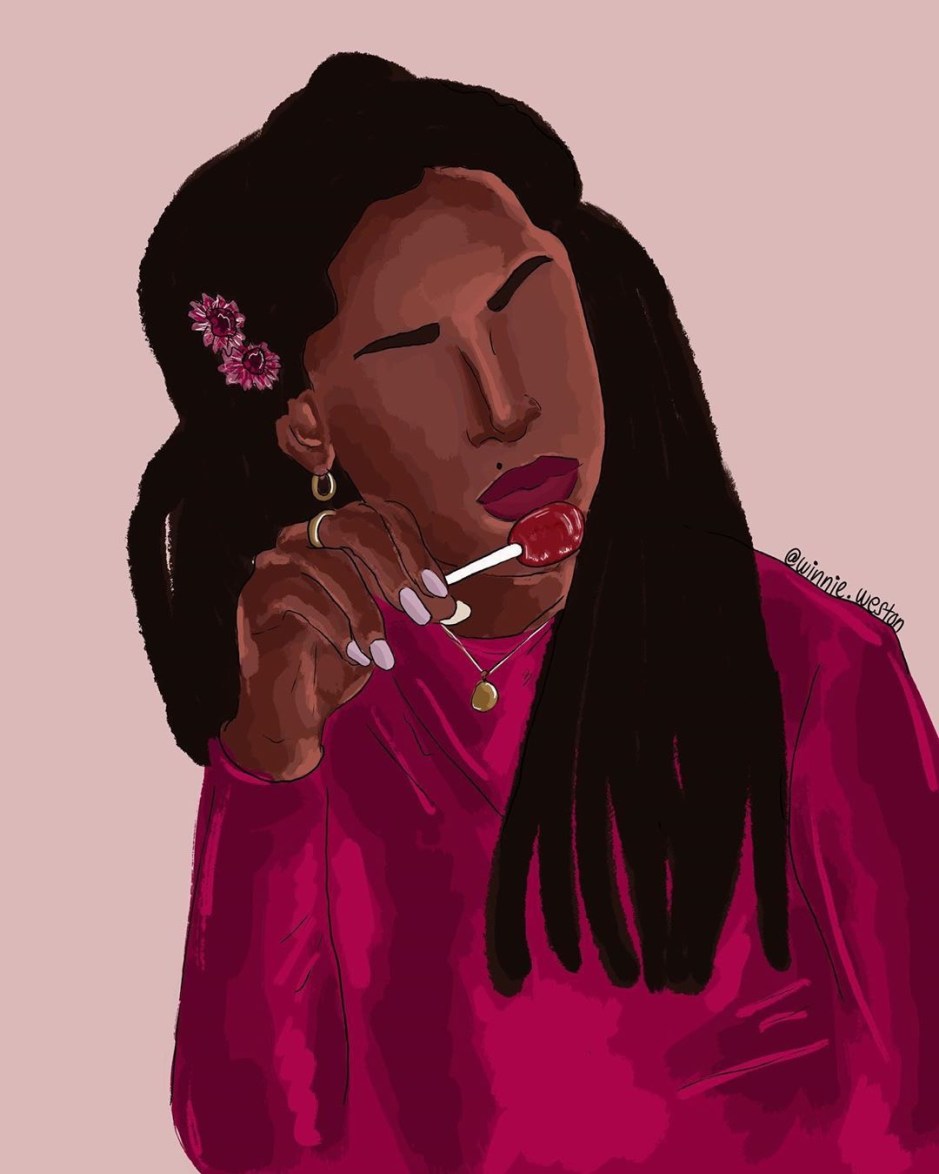
5 Things You Didn’t Know About Black Women’s Hair

Hair. We all have it, but, for Black women, hair is much more than just what grows out of our heads and keeps us warm. Our hair is love, culture, and language. It’s how we express ourselves and communicate with the world around us about who we are and what we are about. The doing and undoing of Black hair is a cultural rite of passage. Black people are able to create and maintain a sense of community with one another simply through our hair. While our hair is understood by those who are a part of our community, it can be a source of confusion for those who aren’t. In an effort to bridge cultural gaps, I’d like to make sure that some things are well understood about Black women and our hair.

1. First and foremost, sis—DO NOT TOUCH IT.

I can’t stress this enough. Do not touch a Black woman’s hair without permission first. On a personal level, it’s incredibly invasive and rude to physically assert yourself in someone’s personal space without asking. How would you if a total stranger or random co-worker were to invade your personal space for the sake of satisfying their own curiosity? Would you not feel reduced and devalued if someone decided to follow their urge to wrap their fingers in unfamiliar territory? It’s weird at best, and dehumanizing at least. A Black woman’s hair is not your personal exploratorium. When our hair is touched without permission, we feel violated and devalued, because at that moment we are not seen as human, but as objects. As women, I’m sure many of us know how that feels. It’s incredibly frustrating for someone to totally disregard your personal agency and autonomy just so they can satisfy themselves. I’m all for non-Black people educating themselves and increasing their cultural competence, but a Black woman’s scalp is not your hands-on classroom. 

2. Our “carefree” styles take a lot of time. 

Contrary to popular belief, Black women are not out here summoning the energy of Queen Bey and rising from the bed with the same ability as the almighty Beyonce; we did not wake up like this! I know our afros are super cute. I know our curly styles are to die for but hear me out: these styles are a labor of love. Heavy emphasis on labor. Our “afros” are perfectly styled with the labor and intention of a small army. These “carefree” styles take a lot of time, effort, and product. Have you ever heard of a thing called “wash day”?? It’s literally a day that Black women with natural hair dedicate to detangling our tresses and perfectly styling our manes. Wash day takes several hours, if not a full day. Our world stops as we take the time to allow ourselves or someone else to help us look our best. My last set of braids took 6 hours. My wash day (once a week) is at least five hours long, and this does not include the time it takes to dry my hair, which if left to its own devices, takes at least 36 hours to fully dry without the use of a dryer. When’s the last time you had to take an entire day just to wash your hair?

3. Black girl hair is magic. 

No one can shapeshift like a Black woman. We can switch styles with ease. Long, flowing locks on Monday, braids on Tuesday, a wig on Wednesday, an afro on Thursday, and a sleek bun on Friday. Our hair can withstand a lot of manipulation and has the strength to hold a lot of different styles. If you personally know a Black woman, I’m sure you’ve been befuddled a time or two by the way we can change our look. If you see a Black woman who’s switched the style up, don’t be baffled. Black hair is magic. Our tight, shrunken curls can stretch out to two or three times their curled length when pulled. Our hair can go from perfectly coiled at ear length to mid-back with just a little pull.

4. Black hair is political. 

Historically and currently, Black people have been policed about our hair and how it naturally grows from our heads, especially in professional environments. If you google “unprofessional hairstyles,” you’ll see a large number of Black and Brown people with their beautiful curls. To this day, Black people can be fired for wearing their hair in natural styles instead of adhering to a white beauty standard. I’m not bringing this up to be radical, I’m bringing this up to show how absurd it is for the world to deem Black people’s natural hair as problematic, unkempt, or unprofessional. The language surrounding that is intentional. The impact and implications of that are as intentional and harmful. 

Advertisements

5. Black hair is love. 

Our hair is love. It’s culture. It’s how we communicate who we are and who we belong to. Our hair is complex and wild, but it is our pleasure to don. Black hair unites Black people. We rely on each other to care for it, style it, and share in the labor of loving on it. I can’t tell you how many good conversations have been had while in my stylist chair or how many family recipes and secrets my mother divulged while she braided my hair. 

When you see our hair, just know you’re looking at our culture. It’s more than a head full of curls. It’s more than very neat braids. It’s an expression of our culture and who we are. You are looking at what makes us so beautifully unique.

Posts You’ll Love:

These Are the Conversations About Sex You Should Be Having With Your Partner

From entertainment to advertising, we live in a culture where sex infiltrates many aspects of our lives. Although many of us might feel comfortable discussing the details of our sex lives over a few drinks with friends, sometimes it can be harder to talk about what we want in the bedroom with the person who really needs to know what we’re thinking.

Being able to communicate about physical intimacy is an important part of any relationship, and the only way to ensure that your sex life is satisfying for you both. If you haven’t already, these are the conversations that you need to have with your partner to get the most out of the sexual side of your relationship:

Your sexual history

Speaking of sexual health, this is a tricky but important topic that should always be discussed before having unprotected sex with someone new. Disclosing your STI status, checking that your partner has been tested recently, and clarifying whether either of you are having unprotected sex with anyone else is important steps in protecting your sexual health and making an informed decision about whether you should be using condoms.

What your boundaries are

We all have different limits when it comes to sexual play, and making sure that you and your partner are both comfortable is key to having enjoyable and fulfilling sex. You don’t need to be having 50 Shades-style sex to have conversations about what your boundaries are and what you feel happy doing — this can be a beneficial conversation for any couple, and give you an opportunity to express your likes and dislikes in the bedroom. If you are getting a little more experimental, then set out your expectations beforehand and remember to agree on a safe word.

What your kinks are (and how to explore them)

The things that turn us all on are complicated and immensely varied. It’s impossible to be able to expect your partner to know that you’ve always had a fantasy about firemen or all about your secret foot fetish, so if you want to enact your kinks, then this is a conversation that has to be had. Bringing up our innermost sexual fantasies can be nerve-wracking, so experts suggest introducing this via dirty talk, as part of a game, or by asking your partner about their kinks to ease you into sharing your own, according to Refinery29. Once you’ve shared your interests, then discuss how you can introduce these in a way that you will both enjoy, whether this is via roleplay, watching porn together that involves your kink, or engaging in safe and consensual BDSM.

What makes you orgasm

As much as television and movies would have us believe that the Big O is easy to achieve, most women find that their experience is slightly different. In fact, only 31-62 percent of women report “usually” orgasming during sex. Do something about this by talking to your partner about what positions are most likely to make you orgasm. You could also try masturbating in front of your partner, showing them the techniques that you use to make it happen. As well as demonstrating how to best get you off, you will likely also find that this is a great style of foreplay and that your partner loves seeing you turn yourself on.

Advertisements

How often you like to have sex

Most couples will find that there is at least some mismatch in their sex drives, and being unable to communicate this to each other can lead to massive misunderstandings. If your partner is a physical touch person who experiences love and affection through touch, then they may feel rejected if you’re just not in the mood. Similarly, a partner who connects more via emotional intimacy may feel devalued if they feel that you’re only interested in having sex when they just want to talk about their day. Talk to your partner about how often you like to have sex, how you generally signal that you’re not feeling sexual, and how you signal that you’re interested in initiating physical intimacy.

What contraception you are using (or would like to use)

Because women shoulder most of the burden of pregnancy, contraception in a heterosexual relationship is often seen to be the responsibility of the female partner. However, this doesn’t have to be the case. If you are thinking about changing your choice of contraception, you can easily explore potential options as a couple. How do you both feel about long-term contraception methods, such as an IUD or a vasectomy? If you’re planning on having children in the next couple of years, would something more short-term be a better option? Do you have other sexual partners and would, therefore, feel more comfortable using condoms? Having these conversations with your significant other means that you can reach a decision about your sexual health that benefits you both.

Will It Fit? Straddling Between Standard and Plus-Size

I recently found myself browsing the promotions tab of my Gmail inbox and decided to click on one from a store that I don’t normally shop at that was having a sale. I was then shocked to discover that their “regular” sizing only went up to a 10, and “plus” sizing starts at a 12. I usually wear somewhere between a size 8 and a size 12. Regular and plus-size ranges often fit differently, so I was faced with a dilemma: if I were to order from this store, which size range would I order from?

It got me thinking about the struggle I sometimes encounter in trying to find the right size at certain stores. At stores like Forever 21, for example, if a large doesn’t fit me, it’s almost impossible to find a size XL or pants in any sort of inclusive sizes in store. And then if I go to the plus section, I can’t find a size that fits there either. Their plus range starts at a 0X, but those are very hard to come by in store as well.

Unfortunately, stores like these aren’t the only ones where mid- and plus-sized women might struggle. Lululemon was exposed for keeping their small selection of the largest sizes they carry, 10s and 12s, in a separate and messy area in the back of the store and rarely restocking them, as Business Insider reported. High-end brands and celebrity or influencer clothing lines often only go up to a size large and an 8 or 10, but 68 percent of American women wear a size 14 or above, as per Racked.

As brands become more and more inclusive (as they should), they tend to ignore a group of millions of consumers that would be considered “mid-size” or “in-betweeners.” On websites and in advertising, we often see models on the smaller end of the spectrum for both standard and plus/curve size ranges. The lack of mid-size women wearing a 10, 12 or 14 is apparent. And if they are there, they’re considered plus-size.

Ashley Graham, widely regarded as one of the world’s most famous “plus-size” models, is a size 16. The fashion industry is built to divide women into only two size categories: sample and plus, and when a model is a size 8 or above, they’re automatically looped into the plus-size category. Celebrities like Amy Schumer and Mindy Kaling have spoken out about how they are often referred to as plus-size actresses, but Schumer has said she is a size 6 to 8, and Kaling a size 8.

Advertisements

When this happens, brands not only forget to include options and representation for women who fall in the middle, but set standards that could be harmful to young girls’ body image. Every body type is beautiful, and I’m part of the group that believes brands can provide inclusive size ranges without separating women into categories. As Time reported, Melissa McCarthy said, “Women come in all sizes. Seventy percent of women in the United States are a size 14 or above, and that’s technically ‘plus-size,’ so you’re taking your biggest category of people and telling them, ‘You’re not really worthy.’”

Women come in all sizes. Seventy percent of women in the United States are a size 14 or above, and that’s technically ‘plus-size,’ so you’re taking your biggest category of people and telling them, ‘You’re not really worthy.’

One of the major reasons that mid-size women often have trouble finding clothes that fit is the limitations in patterns that clothing pieces are made from. Because of cost restrictions, designers often have a sample size pattern (a 2 or 4) as well as a plus-size pattern (a 14 or 16 — if that’s something they offer) that they make tweaks to for the rest of the size range. When a size 2 pattern is being tweaked for up to a size 12 or 14, distortions occur and the clothes don’t actually fit the real women who wear these sizes. This pattern issue is also the reason that a size 14 in a regular size range tends to fit differently and usually smaller than a size 14 in a plus-size range. 

As everyone has probably experienced, sizing in women’s fashion is extremely inconsistent across the board. We already live in a world where we have to deal with the dread of standing in a dressing room staring in the mirror at yourself sweating, trying on clothing item after clothing item that doesn’t fit. Is it too much to ask that retailers just provide us with inclusive, standard sizing and representation without putting us in meaningless categories?

Advertisements

Thankfully (and many years too late), these conversations are now being had and things are beginning to change. There has been a recent rise in mid-size fashion bloggers, looking to fill the gap in influencers who have body types that everyone, regardless of what size they wear, can relate to and get inspiration from. YouTubers and Instagram influencers such as P A S S I O N J O N E S Z, STEPHANIE PEREIRA, Carrie Dayton, Lucy Wood and 𝑫𝑨𝑵𝑰 𝑫𝑴𝑪 who both have said in their videos that they typically wear a size 12 or 14, use their platforms to discuss their struggles in finding clothing to fit their self-proclaimed mid-size bodies and sometimes straddling the line between regular and plus sizes. If you’re interested in checking out their Youtube videos, start with Lucy Wood | MIDSIZE GIRLS WHO’LL CHANGE YOUR LIFE.

MIDSIZE GIRLS WHO’LL CHANGE YOUR LIFE | LUCY WOOD

Is it too much to ask that retailers just provide us with inclusive, standard sizing and representation without putting us in meaningless categories?

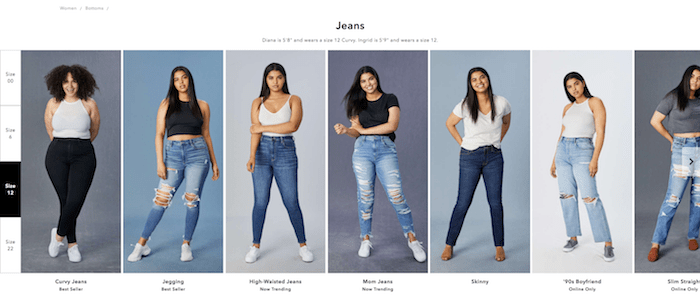
Some brands are beginning to recognize their lack of inclusivity and are making changes to their branding, advertising, and websites. Aerie, for example, has made headlines for banning the alteration of their advertising photos and vowing to be more inclusive in both sizing and representation, as Time reported. Its parent company, American Eagle, has a feature on their website where you can see the same jeans on models who wear sizes 00, 6, 12, and 22. 

As women in the United States, trying to find clothes that fit us can be extremely hard. On any given day, I can be a size 8 in one store and a size 14 in another. I didn’t even know that there was an entire community of women out there who are also facing this “mid-size” or “in-betweener” struggle, until I found the influencers who are talking about it openly — and I hope that anyone facing the same dilemma can relate as well. We are all beautiful, and we all deserve clothes (and lots of them) that fit!

LATEST POSTS YOU’LL LOVE:

The Acne-Prevention Strategies Glasses Wearers Need to Know

How four eyes become five

After months of procrastinating to get a new prescription, I finally decided to splurge on a pair of glasses… can’t wait! But with them came a surprise: acne.

It seemed like there was a new pimple on the bridge of my nose basically every other day. Because I hadn’t purchased my new glasses yet and because those pimples always appeared in that specific spot, my beautiful now old glasses were unfortunately the primary suspect.

Sure, being able to see is cool and all, but wouldn’t it be great if it didn’t also cause breakouts? Yes! It would!!! In fact, I talked to an expert about how to deal with this exact situation. Here’s what I learned.

How to know if it’s actually acne

The biggest clue that your glasses are causing acne is where the acne is showing up: The bridge of your nose, your cheeks where the rims sit, and the ears where they might rub are all common places.

The other major sign is if you can say, ‘I didn’t have it,’ and then all of a sudden you develop it, which is exactly what happened to me. Maybe this is your first pair of frames, maybe you took a break from your glasses or alternate with wearing contacts. Whatever the reasoning is, the point is you have and you’re getting pimples in places you’ve never seen before. And, now you’re wearing glasses, that’s another clue that your glasses are to blame.

But other conditions can mimic acne, even in those areas. One to look out for is called acanthoma fissurataum, which is a patch of thickened skin that experts think develops after repeated trauma to an area—and it specifically occurs in people who wear glasses. So if your frames are constantly rubbing on the top of your ears or the bridge of your nose, they might cause this.

How do glasses cause acne?

It’s really from too much pressure. This form of acne—acne mechanica—develops when something is pushing down on the skin, which prevents the normal shedding of skin cells. Instead, those skin cells clog up your pores and lead to acne. Having oily skin and wearing thicker makeup just add to the issue.

Acne mechanica is also common among those who play sports or wear restrictive athletic clothing because those clothes can trap sweat and heat, making it even more likely that the pressure from clothing or equipment will cause acne in areas that those garments touch.

Here’s how to deal.

Luckily, once you’re sure it’s acne, there are specific ways to treat the bumps in those sensitive areas on your face as well as to prevent them from coming back.

  • Get your glasses adjusted. If you find that you’re having to push your glasses up your nose frequently or they’re so thick or heavy that they’re causing acne in the cheek area where the lenses touch your face, you should go to your eye doctor or wherever you got your glasses to have them adjusted. Sometimes the answer is getting new bridges put on the nose so you spread the pressure.
  • Wipe your glasses down frequently. Make sure you’re cleaning your glasses. We suggest getting a basic alcohol wipe and swabbing it over every part that touches your face every night.
  • Use an over-the-counter acne wash. Using an over-the-counter acne wash with salicylic acid in it at night is an easy way to manage mild acne all over the face, especially if you notice it on your cheeks and not just on the bridge of your nose.
  • Use an over-the-counter spot treatment. If your acne bumps are primarily confined to one area of your face, such as the bridge of your nose, a spot treatment containing salicylic acid or benzoyl peroxide is the way to go. Other options include acne patches you can wear overnight and prescription topical antibiotics.
  • Take breaks from wearing your glasses if possible. Your glasses obviously serve a very important purpose. But if it’s possible for you to take breaks from them during the day, taking advantage of that cuts down on the likelihood that they’ll cause acne.
  • Use a makeup remover before cleansing. Make sure that you’re really getting your makeup off. The buildup of makeup under your glasses can definitely contribute to acne, so it’s important to make sure it’s all off—with the help of a makeup remover or micellar water—even before you wash your face. And when it comes to washing, opt for a cleanser that isn’t oil-based.
  • Use concealers with salicylic acid. While your acne is healing, we suggest going with concealers that contain salicylic acid to keep treating them while covering up any bumps.

When to check with a derm

If you’re not sure if you have acne or something else is going on, it’s always a good idea to talk to a professional. And if what you think is acne isn’t going away with those measures, or if you have a lot of acne on other parts of your face, too, it’s important to check with your derm about the best way to manage it. They may be able to prescribe you an antibiotic medication that can take better care of all the acne.

And if your bumps aren’t going away or don’t seem to be healing, they may be a sign of another condition—including, possibly, skin cancer—that you’ll want to get checked out sooner rather than later.

But for most of us with glasses, acne is a common yet manageable annoyance.

Related:

BEAUTYLEEBAR does not provide medical advice, diagnosis, or treatment. Any information published on this website or by this brand is not intended as a substitute for medical advice, and you should not take any action before consulting with a healthcare professional.