Do you feel like anxiety runs point in your day? Do you wonder what in the world is going on with you that you have these stressed-out reactions that feel disproportionate to the reality of what’s at hand?
Advertisements
The truth is that your reactions can get triggered in response to a real or imagined event. The part of you that overrides reality and kicks up a sometimes-surprising physical response does not know the difference between what’s actually taking place and what’s not real. That can be baffling because it can make you do things that don’t make sense. And no one likes to be the foolio or feel hijacked by their fight-or-flight response.
Let’s discuss: say you’re at a campground with friends, and you hear a loud noise that scares you. You then find you’ve hightailed it across the campground into your tent before you’ve had time to even sort through if that noise is actually a real and present danger. Stay with me—here’s what has happened. Your subconscious mind hijacked your conscious mind (the part that feels like you). You heard the noise. Your subconscious, which stores all your memories, downloaded a memory of a threat (i.e. a bear growl) that it had stored in its complex hard drive; your imagination envisioned a bear in your immediate environment. It then sent a message to your autonomic nervous system, which houses all hormones (like adrenaline, which makes you move fast), your senses became hyper-alert, and your heart rate increased—all for your survival. Before you could check to see if there indeed was a bear about to eat you, your body drove you to seek safety—all in seconds. But then what if your friends, while you were cowering, began to laugh at your folly, as one of them had merely opened the zipper on their bag, and that was the sound your subconscious deemed dangerous that caused you to run for shelter? It would undoubtedly feel like a bodily betrayal.
Advertisements
But you have to give thanks for the fight-or-flight response, because it has literally kept humankind alive for thousands of years of evolution as a species. It’s not as necessary day to day now because we aren’t being hunted by lions as we once were. We aren’t always fighting for our survival, and yet, our body still gets flooded with messages to flee or fight back. Makes you question how often you have automatically reacted in that irrational mode because of an unconscious download, then responded in kind, with an over-the-top, inappropriate response because you felt threatened—and that wasn’t actually the case. Anxiety disorders come into focus when that response becomes triggered easily and often, and the brain learns to perceive the world as more dangerous than it actually is. It becomes the norm, and that’s taxing on your whole system and your quality of life.
The more you can realize when the fight-or-flight is happening, the more you can be present with the reality of what’s truly unfolding. You can then allow your life to be directed by responding instead of reacting to daily events that pose no real threat. You start to see where your anxiety has you by the nose, where you consistently allow yourself to fly off the handle to attack, defend, or find yourself running from conflict. All are good indicators that these are areas where you can work on being more mindful, more present, more conscious. Breathing through automatic responses of fight-or-flight to stabilize your anxiety levels is helpful. It allows you to feel more in control and, ultimately, happier as a result. And your flight-or-flight response can show up for you in instances where it’s actually useful, when there’s a real need for its gift.
It’s centuries too late if you ask me, but our culture is finally starting to embrace the female orgasm and acknowledge the fact that women feel, want, and need pleasure too (shocking!). Scientists are researchingdeterminants of female orgasms, women are singing about feelin’ themselves, and people wouldn’t bat an eye if Sally pulled her orgasm-in-public performance in 2020 (well, maybe they would, but you get the point).
Advertisements
All of this is amazing progress for long-overdue gender equality (and we still have a lot of work left to achieve it), but all this “O” talk can put pressure on women to reach an orgasm, whether they’venever had one, can only have one by themselves, or only know one way to have one (news flash: there are lots of ways). So for the betterment of your sex life (and because pleasure is your human right), here are 10 ways to orgasm that you might not have thought of, according to sex therapists and experts.
Megwyn White, a certified clinical sexologist and director of education at Satisfyer, suggested practices like drybrushing and scalp massage to increase sexuality and pleasure. “Dry brushing is a great way to stimulate circulation and detox the skin,” White said. “You’ll feel refreshed, and your tissues will feel soft and satiated. It’s a great self-care practice that can add a sensual start or end to your day. Likewise, giving yourself a scalp treatment at home with essential oils can reduce stress and activate your senses. You’ll feel refreshed, invigorated, and sexier.” Bottom line: find the indulgent practices that connect your mind with your body and stimulate the senses. You’ll feel heightened awareness that can translate into more sexual pleasure (and the chance to check out yo’ bad self in the mirror will be an added sexy bonus).
2. Explore blended orgasms
Here’s the good news: from clitoral orgasms to nipple orgasms, there’s no shortage of orgasms to be had. And better yet, they don’t necessarily have to be independent of one another. A blended orgasm is two (or more) simultaneous orgasms, resulting in an intense, full-body response. While this may sound difficult and you may be thinking great, even more pressure in the climax department, know that our bodies are meant to experience multiple different sensations.
“If you stimulate multiple regions, you create more intense sensations, and multiple nerves communicate the sensation of pleasure at the same time,” said Dr. Jess O’Reilly, founder of Sex With Dr. Jess and Astroglide’s resident sexologist. For example, the vagus nerve is believed to communicate signals from the cervix, uterus, and vagina, bypassing the spinal cord. Crazy, right!? Bottom line: there’s more to your sexuality than just the vagina. Explore, experiment, and try multiple different forms of pleasure at once.
Advertisements
3. Get creative juices flowing
That’s right: that pottery class you took in college could have been increasing your chance to orgasm. “Sexual energy and artistic expression are not mutually exclusive,” White said. “Creativity will naturally stir the pot of your sexual nature and also invite you to think out of the box and invite new experiences into your world.” No matter if your favorite form of creativity is singing, dancing, painting, or scrapbooking, it doesn’t necessarily have to be erotic to help boost your pleasure when it comes to sex.
Being creative in whatever way feels expressive and enjoyable to you can tap into your sexual energy, but will also get you into a creative and open mindset that will encourage you to try new things (see #6 below). You can tell your significant other we told you to sign up for that painting class or dance lesson (and I’m sure when they know the benefits, they’ll want to join too).
4. Talk about sex
Looks likeSalt-N-Pepa were onto something! Kamil Lewis, AMFT, believes getting comfortable talking about sex outside of the bedroom can help encourage a healthy sex life. “Talking about sex with friends is a great way to normalize sex and provides a space to ask questions and hear about other experiences,” Lewis said. “The more comfortable you feel talking about sex, the more empowered you will feel when it’s time to get into it.”
Advertisements
Yes, it’s important to have a support system outside of your relationship or sexual partner (Sex-and-the-City style) to talk openly about sex and normalize a lot of the subjects that have been taboo for far too long. But it’s equally just as important to communicate openly and honestly with your sexual partner, whether you’re in a committed relationship or not. “Give yourself permission to talk with your partner or partners about orgasms,” Lewis said. “If this is something you want to change in your relationship, it’s important to bring it up.”
5. Build sensuality outside of the bedroom
Sexuality is an equal mix of physical and mental. It’s not going to immediately switch on when you walk into the bedroom, nor is it reserved for the bedroom. Hani Avital, clinical sexologist and sensuality expert, said it best to S Life Magazine, “Sexuality is our life force. The more we cultivate that energy in everything we do, the more alive we will feel. Period.” Remember that your sexuality is powerful and life-giving, not shameful. Build sensuality in your day-to-day life by indulging in self-care that feels good (like massaging in body oil after your shower or taking a decadent bath) and making decisions based on what would feel more pleasurable for you.
Not only will this help you feel more vibrant in your day-to-day life, but it might also help you experience more pleasure in the bedroom. Lewis recommended using mindful moments throughout the day, like paying attention to the temperature of the water in your shower or the smells of your food, to feel more connected to your body and improve sexual connection. Dr. O’Reilly agreed. “You are not a light switch. You likely can’t transition from talking about your kids and taxes to indulging in sexual pleasure and orgasm,” she said. “Take time to indulge in all things pleasurable throughout the day to cultivate more presence in your body and remind yourself that pleasure is your birthright.”
6. Try new things
If you’re not reaching climax, it might be because whatever you’re doing is not working. Even if you are orgasming but are hesitant to try something new, you could be missing out on an even more intense and enjoyable climax. Dr. O’Reilly recommended getting creative with sextoys and lube, which are both associated with heightened pleasure and orgasmic response.
Mia Sabat, the sex therapist at Emjoy, agreed that trying new things is important. “You don’t know what’s going to get you going until you try,” Sabat said. “Sometimes, we forget that there’s more to our body than our vulva, and we’re surprised to see how much a specific place or type of stimulation can help us reach our orgasm end-goal.” Bottom line: try new things, whether it’s positions, toys, body parts, or even the routine, for the sake of enjoyment and getting to know your body better. An orgasm will just be a welcomed bonus.
Advertisements
7. Make masturbation a part of your self-care routine
So you already know that masturbation can help you orgasm, but it might not be easy to reach climax if you only think of the ménage à moi as a must-do when you’re in between partners (thank you, quarantine). Exploring your own sexuality and pleasure should be just as much a part of your self-care routine as a face mask or a bubble bath (and, FYI, can be done simultaneously with both!). “Stop thinking about masturbation as a dirty little secret. It’s a perfectly healthy thing to do, with a myriad of health benefits. It can be used to ease pain, boost your mood, and even help with period cramps,” Sabat said. “By framing masturbation as part of your self-care routine, you can explore your body with comfort and confidence instead of something to feel embarrassed about.”
8. Fantasize
Dr. O’Reilly calls the brain the most powerful sex organ, and for good reason. Remember how sexuality is a mix of physical and mental? The physical component might be stimulated, but the mental component needs to be stimulated too in order to achieve mind-blowing pleasure. Fantasizing can help you explore your sexuality and find different ways to feel pleasure, rather than getting caught up in achieving an orgasm and the dreaded performance anxiety.
Advertisements
Luckily for us, there are multiple ways to fantasize besides imagining shirtless Ryan Gosling or watching Rihanna’s “Pour it Up” music video (though both are great if they do it for you!). “There are many ways you can stimulate the brain, like listening to erotica, engaging with pornography created for a female audience, or simply taking the time to gently let your mind and body ease into a sexual state through sensual massages, candlelit baths, or self-pleasure,” Sabat said.
9. Don’t over-hype the climax
OK, back to that pressure to orgasm. Yes, there is a huge orgasm gap, and yes, you deserve to orgasm as often as you want every single time. But we often hype up the climax so much (I mean, it is called “the climax”) that so many women struggle to get there because of the pressure to achieve it. We look at our ability to orgasm to determine whether it was “good sex” or even whether or not we’re “normal.” Here’s the truth: it’s good sex if it felt good, and anything is normal if it’s normal for you. Instead of focusing on the end-goal, focus on the pleasure you feel before and during sex. Not only will it be more pleasurable overall, but you might be more likely to orgasm. The destination is better when you enjoyed the journey, right?
In fact, Gigi Engle, certified sexologist and award-winning author, suggested delaying orgasming instead of focusing on achieving it. She said, “Slowly bring yourself closer and closer, but hold back before going over the edge. When you become aroused and then let it go, the energy is recycled, waiting just under the surface to be ignited once again. If you keep building towards a finale, the endgame will be unreal.”
Advertisements
10. Romance yourself
No, this is not some cheesy self-love advice; it’s truly the most effective way to increase pleasure, sensuality, and orgasms, whether you’re solo-sexing or with a partner. When we take time to make ourselves feel special like we would a romantic partner, we increase confidence, comfortability, and just feel hotter; to quote my queen Lizzo, “No, I’m not a snack at all. Look, baby, I’m the whole damn meal.” FYI, Lizzo definitely knows how to romance herself. No matter your relationship status, we can all afford a little more self-romance.
Advertisements
“Even if you’re going solo, it doesn’t mean that you have to skip the romance,” Sabat said. “Don’t be afraid to light some candles, put on some perfume, and dim the lights to set the mood. This is your own personal adventure and something to enjoy, not rush. Don’t rush it or sell yourself short; this is about treating yourself in exactly the way you want to be treated, and you deserve the best.” As Lizzo would say: “‘Scuse me while I feel myself.”
It’s more than normal to have some “happier” days than others, especially given everything going on in 2020. To help create big positive energy in everyday life, we’re taking a look at the habits genuinely happy people typically have in common. With the help of these practices and our simple self-care hacks, here’s to the power of self-soothing tips to get us through hectic times and land on the happier side. Learn the 10 things that happy people do differently below.
Having an attitude of gratitude is one of the most popular habits among the happy because it works. When you’re constantly noticing all the blessings and awesomeness in your life, it is physically impossible to be unhappy. Seeing the world through thankful eyes skews your perception toward positivity.
What you can do today:
Keep a gratitude journal. I did this when I changed my life, and it seriously made all the difference.
2.Happy people put themselves first.
Happy people always put themselves first, so that they can take care of others second. I am talking about self-care. Putting your mental, emotional, physical, and spiritual health first is a must. Being balanced and feeling good about yourself and your life helps. Because when you’re happy, you have so much more to give.
What you can do today:
Do something nice for yourself today. Take care of your own needs.
3. Happy people give.
The fact of the matter is, giving makes us happy. As much as we think (and are taught) that obtaining more is the solution, it’s not. Studies have also shown that people who volunteer have shown better mental health, well-being, and even longevity. You can give your time, your love, and your presence, even if you can’t give money.
What you can do today:
Find a cause that you care about and learn how to get involved or support it.
4. Happy people stay inspired and have fun.
Happy people make it a point to have fun on a regular basis and do things that help them grow and learn. To them, having fun is not a lost ar—it’s part of the daily happiness upkeep. It’s important to experience and see new things, since it helps us stay inspired and excited.
What you can do today:
Do something thrilling today. Try a new activity, have a picnic, go on a day trip somewhere cool, or visit the zoo (animals always inspire).
Advertisements
5.Happy people stay present.
Happy people do their best to stay present as much of the time as possible. Think about it: if you’re living in the future, you’re probably anxious, and if you’re living in the past, you’re probably depressed. Which leaves the present as the one and only moment any of us really need to pay any attention to. That’s why happy people practice mindfulness, the art of staying present.
What you can do today:
Take a meditation or yoga class.
6.Happy people develop healthy coping strategies.
Happy people encounter stressful life adversities, but they have developed successful coping strategies. Learning how to seek lessons after a challenging event gives people a renewed appreciation for life, the ability to recognize new paths for themselves, enhanced personal strength, and improved relationships with others. Happy people become skilled at seeing the good that might come from challenging times.
What you can do today:
Try reframing.
7. Happy people focus on health.
Happy people take care of their mind and body and manage their stress. Focusing on health, though, doesn’t just mean exercising. Happy people actually act like happy people. They smile, are engaged, and bring an optimal level of energy and enthusiasm to what they do.
What you can do today:
Take a walk, run, bike ride, or read a book.
Advertisements
8.Happy people cultivate emotional awareness.
There is a growing body of science suggesting that emotionally aware people are happier, healthier, and recover more quickly from traumatic events because they understand what they are feeling.
What you can do today:
Journal your highs and lows every day.
9. Happy people don’t dwell on problems.
Where you focus your attention determines your emotional state. By fixating on your problems, you create and prolong negative emotions and stress, which hinder performance. Focus on actions to better yourself and your circumstances.
What you can do today:
Reframe any situation with a positive ending.
10. Happy people finish what they start.
Coming up with a great idea means absolutely nothing if you don’t execute on that idea. The most successful and happy people bring their ideas to fruition.
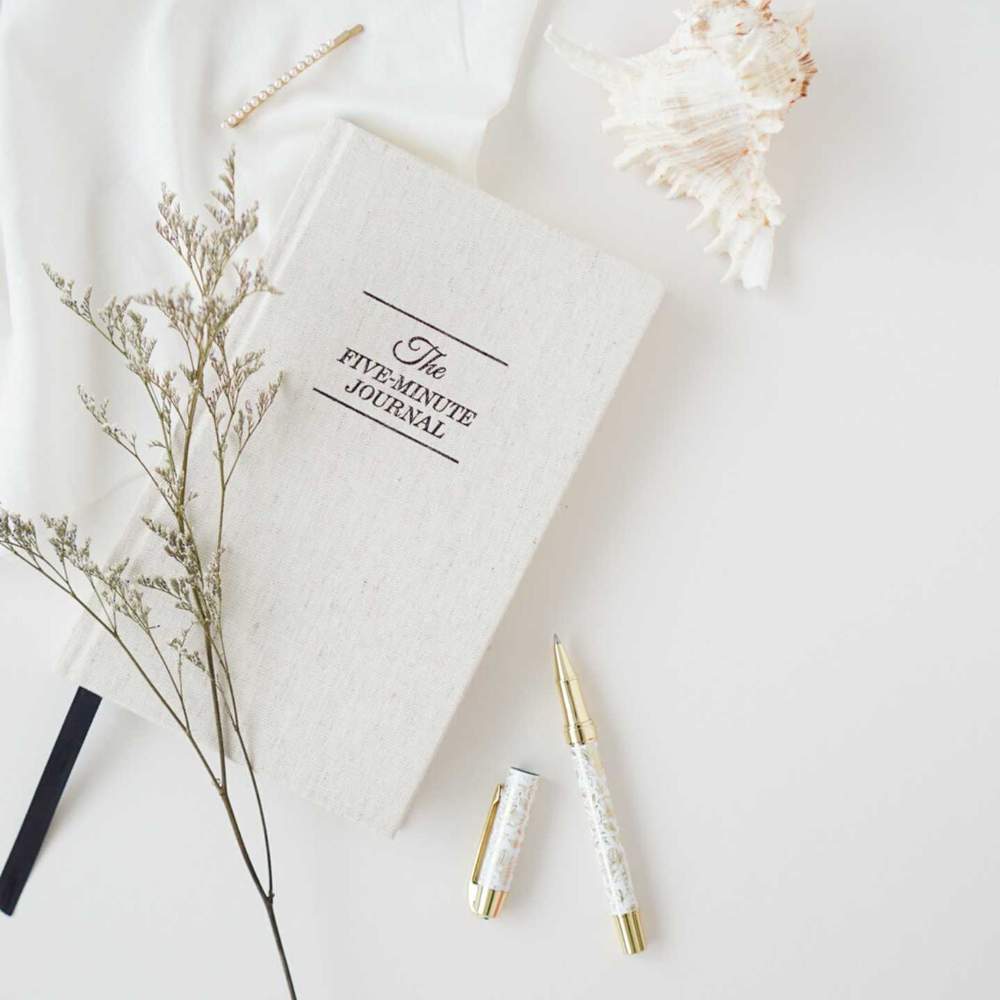
We repeat: five-minute! Journaling can be a hard habit to keep, but this one—which leads the entrant to start and end each day with gratitude—is a joy to use and honors its promise. It’s a direct route to an uptick in happiness, optimism, and improved relationships, and the easiest way to finally keep that New Year’s resolution.
I say it all the time: “This is giving me anxiety.” What I often mean, however, is something slightly different: “This is stressing me out.” As someone who has actually been diagnosed with chronic anxiety, I should probably know better than to conflate the two. And yet, I know just in conversing with my friends and co-workers on a daily basis that among my generation, using the words “stress” and “anxiety” interchangeably has become the norm.
While it might seem like a matter of semantics, in reality, it’s a problematic habit. For one thing, using “anxiety” as a replacement term for “stress” diminishes the very real symptoms that those who suffer from anxiety have to negotiate on a daily basis. For another, it might prevent someone who has undiagnosed anxiety from seeking the correct kind of treatment because they can’t differentiate those symptoms from that of regular, day-to-day stress.
Advertisements
Psychology Today
“Both stress and anxiety can bedevil anyone’s psychological and physical health,” says Heather Silvestri, PhD, a New York City–based psychologist. “However, while often related, they are distinct phenomena.” Below, she helps us clear up the difference between the two—and how to manage both.
Advertisements
WHAT’S THE DIFFERENCE BETWEEN ANXIETY AND STRESS?
Let’s start with stress, which typically refers to a situational experience. “It’s a physiological and psychological response to a stressor, which is often obvious and explicitly identified,” says Silvestri. A crazy day at work, a traffic jam, a looming presentation—these can all be sources of stress and can all cause your cortisol levels (also known as the “stress hormone”) to spike. You probably know the symptoms of stress pretty well: anything from sweaty palms to a racing heart to butterflies in your stomach.
But here’s the key thing about stress: When the source of your stress is resolved, those symptoms tend to go away. That’s not the case with anxiety.
Advertisements
“With anxiety, the internal disquiet stubbornly persists, without heeding the actual conditions,” explains Silvestri. In other words, those who suffer from generalized anxiety experience those same stress-like symptoms on a chronic basis, no matter the external circumstances. That’s why anxiety often feels inexplicable or “out of proportion” to what’s going on in our lives.
“Stress responses are hard-wired into our nervous system because we need them to survive,” says Silvestri. “Anxiety can be seen as the lingering upheaval that doesn’t necessarily quiet down when the situation improves. In this way, anxiety is the horse that ran away from the stable.”
Advertisements
WHY ARE THEY USED SO INTERCHANGEABLY?
Silvestri suspects a few factors, not the least of which is our current political landscape and the breakneck pace of the digital age—both valid sources of stress and fear. It’s our new norm, which certainly impacts the way we talk about it. “Our modern lexicon has absorbed this idea and it now trades in terms connoting fear, anxiety, and neurotic apprehension,” she says. “You might even go so far as to argue that there has been a glorification of internal unrest insofar as proclaiming, ‘I’m so stressed out!’ or ‘I’m freaking out!’ have a certain cache, as if such frenetic nervous system activity means someone is doing something important or notable.”
This, she says, has led to misuse of both terms, as well as a lapse in distinction between the two. “This is lamentable because stress and anxiety can be sources of substantial suffering, and they are best treated with nuance and precision about what they are and how they operate,” she adds. “Nowadays we also run the risk that someone may be delayed or miss out entirely on getting needed help because they mistake their clinically treatable anxiety disorder for a more normalized and watered-down idea of being ‘stressed out.'”
CAN ONE LEAD TO THE OTHER?
“Chronic stress can absolutely give way to anxiety,” says Silvestri. “We need rebound time to recover. When we experience chronic stress, we lose our ability to recover, and elevated physiological arousal becomes the new normal.” If you’re perpetually stressed, turning off that “switch” and finding relief becomes more difficult.
Advertisements
That’s why with anxiety, we tend to scan for things that might be worrying us when there aren’t any obvious stressors at a given moment—kind of like a self-fulfilling prophecy. But the good news is that there are many ways to manage both chronic stress and generalized anxiety.
HOW CAN I NIP STRESS IN THE BUD?
Honestly, a lot of it is reflecting and figuring out what works for you. If you know that nothing clears your head like a sweaty jog, make time for that. If you notice that stress feels much more manageable when you get a good night’s sleep (as tends to be the case for most of us), be sure to get plenty of shut-eye when you know you’re about to be put in a stressful situation. Being both self-aware and proactive is key.
HOW DO I KNOW IF I HAVE ANXIETY, AND WHAT CAN I DO ABOUT IT?
“If someone continues to feel preoccupied after a stressor has resolved or if the course of the worry doesn’t really track external events, this can be a sign that something more significant than generic stress is going on,” says Silvestri. This recognition is the first step. “By acknowledging your anxiety, you can be more mindful of triggers and more purposeful about your choices,” she says.
Also, know that it’ll be much easier and more efficient to treat your anxiety if you can approach it with curiosity instead of judgment. Then, you can start to play around with different rituals to manage it: Silvestri suggests starting with common aids like yoga, mindfulness, and journaling. “Really, any activity of self-care that lends a sense of agency to your lifestyle,” she says, since anxiety can rob us of our sense of control.
Advertisements
But if those initial steps aren’t offering any relief, then it’s probably time to seek help elsewhere. “For the first line treatment, I would recommend either cognitive behavioral or insight-oriented psychotherapy, depending on how interested someone is in delving into historical causes or sticking with a focus on symptoms, especially the triad of thoughts, feelings, behavior,” she says. You and your doctor or therapist can then discuss the best treatment plan for you.
Either way, know that you have options—and knowing the difference between stress and anxiety is a solid first step to feeling better.
Aromatherapy can help. There are some essential oils that have a calming effect, like lavender and bergamot. A diffuser is an easy way to use essential oils.
A bath is probably one of the best forms of self-care. This CBD soak also contains Epsom salt, pink Himalayan salt, calendula petals, and essential oils.
These supplements from Hum are formulated to help you stay calm and focused thanks to the adaptogenic plant, rhodiola. Take one capsule with food when you need it.
Add a teaspoon of this powder to your water before you go to bed, or whenever you need to de-stress. It contains magnesium and L-theanine to calm, improve move, and promote healthy digestion.
Advertisements
This article is provided for informational purposes only and is not intended to be used in the place of advice of your physician or other medical professionals. You should always consult with your doctor or healthcare provider first with any health-related questions.









 beautyleebar.org