Anxiety has a very unwelcome way of popping up when you least expect it.
When you’re anxious or stressed, you don’t usually pay attention to your breathing. You either overdo it, taking short breaths or don’t do it at all. It’s quite possible to suddenly realize you’ve been holding your breath and clenching your jaw for ages if you’re stressed out.
Just thinking about your breath and paying attention to it can have a calming effect though. It’s not something we do very often but breathing properly is so important. And using a focused breathing technique can be even more helpful when you’re anxious or stressed.
Advertisements
It’s a technique that has been used in yoga for thousands of years and yes, it focuses on breathing through the nose. Hillary Clinton gave it a shout out in her autobiography, What Happened in 2017. It was one of the things she said she used to recover from losing the American election to Donald Trump in 2016.
And, hey, if it’s good enough for Hillary…
It’s a very simple trick to master and you can use it anywhere – once you get the hang of it.
HOW TO PRACTICE ALTERNATE NOSTRIL BREATHING:
Step One:
Sit in a comfortable position if you can. On the floor on in a chair with your back straight and feet planted on the ground.
Step Two:
Using your right thumb, gently close your right nostril and inhale slowly through your left nostril.
Advertisements
Step Three:
Gently close your left nostril by pressing on it with your ring (third) finger. As you do so, open your right nostril and slowly exhale out of it.
Step Four:
Still in this position, inhale through your right nostril, then close it, before opening your left nostril and slowly exhaling thought it. Then inhaling once again.
And that’s basically it! You can repeat the moves five to ten times and the technique will get smoother after a few goes.
Advertisements
Taking deep slow breaths in this way could help you find your way out of feeling anxious or stressed. Fans of alternate nostril breathing also reckon it helps with focus, lowers the heart rate and makes you more alert too.
Have you ever noticed that as one season winds down and another ramps up, you suddenly start to experienceskin concerns like dryness, dullness and acne? Changes in temperature, humidity levels and lifestyle habits often come with a change of season, and these elements can all affect your skin.
Now that the air is dryer and the temperatures are cooler, it’s easy for skin to lose moisture, resulting in a dry, dehydrated and rough-textured complexion. To replenish hydration and help skin retain moisture, use a product that contains hyaluronic acid, like the Garnier Green Labs Hyalu-Melon Replumping Serum Cream, daily. At night, use a thick, nourishing cream like the Vichy Aqualia Thermal Night Spa. If the air in your home is dry, consider investing in a humidifier.
Garnier Green Labs Hyalu-Melon Replumping Serum Cream – SPF 30
Breakouts
Just because summer is over doesn’t mean you can’t get breakouts. If your skin is dehydrated, it can overcompensate by producing excess sebum that can clog pores. To treat breakouts without dehydrating skin with harsh acne treatments, try a pimple patch. The Klog Soft Shield Pimple Patches help absorb impurities from breakouts and protect spots from bacteria so they can heal faster.
A sudden, drastic change in temperature can cause our skin’s capillaries to contract and become more visible on the surface. Redness can occur as a result. Keeping your skin moisturized and applying sunscreen can help protect against environmental aggressors. We also recommend incorporating a soothing product like the SkinCeuticals Phyto Corrective Gel into your routine. This serum hydrates and minimizes the appearance of discoloration throughout wear.
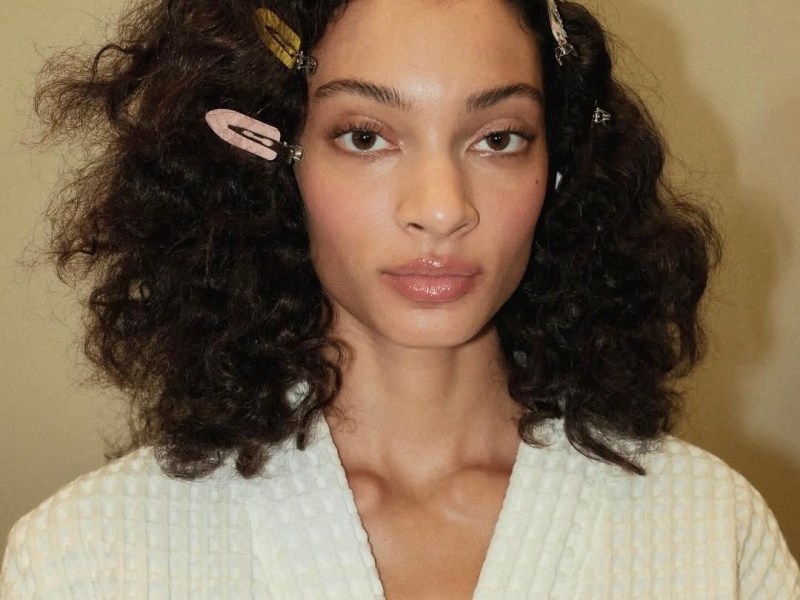
Sleepy girl makeup emerged as one of NYFW’s softest beauty trends at Sandy Liang’s FW26 show. Created by makeup artist Romy Soleimani in collaboration with Rare Beauty, the look focuses on luminous skin, pastel pink blush, subtly emphasized under-eyes, and glassy lips for an intentionally undone, just-woke-up effect that’s surprisingly wearable in real life.
I stand by that one of the best things you can do for your sex life, with or without a partner, is creating a sex bucket list. Having an ongoing list of everything you’d like to try or do sexually can help keep your sex life spicy and full of experiences you are interested in. If you’re getting started on a sex bucket list, start here. But if you’re ready to incorporate some new-and-improved additions or changes (I’m all for editing your bucket list as time goes on—what you wanted a few years ago is probably a little different from now!), these are my suggestions.
Advertisements
Rearrange the furniture
We all know it’s a good practice to try sex outside of the bed or bedroom sometimes, but to switch it up, even more, you can move some furniture around to make your space work for you. Mirror play is one of the most underrated sex toys in the bedroom. If you have a full-length mirror or a vanity mirror in your bedroom or home somewhere, use it to your advantage. Move the mirror so that you and your partner can both see each other in it while you’re having sex. The view will turn you both on a little more, and it might spark some new ideas and positions to try.
Along with mirror play, you can also pull the couch out a little or move side tables and coffee tables to try different positions and moves throughout the house. You’re not confined to a few spaces when it comes to sex. Make it up as you go!
Try a new form of sexting
If you’ve long been turned off by sexting because you don’t like sharing naked photos or your dirty talk game is less than impressive (it’s a learned skill, I promise!), there are so many other ways to approach it that can completely boost your sex life. Even if you love sexting, you can try it in a few different ways to keep it new and interesting. Sending nudes and a little dirty talk are always an option, but a really fun way to try might be role-playing. Tell your partner exactly what would be happening if you were together. “You’re on the bed, I’m standing next to you. I start to undress, and you grab my hips.” It’s a little more work, but it plays it out like the two of you are together. Then, you can reenact this in the future!
I also love simple “I’m thinking about you” or “You look hot today” texts throughout the day. They’re safe for work but are a little, exciting way to get you excited.
Find your go-to sex toy
One of the most underrated items on our TEG sex bucket list is going to a sex shop with a partner. It might feel a little awkward, and you’ll probably giggle at first, but it’s a great way to see what intrigues or excites both of you when you set your mind to finding something that will benefit you together. That isn’t necessarily possible right now, so instead, you might find it helpful to begin searching for your go-to #1 favorite that you both enjoy using, together and alone. We have tons of guides on vibrators and sex toys for partners, but you might also enjoy talking it out, figuring out what you’d both like, and spending some time on a few different sites.
Advertisements
Try to push your orgasms farther
So, you had an orgasm on your own. YAY! Next, you can focus on pushing them to go longer and maybe even have multiple at a time (the absolute dream). It might be easiest to try this alone first and then bring a partner in on the fun, but you can try it however is easiest for you. Orgasms tend to feel even better the longer you let your body relax and allow yourself to feel them. The next time you feel an orgasm coming on, try to keep it going instead of stopping whatever motion or toy you’re using. It might feel intense for a second, but it’ll lead to better, longer, and stronger orgasms over time.
Ask your partner questions
When you and your partner decide to engage in a conversation about fantasies and trying new things, make sure to ask them questions. Do they watch porn? What do they watch? What is their favorite color to see you wear? What’s their favorite position? Do they prefer sex in the bedroom or outside of the bedroom? This might seem a little juvenile, especially if you’ve been together for a while, but it’s a good practice to make sure you know more about what they want and like, and of course, they should reciprocate and ask you questions too. As cliche as it may seem, good sex life comes down to communication.
I say it all the time: “This is giving me anxiety.” What I often mean, however, is something slightly different: “This is stressing me out.” As someone who has actually been diagnosed with chronic anxiety, I should probably know better than to conflate the two. And yet, I know just in conversing with my friends and co-workers on a daily basis that among my generation, using the words “stress” and “anxiety” interchangeably has become the norm.
While it might seem like a matter of semantics, in reality, it’s a problematic habit. For one thing, using “anxiety” as a replacement term for “stress” diminishes the very real symptoms that those who suffer from anxiety have to negotiate on a daily basis. For another, it might prevent someone who has undiagnosed anxiety from seeking the correct kind of treatment because they can’t differentiate those symptoms from that of regular, day-to-day stress.
Advertisements
Psychology Today
“Both stress and anxiety can bedevil anyone’s psychological and physical health,” says Heather Silvestri, PhD, a New York City–based psychologist. “However, while often related, they are distinct phenomena.” Below, she helps us clear up the difference between the two—and how to manage both.
Advertisements
WHAT’S THE DIFFERENCE BETWEEN ANXIETY AND STRESS?
Let’s start with stress, which typically refers to a situational experience. “It’s a physiological and psychological response to a stressor, which is often obvious and explicitly identified,” says Silvestri. A crazy day at work, a traffic jam, a looming presentation—these can all be sources of stress and can all cause your cortisol levels (also known as the “stress hormone”) to spike. You probably know the symptoms of stress pretty well: anything from sweaty palms to a racing heart to butterflies in your stomach.
But here’s the key thing about stress: When the source of your stress is resolved, those symptoms tend to go away. That’s not the case with anxiety.
Advertisements
“With anxiety, the internal disquiet stubbornly persists, without heeding the actual conditions,” explains Silvestri. In other words, those who suffer from generalized anxiety experience those same stress-like symptoms on a chronic basis, no matter the external circumstances. That’s why anxiety often feels inexplicable or “out of proportion” to what’s going on in our lives.
“Stress responses are hard-wired into our nervous system because we need them to survive,” says Silvestri. “Anxiety can be seen as the lingering upheaval that doesn’t necessarily quiet down when the situation improves. In this way, anxiety is the horse that ran away from the stable.”
Advertisements
WHY ARE THEY USED SO INTERCHANGEABLY?
Silvestri suspects a few factors, not the least of which is our current political landscape and the breakneck pace of the digital age—both valid sources of stress and fear. It’s our new norm, which certainly impacts the way we talk about it. “Our modern lexicon has absorbed this idea and it now trades in terms connoting fear, anxiety, and neurotic apprehension,” she says. “You might even go so far as to argue that there has been a glorification of internal unrest insofar as proclaiming, ‘I’m so stressed out!’ or ‘I’m freaking out!’ have a certain cache, as if such frenetic nervous system activity means someone is doing something important or notable.”
This, she says, has led to misuse of both terms, as well as a lapse in distinction between the two. “This is lamentable because stress and anxiety can be sources of substantial suffering, and they are best treated with nuance and precision about what they are and how they operate,” she adds. “Nowadays we also run the risk that someone may be delayed or miss out entirely on getting needed help because they mistake their clinically treatable anxiety disorder for a more normalized and watered-down idea of being ‘stressed out.'”
CAN ONE LEAD TO THE OTHER?
“Chronic stress can absolutely give way to anxiety,” says Silvestri. “We need rebound time to recover. When we experience chronic stress, we lose our ability to recover, and elevated physiological arousal becomes the new normal.” If you’re perpetually stressed, turning off that “switch” and finding relief becomes more difficult.
Advertisements
That’s why with anxiety, we tend to scan for things that might be worrying us when there aren’t any obvious stressors at a given moment—kind of like a self-fulfilling prophecy. But the good news is that there are many ways to manage both chronic stress and generalized anxiety.
HOW CAN I NIP STRESS IN THE BUD?
Honestly, a lot of it is reflecting and figuring out what works for you. If you know that nothing clears your head like a sweaty jog, make time for that. If you notice that stress feels much more manageable when you get a good night’s sleep (as tends to be the case for most of us), be sure to get plenty of shut-eye when you know you’re about to be put in a stressful situation. Being both self-aware and proactive is key.
HOW DO I KNOW IF I HAVE ANXIETY, AND WHAT CAN I DO ABOUT IT?
“If someone continues to feel preoccupied after a stressor has resolved or if the course of the worry doesn’t really track external events, this can be a sign that something more significant than generic stress is going on,” says Silvestri. This recognition is the first step. “By acknowledging your anxiety, you can be more mindful of triggers and more purposeful about your choices,” she says.
Also, know that it’ll be much easier and more efficient to treat your anxiety if you can approach it with curiosity instead of judgment. Then, you can start to play around with different rituals to manage it: Silvestri suggests starting with common aids like yoga, mindfulness, and journaling. “Really, any activity of self-care that lends a sense of agency to your lifestyle,” she says, since anxiety can rob us of our sense of control.
Advertisements
But if those initial steps aren’t offering any relief, then it’s probably time to seek help elsewhere. “For the first line treatment, I would recommend either cognitive behavioral or insight-oriented psychotherapy, depending on how interested someone is in delving into historical causes or sticking with a focus on symptoms, especially the triad of thoughts, feelings, behavior,” she says. You and your doctor or therapist can then discuss the best treatment plan for you.
Either way, know that you have options—and knowing the difference between stress and anxiety is a solid first step to feeling better.
Aromatherapy can help. There are some essential oils that have a calming effect, like lavender and bergamot. A diffuser is an easy way to use essential oils.
A bath is probably one of the best forms of self-care. This CBD soak also contains Epsom salt, pink Himalayan salt, calendula petals, and essential oils.
These supplements from Hum are formulated to help you stay calm and focused thanks to the adaptogenic plant, rhodiola. Take one capsule with food when you need it.
Add a teaspoon of this powder to your water before you go to bed, or whenever you need to de-stress. It contains magnesium and L-theanine to calm, improve move, and promote healthy digestion.
Advertisements
This article is provided for informational purposes only and is not intended to be used in the place of advice of your physician or other medical professionals. You should always consult with your doctor or healthcare provider first with any health-related questions.











 beautyleebar.org